How to Convert NTFS to EXT4 Without Losing Data on Windows 10
How to convert the file system from NTFS to EXT4 in Windows
You want to convert a Windows partition (NTFS or FAT32) to a Linux file system partition. To achieve this, you'll need to use a tool that can convert the file system without affecting the existing data. One popular option is `fdisk` or `parted` for partitioning, and then `mkfs` (e.convert NTFS to EXT4without losing my data, any suggestion?"
NTFS and EXT4 are file systems used by Windows and Linux operating systems, respectively. There is a growing need to convert file systems from NTFS to EXT4 or vice versa, particularly among users with dual-boot PCs. This is likely due to the increasing popularity of Linux and the desire to have a unified file system across different operating systems.
If you're wondering how to convert NTFS to EXT4 on Windows, you're not alone. To achieve this without losing data, a competent partition manager program like Qiling Partition Master can be used. This tool allows for the conversion of NTFS to EXT4 in a simple and straightforward manner, ensuring that your data remains intact throughout the process.
How to Convert NTFS to EXT4 Without Losing Data
Converting NTFS to EXT4 on Windows is not possible using the built-in Disk Management tool. To achieve this, a robust partition manager tool is necessary, allowing for the conversion of NTFS to EXT4 on Windows 10, Windows 8, or Windows 7.
Qiling Partition Master provides full-around partition and disk management solutions for Windows computers, allowing users to manage partitions, disks, and data with ease.
- Important
- Before reformatting the disk, make sure to back up all important files to avoid data loss. You can manually copy the data or use a free data backup program to help with the process.
After downloading Qiling Partition Master, you can follow the guide to format and convert your NTFS partition to EXT4.
Step 1. Launch Qiling Partition Master, click the partition you intend to format and choose "Format".
Step 2. Enter the Partition label, choose the FAT32/EXT2/EXT3/EXT4 file system, and set the cluster size according to your needs, then click Proceed in the new window.
Step 3. To format a partition to FAT32/EXT2/EXT3/EXT4, you will see a warning window after clicking "OK" in it, which you should click to start the formatting process.
Bonus Tips: How to Recover Data From Formatted Hard Drive
If you forget to back up your NTFS disk before formatting it and your data is lost, don't panic. Immediately apply Deep Data Recovery to quickly recover the formatted hard drive and retrieve the missing data.
This powerful file recovery tool can recover any deleted or lost data from emptied recycle bin, HDD, SSD, USB flash drive, external hard drive, and SD card, even in complex data loss cases such as accidental deletion, device formatting, lost partition, virus attack, OS crash, and more.
Tutorial about how to recover data from formatted hard drive:
Step 1. Launch Deep Data Recovery, select the desired file types, and click "Fast Scan" to initiate the recovery process.
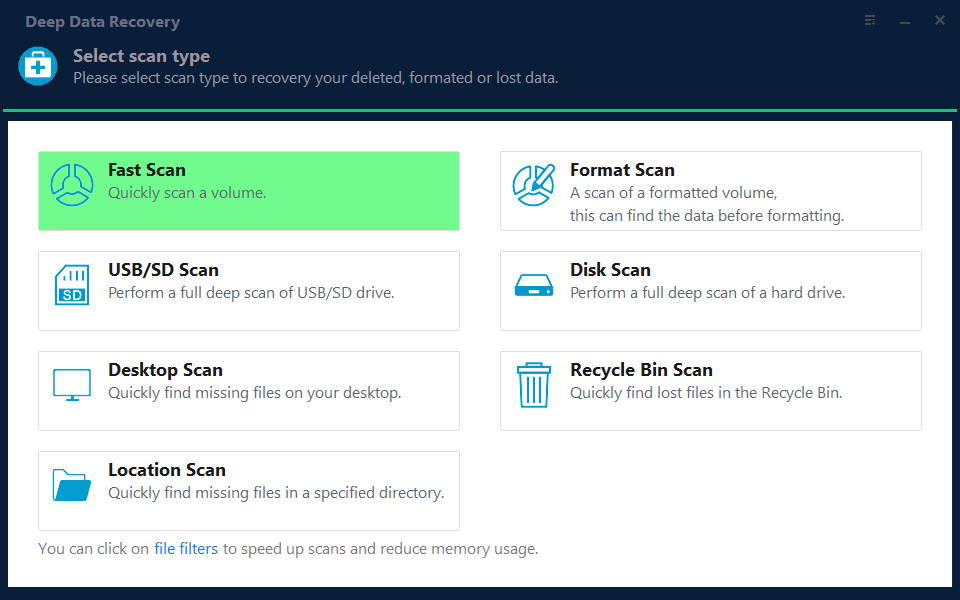
Note: You can choose different search modes based on where and why the data was lost.
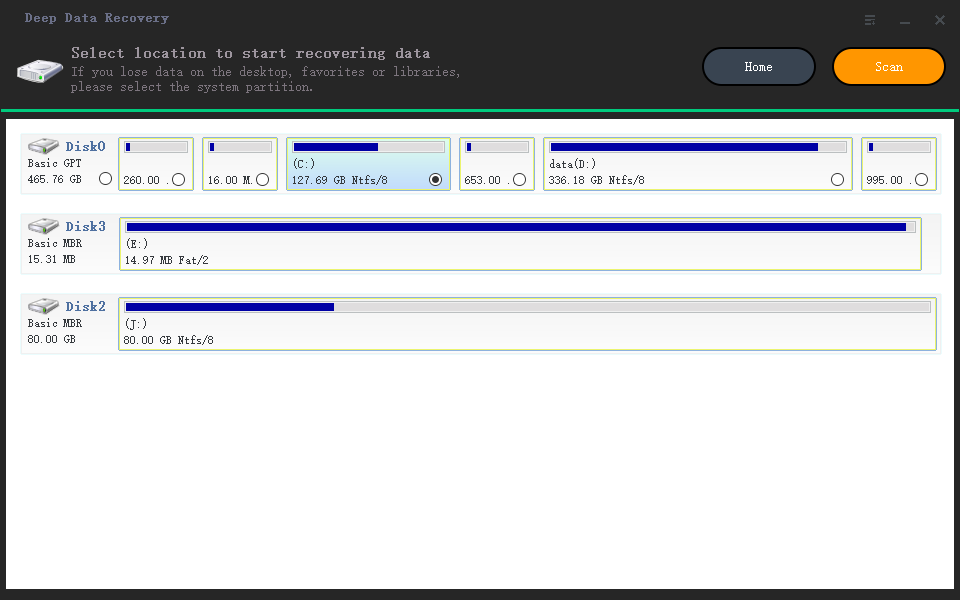
Step 2. Select the drive where you lose your data and click "Scan" to begin the recovery process.
Step 3. When the scan is complete, use the "Filter" or "Search" option to find the lost files. This will help you narrow down the search and locate the files you need.
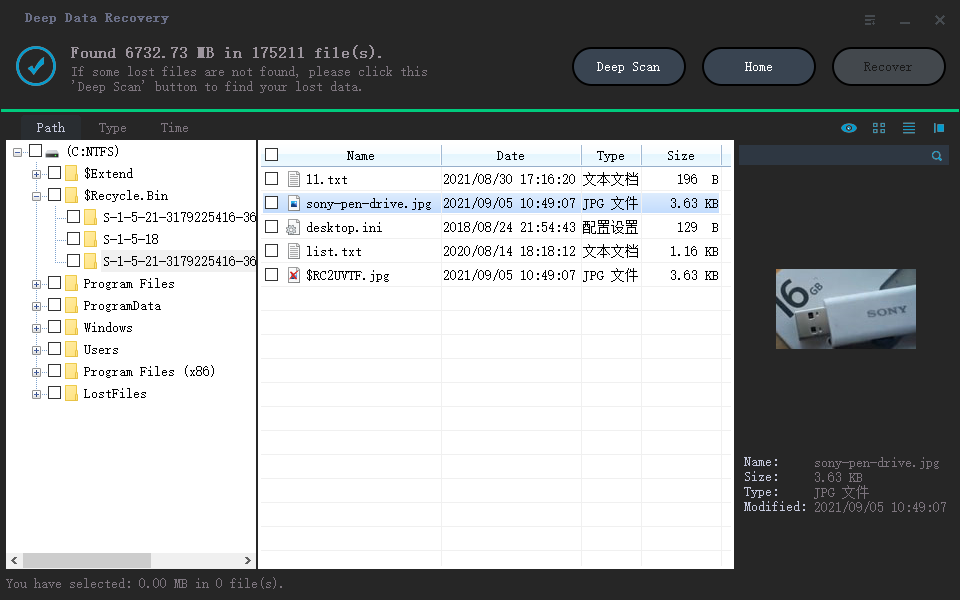
Step 4. Select the files you want to recover and click "Recover". Then, save them to a secure location by browsing another folder.
Final Verdict
When planning to convert NTFS to EXT4 or vice versa on Windows, using Qiling Partition Master can be helpful. This tool allows for the conversion of an NTFS partition to EXT4 with just a few clicks, and also offers additional functions to manage EXT4 partitions, including resizing, creating, deleting, wiping, merging, and cloning without much effort.
To easily organize your hard drive and optimize disk partitions, start by identifying which partitions are taking up the most space and consider merging or deleting unnecessary ones. Next, prioritize your most frequently used programs and files, and allocate the largest partition to the drive where they're stored.
FAQs on How to Convert NTFS to EXT4 on Windows
The top five highly relevant questions on converting NTFS to EXT4 on Windows without losing data are: How to convert NTFS to EXT4 on Windows without losing data, what are the methods to convert NTFS to EXT4 on Windows, how to convert NTFS to EXT4 on Windows 10, how to convert NTFS to EXT4 on Windows 7, and how to convert NTFS to EXT4 on Windows 8. If you have any of these problems, you can find the solutions here.
1. How can I convert NTFS to EXT4 without losing data?
You can back up your files on the NTFS partition first. Then, use a partition management tool like Qiling to format NTFS to EXT4 directly, without deleting or shrinking the NTFS partition. This method allows you to convert the partition to EXT4 without losing any data.
Step 1. Launch Qiling Partition Master. Right-click on the NTFS drive and choose "Format" to accomplish the task.
Step 2. Set the partition file system as EXT4. Click "OK".
Step 3. Confirm to format data. Then, execute format NTFS to EXT4 operation.
2. Is ext4 better than NTFS?
EXT4 and NTFS are file systems designed for different operating systems. Comparing them has no practical significance, as the choice of file system is tied to the selection of the operating system itself.
- NTFS is a Microsoft-developed journaling file system that became the default file system for the Windows NT family, starting with Windows NT 3.1.
- EXT4, or Extended Files System version 4, is the file system for Linux, built upon the success of its predecessor, Ext3. It represents a significant improvement over Ext2 and Ext3, with several key enhancements that make it a more efficient and reliable option for storing and managing files on Linux systems.
3. Can Windows read ext4?
Linux supports NTFS file system, but Windows 10 doesn't natively support EXT4, which means Windows can't read EXT4 file systems. However, you can use third-party software, such as Qiling partition manager, to read and access EXT4 files on a Windows 10 system.
4. How can I convert NTFS to Exfat without formatting?
There's no direct way to convert NTFS to exFAT, so you'd need to format the NTFS partition and then use exFAT as the new file system. You can back up your files, format the partition, and then move them back. This will effectively change the file system from NTFS to exFAT.
5. What is the best file system for Linux?
Ext4 is the preferred and most widely used Linux file system, offering all the advantages of its predecessors (Ext2 and Ext3) while also bringing several improvements. It excels in log verification, multiple block file allocation, compatibility, continuous pre-allocation of free space, and greater file support.
Related Articles
- How to Create UEFI Bootable USB Drive on Windows 10 to Boot and Repair your Computer
- How to Create New Partition in Windows Server 2022/2019/2016 - Qiling
- How Long Does Windows 11/10 Update Take? Windows 10 Update Taking Forever Fixes
- 3 Best Windows Server Partition Tool/Software Free Download [Free & Paid]
- Solved: Ender 3 Not Reading SD Card [Quick Fixes]
If your Ender 3 is having trouble reading an SD card, - there are quick and effective solutions to get you back up and running. By trying a few simple remedies and troubleshooting common problems, you can resolve the issue and get back to printing with ease. - Top 3 Ways to Factory Reset Windows 11 Without Password
Do you want to know how to factory reset Windows 11 without a password? Learn three ways to factory reset Windows 11 without a password in this guide.
Products
Articles & Tutorials
- Data Recovery
- Data Backup
- File Recovery
- File Backup
- System Backup and Restore
- Disk and Partition Clone
- Technical articles
- Mobile articles
- Disk Master Help
- Windows Data Recovery Tutorials
- Windows Secure Delete Tutorials
- Windows Partition Management Tutorials
- Windows File Backup and Restore Tutorials
- Windows System Backup and Restore Tutorials
- Windows Disk Backup and Restore Tutorials
- Windows Clone Tutorials