[SD Card Unavailable] Fix SD Card Wont Mount on Android & PC
Top 5 Ways to Fix SD Card Unavailable/Won't Mount Error
To make a phone or a specific device read and write data on a memory card, it needs to be mounted. This usually happens automatically when the card is inserted, but sometimes it may not work, requiring manual mounting or troubleshooting.
Here, we selected the five most applied and useful methods to fix the SD card won't mount problem. Read on to learn more details.
| Workable Solutions | Step-by-step Troubleshooting |
|---|---|
| 1. Mount SD card on Android | Power off your Android smartphone. Now insert the SD card into the SD card slot...Full steps |
| 2. Format the SD card | Open Qiling Partition Master. Find your SD card and right-click the partition you want to format...Full steps |
| 3. Run CHKDSK | Press the Windows key and type cmd. Right-click "Command Prompt" and choose...Full steps |
| 4. Update SD card driver | Type Control Panel in the search box next to the Windows menu in Windows 11/10...Full steps |
| 5. Recover SD card data | Launch Deep Data Recovery on your PC and select your SD card...Full steps |
The Android Phone Won't Mount the SD Card, How to Fix
If your LG phone is not mounting your SD card despite trying various troubleshooting steps, you might want to try resetting the SD card to its default settings. This can sometimes resolve issues with the phone recognizing the SD card. To do this, you can try removing the SD card from the phone, then putting it back in. If that doesn't work, you might need to consider formatting the SD card, which will erase all data on it. This should ensure the SD card is properly recognized by your phone.
Many people use SD cards to store more data or photos, but sometimes these cards may not mount or be recognized by Android phones. The reason for this "memory card won't read or recognized" error can be unclear, but it's not unique to any particular cause. To resolve the issue, it's essential to understand what "mounted" means - essentially, it refers to the card being recognized and accessible by the device - before attempting to fix the problem.
What Does It Mean When the SD Card Is Mounted or Unmounted
When trying to use an SD card with a phone, camera, or other digital devices that use an external memory card, you may encounter an error saying the card won't mount. To understand this, it's helpful to know that 'mounted' refers to the process of accessing and using the card's storage, while 'unmounted' means the card is not currently being used by the device.
Mounted: The card is integrated with your computer, phone, or device and ready to use, with the OS reading the SD card file system to become aware of the contents and control reading and writing operations.
Unmounted: The SD card can be safely removed from the device without causing damage, as the operating system has relinquished control of it, allowing other processes to access the card. This makes it possible to copy files to and from the card.
If your SD card becomes unmounted or unrecognized, you can try the following solutions to get it working again. Firstly, you can try restarting your device.
Fix 1. Fix SD Card Won't Mount on an Android Smartphone
Applies to old Android phones with SD card
To resolve the issue of mounting an SD card on an old Android phone, prepare the micro SD card that is also experiencing mounting problems. This will ensure that the problem is not specific to the phone but rather a common issue with the card itself.
Step 1. To power off your Android smartphone, press and hold the power button until the device turns off. Then, insert the SD card into the SD card slot on the device.
Step 2. Power on the device.
Step 3. To access the storage settings, tap on "Settings" from the main menu and then click on "SD and Phone Storage".
Step 4. To reformat your phone, click on "Reformat" after accessing the recovery mode, and wait for a few seconds for the process to complete. If it takes longer than expected, it's recommended to restart your phone.
Step 5. To format and mount an SD card on the same screen, tap on "Mount SD Card". If this option is unavailable, select "Unmount SD Card" first, wait for the card to unmount, and then tap on "Mount SD Card" again.
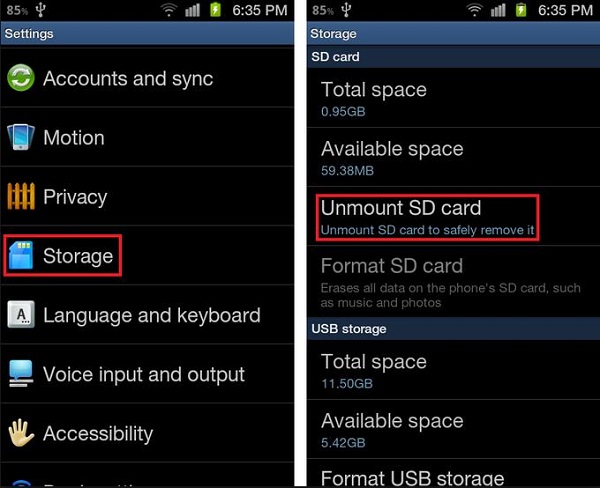
If you have a new SD card, the "Mount SD Card" option will be unavailable. You can format the SD card on your phone:
To format your SD card on an Android phone, go to the Settings menu, select Storage, and then choose Format SD card.
Fix 2. Format the SD card to Fix SD Card Won't Mount
When an SD card can't be mounted on a phone, it's often due to a poor connection or Android software issues. However, the most likely cause is a corrupted SD card. To resolve the issue, using a free partition software can be a viable solution, but it's a more advanced and potentially risky approach.
We're going to use the recommended micro SD card repair tool to format the corrupted SD card that won't mount, which will erase everything on the card, so make sure you had saved a copy of the SD card contents.
Step 1. Find your SD card and right-click the partition you want to format, then choose "Format".
Step 2. Set a new partition label, file system (NTFS/FAT32/EXT2/EXT3/EXT4/exFAT), and cluster size to the selected partition, then click Proceed.
Step 3. To format your SD card, click "OK" on the pop-up window that appears after selecting the formatting option. This will initiate the formatting process, which may take a few seconds to complete.
After formatting the memory card, you can put it back into the Android phone, and it should be mounted automatically. If it's not, you can manually mount it using the first method.
Fix 3. Run CHKDSK to Fix SD Card Unavailable
If your OPPO or VIVO SD card isn't available or unrecognized, you can run CHKDSK to see if there is any error on your SD card.
Step 1. Press the Windows key and type cmd.
Step 2. Right-click "Command Prompt" and choose "Run as administrator".
Step 3. Enter the following command:
chkdsk E: /f /r /x
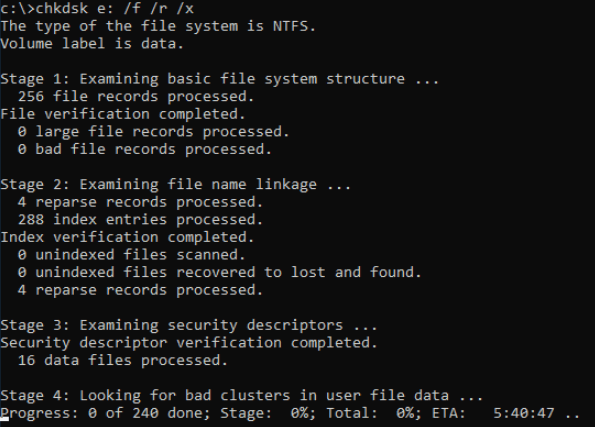
To repair the SD card, you can use the built-in Windows Disk Cleanup tool, or the free Deep Data Recovery Wizard software. First, safely remove the SD card from your device.
Use CHKDSK Alternative Tool
Step 1. To begin the recovery process, launch the Deep Data Recovery software and select the desired file types. Once you've made your selection, click "USB/SD Scan" to proceed with the recovery process.
- Download and install Deep Data Recovery on your Windows PC.
- Use the proper way to connect your SanDisk/Lexar/Transcend SD card to the computer.
- Open Qiling SD card recovery software. Select file types and click "USB/SD Scan".
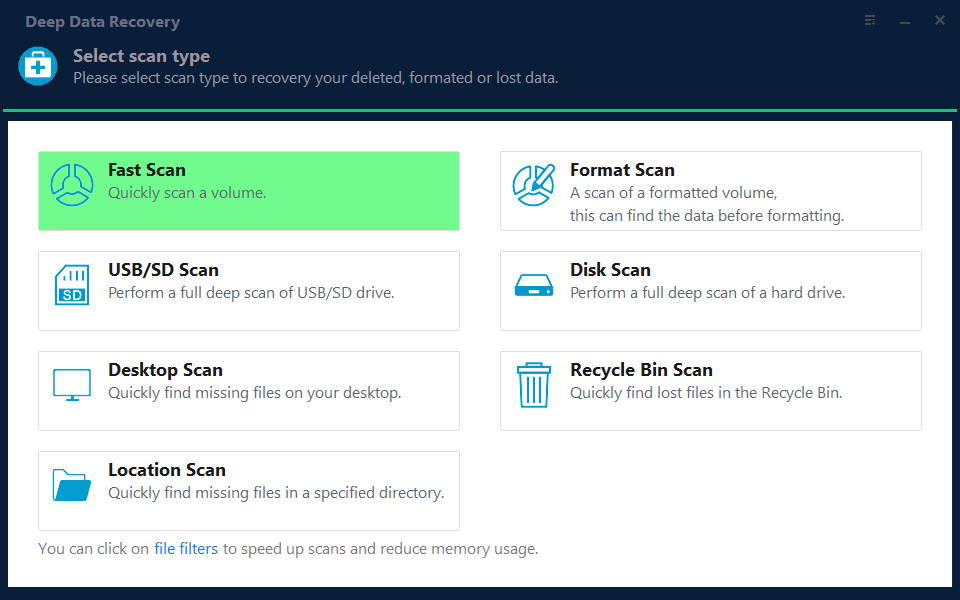
Note: You can choose different search modes based on where and why the data was lost.
Step 2. Select the SD card to scan
- Select the SD card you want to scan and click the "Scan" button to begin the scanning process.

Step 3. Check for scan results
- Wait for the scanning process to complete.
- Click "Filter" and select one or more file types to display, such as Pictures, Word, Excel, PDF, Videos, and other file types.
- Click "Preview" to check if they are the wanted files.

Step 4. Recover SD card data
- Choose desired files and click "Recover".
- When recovering files from a corrupted SD card, it's recommended to save the recovered files to a different location, such as a computer or an external hard drive, rather than saving them back to the original SD card. This is because saving the files back to the original SD card may cause further corruption or overwrite existing data.
Also read: How to Run CHKDSK to Fix Hard Drive Errors
Fix 4. Update SD Card Driver to Fix SD Card Won't Mount
If your device driver is out-If you're experiencing issues with your SD card, you may need to update the SD card drive to resolve the problem. This can be a solution for both SD card not mounting and other related errors.
Step 1. To access the Control Panel in Windows 11/10, type "Control Panel" in the search box next to the Windows menu, and then click on "Control Panel" in the search results to open it.
Step 2. Navigate to "Device Manager" and open it.
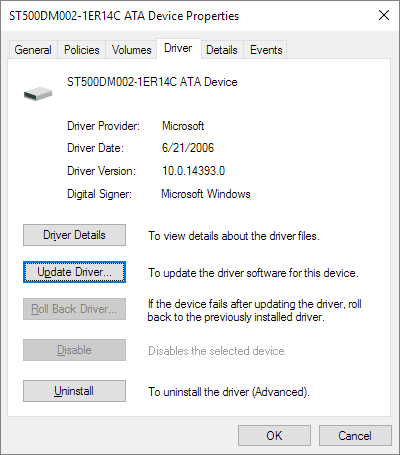
Step 3. To update the driver for your SD card, right-click on it and select "Properties", then click on the "Driver" tab and select "Update driver". You can choose to "Search automatically for updated driver software" to let Windows find and install the latest driver.
Fix 5. Recover SD Card Data/Photos to Rescue Your Data
If you've successfully resolved the issue of your SD card not mounting, you can now recover as many photos, videos, and documents as possible using Qiling disk data recovery software. This comprehensive recovery tool helps you retrieve lost files, including photos, videos, and music, with its various highlights and excellent features.
- Recover deleted, formatted, and inaccessible data in various data loss situations, including accidental deletion, formatting, virus attacks, power failures, and hardware malfunctions.
- Recover lost data from any storage device, including photos, audio, music, and emails, with a safe and complete process.
- You can recover data from various devices, including the recycle bin, hard drive, memory card, flash drive, digital camera, and camcorder.
To recover SD card data with ease, follow these simple steps. First, stop using the SD card immediately to prevent any further data loss.
Download Qiling CleanGenius and install it on your computer. Let's start checking and refixing file system error on your device now.
Step 1. Click "File Showing" to enter the next step.
Step 2. Choose the target device and tick the box of "Check and fix file system error". Click "Execute" to start fixing the problematic device.
Step 3. When the fixing process completes, click "here" to open and use your device.
Conclusion
If your Android SD card is unavailable, ! There are 5 effective solutions to fix the issue and make your memory card detectable and readable again on your phone. You can also use Qiling Partition Master, a disk management tool, to format your SD card or manage your SD card space.
Related Articles
- How to Clear Windows DNS Cache Windows Server/Workstation
- What Is FAT32 Partition Size Limit and How to Break It
- How to Wipe Partition Data to Protect Privacy
- What Is 4k Hard Drive
- How to Wipe Xbox One Hard Drive on Windows - Full Guide
If you need to wipe your Xbox One hard drive on Windows for any reason, this guide will help you and offer you two easy and simple methods to perform this task and achieve this goal. So, this guide read thoroughly to learn the process. - How to Zero Fill A Hard Drive [Efficient]
Writing zero to a hard drive means completely erasing all data on the drive by filling it with zeros, essentially wiping it clean. This process is also known as zero-filling or zeroing out a hard drive.
Products
Articles & Tutorials
- Data Recovery
- Data Backup
- File Recovery
- File Backup
- System Backup and Restore
- Disk and Partition Clone
- Technical articles
- Mobile articles
- Disk Master Help
- Windows Data Recovery Tutorials
- Windows Secure Delete Tutorials
- Windows Partition Management Tutorials
- Windows File Backup and Restore Tutorials
- Windows System Backup and Restore Tutorials
- Windows Disk Backup and Restore Tutorials
- Windows Clone Tutorials