6 Fixes for Not Enough Space for Windows 10 Update
6 Useful Ways to Fix Not Enough Space for Windows 10 Update
If your computer fails to install the latest Windows 10 update, you can try to troubleshoot the issue by checking the system requirements, disabling any unnecessary startup programs, running the Windows Update Troubleshooter, checking for disk space, and running the System File Checker and DISM tools to fix any corrupted system files and registry issues. Additionally, you can try to update the drivers, reset the Windows Update components, and run the System Update Readiness Tool to resolve any issues that might be preventing the update from installing. If none of these solutions work, you can try to seek help from Microsoft Support or a professional computer technician.
| Workable Solutions | Step-by-step Troubleshooting |
|---|---|
| Fix 1. Delete Useless Files | When the system doesn't have enough space for Windows 10 update, most users will free up C drive...Full steps |
| Fix 2. Clean Up C Drive | Click the "Start" button, type Disk Cleanup in the Search box, run this program as administrator....Full steps |
| Fix 3. Extend C Drive | Step 1. Click "Adjust with 1-Click" to extend C drive; Step 2. Click "OK" to extend C drive automatically...Full steps |
| Fix 4. Use External Drive | Step 1. Go to "Settings", click on "Update & security" > "Windows Update" > "Check for Updates"...Full steps |
| Fix 5. Migrate OS | Step 1. Run Qiling Partition Master, select Migrate OS from the top menu; Step 2. Select the SSD or HDD...Full steps |
| Fix 6. Use Media Creation Tool | Step 1. Go to Download Windows 10 page on Microsoft website via your Windows 10 browser...Full steps |
If you receive an error message during a Windows 10 update that says "Windows needs more space", it means your computer's C drive is running low on space and doesn't have enough room to install the latest Windows 10 update.
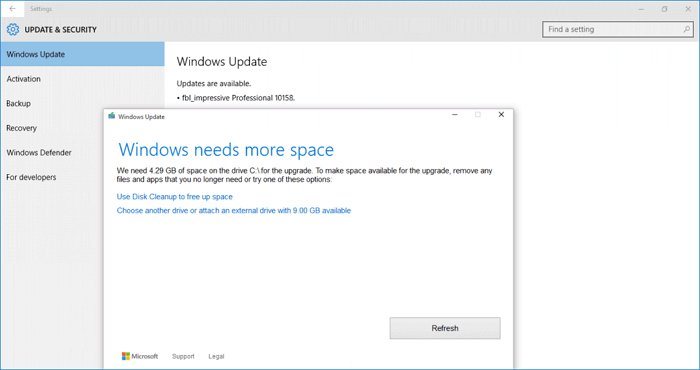
To upgrade to Windows 10, it's recommended to have 16GB free space on drive C for 32-bit OS and 20GB for 64-bit OS, plus extra space for the Windows.old folder that's created during the update process.
Windows 10 update problem is mostly caused by low disk space on C drive. To resolve this issue, you can try deleting unnecessary files, disabling unnecessary startup programs, disabling Windows Update service, checking for disk errors, running the built-in Disk Cleanup tool, or using a third-party cleanup tool to free up space on your C drive. Alternatively, you can also consider upgrading your hard drive to a solid-state drive (SSD) to improve performance and resolve the issue.
Solution 1. Delete Useless Files and Programs
To free up space on your C drive for a Windows 10 update, consider backing up your C drive to an external hard drive first to prevent accidental deletion of important files. Once backed up, you can safely remove unwanted files and applications to make more space available for the update.
Solution 2. Clean up C Drive to Free up Space
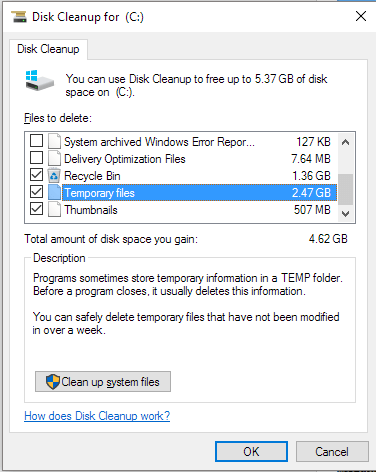
To free up space on your C drive and resolve the Windows update issue due to insufficient disk space, you can use the Disk Cleanup tool to remove unnecessary files from the Downloads folder, Recycle Bin, and Temporary files. This should help create more space for the update to proceed.
To run Disk Cleanup, click the "Start" button, type "Disk Cleanup" in the search box, and run the program as an administrator. Then, choose the C drive to clean, select the files you want to delete, and click "OK".
Solution 3. Extend C Drive
If your computer is still running out of space for installing the latest Windows 10 update, you can use Qiling Partition Master to expand your C drive without formatting.
Reliable Windows Partition Manager Software
- To convert a file system from FAT32 to NTFS, convert the Master Boot Record (MBR) to GUID Partition Table (GPT), and convert a dynamic disk to a basic disk, you can follow these steps: First, back up all data on the disk as the conversion process will erase all data. Then, open the Disk Management console, select the disk you want to convert, and right-click on it to select "Convert to NTFS".
- Transfer free disk space from one drive to another directly
- Migrate OS to SSD to speed up Windows without reinstalling
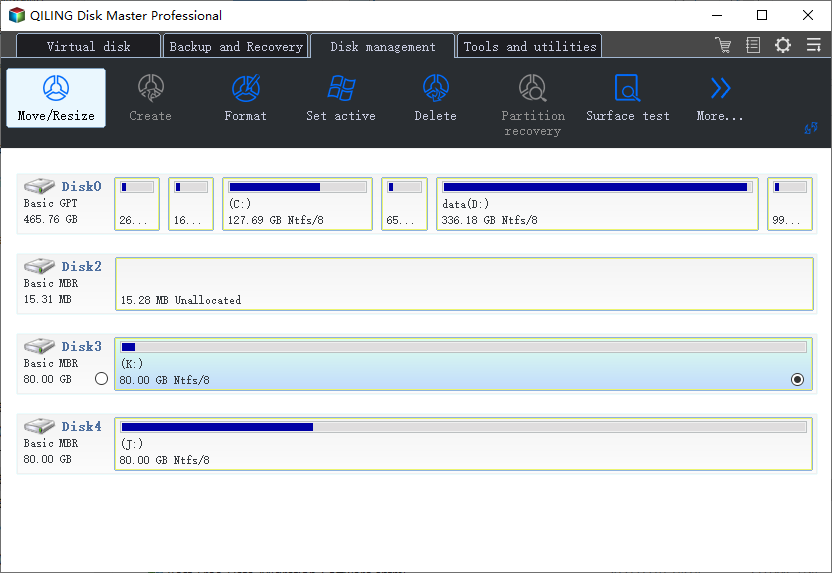
Step 1. Click "Resize/Move" to extend C drive.
When your C drive runs out of space, you'll see a Low Disk Space alert on Qiling Partition Master. To resolve this, click the Adjust button to extend the drive.
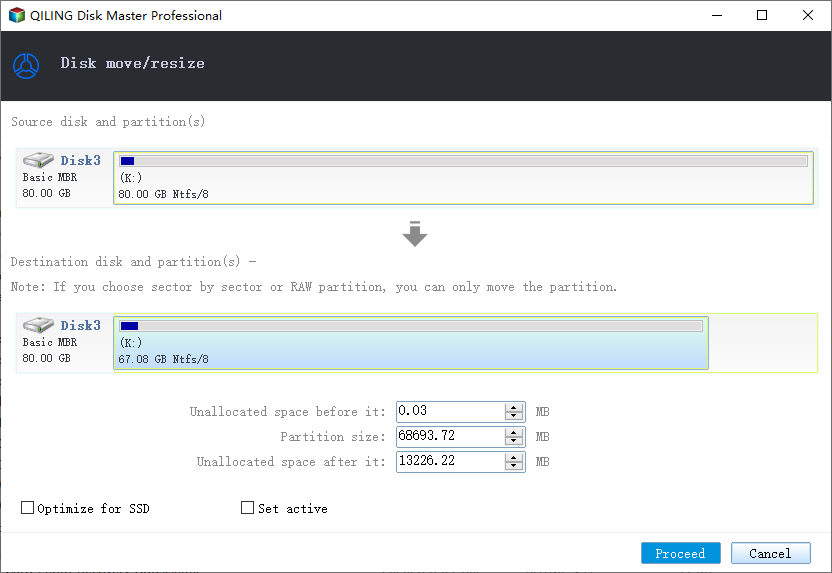
Step 2. Drag dots rightward of C drive to extend C drive.
To resolve low disk space in the C drive, select the C drive and drag the dots to the right to add more space. Then, click "Proceed" to complete the process.
Solution 4. Windows 10 Update Using External Drive
Step 1. To check for Windows updates, go to Settings, click on Update & security, then Windows Update, and finally click on Check for Updates.
Step 2. Windows will display a message saying "Windows needs more space" and will ask you to free up some space on your computer.
Step 3. You can click the "Free up space" option first to see if this can help. If that doesn't work, you can go to Settings > Storage > Internal Storage, and then click on the "Clear data" or "Clear cache" option for the app that's taking up the most space.
You can use the built-in Disk Cleanup tool in Windows to identify and delete unnecessary files on your C drive, freeing up space.
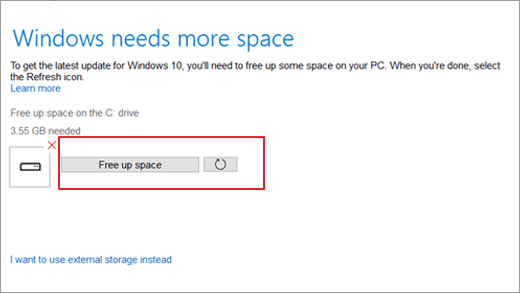
After freeing up space on the C drive, return and select the Fresh icon next to the Free up space button, which will show a green checkmark if the C drive has enough space. You can then click "Continue" to install the update.
Step 4. The steps to resolve the issue can be summarized as: connect an empty external hard drive to your PC and when the 'Windows needs more space' window appears, click "I want to use external storage instead".
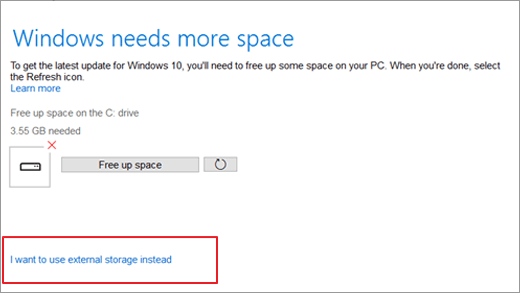
To prevent a failed Windows update from causing issues with your external storage, it's recommended to format the external hard drive before attempting the update. This will ensure that the drive is in a clean state and is less likely to be affected by any potential issues during the update process. By formatting the external hard drive first, you can minimize the risk of data loss or corruption and ensure that your external storage remains functional even if the Windows update fails.
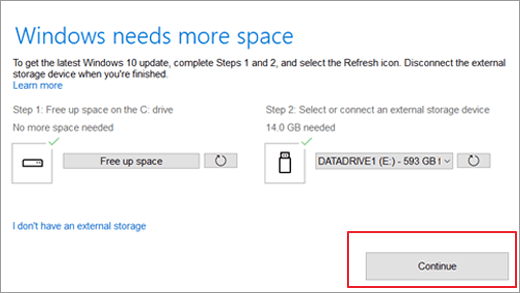
Step 5. If the external hard drive fails to show up, click the Refresh icon, and a green checkmark will appear next to the storage drive icon.
Step 6. To install the latest Windows 10 update, click "Continue" and follow the on-screen instructions to complete the update process.
Solution 5. Migrate OS to a Bigger HDD/SSD
If you're running out of space on your internal hard drive for Windows 10 updates, consider upgrading to an SSD or a larger HDD to free up space. This can help with Windows upgrades and expansion of the C drive.
Qiling partition manager offers the "Migrate OS" and "Clone" features, allowing you to transfer a Windows OS to an SSD/HDD without reinstalling.
Steps to migrate OS to HDD/SSD:
- Run Qiling Partition Master, select Migrate OS from the top menu.
- Select the SSD or HDD as the destination disk and click Next.
- Be aware that the process will erase data and partitions on the target disk, and you should have backed up any important data before proceeding. If you haven't backed up your data yet, do so now.
- Then click Continue.
- Preview the layout of your target disk. Then click Proceed to start migrating your OS to a new disk.
Note: If you're migrating your OS to an SSD or HDD, be aware that this process will erase and remove existing partitions and data on the target disk if there's not enough unallocated space available. This means you'll need to back up any important data stored on the target disk to an external hard drive beforehand to avoid losing it.
Solution 6. Update Windows 10 Using Media Creation Tool
To upgrade or update Windows 10 using the Media Creation Tool, you can follow these steps: download the Media Creation Tool from Microsoft's website, run the tool, select the upgrade option, and follow the prompts to download and install the latest version of Windows 10. This process will automatically update your current version of Windows 10 to the latest version, or upgrade from Windows 7/8 to Windows 10.
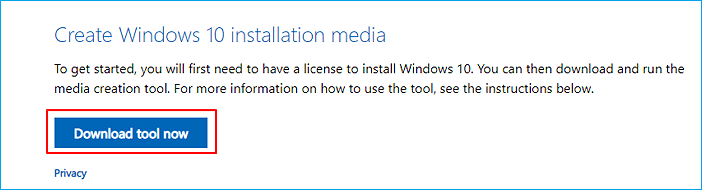
Step 1. Go to the Download Windows 10 page on Microsoft's website via your Windows 10 browser.
Step 2. To create Windows 10 installation media, click on the "Download tool now" button and run the downloaded media file.
Step 3. Choose "Upgrade this PC now".
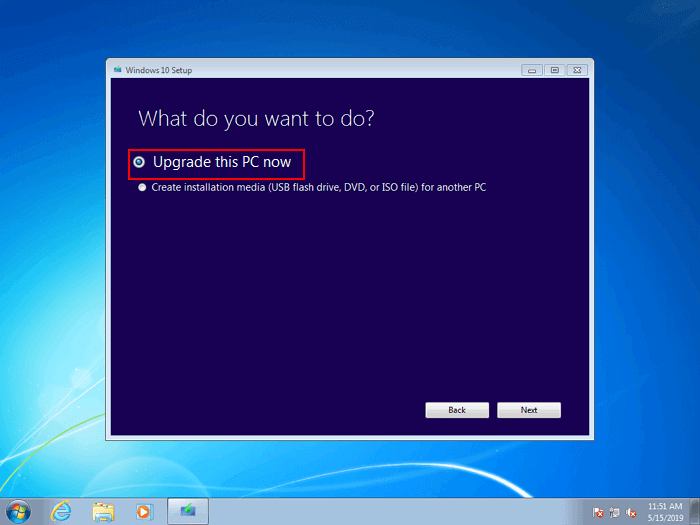
Step 4. Follow through the prompts to set up Windows 10.
When you reset your Windows 10 device, you have the option to keep personal files and apps during the process. This means you can preserve your important files and keep your installed apps intact, while still resetting your device to its factory settings.
Step 5. To upgrade to Windows 10, wait for the process to complete, then restart your computer and you'll be able to use Windows 10.
Other Related Issues for Windows 10 Update
If you're getting a warning message saying "This PC can't run Windows 10" due to an inability to update the system reserved partition, it's likely because of low space on this partition. To resolve this, check out the tutorial on how to fix low system reserved partition on MBR/GPT disks in Windows 7/8/10.
Conclusion
You've learned how to upgrade to Windows 10 on devices with limited free storage space, including using an external storage device for the upgrade, freeing up space for the upgrade, and more. Qiling partition manager software has also been helpful in this process, assisting with freeing up space, extending the C drive, and migrating the OS. It's been a useful tool in the upgrade process.
People Also Ask These Questions
The new law aims to protect consumers from unfair business practices and ensure they are treated fairly, providing them with greater protection and confidence when making purchases. Businesses will need to comply with new regulations and guidelines to avoid fines and penalties, and can prepare by reviewing their policies and procedures, training staff, and ensuring compliance with the new regulations.
How much space does Windows 10 need to update?
Windows 10 version 190p requires 32 GB of space, double the 16 GB required for the previous version 1809.
Can't free up enough space for Windows Update?
If you fail to free up space you can follow the steps below:
Step 1. Click the Start button
Step 2. Type "Disk Cleanup" in the Search box, and run this program as administrator.
Step 3. To clean the C drive, select it from the list of available drives, choose the files you want to delete, and then click the "OK" button to initiate the cleaning process.
How do you update Windows 10 when you don't have enough space?
Free up space on your device:
Step 1. Open your Recycle Bin and remove deleted files.
Step 2. Open your Downloads and delete any files you don't need.
Step 3. If you still need more space, delete any files you don't need.
Related Articles
- 3 Most Effective Ways to Upgrade My PC | Easy PC Upgrade Guide
- How to Reformat Windows 11/10 PC/Laptop | In-depth tutorial
- Western Digital VS Seagate: A Detailed Comparison Guide
- What Is 4k Hard Drive
- Top 5 Free Disk Formatter Recommend for Windows & Mac
To format your SD card, you can use the built-in formatting tools on your device or computer. On Windows, you can right-click on the SD card drive, select “Format,” and follow the prompts. On Mac, you can use Disk Utility to format the SD card. - Blue Screen While Playing Games? 2024 Fixes Here
If your computer crashes with a blue screen while playing games, there are several solutions you can try. One approach is to use automatic repair tools, such as Windows' built-in diagnostic and repair tools, to identify and fix the problem.
Products
Articles & Tutorials
- Data Recovery
- Data Backup
- File Recovery
- File Backup
- System Backup and Restore
- Disk and Partition Clone
- Technical articles
- Mobile articles
- Disk Master Help
- Windows Data Recovery Tutorials
- Windows Secure Delete Tutorials
- Windows Partition Management Tutorials
- Windows File Backup and Restore Tutorials
- Windows System Backup and Restore Tutorials
- Windows Disk Backup and Restore Tutorials
- Windows Clone Tutorials