How to Wipe a USB Drive and Permanently Delete Files from USB Flash Drive
To clear a flash drive, deleting files or formatting the USB drive may not be enough, as professional data recovery software can easily recover the formatted files, potentially leading to privacy leaks.
When it's time to discard an old USB flash drive or give one away that contains sensitive files, the safest way is to wipe the drive to delete everything permanently. This is also necessary if you need to reuse the drive, sell it, or get rid of it securely.
- When you delete all files from your USB drive, it may still show occupied storage space, which can prevent your computer from displaying its full size. This is likely due to the operating system's file system not being able to free up the space immediately, leaving behind a residual occupation of space on the drive.
- You need to remove the virus from the USB drive.
- If your USB flash drive or external hard drive isn't working quite right, it may be due to a variety of reasons such as a faulty connection, corrupted data, or a malfunctioning drive. Check the connection to ensure it's properly plugged in, and try to troubleshoot the issue by running a disk check or formatting the drive.
How to wipe a USB drive To delete files from a USB flash drive permanently, you can use the built-in Disk Cleanup tool on Windows or the Disk Utility app on macOS. On Windows, go to the Start menu, type "Disk Cleanup," and select the tool. Then, select the USB drive and follow the prompts. On macOS, open Disk Utility, select the USB drive, and click "Erase.
| Workable Solutions | Step-by-step Troubleshooting |
|---|---|
| To wipe a USB drive using a data wiping tool, you can follow these steps: | You can clear a USB drive to delete everything off a USB with a simple disk management tool...Full steps |
| Option 2. Wipe a USB Flash Drive Using Command Prompt | Wipe a flash drive in Command Prompt with Diskpart utility...Full steps |
Option 1. How to Wipe a USB Drive with a Data Wiping Tool
The most secure way to wipe a USB flash drive is by using a reliable disk management tool, such as Qiling BitWiper, which offers a full-around solution to completely wipe out all data on the drive, preventing information from being leaked or recovered.
- Wipe OS drive and data drive.
- Erase Partition (Including OS and other partitions.)
- Shred files and folders.
Now, download this disk management software and follow the steps below to wipe a USB drive effortlessly.
Warning:Make sure to back up any important files on the flash drive you want to erase, and double-check the correct disk to avoid accidentally deleting data from the wrong USB drive.
Step 1. Open Qiling BitWiper and then select "Wipe Disk."
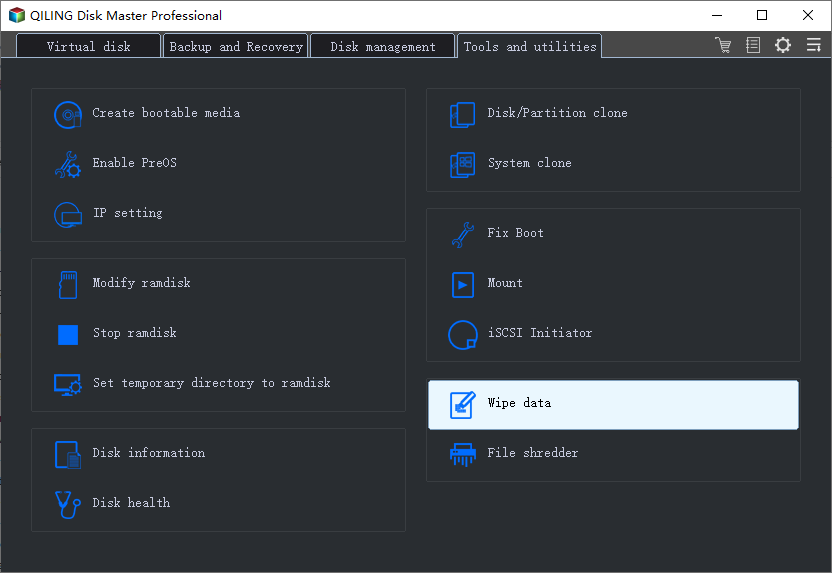
Step 2. Choose the external (or USB, SD, Memory) hard drive to wipe.
Important: Make sure you have chosen the targeted external disk. The data is irrecoverable.
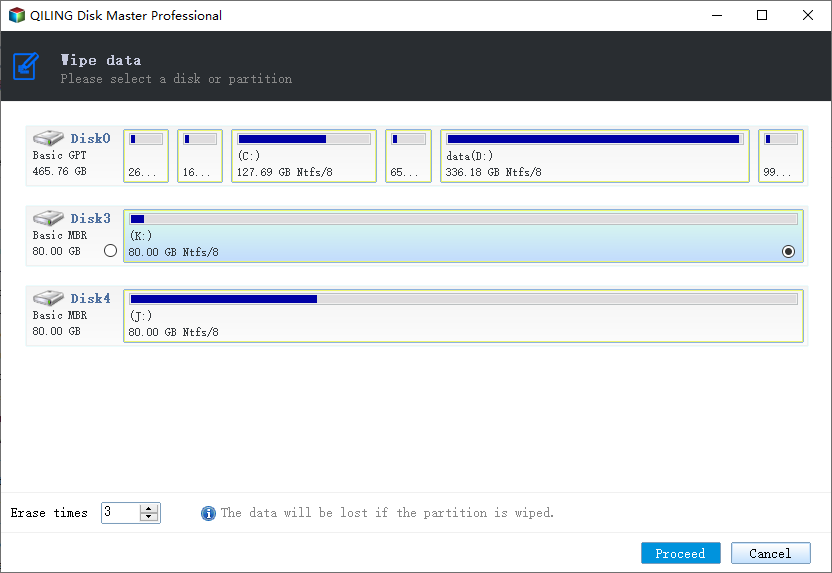
Step 3.Choose the proper wiping method based on the security level and wipe speed, and then click "Proceed" to continue.
Step 4. Confirm the Warning message and then select "Wipe."
Step 5. Wait for the wiping process to complete.
Erasing the USB drive deletes both partitions and data, leaving only unallocated space. To reuse the drive, simply format and create a new volume using Qiling partition management software, making it easy to start fresh.
Option 2. Wipe a USB Flash Drive Using Command Prompt
If you're a computer expert, you can still erase and clear a USB drive using Command Prompt. To do this, follow these steps: open Command Prompt as an administrator, navigate to the USB drive's drive letter, and then use the 'cipher /w' command to erase the drive. This will overwrite the entire drive with zeros, effectively clearing it.
Step 1. To run the Command Prompt as an administrator, search for "cmd" in the Start menu, right-click on the "Command Prompt" shortcut that appears, and select "Run as Administrator".
Step 2. To clean a USB drive using the Diskpart command, open the Command Prompt as an administrator and type "diskpart" and press Enter. Then, type "list disk" and press Enter to identify the USB drive you want to clean and note its number. Next, type "select disk [number]" and press Enter, replacing [number] with the number of the USB drive you want to clean.
diskpart
list disk
select disk # (# is the USB drive number)
clean all
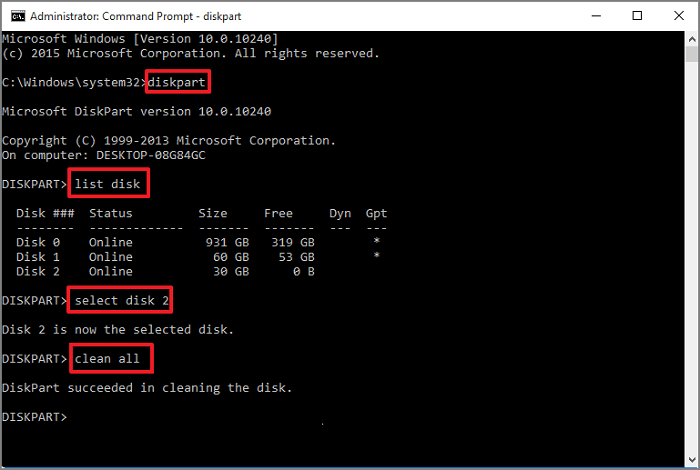
You'll see a message saying that "DiskPart succeeded in cleaning the disk" if everything works properly. This means the USB drive has been successfully cleared of any partitions, and you'll see that it has no partitions. You can then create new partitions in Disk Management on your Windows 11/10/8/7.
- Important
- Question: Is it possible to recover the permanently deleted files?
- When deleting files from a USB drive, ensure you've backed up essential data to another storage device. If you've lost files permanently, use methods to recover them.
Conclusion
To completely delete everything from a USB drive that cannot be recovered, you can wipe the USB drive using Qiling Partition Master or Command Prompt, following specific steps. Keep in mind that simply deleting or formatting a USB does not erase a file, and wiping is necessary for complete data removal.
How to Wipe a USB Drive FAQs
There are some related questions on how to wipe a USB drive and completely remove files. You can read on to get extra help.
1. If I format a USB, will it erase data and completely delete everything?
Formatting a storage device like a USB drive prepares it for initial use, creating a new file system, and deleting everything on it. However, this process doesn't erase the data, and you can recover it using deep data recovery tools.
2. How to wipe a USB drive on Mac?
To delete files off a flash drive on a Mac, first, insert the flash drive into your Mac. Then, open Finder and select the flash drive from the sidebar. Next, click on the "Files" or "Applications" tab, depending on the type of files you want to delete.
- 1. Plug the USB storage device into your Mac.
- 2. Go to Find > Applications > Utilities and launch Disk Utility.
- 3. To erase the USB flash drive, select it in the left panel and then click on the "Erase" tab.
- 4. To erase a USB drive, select the device name, choose a format, and click Erase. This will completely wipe the drive, making it ready for new data.
- 5. Close the Disk Utility window and eject the USB drive.
3. How to format/clean up USB without Wipe?
Here are three common ways to format a USB drive without losing data:
- Format USB Drive Securely with a USB Formatter
- Format a USB Drive in File Explorer
- Format a USB Flash Drive in Disk Management
Read the article to use the best USB format tool:
Related Articles
- Is 8GB RAM Enough? Get the Answers Here!
- How to Install Windows 11/10 from USB on New PC (2022 Updated)
- Windows 11 VS Windows 10 Gaming: Is Windows 11 Better for Gaming
- 10 Ways to Resolve 100% Disk Usage on Windows 11/10
- DiskPart Force Delete Partition: How to Force Delete Partition on Windows 11/10/8/7
Cannot delete a system-protected partition on Windows 11/10/8/7? You can get a complete guide on using Diskpart force delete partition. - FIXED: DISM /Online/Cleanup-Image/Restorehealth Stuck🔥
If DISM /Online/Cleanup-Image/RestoreHealth is stuck, try SFC, restart repair steps, or other recovery methods to fix corrupted Windows system files.
Products
Articles & Tutorials
- Data Recovery
- Data Backup
- File Recovery
- File Backup
- System Backup and Restore
- Disk and Partition Clone
- Technical articles
- Mobile articles
- Disk Master Help
- Windows Data Recovery Tutorials
- Windows Secure Delete Tutorials
- Windows Partition Management Tutorials
- Windows File Backup and Restore Tutorials
- Windows System Backup and Restore Tutorials
- Windows Disk Backup and Restore Tutorials
- Windows Clone Tutorials