How to Restore USB Drive/Flash Drive/Pen Drive Back to Full Capacity
| Workable Solutions | Step-by-step Troubleshooting |
|---|---|
| On Windows 10/8/7 |
Step 1. Select the USB drive to format. Connect the USB drive or pen drive to your computer...Full steps |
| On Mac OS X & macOS | Step 1.Connect the wrong-size USB flash drive to your Mac and go to Applications> Utilities...Full steps |
| On Linux |
Step 1. Delete all partitions. Open a terminal and type sudo su...Full steps |
Overview of USB flash drive not showing the full capacity
If your USB flash drive or other storage devices like hard drives, pen drives, memory cards, or Micro SD cards are not showing their full capacity, you can reclaim the lost space. For example, a 16 GB USB flash drive might show only 3 GB in Windows. The issue can be caused by various reasons, and fortunately, there are fixes available. By understanding the reasons and implementing the solutions, you can restore your USB flash drive back to its full capacity or original size, just like the SD card.
Qiling partition manager's format feature allows Windows users to easily recover full capacity on their USB drives. To try this, users can follow a guide that provides step-by-step instructions.
Mac users can also use Disk Utility to fix the issue with ease, making it a successful solution.
Why USB flash disk showing wrong capacity
When a USB flash drive or other removable disk is not showing its original size, it may be due to various reasons such as incorrect file system formatting, partition table corruption, or file system inconsistencies, which can cause the actual disk space to be mistakenly displayed as smaller than it actually is. This can happen when the file system is not properly formatted, or when there are inconsistencies in the partition table, leading to a mismatch between the reported and actual disk size. In such cases, the lost capacity can be recovered by reformatting the drive or running disk checking and repair tools.
- It's designed to be a bootable USB drive with a portable Windows OS on it.
- The flash drive contains multiple partitions, but Windows only acknowledges the first one, ignoring the rest.
- There is a hidden recovery partition or unallocated space that doesn't show up in the PC.
- The 64GB or 128GB USB flash drive is formatted with an improper file system (FAT32) in Windows, which may cause it to be recognized as a larger capacity than it actually is, leading to potential issues with data storage and transfer.
- Some viruses damaged the removable disk or the card reader, and some host devices are not well suited for certain types of memory cards.
How to restore USB drive back to full capacity
To restore a USB drive to its full capacity, the solution varies depending on the operating system. On Windows, the steps to recover the lost space include checking for disk errors, running the Check Disk utility, and updating the drive's file system. On macOS, users can try running the Disk Utility app to repair the drive and update its file system.
Format USB to Full Size on Windows 10/8/7:
To restore a USB drive, pen drive, or flash drive to its full capacity, you can use a third-party USB format tool to reformat the drive, such as Qiling Partition Master, which can also recover lost disk space or unallocated space when the drive shows incorrect capacity in Windows.
Warning
Before attempting to restore your USB drive to its full capacity, make sure to back up any important data on the drive. Formatting will erase all data, so be cautious and ensure you have a backup before proceeding.
To restore a USB drive, pen drive, or flash drive to its full capacity, you can try the following steps: 1. Format the drive using the built-in formatting tool on your computer.
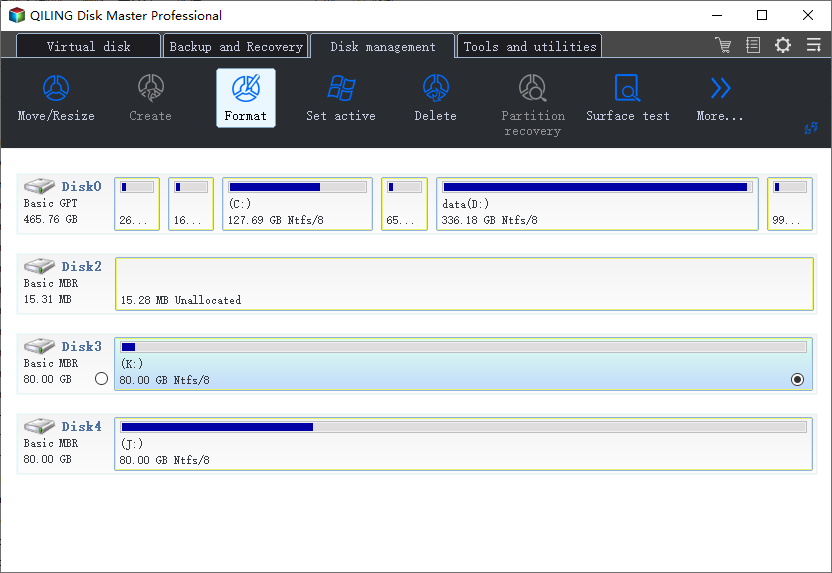
Step 1. Select the USB drive to format.
To format a USB drive, connect it to your computer, download and launch the Qiling partition software, and then select the USB drive from the list and choose the "Format" option.
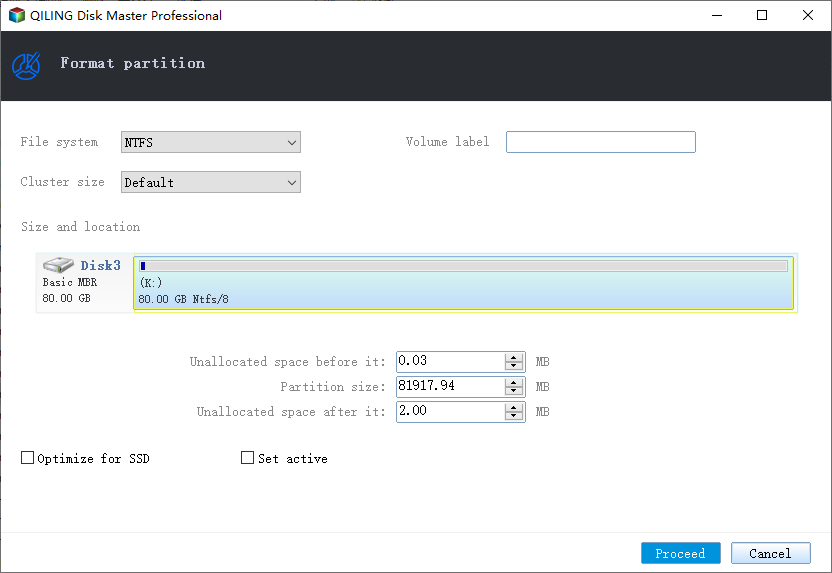
Step 2. Set the drive letter and file system on USB.
Assign a new partition label, file system (NTFS, FAT32, EXT2, EXT3, EXT4, exFAT), and cluster size to the selected partition, then click "Proceed".
Erase USB to Full Size On Mac OS X & macOS:
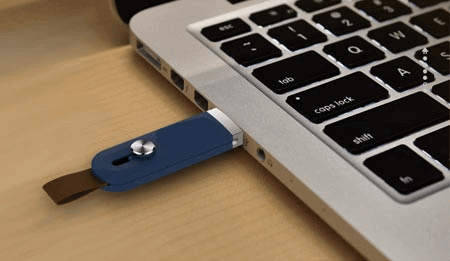
Step 1.Connect the wrong-size USB flash drive to your Mac.
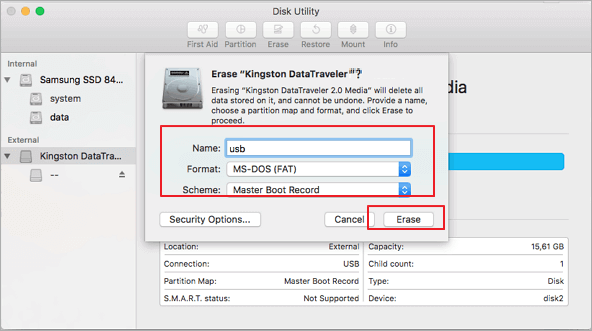
Step 2.Open Disk Utility by going to Applications > Utilities, then double-clicking on the Disk Utility icon.
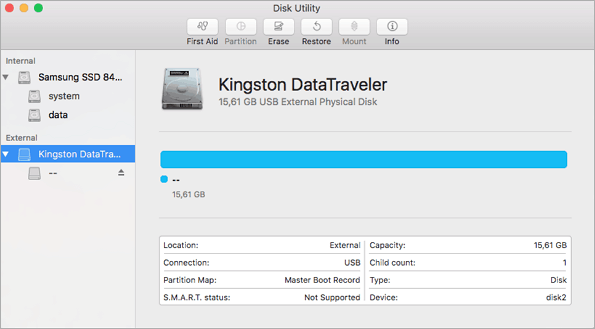
Step 3.Select your USB flash drive on the sidebar, chooseErase.
Step 4.To rename the USB flash drive, select the desired name, choose the format as MS-DOS (FAT) and scheme as Master Boot Record, then click Erase.
On Linux:
Step 1. Delete all partitions
- Open a terminal and type sudo su.
- Type fdisk -l and note your USB drive letter.
- Typefdisk /dev/sdx(replacing x with your drive letter).
- Typedto proceed to delete a partition.
- Type 1to select the 1st partition and press enter.
- To proceed with deleting another partition, type 'd' in fdisk, and it will automatically select the second partition.
Step 2. Create a new partition
- Type nto make a new partition.
- Type p to make this partition primary and press enter.
- Type 1to make this the first partition and then press enter.
- Press enter to accept the default first cylinder.
- Press enter again to accept the default last cylinder.
- To write the new partition information to the USB disk, type w.
- Typemkfs.vfat -32 /dev/sdx1 (replacing x with your USB key drive letter)
What else can help restore a USB flash disk back to full capacity?
Deleting all partitions on the USB drive and reformatting it is the most effective way to regain its full capacity, but it's not the only solution for all cases of a USB drive showing the wrong capacity.
If a flash drive, memory card, or external hard drive is not showing its original size due to bad sectors or corruption, running a CMD (Command Prompt) command might help to fix the issue.
Related Articles
- How to Format USB Flash Drive to FAT32 (Applies to 32GB/64GB/128GB...)
- How to Repair or Fix MBR (Master Boot Record) in Windows 11/10/8/7/Vista/XP
- How Do I Securely Erase Hard Drive/SSD, Wipe Confidential Data? Your Reliable Guide Is Here
- How to Figure Out if You Have a 32 or 64-bit Operating System on Your PC or Laptop
- Download Partition Magic Server 2022/2019 and Optimize Server Disk Performances [2024 Guide]
This page introduces reliable partition magic server software that helps efficiently manage and optimize disk performance on Windows Server 2022/2019, making it easier to manage your server's disk performance. - Is Partition Magic Server Edition Crack Safe? No, You Have a Better Choice
To manage your server partitions and disk drive space effectively, you'll need a reliable partition magic server software. While cracked versions may seem appealing, they are not safe to use. This will ensure your server's disk drives are managed safely and efficiently.
Products
Articles & Tutorials
- Data Recovery
- Data Backup
- File Recovery
- File Backup
- System Backup and Restore
- Disk and Partition Clone
- Technical articles
- Mobile articles
- Disk Master Help
- Windows Data Recovery Tutorials
- Windows Secure Delete Tutorials
- Windows Partition Management Tutorials
- Windows File Backup and Restore Tutorials
- Windows System Backup and Restore Tutorials
- Windows Disk Backup and Restore Tutorials
- Windows Clone Tutorials