Recover Data from a Dead Hard Drive and Repair the Corrupted Disk
To Recover Deleted Data from a Damaged Hard Drive:
- 1. To recover lost data, download and install the Deep Data Recovery WinPE Edition software on your computer. This will allow you to create a bootable USB drive or CD/DVD that can be used to scan for and recover lost data from a crashed or unbootable computer.
- 2. Select your hard drive & click the Scan button.
- 3. Preview files and click Recover.
How to Recover Data from a Dead Hard Drive
- Part 1. Chances of a Dead Hard Drive Data Recovery
- Part 2. How to Recover Data from a Dead Hard Drive
- Part 3. What to Do If the HDD Is Not Online
- Part 4. How to Repair Corrupted/Damaged/Dead Hard Drive
If your hard disk drive suddenly stops responding and makes a "biz biz" sound when you try to boot from it, it may indicate that it's dead. In such a situation, you might not be able to access your hard drive, and it could be a sign that the drive has failed and is no longer functional.
- Strange noises
- Computer crashes
- Disk errors and data loss
- Computer stops recognizing the drive
If your hard drive is dead, don't panic - you can still recover your data. If you're faced with symptoms such as the drive not spinning up, making strange noises, or not being detected by your computer, it's likely that your hard drive is dead. In this case, follow the tips below to recover your data from the dead hard drive.
Part 1. Chances of a Dead Hard Drive Data Recovery
The loss of a hard drive can be frustrating, especially when it contains irreplaceable files such as pictures, music, and documents. As the drive fails, users may experience a sense of desperation, knowing that they can't easily recover or replace the lost data. This can be a stressful experience, especially for those who rely heavily on their computer for work or personal projects.
If your hard drive has stopped working, don't panic! Unless corruption has occurred within the files, the files are still safe. It's a good idea to have a backup of your important data, but if you don't, you can still recover data from the dead hard drive using a bootable CD/DVD with data recovery software like Deep Data Recovery WinPE Edition.
Tip: To use this software, ensure that the external hard drive is recognized as an online disk and its partition or disk space is displayed properly. If it's not recognized, refer to Part 3 for troubleshooting. Once verified, you can proceed with the software.

Part 2. How to Recover Data from a Dead Hard Drive
Deep Data Recovery WinPE Edition is a bootable disk of data recovery software that can help recover data after a system crash or boot problem. To use it, create a bootable USB first, then boot from the Data Recovery Wizard WinPE bootable disk. From there, follow the steps to recover data from a dead HDD.
Step 1. Create a bootable disk
To prepare a USB for creating a bootable disk, copy any important data to another device to avoid losing it. Then, use Deep Data Recovery WinPE Edition to create a bootable disk on the empty USB. This process will erase any existing data on the USB.
Connect a USB drive to your PC, then launch the Deep Data Recovery WinPE Edition software. Select the USB drive and click "Create" to create a bootable disk from it.
Step 2. Boot from the bootable USB
Connect a bootable disk to a non-booting PC, change the computer's boot sequence in the BIOS, and restart the PC while pressing F2 to enter the BIOS. This often resolves the issue for users.
To boot the PC from a device other than the hard drive, press F10 to save and exit. This allows you to select booting from a removable device (such as a USB drive) or a CD/DVD drive.
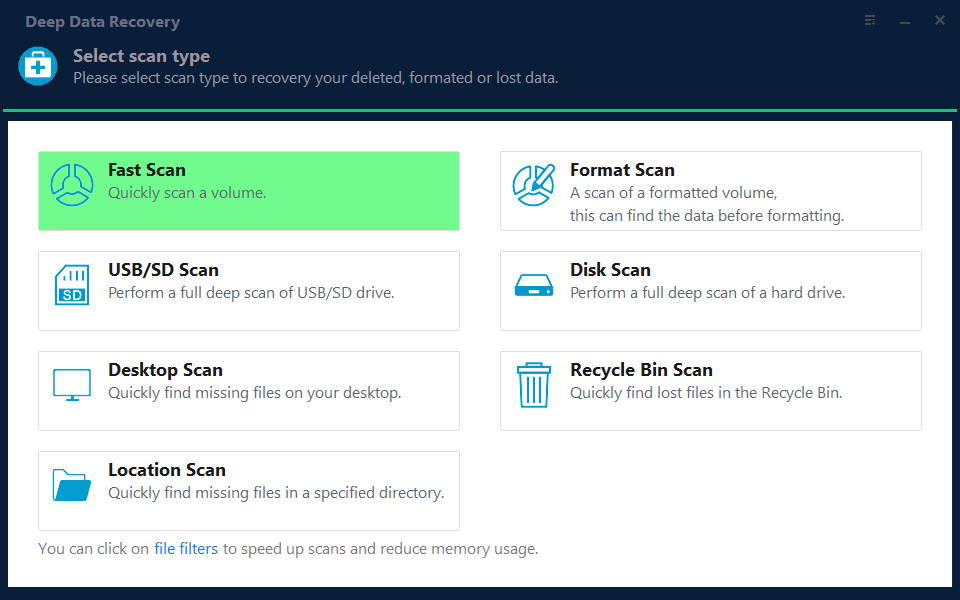
Note: You can choose different search modes based on where and why the data was lost.
Step 3. Recover data from a hard drive that won't boot
When booting from a USB, you can run Deep Data Recovery from the WinPE bootable disk, select the drive to scan to find lost files.
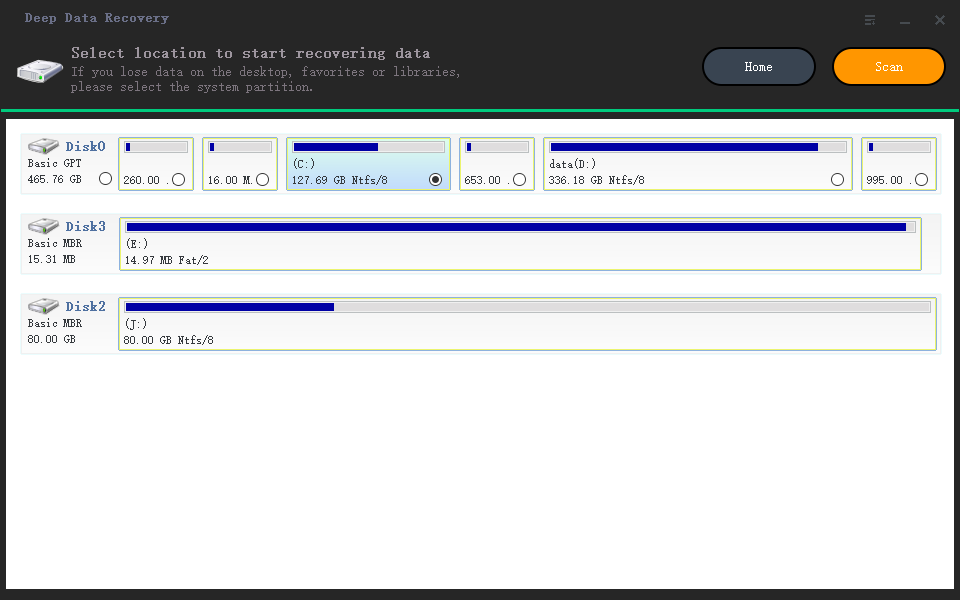
Click "Proceed" to start the scanning process.
After scanning, you can preview all recoverable files, select the targeted files, and click the "Recover" button to restore your files. It's recommended to save all recovered data to another place to avoid data overwriting. This will ensure that you can safely recover your important files from the computer or laptop.
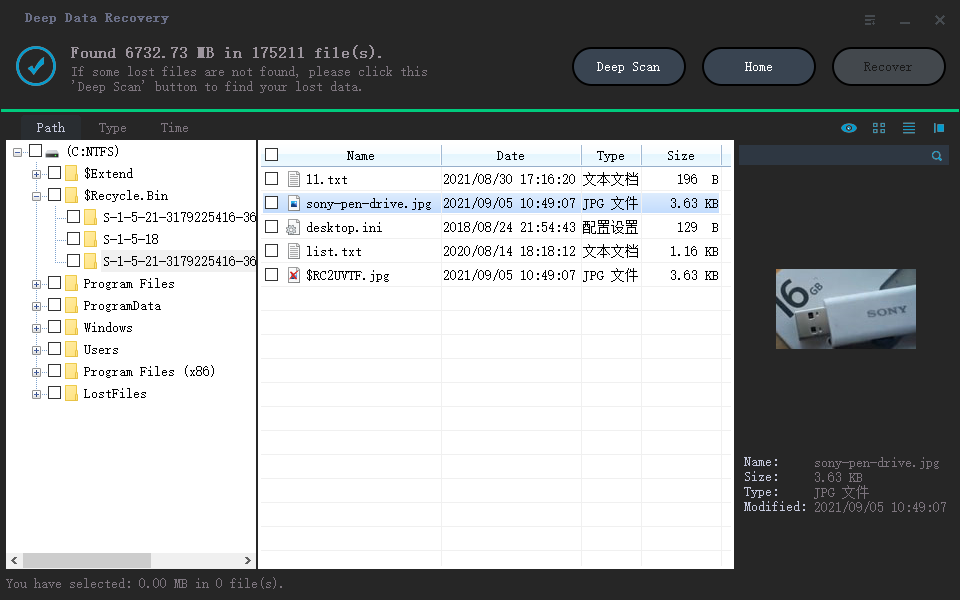
Deep Data Recovery WinPE Edition not only recovers lost files from a dead hard drive but also supports data recovery from RAID, external hard drives, dynamic disks, and memory cards. It can recover lost photos, documents, and media files, as well as unformat files and recover data from lost partitions.
Part 3. What to Do If the HDD Is Not Online
If your dead HDD is not showing as "Online", you can try to fix it by following these steps.
Case 1: The HDD Shows "ONLINE (ERRORS)"
When a dynamic disk encounters an I/O error, it goes into an "online (error)" status, and all volumes on that disk are marked as "At Risk".

Step 1. If the I/O error is a temporary issue such as a cable problem, try reactivating the disk to resolve the issue.
Step 2. If the "Healthy (At Risk)" status is displayed, it may indicate a disk failure. To resolve this, back up your data and replace the disk as soon as possible.
Case 2: The HDD Shows "Not initialized"
The "uninitialized" state occurs when the disk does not have a valid signature or is corrupted by a virus.
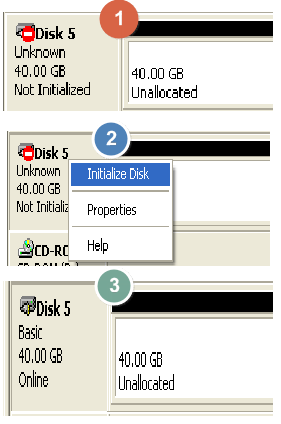
Step 1. If the external hard drive is still uninitialized after trying the above steps, you can try initializing it first. To do this, you can connect the hard drive to another computer and follow the manufacturer's instructions to initialize it. This will erase all data on the drive, so be sure to back up any important files before doing so.
Step 2. Right-click the disk and select "Initialize Disk". The disk status will temporarily change to "initializing" and then to "Online" status.
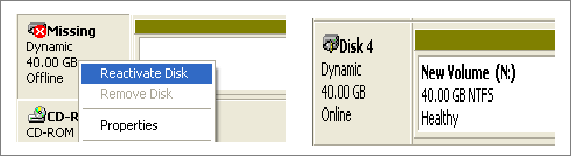
Case 3: The HDD Shows "Missing"
A "Missing" state occurs when a disk is destroyed, closed, or disconnected.

Open "Disk Management", right-click on the missing disk in Disk Management, then click "Reactivate Disk" to attempt to reactivate it. If multiple disks are missing, the process will be attempted for all of them.
Case 4: The Disk Is Showing as "Foreign"
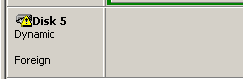
When a dynamic disk is transferred from another computer to the local one, it shows a "Foreign" status. This can also occur if a Windows XP Home Edition computer is set to dual boot with another OS using dynamic disks. Importing the Foreign disk resolves this issue.
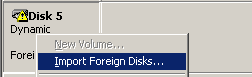
- Right-click the disk.
- Click "Import Foreign Disks". The data will not get lost.
Case 5: The Device is Unreadable or No Media
An "unreadable" state occurs when a basic or dynamic disk is inaccessible. The disk may have a hardware failure, a corrupted, or an I/O error. You can solve this error by following the steps below:
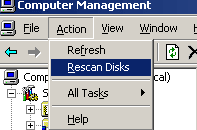
1. Rescan the disk
To check if the disk status has changed, click on "Action" and then select "Rescan Disks" from the dropdown menu. Alternatively, you can restart your computer to see if the disk status has been updated.
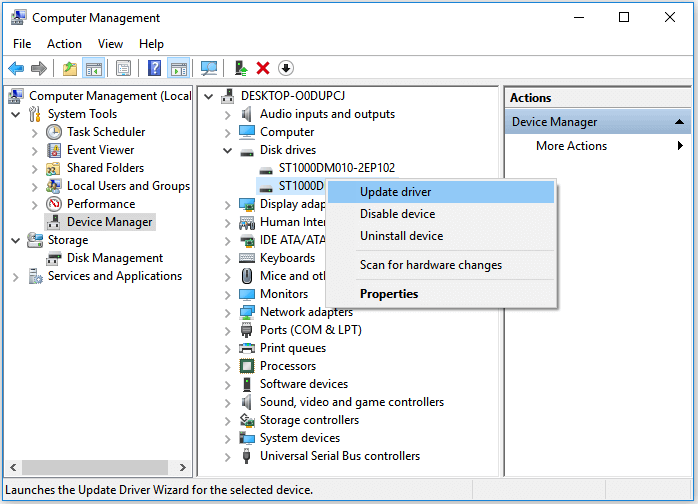
2. Update driver in Device Manager
Step 1. To access the Device Manager, press the Windows key + X and select Device Manager. Double-click the device with the yellow triangle exclamation icon, then open the driver Properties window.
Step 2. Go to the Driver tab and click "Update Driver".
Step 3. Click "Search automatically for updated driver software".
3. Rebuild MBR
If your MBR disk is damaged, you can't boot into Windows. To repair the damaged MBR, you can use a tool like Qiling Partition Master, which has a function to rebuild MBR in case of boot failure due to MBR problems. This tool provides a safe and reliable procedure to help you rebuild the MBR.
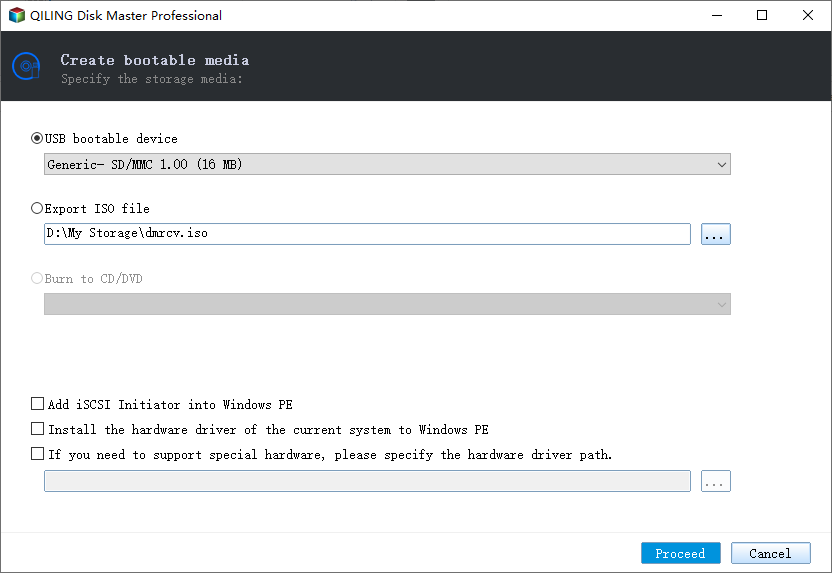
Step 1. Create a WinPE bootable disk
- Launch Qiling Partition Master, click "Create bootable media" on the toolbar, and select to create the bootable disk on a USB drive or alternatively on a CD/DVD if your computer has a CD/DVD drive.
- Click "Proceed" to finish the process.
Step 2. Boot Qiling Partition Master Bootable USB
- Connect the bootable USB or CD/DVD to your PC.
- To enter the BIOS screen, press F2 or Del when restarting the computer. Once in the BIOS, set and boot your computer from the "Removable Devices" or "CD-ROM Drive". This will allow Qiling Partition Master to run automatically.
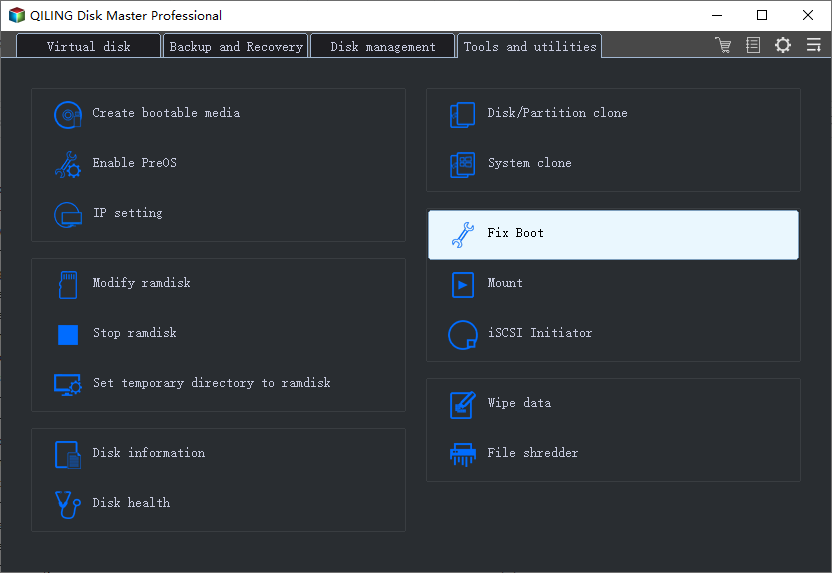
Step 3. Rebuild MBR
- In the tools page, choose "Fix boot" and click the disk whose MBR is damaged.
- The current operating system is Windows 10.
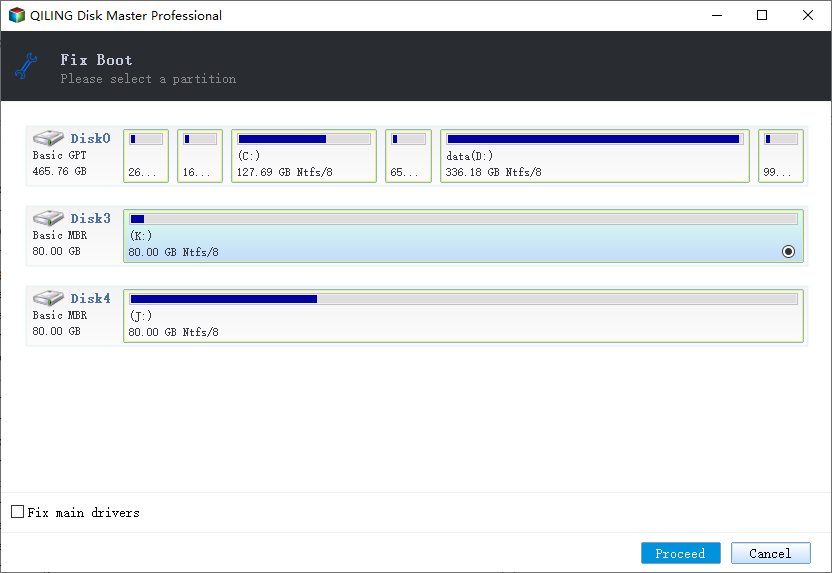
- To resolve the issue, click the "Proceed" button to rebuild the Master Boot Record (MBR). This will allow your computer to boot normally again.
Part 4. How to Repair Corrupted/Damaged/Dead Hard Drive
When your external hard drive fails, you can try the following solutions to fix it. If you notice obvious damage such as strange sounds, cracks, or a broken printed circuit board, send the HDD to a specialist. Otherwise, try running a disk check, updating the drive's firmware, or using a data recovery software to recover your files. If none of these methods work, consider sending the drive to a professional for further repair.
Solution 1. Use Disk Repair Services
To efficiently repair a corrupted disk or USB flash drive and restore data, consider using Qiling disk repair services.
Consult with Qiling data recovery experts for one-on-one manual recovery service, which includes the following services after a FREE diagnosis.
- To fix errors and restore data from various storage devices, including HDD, SSD, external hard drives, and USB flash drives, and from all RAID levels, you can try the following steps. First, run a disk check and repair any errors on the affected device.
- If a partition cannot be restored by data recovery software, it may be possible to recover the lost partition using specialized tools or techniques. One approach is to use a partition recovery tool, such as Qiling Partition Recovery or R-Studio, which can scan the disk for lost partitions and attempt to recover them.
- Bad sectors on a hard drive or solid-state drive can cause issues with reading or accessing data. To fix disks with bad sectors, you can try running a disk check using built-in tools like `chkdsk` on Windows or `fsck` on Linux.
- Fix disks that become GPT protected partitions
- Wipe data, unformat hard drive, Install/uninstall software or driver, etc.
Solution 2. Fix the File System Error
If a hard disk has bad sectors or internal errors, it can easily become corrupted. Running the CHKDSK command on your PC can help fix this issue.
- Press Win + X, select "Command Prompt (Admin)".
- Click "Yes" to launch Command Prompt as Administrator.
- To run a chkdsk on your corrupted hard drive, open the Command Prompt as an administrator, type "chkdsk" followed by the drive letter of the corrupted hard drive, and press "Enter" to run the utility. If prompted, type "y" to allow the chkdsk to check the drive for errors, and let it run and complete its scan.
- To run a full diagnostic and repair any issues with the C: drive, type `chkdsk c: /f /r /x` in the Command Prompt. This command will let CHKDSK fix the drive. (Note: Replace "c:" with the actual drive letter of your corrupted hard drive)
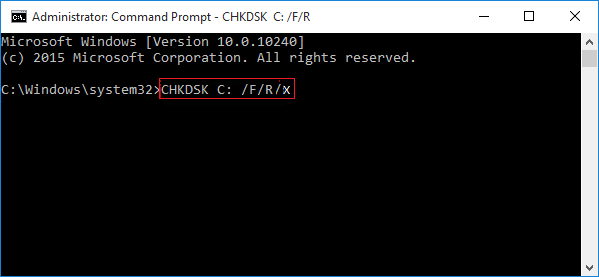
If you're a beginner, you may not know how to use CHKDSK, so you can use a CHKDSK alternative tool.
If you're not a fan of using the command line, you can use an alternative tool called Qiling CleanGenius to fix file system errors on your hard drive. This one-click tool provides a simple solution to the problem.
Step 1. Download Qiling CleanGenius on your computer for free.
Step 2. To proceed, run the software and navigate to the left panel, where you'll click on "Optimization". From there, select "File Showing" to continue.
Step 3.To resolve a file system error on a drive, go to "Choose drive" and select the drive with the error. Check the "Check and fix file system error" option and click "Execute" to initiate the repair process.
Step 4. Once the Qiling CleanGenius repair process is complete, click the "here" button to view the results.
Solution 3. Use File Manager to Fix Corrupted Non-System Drive
- To open File Manager and access the appropriate drive, press the "Win + E" keys on your keyboard, which will open the File Manager. Then, simply right-click on the drive you want to access from the left-hand pane.
- Select "Properties" and click "Tools" > "Check under Error Checking".
- Once the scan is complete, click on "Repair This Drive" to fix the drive errors.
Solution 4. Run a Thorough Disk Check
- Open "This PC", right-click the hard drive, and select "Properties".
- Click "Tools > Error checking > Check".
- To resolve the issue, select the "Check local disk" option and click "Start". Close all running and open programs, then select the option to let the system check upon the next boot. Finally, restart the PC.
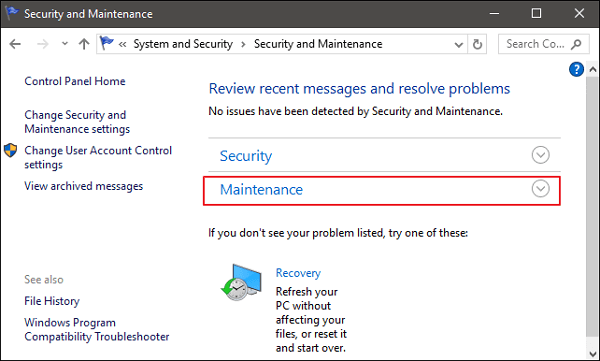
If it reports that your drive has 'bad sectors or clusters', don't worry. CHKDSK command will fix this issue.
Conclusion
Diagnosing and fixing a broken hard drive is difficult, but it's worth trying to rule out simpler issues before spending hundreds on a specialist. Even if you succeed in recovering your data, consider replacing the hard drive with a new one as soon as possible, as it may not be trustworthy.
Related Articles
- Fix Corrupted Data and Recover Files from PSP Memory Stick
- Files Disappeared and Missing from Hard Drive
- Netgear NAS Recovery: Safe Software to Restore NAS Data
- Top 5 PST Repair Tools in Windows 10/11
- SD Card Recovery Online for 2021 – Recover Deleted/Lost Files from Memory Card
Looking for SD card recovery online for 2021? Check out the details in the article to learn how to recover formatted sd card online or memory card recovery online. - WD My Cloud Data Recovery - Recover Deleted Files from WD My Cloud
Best WD My Cloud recovery software free download. It can recover data from WD My Cloud hard drive or WD My Cloud home. No matter whether the files were lost by deleted, formatted, and more. Try this program to WD My Cloud recover deleted files.
Products
Articles & Tutorials
- Data Recovery
- Data Backup
- File Recovery
- File Backup
- System Backup and Restore
- Disk and Partition Clone
- Technical articles
- Mobile articles
- Disk Master Help
- Windows Data Recovery Tutorials
- Windows Secure Delete Tutorials
- Windows Partition Management Tutorials
- Windows File Backup and Restore Tutorials
- Windows System Backup and Restore Tutorials
- Windows Disk Backup and Restore Tutorials
- Windows Clone Tutorials