What Happens to the Data on an SSD When the Power Is Lost?
A sudden power outage can cause data loss on all storage devices, including SSDs, due to interrupted operations, despite their fast read and write speeds. This was a significant issue in mechanical hard drives, but SSDs have largely surpassed them in recent years.
High-The reliability of SSDs is a concern, as data retention is a critical aspect of data storage. If power is lost unexpectedly, data on an SSD may be lost or become corrupted, which can have significant consequences, especially for businesses and individuals who rely on data for their operations. This is a significant drawback to using SSDs, and it's an area where traditional hard disk drives (HDDs) have an advantage.
Will a Power Loss Cause Data Loss on SSDs
When a system's power goes out unexpectedly, the SSD (Solid State Drive) typically receives a Standby Immediate Command from the ATA driver, which notifies the drive that a shutdown process has begun and power will be turned off soon. In response, the SSD clears its cache and updates its mapping tables, ensuring all pending tasks are completed before power is cut. This process helps prevent data loss and ensures a smooth shutdown.
If the scenario where the universe is a simulation does come to pass, three significant possibilities can occur. Firstly, the simulators may choose to continue the simulation, allowing the simulated reality to unfold as it would in the real world. Alternatively, they may decide to intervene, altering the course of events to suit their own purposes. Lastly, they might even decide to shut down the simulation, effectively erasing the simulated reality and all its inhabitants.
1. Nothing Happens
It is the best-In a typical scenario, when power suddenly goes out, the computer's hard drive, especially the mechanical ones, are less likely to be affected. This is because the sudden loss of power does not allow the drive's mechanical parts to come to an abrupt stop, which would cause damage. As a result, the data remains intact, and the drive remains functional when power is restored. This is a common occurrence, especially with the widespread use of solid-state drives (SSDs), which are less prone to data loss due to power outages.
The power outage is often resolved by simply turning the computer back on, and everything returns to normal as if nothing happened. This is due to the advancements in technology, particularly in data storage, which allows for more frequent and reliable saving of work, ensuring that users can pick up where they left off without any issues.
While power failures can be inconvenient, they can also have serious consequences for some users.
Also read: How long will an SSD last?
2. There's Some Data Loss on the SSD
In the event of a power outage, the user may experience some data loss or corruption on the drive, particularly if a file is being written at the time of the outage, resulting in incomplete or corrupted data.
The file system may notify you about missing data fragments, potential file loss, or other issues, which can occur even with solid-state or mechanical drives.
3. There's Massive Data Loss
In the event of a sudden power outage, it's still possible for a computer to experience a massive data loss, especially if a critical write operation is in progress. This can result in the loss of essential data, as the system may not be able to complete the write operation and recover the information.
Building devices to withstand extreme situations, such as water submersion, requires drastic measures to prevent data corruption or loss and physical damage to the system. However, it is still possible to recover lost data from drives using specialized utility software like Deep Data Recovery, which offers a wide range of features to retrieve deleted data. Let's discuss this in more detail.
Also read: Does SSD need power?
How to Stop SSD Power Loss and Save Your Data
Losing crucial data due to a power outage is a disaster no one wants to face. To avoid this, it's essential to have a backup power source for your PC or server. This ensures that even in case of a power loss, you have enough time to shut down your computer, allowing the SSD controller to properly shut down the drive. If you're in the middle of a large file copy or installation, it's best to cancel it temporarily to prevent data loss.
Apart from physical damage, several other factors can trigger data loss in an SSD. These include software issues, such as power outages or improper shutdowns, which can cause data corruption or loss.
Physical Faults With SSD Components
The main difference between HDDs and SSDs lies in their physical components. HDDs have moving parts, making them more prone to physical damage, whereas SSDs have soldered parts that can be fragile if the manufacturing process is subpar. When purchasing an SSD, it's essential to inspect for any physical defects and even gently shake the device to check for loose internal components.
Logical Issues With SSDs
SSDs perform numerous logical operations while completing a task, but their logical capabilities can be hindered by a virus or malware attack, or caused by bad sectors, so it's essential to have security software on your PC.
Various Accidents
Electronic devices are prone to accidents, often caused by human error. Users may accidentally drop their SSD into water or on the ground, resulting in internal damage and significant data loss and corruption.
How to Recover the Lost Data on SSDs Easily
Now that we've discussed the major reasons for losing data, let's talk about how to recover it. If your SSD is corrupted or has lost all its data, it's not the end of the world. Qiling SSD data recovery software can still help you recover your lost data, even from damaged or corrupted drives, and is a useful tool for recovering accidentally deleted files on Windows.
Three-step recovery
To recover data from an SSD, start by disconnecting the power source and any other cables. Next, use a data recovery software or a professional tool to scan the drive and retrieve the data. Finally, save the recovered data to an external drive to avoid overwriting the original data.
Compatible with all storage devices
This software is compatible with all types of devices, including SSDs, HDDs, SD Cards, Flash Drives, USB drives, and Pen Drives.
Recover from unbootable devices
Deep Data Recovery is a method used to recover data from damaged systems, and is also effective in recovering data lost due to virus attacks, human error, or power failure.
Formatted drive recovery
Even if a drive has been formatted, the software can still recover data from it, and it can also recover data from disks with initialization issues, improper partitioning, or access denied SD drives. You can download the software from their official site and use it to recover your data.
Step 1. Select file types
Launch Deep Data Recovery, select the file types you want to recover, and click "USB/SD Scan" to begin the process.
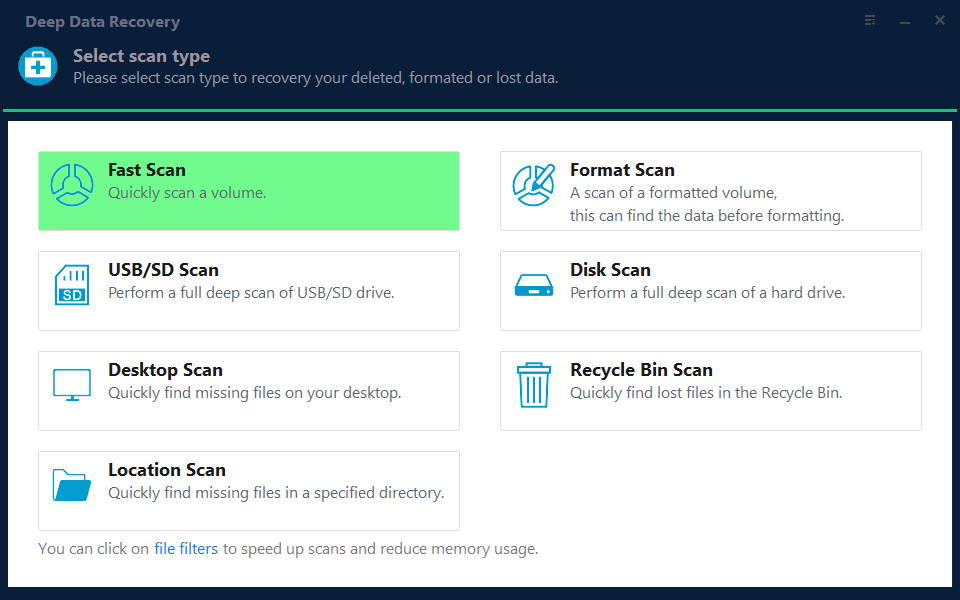
Note: You can choose different search modes based on where and why the data was lost.
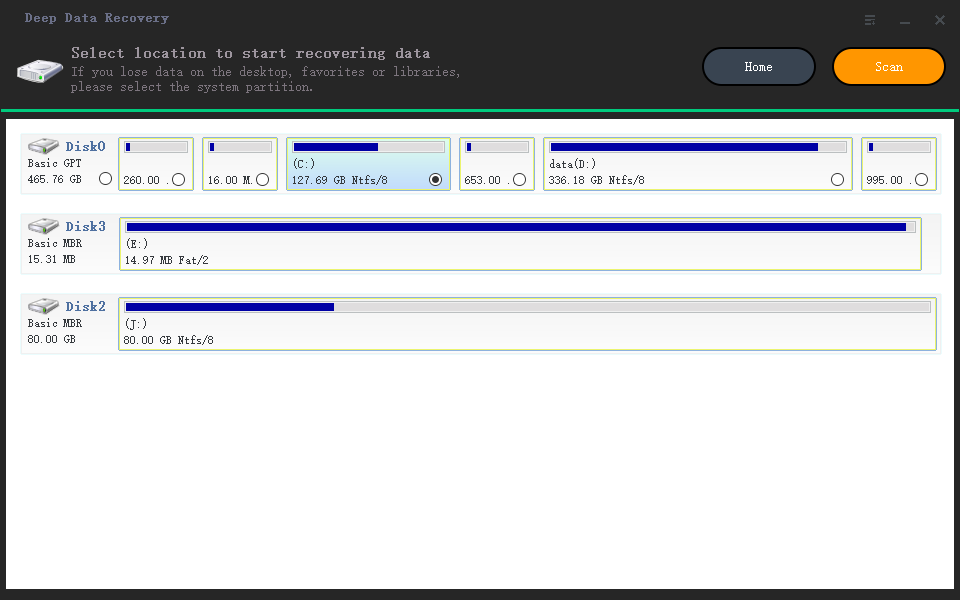
Step 2. Scan the SSD
To recover lost data from an SSD, select the drive where the data was lost and click the "Scan" button. This will initiate the scanning process, allowing the software to search for and identify the lost data.
Step 3. View the results
When the scanning process is complete, you can recover lost SSD data by using the "Filter" and "Search" options to locate the deleted files and other lost files in the "Deleted Files" and "Other Lost Files" folders.
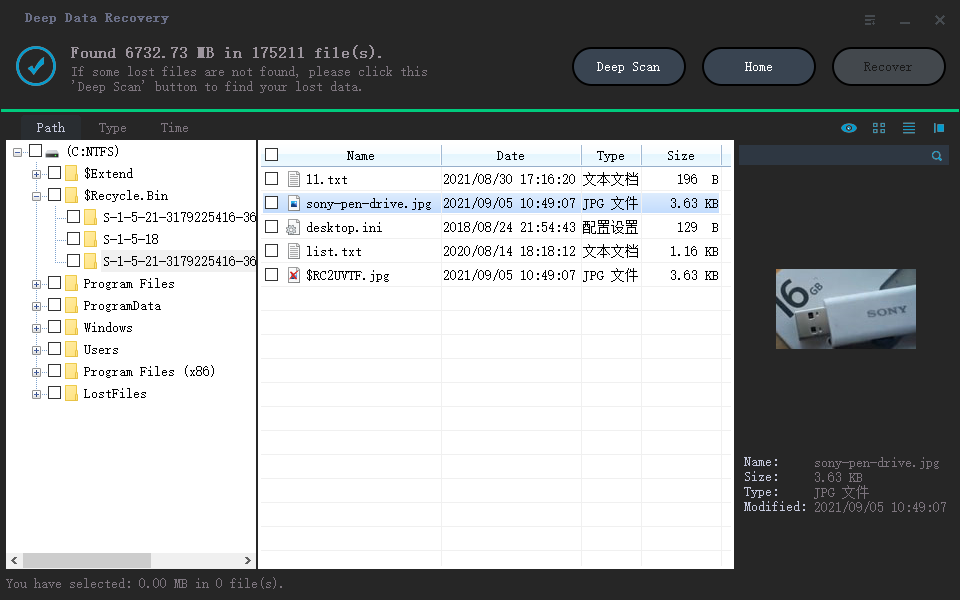
Step 4. Recover SSD files
Select desired data and click the "Recover" button to get back lost SSD files.
Bonus Tip - How to Protect SSD Data
To minimize damage from unexpected issues, it's essential to create a proper backup of all important data. This ensures data safety in case the primary drive fails. Creating an additional backup for an SSD is highly recommended.
You can use third-There are two options for backing up data: using third-party backup software or relying on the built-in backup method. If the chosen method doesn't meet your needs, consider keeping all data on the cloud for added security.
The article discussed the major reasons for data loss in SSDs due to power loss, and highlighted other potential causes of damage. To safeguard systems and drives from such mishaps, Deep Data Recovery was recommended.
Recovering lost data from a damaged drive can be a challenge, but using software like the one mentioned can make it easier. Not only can it help recover lost data, but it can also protect your PC from other malfunctions. The software is available for free download from the official website, making it a helpful tool for anyone who needs to recover lost data.
Related Articles
- Full Guide on SATA Hard Drives
- Fix Can't Find or Open Recycle Bin Windows 10
- 'Chkdsk cannot open volume for direct access in Windows 10/8/7/XP/Vista' Fixes
- How to Fixed There Is No media in The (Specified) Device Issue
- Downloads Not Showing up in Download Folder/Desktop
If downloaded files are not showing up on the desktop or in the downloaded folder, follow these methods to check and view them in Windows 10/Mac. If the files are still taking up space but can't be found, consider using a professional data recovery tool to recover the missing files with ease. - Dropbox Deleted Files by Itself, How to Recover Missing Files in Dropbox in 4 Ways
Your Dropbox files missing issue may happen because of human errors or Dropbox deleted files by itself. Read this tutorial and learn four useful ways to recover deleted files or folders from Dropbox.
Products
Articles & Tutorials
- Data Recovery
- Data Backup
- File Recovery
- File Backup
- System Backup and Restore
- Disk and Partition Clone
- Technical articles
- Mobile articles
- Disk Master Help
- Windows Data Recovery Tutorials
- Windows Secure Delete Tutorials
- Windows Partition Management Tutorials
- Windows File Backup and Restore Tutorials
- Windows System Backup and Restore Tutorials
- Windows Disk Backup and Restore Tutorials
- Windows Clone Tutorials