How to Fix You Don't Currently Have Permission to Access This Folder Issue
If you're having trouble accessing files saved in a folder, don't worry - there are three potential fixes to try. Firstly, check if the folder is still accessible by trying to open it from a different location or device.
| Workable Solutions | Step-by-step Troubleshooting |
|---|---|
| Fix 1. Change Ownership (Recommend) | Right-click inaccessible folder > "Properties" > "Security" > "Advanced"...Full steps |
| Fix 2. Gain Access (Work in Rare Case) | Right-click inaccessible folder > "Properties" > "Security" > "Edit"...Full steps |
| Fix 3. Use File Recovery Software (Data Loss/Deleted) | Run a professional data recovery software > Scan folder > Recover files...Full steps |
"You Don't Currently Have Permission to Access This Folder" Error
You're experiencing an issue accessing your USB flash drive files due to permission errors. To resolve this, try checking the drive's permissions settings on your computer. Sometimes, a simple reboot or changing the drive letter can resolve the issue. If that doesn't work, you can try formatting the drive or using a third-party software to recover your files. If you're still having trouble, it might be worth considering a data recovery service for further assistance. Follow the steps below to resolve the issue.
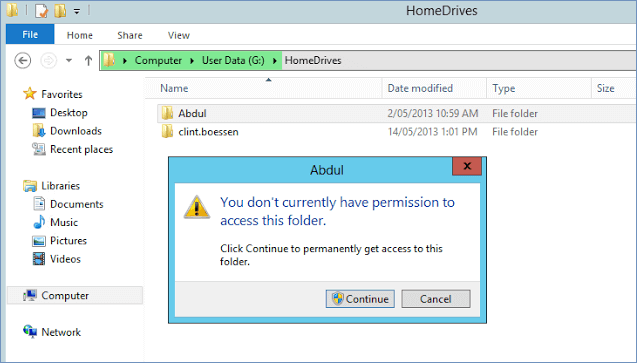
Quickly access the best solution to remove the folder access error:
Reasons for "You Don't Currently Have Permission to Access This Folder"
On a Windows 10 PC, you may encounter the "You don't currently have permission to access this folder" error when trying to save a file in a folder or access a folder, prompting you to click "Continue" to permanently gain access. This error can be caused by various factors, including issues with folder permissions, corrupted system files, or problems with the Windows User Account Control (UAC).
- To remove a user or group from the "Group or user names" list on the folder's "Security" tab, right-click on the user or group name and select "Remove". Alternatively, you can select the user or group name and click the "Remove" button at the bottom of the list.
- Application of an explicit "Deny" to the user or group.
- The conflict between share permissions and NTFS permissions can lead to inconsistent access control, where users may be granted access to a shared resource through NTFS permissions, but denied access through share permissions, or vice versa. This can cause confusion and security issues, as users may be able to access the resource in one way, but not in another.
Fixes for "You Don't Currently Have Permission to Access This Folder"
If you're experiencing the 'You don't currently have permission to access this folder' error in Windows 10, 8, or 7, the first step is to identify the root cause of the issue. Once you've done that, we'll provide you with a step-by-step guide on how to resolve the problem in three easy ways. The solution will involve a straightforward process that will grant you access to the folder.
Solution 1. Change the Ownership of the File/Folder (Recommend)
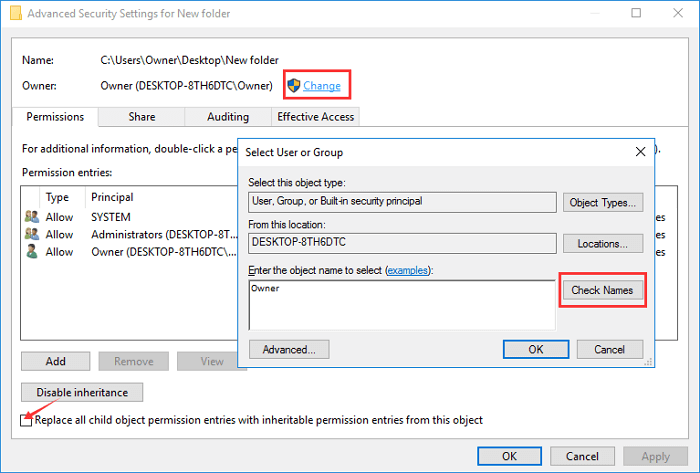
You can try changing the ownership of the file or folder to troubleshoot the "You Don't Currently Have Permission to Access This Folder" issue on Windows 10/8/7.
1. Right-click on the folder to navigate to "Properties".
2. Go to the "group or username" section on the "Security" tab.
3. Click on "Advanced", and then "Change".
4. Type your account name. Click on "Check names" > "OK".
5. Check "Replace owner on sub containers and objects" > "OK".
Solution 2. Gain Access by Allowing Everyone (Works in Rare Cases)
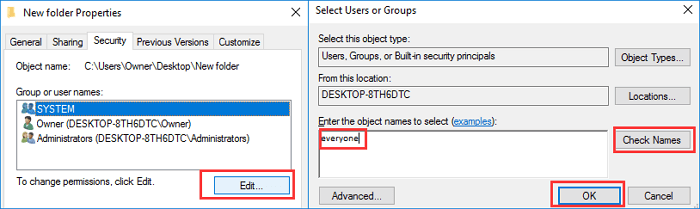
1. Right-click on the folder that you're unable to access and select "Properties".
2. To make changes to security settings, click on the "Security" tab and then select "Group or user names" from the options. Finally, click on the "Edit" button to proceed with the modifications.
3. To add everyone to a contact list, click on the "Add" button and type "everyone". Then, click on the "Check names" option to verify the list. Once confirmed, click "OK" to finalize the addition.
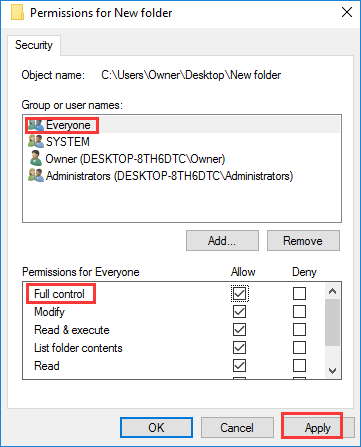
4. Select "Everyone" under "Group or user names", then under "Allow", select "Full control" and click on "Apply". Finally, click "Ok".
Solution 3. Recover Files in Inaccessible Folder with a Professional Data Recovery Tool
If the solutions above are not helpful, the reasons behind it may be related to system corruption or a virus infection. You can try using data recovery software to recover data from a specific folder in Windows 10/8/7 and access the files urgently. Qiling Data Recovery Wizard is capable of restoring files on various storage devices with a high recovery rate.
Qiling File Recovery Software
- Recover lost, deleted, or inaccessible files, videos, documents, photos, audio, music, and emails easily with advanced data recovery software.
- If you've accidentally deleted, reformatted, emptied the recycle bin, or experienced a system crash, virus attack, or other data loss event, there are still ways to recover your lost data. Data recovery software can scan your device for recoverable files, and in some cases, even recover data from a formatted drive.
- This software supports over 1000 types of files, including images (JPG/JPEG), documents (DOC/DOCX), spreadsheets (XLS/XLSX), presentations (PPT/PPTX), audio files (MP3, WAV, WMA), and video files (AVI, MOV, MP4).
To recover data from an inaccessible folder, download Deep Data Recovery and follow the steps below. This software can help you easily recover data from the inaccessible folder.
Step 1. Run Deep Data Recovery on your computer, select the desired file types, and click "Fast Scan" to initiate the recovery process.
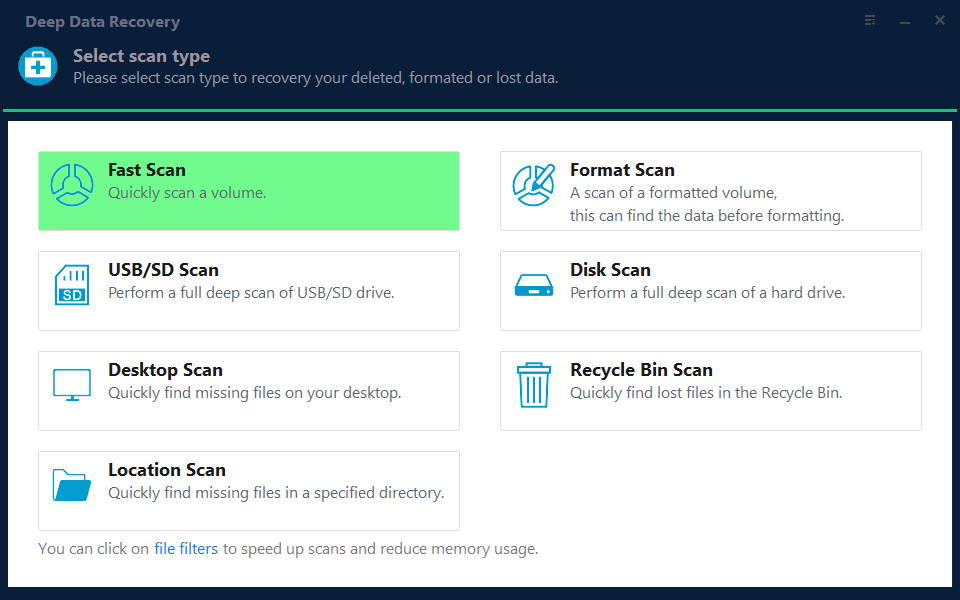
Note: You can choose different search modes based on where and why the data was lost.
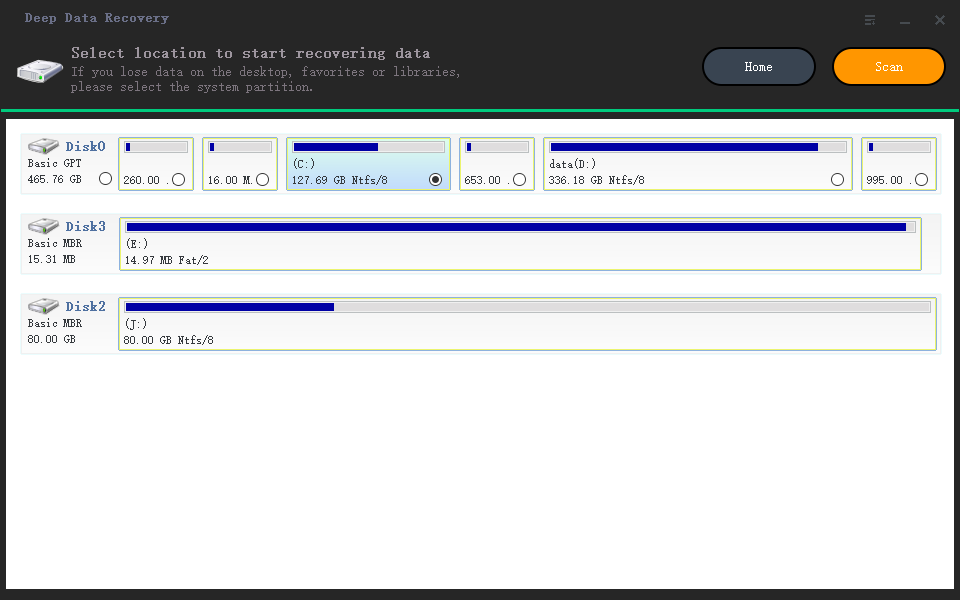
Step 2. If you have lost files on a specific drive, choose that drive and click "Scan" to start the recovery process. If the lost files were on an external device, ensure it's connected to your computer before proceeding.
Step 3. The software rapidly scans deleted files, followed by a deep scan to find more lost files. After the scan, you can filter specific file types using the "Filter" feature.
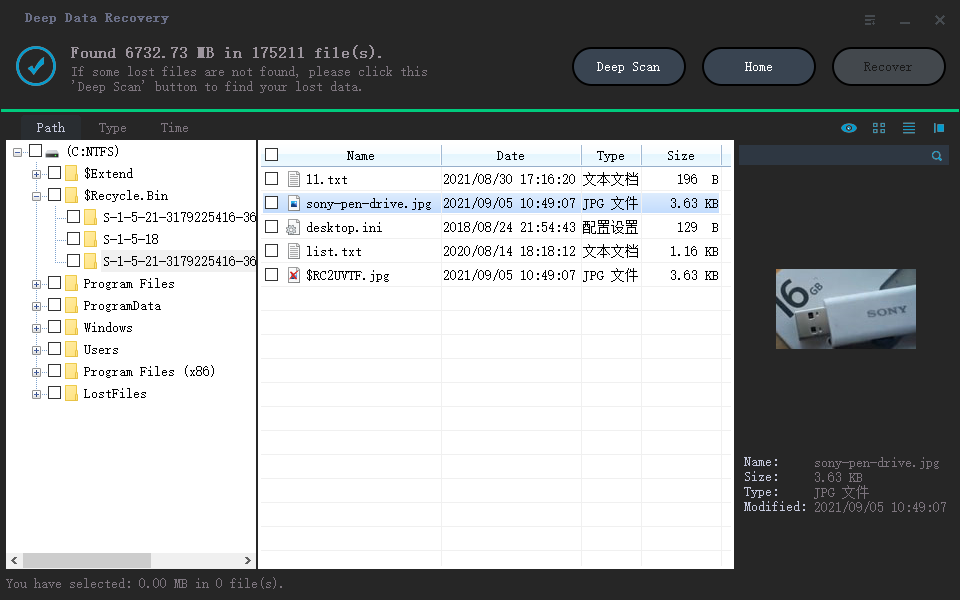
Step 4. To preview and recover files, click the "Preview" button or double-click on a file to view its contents. Select the desired files, click "Recover", and choose a new safe location to save them.
Which Method Is Most Effective? Check The Comparable Table
| Comparison | Change Ownership (Recommend) | Gain Access (Low Chance) | Deep Data Recovery |
|---|---|---|---|
| Scenarios | Check Ownership of your folder. | Don't allow everyone to access the folder. | Data loss, system crash, virus infection, computer glitch... |
| Cost | None | None | Supported 2GB file recovery in the free version. |
| Operational Risk | None | None | None |
| Easy-to-use | Require more steps. | Yes | Yes |
For the average computer user, we recommend applying the change ownership method to access a folder, as it requires more steps but is workable. If this method is invalid, the gain access solution can be used, but it's more suitable for rare cases. If both methods fail, a file recovery tool can be used to access data immediately.
Related Articles
- Recover Deleted or Unsaved PowerPoint Files
- How to Show Hidden Images in Word and How to Unhide a Word
- Recover Unsaved or Deleted PSD (Photoshop) Files in 2022
- Recover Sticky Notes in Windows 10/8/7
- TXT File Recovery - Two Methods to Recover Lost Text Files
Qiling's free text recovery software can recover lost text files that were deleted, formatted, or lost due to a system crash on a hard disk drive. You can download this software for free to recover text/txt files. - Battle of Hard Drives: Fusion Drive vs. SSD vs. HDD. Which Is Better?
Fusion Drive, SSD, and HDD can be compared based on price, speed, performance, and potential risks. This comparison can help you choose the right hard drive for your Apple computer, Windows PC, or laptop.
Products
Articles & Tutorials
- Data Recovery
- Data Backup
- File Recovery
- File Backup
- System Backup and Restore
- Disk and Partition Clone
- Technical articles
- Mobile articles
- Disk Master Help
- Windows Data Recovery Tutorials
- Windows Secure Delete Tutorials
- Windows Partition Management Tutorials
- Windows File Backup and Restore Tutorials
- Windows System Backup and Restore Tutorials
- Windows Disk Backup and Restore Tutorials
- Windows Clone Tutorials