Accidentally Formatted Hard Drive? Unformat Hard Drive Right Now!
Format vs Unformat
Format: Formatting a partition involves deleting all data on it and setting up a file system for the drive, typically necessary in situations like a RAW file system, disk not formatted error, or a virus-infected drive, and can also occur accidentally.
Unformat: Unformatting a storage device, such as a hard drive, USB flash drive, or SD card, is the process of recovering data that was lost due to formatting. This can be done using third-party software or manual data recovery services, allowing users to retrieve their lost data.
How to Unformat a Hard Drive with Data Recovery Software
- Notice:
- To avoid data overwriting, don't put files on your hard drive after formatting it. Although putting data on the disk won't necessarily cause data overwriting, once data is overwritten, it's gone forever.
To unformat a hard drive, you need to recover all data that was wiped from the drive. This can be done by using a data recovery service or a hard drive recovery software, such as Deep Data Recovery, which can help you recover your files in simple steps.
In addition to recovering data from formatted hard drives, Deep Data Recovery offers a range of capabilities, including (please provide the rest of the information to complete the paragraph)..
- Recover All Kinds of Lost Data. It supports recovering deleted files emptied from the Recycle Bin, as well as data lost due to partition loss, software crash, virus infection, boot-up problem, or other reasons.
- Recover Data from Various Devices. The software can recover data from various types of storage devices, including USB flash drives, memory cards, digital cameras, and other conventional storage devices, in addition to hard drives.
- Preview Before Recovery.This feature allows you to preview lost files before the actual recovery, ensuring the file contents are alright.
Now download the Deep Data Recovery and follow the guide below to unformat HDD.
Steps to Unformat HDD with Deep Data Recovery:
Note: To ensure a high chance of successful data recovery, install Qiling data recovery software on a separate disk drive, rather than the original formatted disk. This approach helps to maximize the chances of recovering your data.
Step 1. Launch Deep Data Recovery, select the desired file types, and click "Format Scan" to initiate the recovery process.
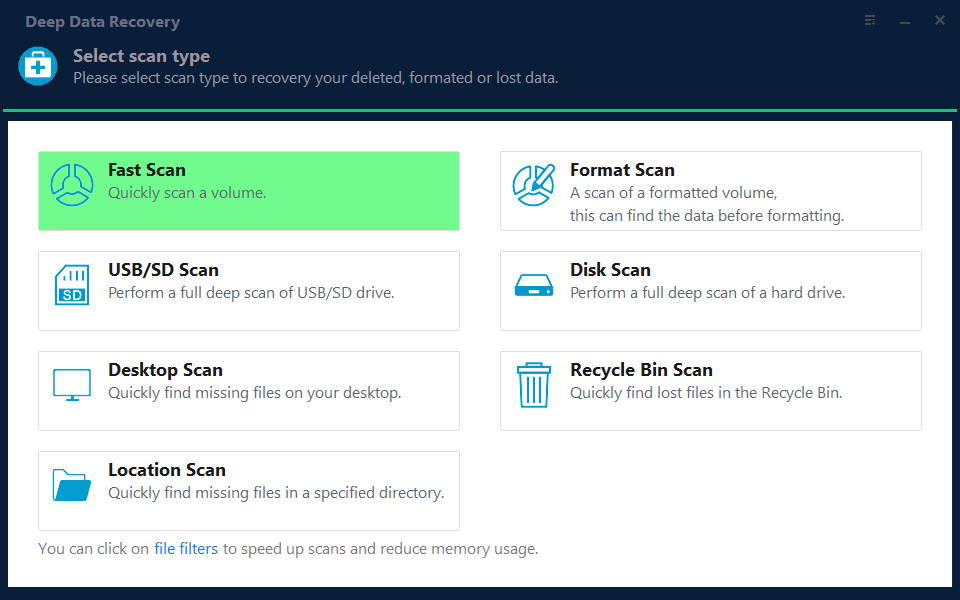
Note: You can choose different search modes based on where and why the data was lost.
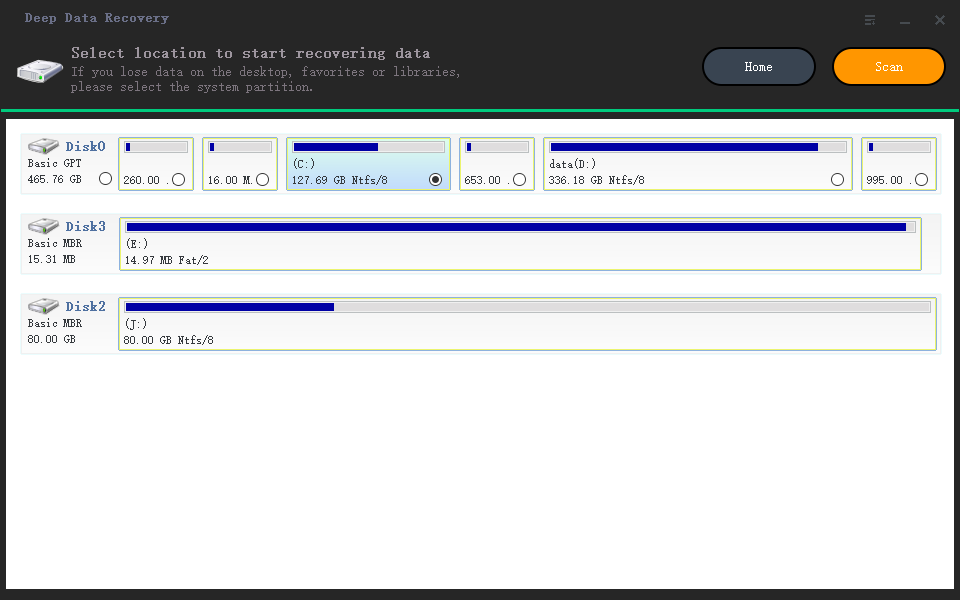
Step 2. You can recover data from a formatted hard drive by using a data recovery software that scans the drive for deleted files and folders, and then restores them to their original location. To do this, you would choose the hard drive partition that was accidentally formatted, click on the "Scan" button in the data recovery software, and let it complete the scanning process.
Step 3. This formatted hard drive recovery software will start scanning for all the lost data and files after being launched. Once scanning is complete, you can filter a specific file type to quickly find the files you need, or search for specific files or folders to select the data you want to recover.
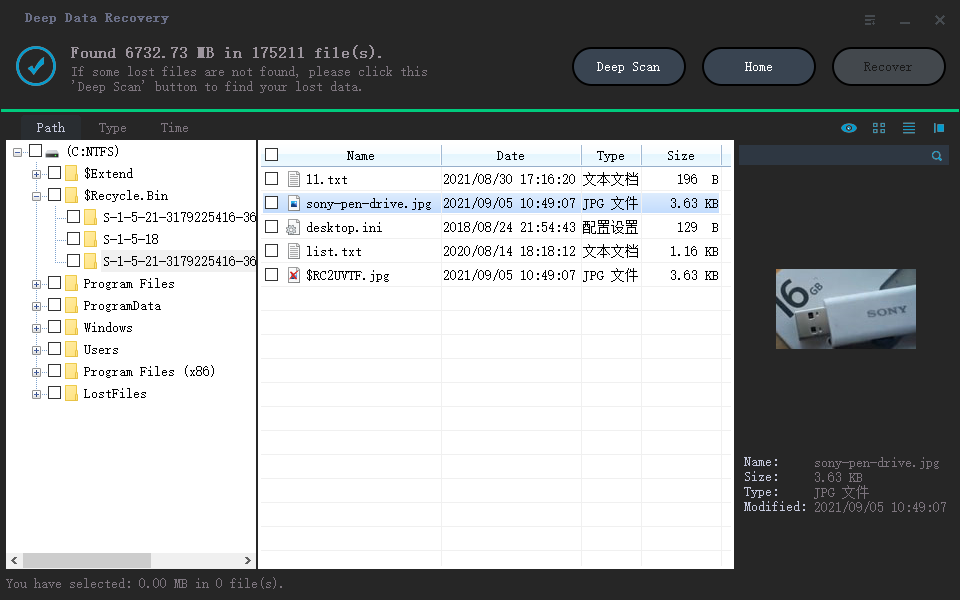
Step 4. Preview the scanned files, select the ones to recover, click "Recover", choose a new location, and click "OK".
Deep Data Recovery can help retrieve lost files from a hard drive as long as the formatted files are not overwritten by new content. This means that even if your files are no longer visible on the drive, they can still be recovered if the drive's contents have not been altered since the formatting.
Consult with Deep Data Recovery Experts for one-on-one manual recovery service. After a free diagnosis, we offer a range of services including manual recovery, where our experts work closely with you to recover your lost data.
- To repair a corrupted RAID structure, an unbootable Windows OS, or a corrupted virtual disk file.
- Recover/repair lost partition and re-partitioned drive
- Unformat hard drive and repair raw drive (BitLocker encrypted drive)
- Fix disks that become GPT protected partitions
Why Can We Unformat HDD?
Unformatting is the process of restoring data from a formatted hard drive. When you format a hard drive, the data is not immediately erased but rather marked as available for overwriting. Unformatting works by searching for file system structures that remain on the disk after formatting and reconstructing the original file system to recover the data.
When formatting a storage device, there are two options: quick format and full format. A quick format only rewrites the file system structure, deleting files, but leaving data intact. This means that after a quick format, the data is still on the hard drive, but inaccessible. However, by rebuilding the volume, you can recover and access the formatted files.
If you accidentally formatted a hard drive, there is still hope for recovery. Since a quick format is the default option in Windows, the overwritten data can still be retrieved using data recovery software. This means you can unformat your hard drive and recover the lost data, rather than losing it forever.
The Bottom Line
If you've accidentally formatted a hard drive, USB flash drive, memory card, or other storage device, don't panic. Stop using the device immediately and run data recovery software to unformat your hard drive. This should allow you to recover all your files.
Related Articles
- How to Fix File Explorer Won't Open in Windows 10 or Windows 11
- RAW to NTFS Converter Software Free Download (for Windows Only. 100% FREE)
- Windows 11 Size: How Much Space Does Windows 11 Take Up?
- Error: Google Docs Didn't Save My Work _ How to Recover Unsaved Changes to Google Docs
- How to Change Wallpaper on Windows 10
Learn how to change desktop wallpaper on Windows 10 using Settings, right-click shortcuts, and themes. Also discover the best sites to download HD wallpapers for your PC. - How to Connect PC to WiFi and Fix PC Can't Connect to WiFi Issue
Do you want to know how to connect your PC to Wi-Fi but are unsure how to do so? You couldn't have found a better destination! If you follow the guidelines outlined in this article, you will have no trouble connecting to your wireless network.
Products
Articles & Tutorials
- Data Recovery
- Data Backup
- File Recovery
- File Backup
- System Backup and Restore
- Disk and Partition Clone
- Technical articles
- Mobile articles
- Disk Master Help
- Windows Data Recovery Tutorials
- Windows Secure Delete Tutorials
- Windows Partition Management Tutorials
- Windows File Backup and Restore Tutorials
- Windows System Backup and Restore Tutorials
- Windows Disk Backup and Restore Tutorials
- Windows Clone Tutorials