What Is Vulkan Run Time Libraries and Do I Need or Remove It? [Updated 2023]
If you're seeing anything related to Vulkan on your screen and are worried, then let's find out whether you should be concerned or not. Vulkan is a graphics API that's used by many modern games and applications, and it's completely normal to see Vulkan-related things on your screen, especially if you're running a game or using a graphics-intensive program.
Gaming on computers requires high-quality hardware, but it also demands that hardware and software work together seamlessly. A crucial aspect of this harmony is drivers, which enable the operating system to communicate effectively with the hardware, ensuring a smooth gaming experience.
The Vulkan runtime libraries are additional software installed by graphics drivers that can raise user concerns. They are a set of libraries that provide an interface for graphics applications to use the Vulkan graphics API, allowing for better performance and compatibility. However, their installation can sometimes be perceived as a security risk, but in reality, they are a necessary component for many modern graphics applications.
What Are Vulkan Runtime Libraries?
Vulkan is a cross-The Vulkan graphics API is used in 3D graphics to simulate life-like graphics in interactive multimedia, particularly gaming, and is often shown running in modern computer games.
Vulkan is a graphics computing API that requires its attributes to run properly, allowing for the execution of common graphics.
Vulkan's primary purpose is to utilize a graphics card, RAM, and CPU to produce high-quality graphics. To achieve this, it relies on its branch Vulkan Runtime Libraries, which enable a seamless workflow between these hardware components, ensuring a smooth and efficient graphics generation process. (Note: I made some slight modifications to make it flow better and be more concise)
What Does Vulkan Runtime Library Do?
Vulkan is a new and advanced 3D API that enables games to fully utilize hardware capabilities to generate 3D graphics. For gamers familiar with older APIs, Vulkan is a successor to OpenGL and Open AL, offering improved performance and capabilities.
Vulkan is a cross-platform graphics and compute API that allows developers to create high-performance, multi-threaded applications. It is designed to work on a wide range of devices, from mobile phones to high-end gaming PCs, and is often used in conjunction with other APIs such as OpenGL and OpenAL. Vulkan's primary focus is on 3D graphics, but it also supports 3D audio and other compute tasks. Its use has been widespread in the gaming industry, with many popular titles employing it, including Doom, Counter-Strike, F1, Roblox, and Dota. Vulkan's architecture is designed to be highly efficient and scalable, making it a popular choice for developers who need to create complex, high-performance applications.
- 3D gaming performance is enhanced by targeting both the CPU and GPU, resulting in a smoother gaming experience.
- The system works with various aspects of the operating system and the game, so it needs a library to keep track of everything.
The new API is a single entity that focuses on CPU and GPU usage, unlike earlier versions which had multiple APIs. This allows it to optimize performance in these areas.
Benefits of Vulkan Runtime Library
The Vulkan Runtime Library is the core program of the Vulkan process and has undergone significant work to ensure key benefits, including being the core program of the Vulkan process itself, which has allowed for improved performance, efficiency, and flexibility in graphics rendering and computing applications.
- Rendering graphics through a unified API, rather than using multiple APIs such as OpenGL, OpenGL ES, or Open AL.
- The system thoroughly utilizes both the GPU and CPU to ensure they have a sufficient load while rendering high-quality graphics.
- Vulkan makes it easier to use multiple GPUs, but the gaming difference is relatively small.
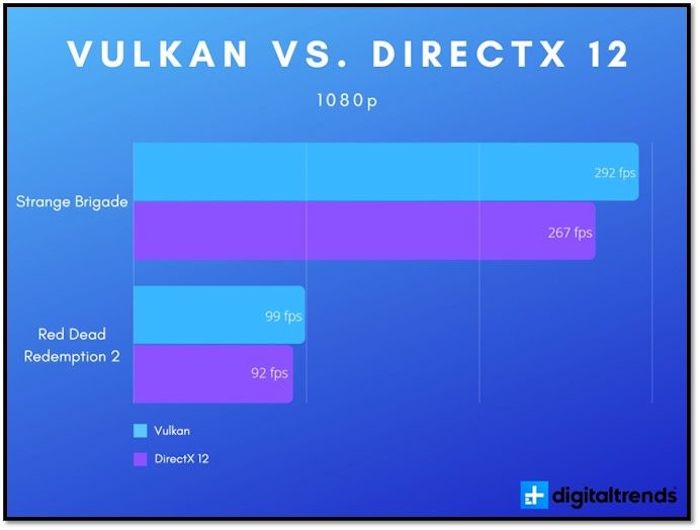
This software efficiently utilizes both the GPU and CPU, distributing the workload in a way that prevents either the GPU or CPU from becoming overworked, ensuring a balanced and efficient operation.
Should You Install or Uninstall Vulkan Runtime Libraries?
If you have the latest driver from either Nvidia or AMD, chances are Vulkan Runtime Libraries are already installed on your PC. Installing or uninstalling them is a matter of choice, but uninstalling might cause issues with games that support Vulkan, such as crashes or poor performance.
- Face stutters or lags,
- Not perform as well as before;
- It might not utilize the processor or graphics card efficiently.
If your PC already has the Vulkan driver installed, it's recommended to leave it as is. If you need to install it, go to the Vulkan website, visit the GPU section, and download the correct driver for your specific GPU, whether it's AMD or Nvidia.
Conclusion
Vulkan Runtime libraries are essential for your computer and graphics card to work in sync, ensuring a smooth and immersive experience in gaming and other interactive media like VR. They facilitate communication between the CPU and GPU, allowing them to work together properly. This is necessary for a seamless and engaging experience, making Vulkan Runtime libraries a crucial component for gaming and other interactive applications.
FAQs
If Vulkan is making you raise more questions, then here are additional questions and their answers:
1. Why are Vulkan Runtime Libraries installed on my computer?
Vulkan Runtime Libraries is a part of the driver that you might install on your computer, often including Nvidia or AMD graphics drivers.
2. Is Vulkan Runtime Libraries a virus/threat?
Windows Defender may flag Vulkan runtime libraries as a threat, but unless your computer is infected with other malware, it's likely a false positive. In this case, you can allow the setting in Windows Defender and continue using your PC without any issues.
3. Should I remove Vulkan runtime libraries?
Experts suggest keeping Vulkan, as it improves the quality and experience of graphics in games.
Related Articles
- Ways to Delete Windows 7 Backup [Updated 2022]
- What Is Hyper-V P2V and How to Convert It? [Latest Tips]
- What is USB 4: All You Need to Know [ 2022 Complete Understanding]
- Discord Hardware Acceleration: Everything You Need to Know
- [Fixed] Pen Drive Not Showing/Detected in My Computer in Windows
Here step-by-step tutorials teach you how to fix pen drive not showing in my computer in Windows 10/8/7 is created. Try it fix your USB pen drive, flash drive, external hard drive or other external USB devices when it detected but not show in my computer. - 4 Choices of Portable Windows Product Key Finder for Your PC
You will have problems if you lose the product key of Windows or any software while reinstalling the Operating System or any other software from scratch. There are so many tools to get it back. But We shortlisted only the 4 best portable Windows Product Key Finder choices for Your PC.
Products
Articles & Tutorials
- Data Recovery
- Data Backup
- File Recovery
- File Backup
- System Backup and Restore
- Disk and Partition Clone
- Technical articles
- Mobile articles
- Disk Master Help
- Windows Data Recovery Tutorials
- Windows Secure Delete Tutorials
- Windows Partition Management Tutorials
- Windows File Backup and Restore Tutorials
- Windows System Backup and Restore Tutorials
- Windows Disk Backup and Restore Tutorials
- Windows Clone Tutorials