Android Deleted Files and Photos Keep Coming Back(Get 4 Easy Fixes)
This article discusses the issue of being unable to permanently delete files or photos on an Android SD card, camera memory card, or USB flash drive, despite formatting the SD card, which eventually fails.
- Format SD card many times but files automatically come back again
- Deleted photos/pictures still show up on Android
- Deleted files keep coming back on Android after a restart
- Nothing is deleting from the SD card because files reappear soon
Now, you may try the following 3 fixes to get rid of this deleted file keep coming back issue on your Android immediately:
Solution 1. Remove Write Protection
Solution 2. Format Android SD Card
Solution 3. Close Cloud Sync Service
Solution 4. Clear Android File Cache
Deleted Files Come Back on SD Card Can't Delete or Format It
"I use my SD card to store pictures and download movies. About one week ago, I started to have trouble deleting any of the files on the SD card. The fact is that I can delete everything I want to delete. However, it's a just temporary moment; deleted files keep coming back after I delete them. They never disappear. So annoying. Please help me, how can I permanently delete files from Android SD card?"
Android users often delete files, but sometimes they are surprised to find them reappear after rebooting or re-opening an app. This can happen when a device's cache or temporary storage is not properly cleared. As a result, deleted files can remain on the device until they are manually cleared or the storage is cleaned. This phenomenon is not a bug, but rather a normal behavior of Android devices.
Why Deleted Files & Photos Keep Coming Back
The problem of deleted files coming back again and again after deletion is a frustrating issue. It's a common problem that can be particularly vexing when trying to delete files permanently from an Android micro SD card to free up storage space. The exact cause of this issue is unclear, but it's likely related to the way Android handles file deletion and storage on micro SD cards.
Most cases of permanent deleted files are related to issues with the SD card, such as being locked, read-only, or write-protected. To resolve this, the card needs to be converted to a normal state. Another potential factor is a virus infection or SD card corruption, which can prevent formatting in Android phones and Windows Explorer. In such cases, using third-party partition manager software can easily overcome the issue and format the corrupted SD card automatically with simple steps.
Due to Android phone features like data cache and cloud syncing, deleted files may reappear after a new sync, making it seem like they were never deleted. This can be frustrating for users who rely on these features.
How to Permanently Delete Files That Keep Returning and Reappearing
We've identified the four main reasons behind the embarrassing situation of not being able to delete files from an Android SD card: SD card write protection, corruption, cache, and data sync issues. Now that we've pinpointed the causes, it's time to implement solutions to finally resolve this problem.
Solution 1. Remove write protection from SD card
Before attempting to remove write protection, check if your SD card has a lock switch on either side. This switch is designed to prevent writing or modification, which may lead you to believe you've successfully removed files, but it's actually just a protection mechanism. To use the card properly without deleting issues, simply flip the switch to the opposite side of the lock.
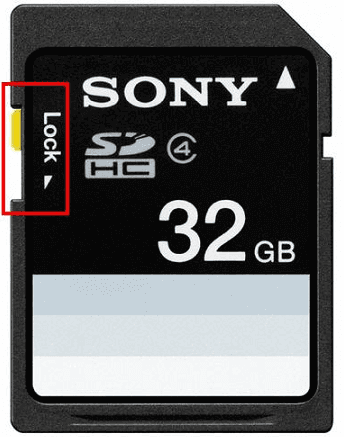
If your SD card doesn't have a lock design, you can use the Diskpart command or a third-party fixing tool to remove the write protection attribute from the card. This will allow you to access and modify the card's contents.
Solution 2. Format and repair corrupted Android SD card
Your SD card is likely broken and malfunctioning, especially if you've tried to format it multiple times but files still remain, not erased as expected. Common symptoms of an error-prone SD card include.
- Format the SD card on Android phone, it warns 'failed to format'.
- You can try formatting the SD card using the built-in Disk Management tool in Windows. To do this, open the Disk Management tool by searching for it in the Start menu, right-click on the SD card, and select 'Format'.
If you've experienced formatting a memory card only to have files still appear after a second attempt, don't panic. Instead, attach the SD card to a computer and download Qiling, a free partition manager, which can help repair corruption. By using this software, you can recover your files and avoid data loss by copying them to your computer's hard drive.
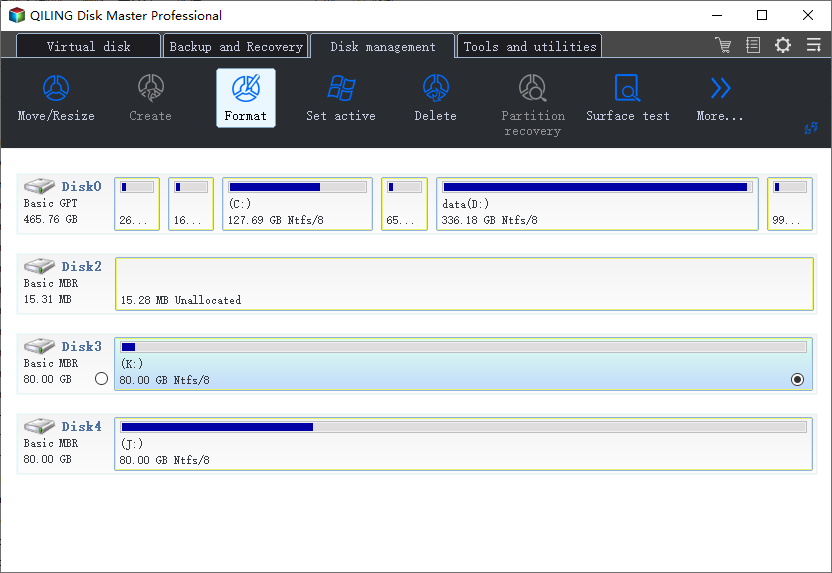
Step 1. To format a partition on an external hard drive, USB, or SD card using Qiling Partition Master, select the partition you want to format and click the "Format" option in the Disk Management page.
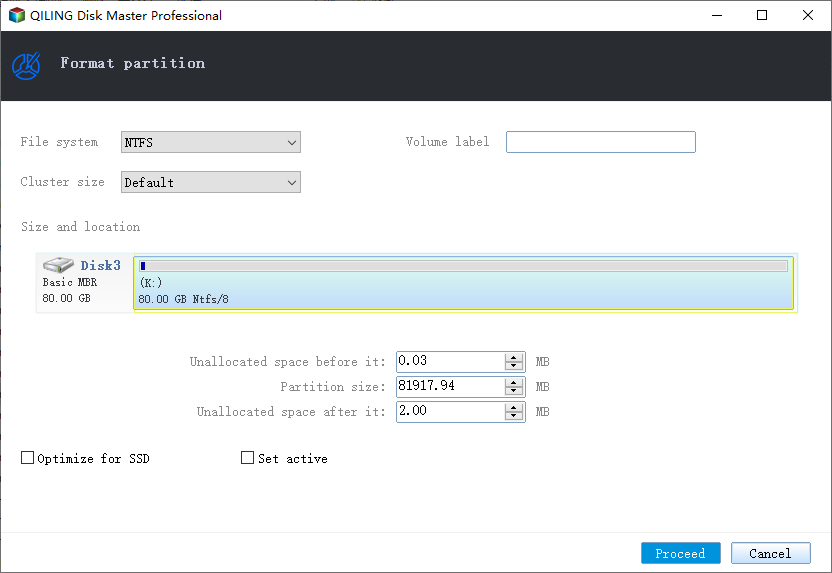
Step 2. In the next window, assign a new partition label, file system, and cluster size to the selected partition, then click proceed.
Step 3. In the Warning window, click "OK" to start formatting your external hard drive/USB/SD card.
Warning: Formatting a partition will erase all data on it, so it's a good idea to back up any important files or data before proceeding. This will ensure that you have a copy of your necessary data in case something goes wrong during the formatting process.
Solution 3. Close the cloud syncing service before deletion
If your Android phone has been synchronized, you can try to delete the synchronized files and photos. Since different Android phones use different cloud syncing services, you'll need to check your device and see if the service is currently turned on. If it is, turn it off, delete the synchronized data, and then sign in to the cloud with your account to try and delete the files and photos that have been synced.
To avoid having to manually sync your phone next time, you can simply change your phone settings to disable auto sync. This way, you won't have to worry about it again.
Now, put back the SD card to your Android phone and see if deleted files will come back again after deleting.
Solution 4. Clear file cache on Android
Clear the cache on your File Manager, browser, and application used to download and play movies. This will resolve the issue of not being able to play the movies.
For each of those applications, select the application and clear its cache:
To clear the cache of an application, go to Settings > Applications > Manage Applications > All, then find the application you want to clear the cache for and select it, and finally click Clear Cache.
Can You Now Delete Files from Android SD Card Permanently?
After trying the troubleshooting methods, if deleted or formatted files reappear on the SD card, the solutions provided will likely help resolve the issue. However, if the problem persists, it may be worth considering sending the SD card to a repair center if it's still under warranty.
If your Android SD card keeps deleting files by itself, check the linked page for help.
Related Articles
- SSD Optimzier for Windows 11 Free Download with Ultimate Guide
- [New] How to Add Unallocated Space to C Drive in Windows 11/10
- Change File Extension One-by-One and in Bulk
- ScanDisk Windows 10: How to Scan and Repair Drive Windows 10/8/7
- Setup SSD/HDD and Change System/OS Disk for Windows 10
- Backup Computer to USB Flash Drive in Windows 10/8/7
- Best Windows Server Backup Alternative - Qiling Disk Master
This article will introduce you to Windows Server Backup and the best Windows Server Backup alternative - Qiling Disk Master Server as well as steps to backup Windows Server 2019 or 2022 in simple steps.
Products
Articles & Tutorials
- Data Recovery
- Data Backup
- File Recovery
- File Backup
- System Backup and Restore
- Disk and Partition Clone
- Technical articles
- Mobile articles
- Disk Master Help
- Windows Data Recovery Tutorials
- Windows Secure Delete Tutorials
- Windows Partition Management Tutorials
- Windows File Backup and Restore Tutorials
- Windows System Backup and Restore Tutorials
- Windows Disk Backup and Restore Tutorials
- Windows Clone Tutorials