Clone Windows 10 OS to New SSD Without Reinstallation
You can clone your Windows 10 system to a new SSD using a cloning software, which will copy the system and boot partitions to the new drive at once. This process will not require a reinstallation of Windows, allowing you to maintain your current system and settings. You can use a tool like Qiling Disk Master to perform the cloning. These software will help you transfer your operating system, programs, and data to the new SSD, making the transition smooth and efficient.
You can use Qiling Disk Master to transfer your Windows 10 system to a larger or newer SSD disk, and clone the system disk without re-installation or moving any other partition with data. This software allows you to migrate the operating system, programs, and settings to the new SSD, preserving the original system and data. It's a user-friendly and efficient solution for upgrading your system disk.
To clone Windows 10 OS to a new SSD using Qiling backup and recovery software, you can follow these steps: first, download and install Qiling on your current Windows 10 system, then create a bootable media, boot from the media, and select the "Clone" option to clone your current Windows 10 OS to the new SSD, and finally, reboot your system and enjoy your cloned Windows 10 OS on the new SSD.
Clone Windows 10 OS to New SSD with Qiling Backup
Qiling Backup excels in data backup and recovery, copy, and clone operations, allowing users to easily clone Windows systems, disks/partitions, back up disks/partitions, systems, files, mail, Exchange databases, mail, SQL, and create emergency disks among other tasks.
Qiling Backup Clone vs System Clone
Qiling Backup offers remarkable HDD/SSD to SSD cloning feature.
- Cloning a disk or partition involves creating an exact duplicate of the selected disk or partition, which can be useful for backing up important data or creating a duplicate of a system disk for testing purposes. The process can be initiated by manually selecting the disk or partition to be cloned, and then creating a copy of it in a specified location, such as an external hard drive or another internal disk.
- The system clone feature will automatically select and transfer the current system and boot partitions to another HDD or SSD, ensuring a smooth transition of the Windows system to the new drive. This is recommended for a seamless migration process.
How to Fix Not Enough Unallocated Space on Target Disk
To ensure a smooth transition to a new disk, delete any existing partitions on the target disk, creating unallocated space that's larger than the combined size of the system and boot partitions. If you've already got sufficient unallocated space, move it to the front of the disk, just before the other partitions, to facilitate a smooth boot process.
How to Clone Windows 10 OS to SSD
You can download the software and follow the guide to clone your Windows system to a new SSD without reinstallation, allowing you to transfer Windows 10 to a smaller SSD or a larger HDD/SSD.
Detail step guide to clone Windows 10 system to SSD.
Notice:
To clone Windows 10 to a new HDD or SSD, make sure to erase the target disk beforehand to ensure a smooth cloning process.
Converting your HDD/SSD disk to MBR or GPT, matching the format of your current system disk, will enable seamless booting of the system after cloning the Windows system.
To clone your Windows 10 OS to a new HDD/SSD without reinstallation, you can use a disk cloning software like Qiling Backup. These tools allow you to create a bit-for-bit copy of your existing OS on the new drive, including all installed programs, settings, and data.
Step 1. Connect the new HDD/SSD to your PC.
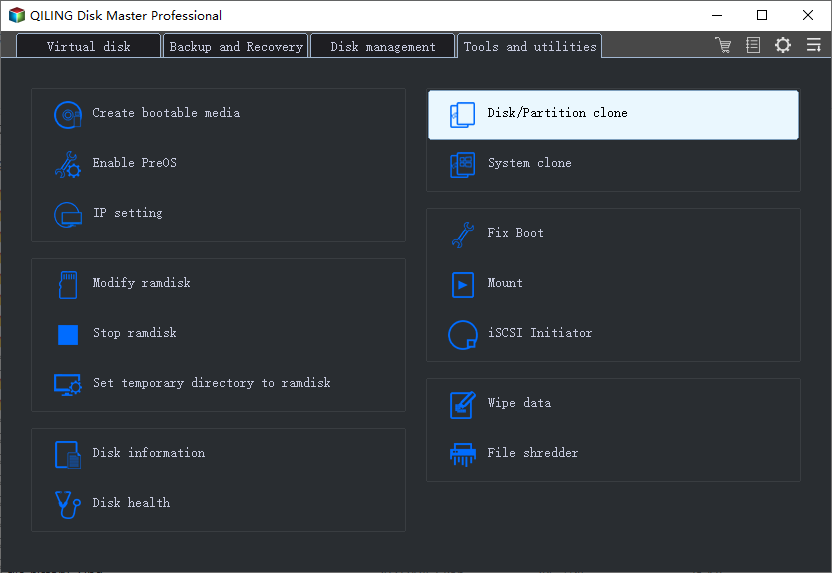
Step 2. Run Qiling Backup for Windows 10 Clone.
Select "System Clone" on the tool page by clicking the icon at the right panel.
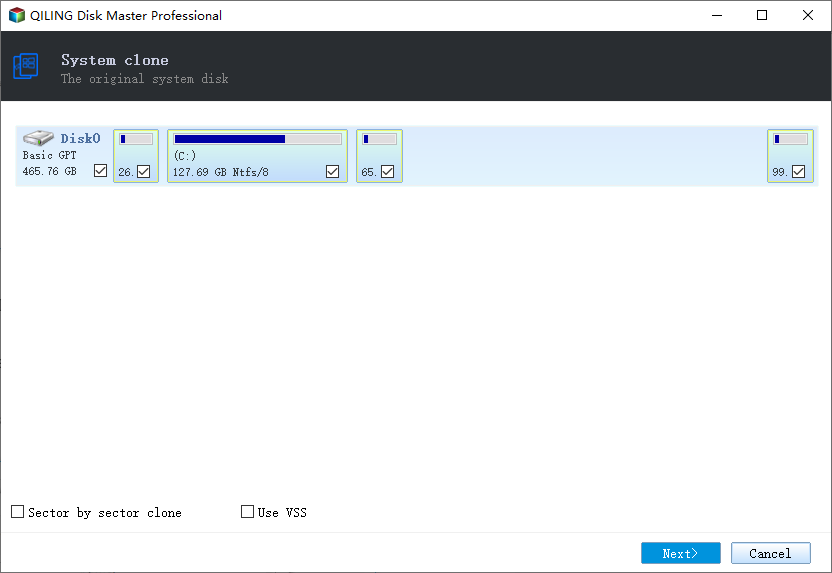
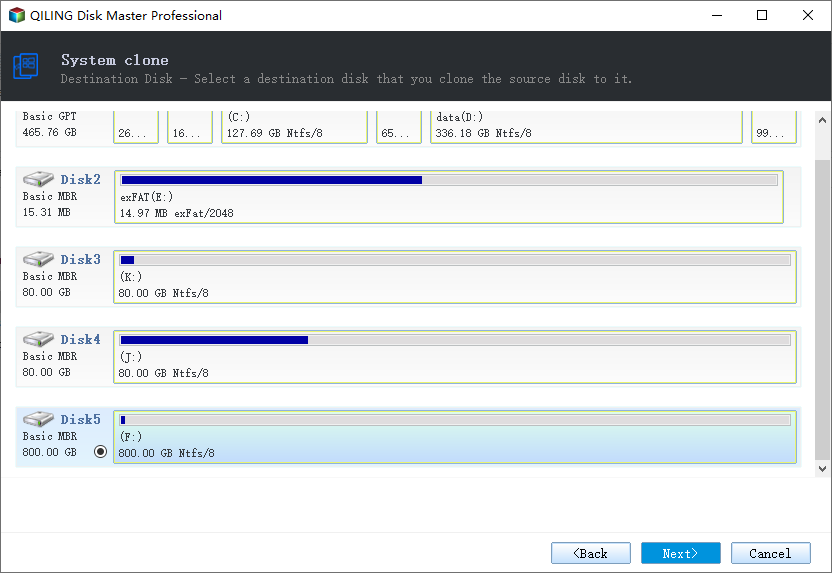
Step 3. Choose the destination disk - HDD/SSD to save Windows 10 system
Select the new HDD or SSD as the target disk for cloning the Windows 10 system.
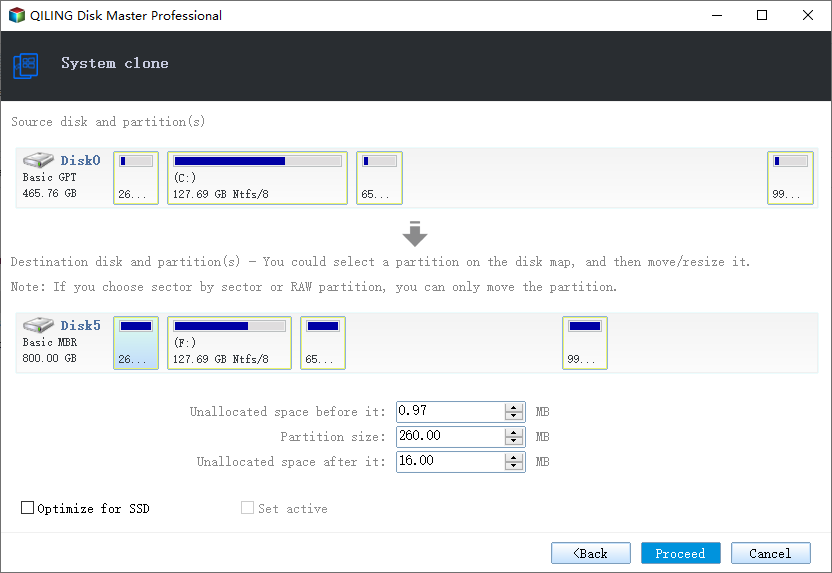
Step 4. Then click "Proceed" to start cloning Windows 10 to HDD/SSD now.
After cloning your Windows 10 system to the new HDD or SSD, physically insert the new drive into your computer. Reboot your PC and enter the BIOS settings to change the boot order, setting your computer to boot from the new HDD/SSD with the cloned Windows 10 system.
- Press the F2 or F8 key on your keyboard to enter the BIOS settings when you restart your PC. This will allow you to access and configure various settings, including boot order and security options.
- In the Boot option, select new HDD/SSD as the new boot drive and save all the changes.
- After exiting the BIOS and restarting the computer, you should be able to see Windows 10 running smoothly on your new disk without any issues.
You can now reboot your computer from a new SSD drive without reinstalling any programs or system, resulting in improved performance and a faster running speed in Windows 10 on SSD.
Related Articles
- How to Backup SD Card Before Formatting [2021 Updated]
- How to Password Protect Flash Drive Windows 10
- How to Clone MBR Disk to GPT Disk/SSD
- How to Move Windows 8/8.1 to SSD Without Reinstalling Windows and Applications
- How to Clone Windows 10 Operating System
- How to Back Up Windows 10 to Synology NAS (2 Ways)
Learn how to back up Windows 10 to Synology NAS with backup software or Windows built-in tools to protect files and system data.
Products
Articles & Tutorials
- Data Recovery
- Data Backup
- File Recovery
- File Backup
- System Backup and Restore
- Disk and Partition Clone
- Technical articles
- Mobile articles
- Disk Master Help
- Windows Data Recovery Tutorials
- Windows Secure Delete Tutorials
- Windows Partition Management Tutorials
- Windows File Backup and Restore Tutorials
- Windows System Backup and Restore Tutorials
- Windows Disk Backup and Restore Tutorials
- Windows Clone Tutorials