How to Set Up Windows Backup [You Must Know 2022]
Key Takeaways:
Use the third-To set up Windows 10 backup, you can use the built-in party software (Qiling Backup Free) or other free backup and restore tools, such as Backup and Restore, and File History.
If your system is unstable and you have many irreplaceable files to protect, consider setting up a backup plan. You can use free backup software and two built-in Windows tools to automate the process.
Page Content:
To set up a backup on Windows 10 using free backup software, download and install a reputable backup software such as Qiling Backup. Launch the software and follow the on-screen instructions to create a backup set, which includes selecting the files, folders, or drives to be backed up. Choose a storage location, such as an external hard drive, network drive, or cloud storage service like Google Drive or Dropbox.
To set up Windows 10 backup via Backup and Restore (Windows 7), follow these steps:
To automatically backup files to an external hard drive using File History, you'll need to set it up on your Windows PC. First, connect the external hard drive to your computer and make sure it's formatted with the correct file system. Next, go to the Control Panel and search for "File History" to access the settings.
Need to Set Up Windows Backup?
Backing up a Windows computer is crucial, as it protects you from data loss in case of a computer crash or virus attack. Without a backup, you risk losing all your important files, making it essential to have a backup plan in place to safeguard your valuable data.
Backups can help you recover from accidental file deletions and provide peace of mind, even if you don't think you need one right now, as they can serve as a safety net in case something goes wrong with your computer.
Backup to Windows 11/10 to USB/External Hard Drive: Choose Backup Options
Backing up "Everything" can be a daunting task, taking up significant hard drive space and consuming a lot of time. To make the process more efficient and free up space for a USB or external hard drive, consider selecting specific items to back up and using suitable tools tailored to your needs.
Backup Windows system and all data: Qiling Backup, Backup, and Restore (Windows 7)
Backup specific Windows folder: File History
Choose multiple backup modes: Qiling Backup
If you are deciding between Microsoft's newer backup experience and a full local backup, compare the Windows Backup app with Qiling Backup. If Windows 10 Backup misses folders, use the guide for Windows 10 backup not backing up all files.
A full backup contains a complete copy of all data, while an incremental backup only saves the changes made since the last backup. A differential backup, on the other hand, saves all changes made since the last full backup, but not the full backup itself.
2022 Five Best Solutions to Backup Files in Windows 11
Backing up your data is the best way to keep it safe, especially with the arrival of Windows 11. To ensure your files are secure, there are 5 different ways you can back up files on Windows 11.
How to Set Up Windows Backup (Automatic Backup)
#1. How to Set Up a Backup on Windows 10 with Free Backup Software
Qiling Backup is a free software that allows users to set up automatic backups of their data, scheduling the process to run at specified times.
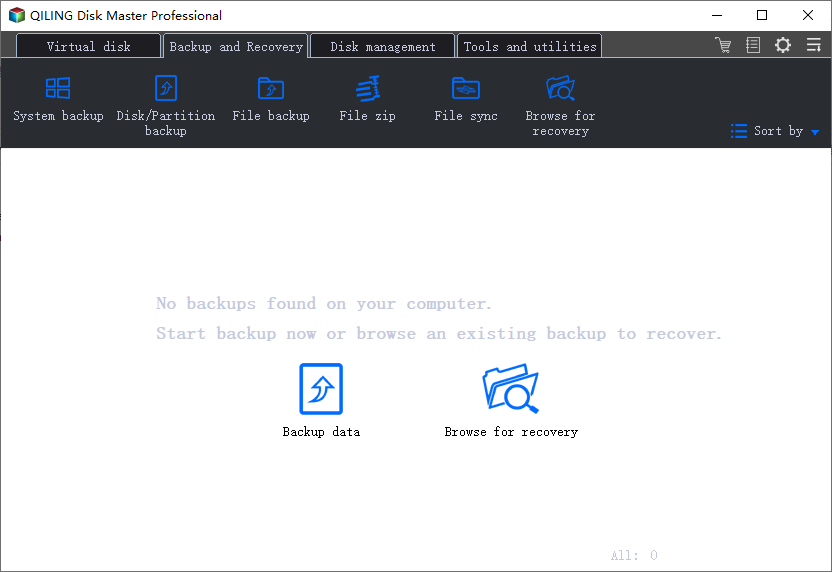
Step 1. When using Qiling Backup for the first time, select the "File backup" option on the home screen to initiate the backup process. This allows you to choose which types of files, such as pictures, videos, documents, and others, to include in the backup.
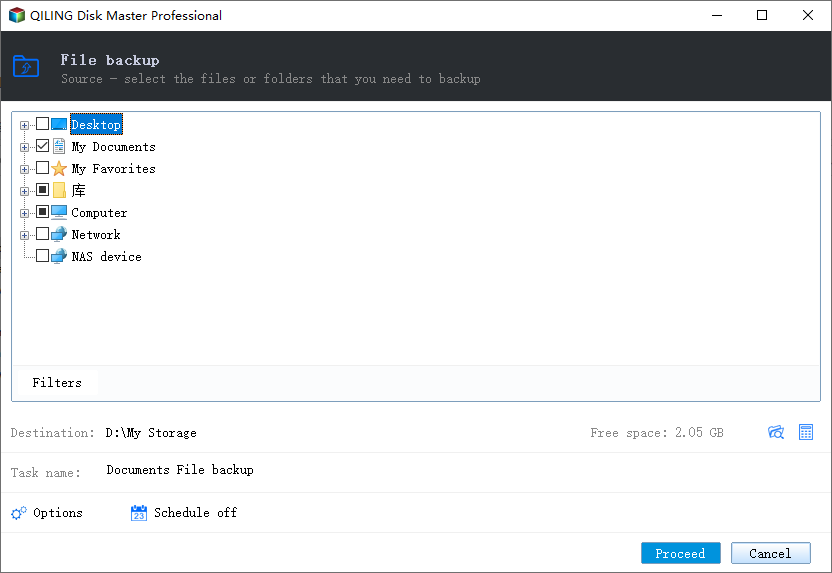
Step 2. To back up files, folders or directories, first locate them and select them all.
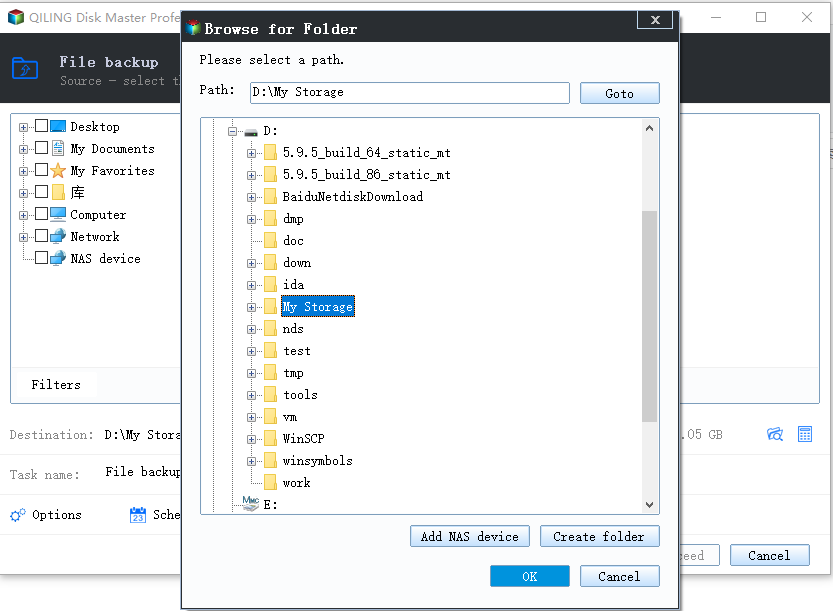
Step 3. You should choose a location to store the backup, so it can be safely kept and retrieved when needed.
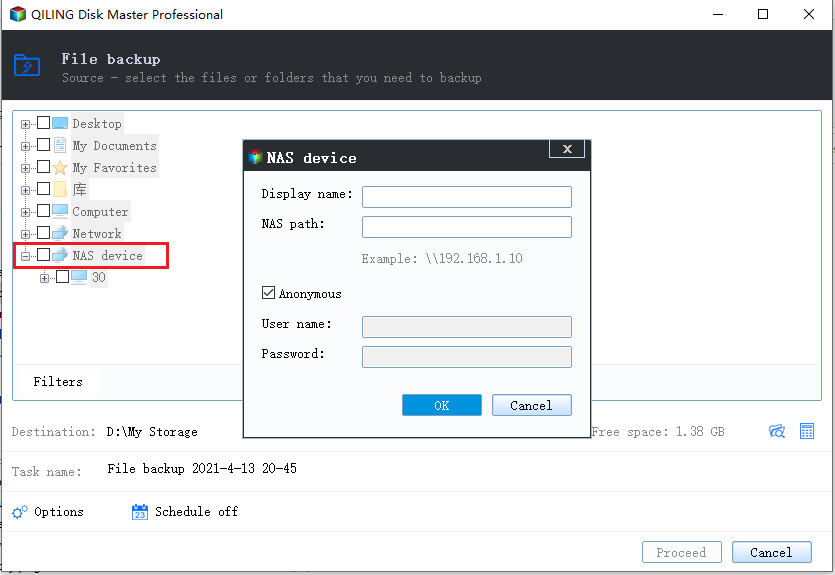
Step 4. Qiling Backup allows users to save backup files to various devices, including local hard drives, external USB drives, SD cards, network drives, NAS drives, and cloud drives, specifically Qiling's cloud drive, which is recommended for its accessibility, flexibility, and safety.
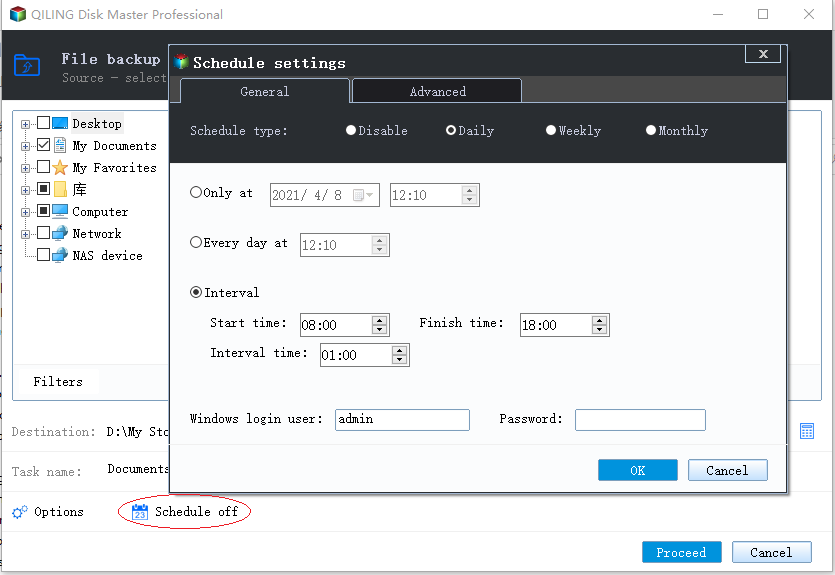
Step 5. If you're looking for a smart and automatic backup schedule for your next file backup task, head to the "Options" setting. There, you can choose to encrypt confidential files, compress the backup image size, or customize the backup schedule to specify when the next backup should start.
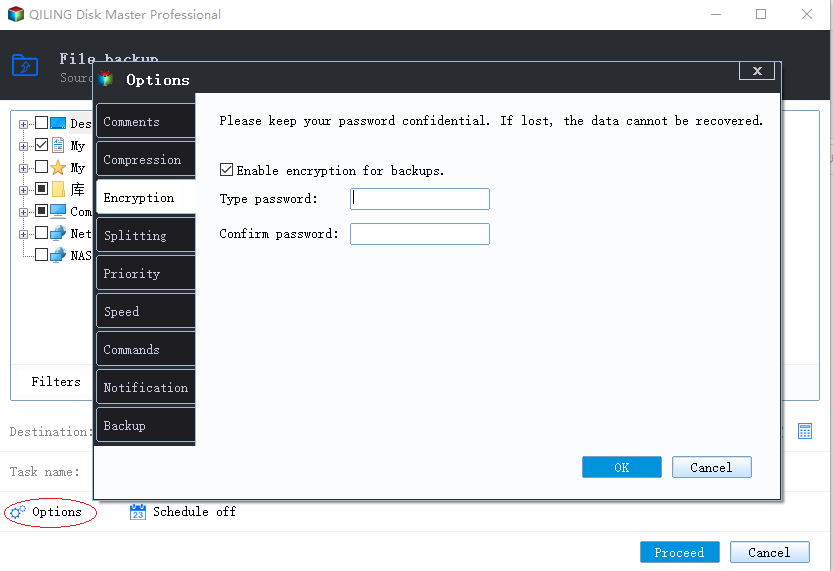
Customize an advanced and automatic backup task here:
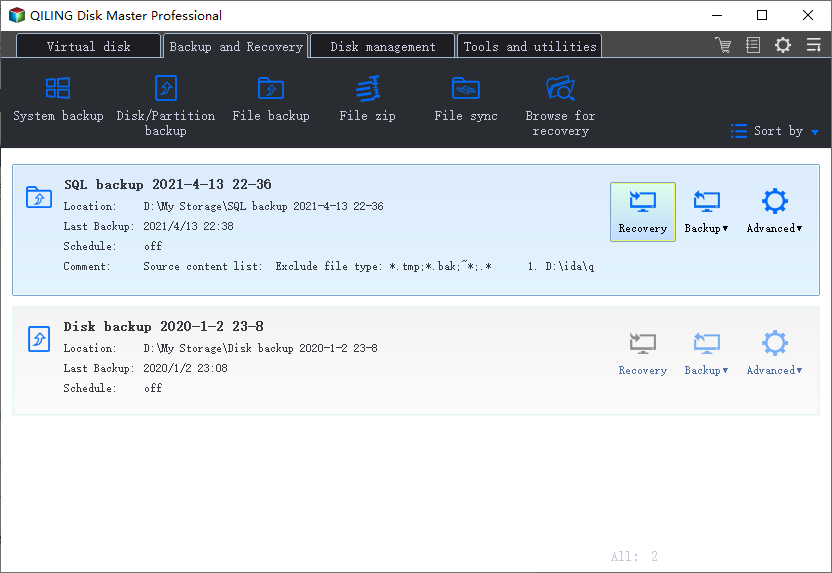
Step 6. Click "Proceed" to start the file backup process, and your completed backup files will be visible on the left in a card style.
Qiling Backup offers a wide range of features, making it a versatile tool for all your backup needs. You can use it to create system images, clone drives, and migrate data to new devices, ensuring your data is protected and easily recoverable in case of a failure or device upgrade. This makes Qiling Backup an essential tool for anyone who wants to safeguard their digital information.
#2. How to Setup Windows 10 Backup via Backup and Restore (Windows 7)
Windows 7 has a built-in backup and restore feature that allows users to create backups of their files, settings, and operating system. This feature can be accessed through the Control Panel and can be used to schedule automatic backups, save backups to external hard drives or network locations, and restore backups in case of system failures or data loss.
How to automatically backup files to an external hard drive Windows 10:
Step 1. To access the "Backup and Restore" feature, go to the Start Menu, type in "Control Panel" and click on it, then click on the "Backup and Restore" link.
Step 2. You can click the "Set up backup" link to start.
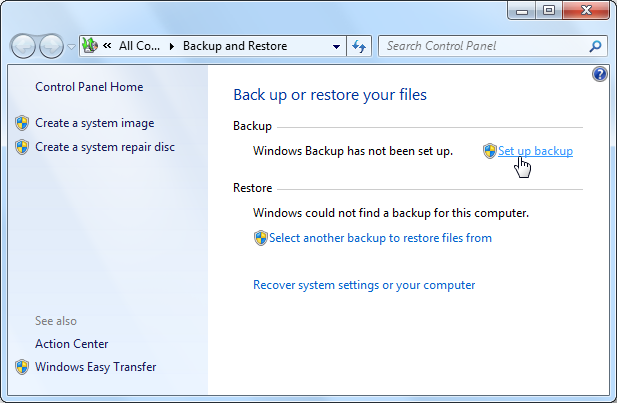
To start, select the Windows backup location, which can be an external hard drive or a network location.
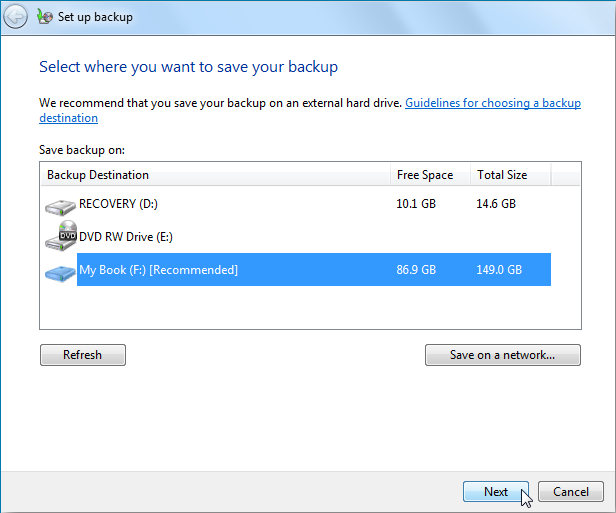
Step 3. Once you've chosen your backup destination, select the types of files you want to include in your backup, then schedule when you want your backup to occur and click "Save Settings and Run Backup."
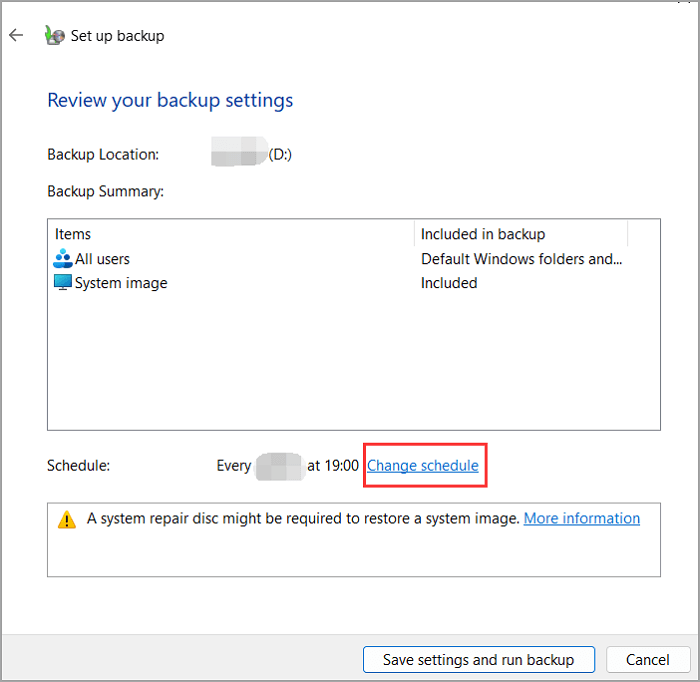
Your backup will now be automatically created according to your schedule, ensuring that your data is safely stored and easily recoverable in case of any issues.
Once the backup is complete, you can restore your files by opening the Backup and Restore Center and clicking on "Restore my files."
#3. Automatically Backup Files to an External Hard Drive by File History
File History, first introduced in Windows 8 and carried over to Windows 10, is a backup feature that automatically creates backups of your files on a schedule. This makes it a simple and effective way to create a backup of your most important data. While File History has some limitations, such as only backing up files stored in specific locations and not supporting backing up entire drives, it is still a viable option for many users looking for a quick and easy way to create backups of their most important files.
Here's how to set up File History:
1. To access File History, open the Start menu and navigate to Control Panel, then click on File History.
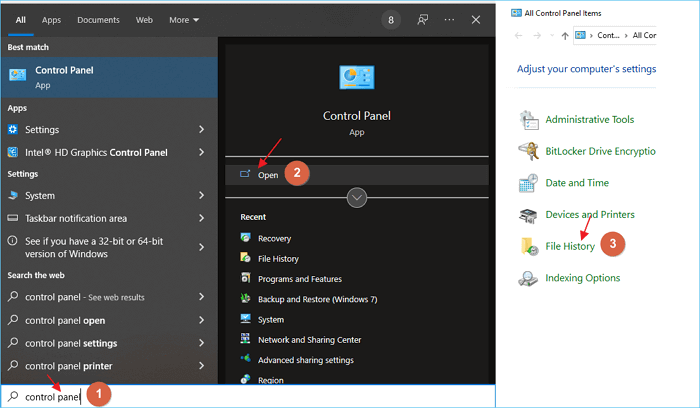
2. Click the Select Drive link from the left side.
3. To set up File History, select the drive you want to use for backups and click OK, which will save copies of your files to that drive on a regular basis.
Final Verdict
Backing up your data is crucial to maintaining your computer, as it safeguards against losing critical files in case something goes wrong. Fortunately, Windows comes equipped with a built-in backup tool that allows you to create backups of your data, and this tutorial will guide you through the process of setting it up on your computer.
Setup Windows Automatic Backup FAQs
1. How do I setup a backup in Windows 10/11?
Use Backup and Restore:
- To create a system image backup in Windows 7, open the Control Panel and click on "Backup and Restore (Windows 7)". Then, click on "Create a system image" and select the location where you want to save the backup.
- To start the backup process, click "Next" and select the drive you want to backup. Then, click "Backup Now" to initiate the backup.
2. How do I set up auto backup on my computer?
Download and run Qiling Backup, then set up a schedule for automatic backups, choosing from daily, weekly, or monthly options.
3. Does Windows Backup save all files?
Windows Backup and Restore will save all data on your desktop, libraries, and default folders, including documents, pictures, and other files.
Related Articles
- 4 Ways to Back Up Computer to the Cloud Drive
- One-click System Clone to HDD/SSD
- Bare Metal Backup and Restore Windows 10 Tutorial | Your Full Guide Is Here
- How to Backup Files in Windows 10 for Full Recovery (100% Work)
- Migrate OS to Crucial SSD via Free Qiling Disk Master
Want to migrate OS to Crucial SSD for free quickly and safely? This post will save you from installation CD and all the complicated operation. - Mount System Image Backup on Virtual Drive to Restore Single File in Windows 10/8/7
You will find the perfect solution to mount backup image to restore individual files while Windows Backup and Restore does not support to restore single file from system image file.
Products
Articles & Tutorials
- Data Recovery
- Data Backup
- File Recovery
- File Backup
- System Backup and Restore
- Disk and Partition Clone
- Technical articles
- Mobile articles
- Disk Master Help
- Windows Data Recovery Tutorials
- Windows Secure Delete Tutorials
- Windows Partition Management Tutorials
- Windows File Backup and Restore Tutorials
- Windows System Backup and Restore Tutorials
- Windows Disk Backup and Restore Tutorials
- Windows Clone Tutorials