Imaging Software Advantages and Disadvantages
Disk imaging software is the most effective tool for managing data backups, given the large volume of data stored on smartphones that makes it difficult to backup data on another device.
Disk imaging software simplifies data backup by compressing and backing up data. This makes it easier to access and manage.
Some disk imaging software falls short in their functionality, with some only backing up user files while leaving out boot data and locked system files. Others may struggle with conflicting file names, copy protection, or recreating security properties, leading to potential issues. In the worst-case scenario, some backup software can even make your machine unbootable if you modify partitions.
This article highlights the advantages and disadvantages of imaging software, providing a comprehensive overview of its capabilities and limitations. Additionally, we have curated a list of the top 5 imaging software, making it easier for users to find the best tool for their needs.
What is Imaging Software?
Imaging software scans the targeted drive, creating a sector-by-sector map that's saved in a compressed file. This file, like a zipped file, needs to be extracted before it can be viewed. If the image needs to be restored, the same software is used to decompress and copy it to a new or corrupted drive.
A bootable, self-The imaging software requires a CD created from the archived disk image to restore the boot drive, which contains the operating system. By booting from the CD, the software can access the image and restore it to the boot drive, allowing the system to be restarted from the hard disk once the process is complete.
Features
- The disk-An image tool that produces a differential or incremental image only includes the data that has changed since the last backup, allowing for more efficient storage and transfer of data.
- A hard drive image can be quickly copied, formatted, partitioned, and even deleted, making it easy to deploy a picture or save data for later use.
- A full image installation reinstalls everything, including programs, files, and related data, and can be completed with just a few easy image installation procedures.
- You can access copied files, folders, and programs more quickly and at any time by assigning an image to a drive, making it easier to find and use them.
Usage
Disk imaging software is a tool that enables effective data backup management, especially useful for smartphones with large data storage. Due to the volume of data, backing up on another device can be challenging. To make this data more accessible, disk imaging software compresses and backs up the data, making it easier to access.
Who Should Use Imaging Software and Who Shouldn't
Users need to use imaging software in various scenarios, such as editing and enhancing digital images, creating graphics and illustrations, and analyzing medical images like MRI and CT scans. They also use it for data visualization, 3D modeling, and animation.
- Disk imaging software allows for incremental backups by only capturing the changes made to the drive since the last backup, rather than re-imaging the entire drive.
In some cases, imaging software may not be effective for users who are unable to use it due to physical or cognitive limitations, or when the software is not compatible with their device. This can lead to frustration and difficulty in completing tasks, such as editing photos or creating digital art.
- Windows system images are created to be used on a single computer, and cannot be used on another PC to retrieve data, as they include specific information like BIOS details, digital certification, and master boot records, making them unique to a single machine.
- Creating a system image backup can be a time-consuming process, taking anywhere from 3 hours to all night to complete, depending on the size of your disks.
- Some disk imaging is considered an all-or-nothing whole-disk backup and restore approach because it can't make incremental backups or target specific folders or files.
The advantages of imaging software include its ability to enhance and modify images, making them more visually appealing and engaging. It can also be used to create artistic effects, correct color and brightness, and remove unwanted objects or noise.
Imaging Software Disadvantages VS Advantages, Pros & Cons
There are some benefits and imaging software disadvantages. To get the overview of the pros and cons in detail, read below and make sure you understand the difference in a better way.
Imaging software disadvantages
- Imaging a disk can be a time-consuming process, requiring a significant amount of time to complete, often resulting in a lengthy wait for the operation to finish.
- It can take a long time to transfer a storage drive's entire content and structure.
- A disk backup, unlike a file backup, includes a copy of every file on a storage drive, including those potentially containing malware or viruses, as well as other system files.
- During disk imaging, malicious files are also included, which can cause a computer to become virus-infected when a disk backup is restored on another computer.
- Software for reliable disk imaging can be pricey.
- Many online tools and services, such as cloud storage, productivity software, and streaming platforms, often have subscription-based models. This means that users must pay a recurring fee, either monthly or yearly, to access and use these services.
What Are the Advantages of Imaging Software?
- To ensure data safety, create an automatic backup plan that captures only the data that has changed since the last backup, using a disk-imaging tool's differential or incremental image. This approach minimizes storage space and reduces the time required for backups, making it a practical and efficient solution for protecting valuable data.
- Reinstall the entire system, including data, specific files, and programs, and execute a few quick image deployment tasks.
- You can back up your mobile devices and tablets to the cloud and your PCs.
- Disk backup files are more space-efficient than traditional backups, as they only save the differences between the original data and the backup, rather than a complete copy of the data. This means that less storage space is needed to store the backup, making it a more efficient option for storing large amounts of data.
- Disk backup files are compressed, making them smaller than the actual content of a storage device, but still large in size.
- A disk image file can be stored anywhere, while a disk backup file can be kept practically anywhere.
Pros & Cons of Imaging Software
| Comparison | Pros | Cons |
|---|---|---|
| Imaging Software |
|
|
Editor's suggestion:
Imaging software can create duplicate files and resize partitions, potentially causing minimal error recovery that may harm files or backups, but its benefits outweigh its drawbacks, in our opinion.
To safeguard your essential data on computers and external storage devices, utilize trustworthy imaging software. This software can be found in the next section.
Recommends: List of 5 Best Imaging Software in 2022
The concept of a "dream team" is often used to describe a group of people who work together seamlessly and achieve great things. However, the idea of a "dream team" is not just limited to sports or business.
- 1. Qiling backup Free
- 2. Paragon Backup and Recovery Free
- 3. Acronis Cyber Protect Home Office
- 4. Blackblaze
- 5. NovaBackup For PC
1- Qiling Backup Free
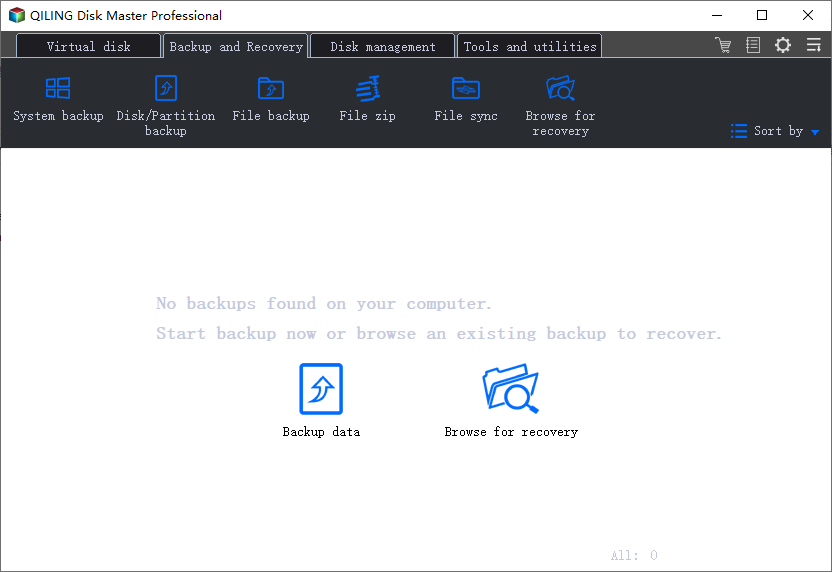
Your files are protected with the free backup software from Qiling, which offers a straightforward user interface and strong backup capabilities, including backing up disks, partitions, OS, and files to local devices, NAS, networks, and the cloud.
Users who sign up for a free account can enjoy advanced backup features, including incremental and differential backup, scheduled backup, encrypted backup, setting backup frequency, enabling image reserve policy, and more.
Rating: 4.6 out of 5
Best Overall:The new version of the app is improved with a fresh design and cloud storage, while maintaining its adaptability, reliability, and simplicity of use.
Features
- It provides both drive/partition imaging and file/folder backup.
- The latter replicates every piece of data on a disk or partition for complete system recovery.
- The new version restores while the former version copies files and places them in a container file (*.pbd).
- The overall requirements of 3DS
Price: $39.95
Review: Qiling Backup is free software that automatically backs up the system drive, specific files and folders, and entire hard drives. It also allows for easy restoration of backed up files by mounting the backup image as a virtual hard drive. -by Tim Fisher from lifewire.com
You can follow the steps to use it:
Step 1. Click the "File backup" button to start backup.
Step 2. On the left, both local and network files will be listed, allowing you to expand directories to select the files you want to back up.
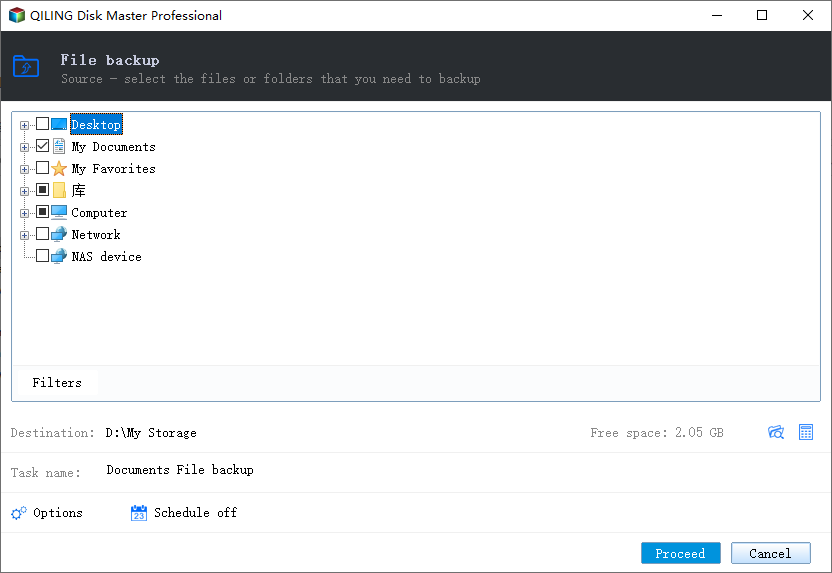
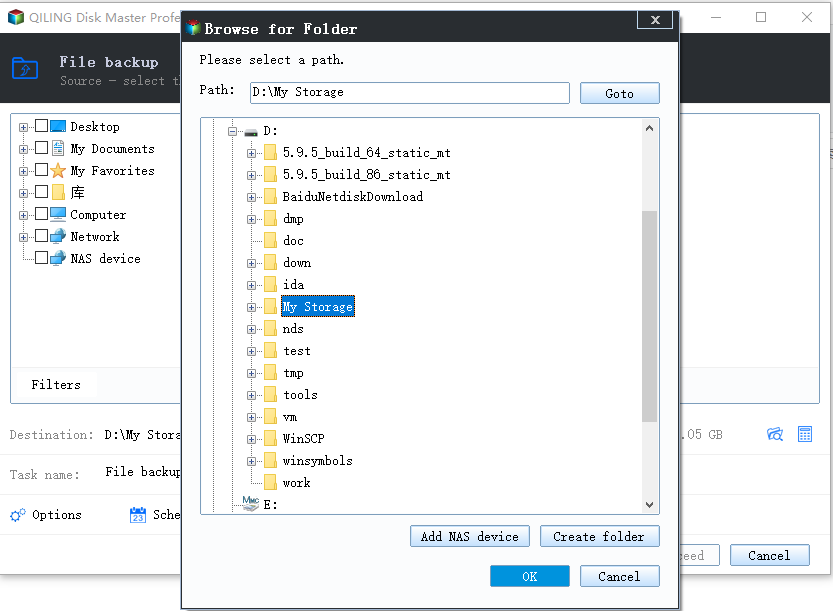
Step 3. Follow the on-screen guide and select the destination where you want to save the backup.
Step 4. To encrypt the backup with a password, click on "Options" in the "Backup Options" section. This will allow you to customize the backup task to your specific needs, and also provide other options to explore.
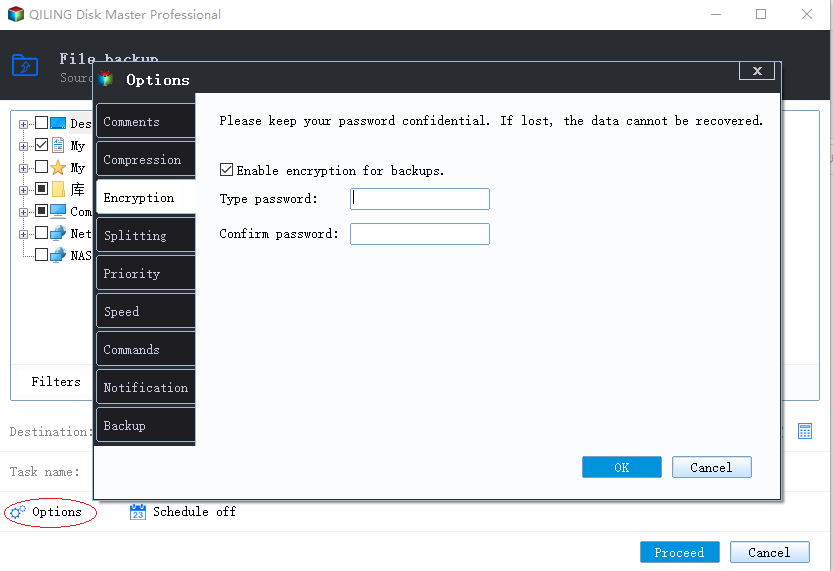
Set the backup schedule and choose to start back up at certain event in "Backup Scheme".
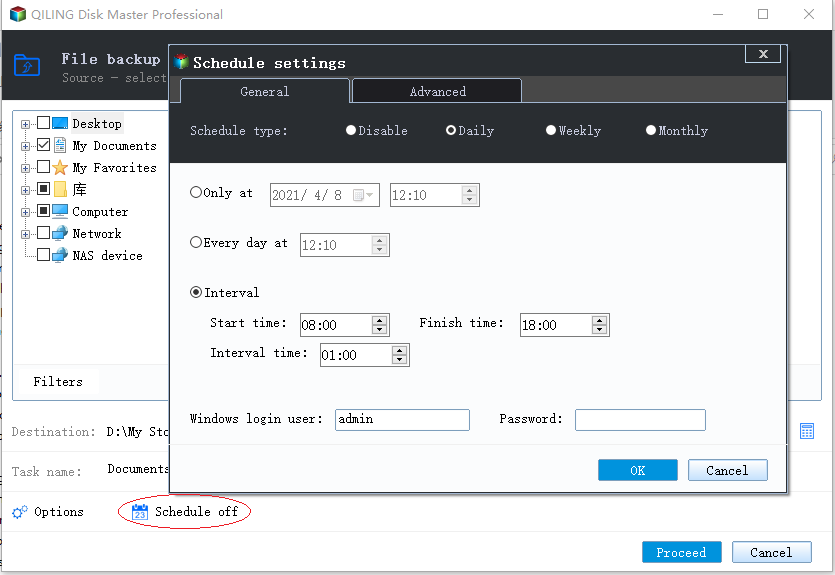
Step 5. You can store backups to a local drive, Qiling's cloud service, and NAS.
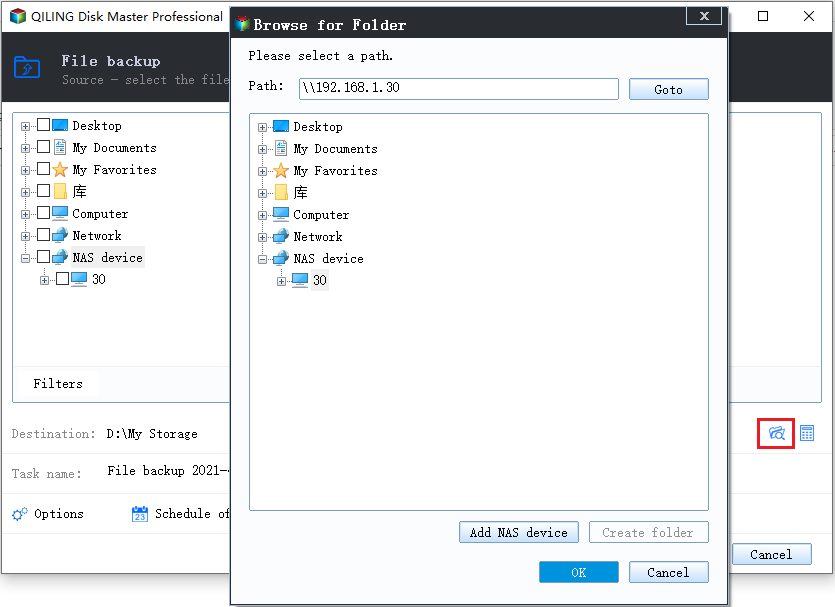
Step 6. Qiling Backup allows users to save their data to both external cloud services and its own cloud storage solution.
To back up data to a third-party cloud drive, select Local Drive, scroll down to add a Cloud Device, add your account, and log in.
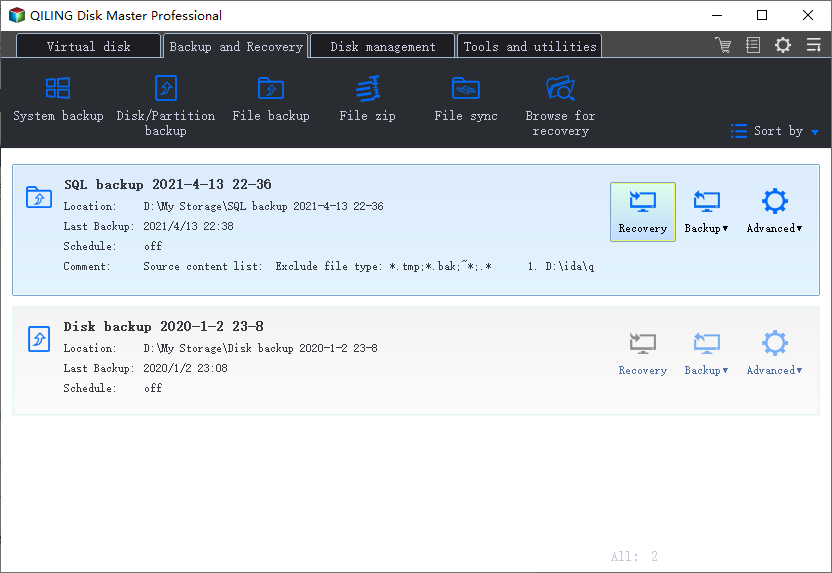
Step 7. Click "Proceed" to start the backup task. Once completed, it will be displayed as a card on the left panel, allowing further management by clicking on it.
2- Paragon Backup and Recovery Free
Best Software to save data and regularly update your backups
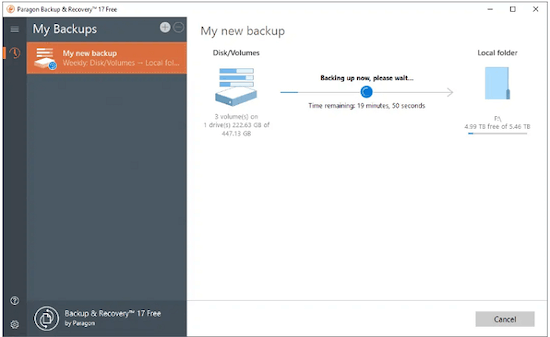
The free 64-Paragon Backup & Recovery 14 allows for full or incomplete backups of data or entire CDs on demand or on a schedule, addressing the cost issue that often prevents Windows users from backing up their PCs. The software also has a 64-bit version.
Rating: 4 out of 5
Features
- It allows users to set a backup schedule, defining the rules for when backups will commence.
- It offers disk space management, automatically deleting old backup images based on a specified value.
- It manages backups and recovers.
Price: $79.95
Review: 6 million users use the free community version of Paragon Backup & Recovery for personal use.
3- Acronis Cyber Protect Home Office
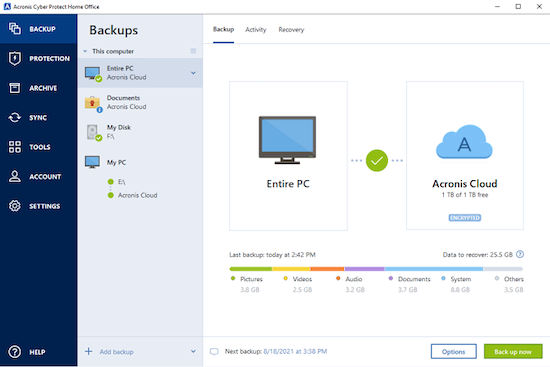
Best for storing backups in local or network directories.
Acronis Cyber Protect Home Office is a software package that safeguards systems against ransomware by enabling users to backup and recover files or complete systems from a previously prepared backup archive. It also allows users to sync folders between devices.
Rating: 4.5 out of 5
Features
- Back up everything to restore anything to any device.
- Stop cyberattacks in real-time and recover automatically.
- Simplify your protection and manage it all via one console
Price: $59.0
Review: Acronis True Image is used by our IT department for backup and recovery, and it's a good fit for them. It also benefits our business by saving time and money, and most importantly, protects valuable user data. -by Valentine Leamy from trustradius.com
4- Blackblaze
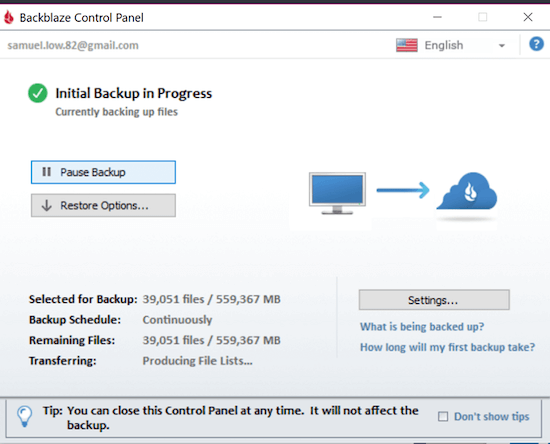
Best Value
Backblaze is a reliable option for online storage and backup, offering a straightforward and reasonably priced unlimited backup service, ideal for individuals with a single computer loaded with crucial data.
Rating: 4 out of 5
Features
- All the backup devices connected to your account are displayed on the home screen.
- Setting up this protection is simple, and it works quietly in the background to safeguard your files.
- It moves files faster by transferring, as local transfers are quicker than cloud transfers.
- A simple backup program that automatically backs up all data from a single computer to an external hard drive or cloud storage service. This program is designed for individuals who only have one computer and want to ensure their important files, documents, and photos are safely stored in case of a hardware failure, virus attack, or other data loss event.
Price: $24 yearly
Review: Backblaze offers unlimited online backup for a single PC, is easy to set up, and appeals to newcomers, but may not offer enough control for more advanced users. -by Michael Muchmore & Ben Moore from pcmag.com
5- NovaBackup For PC
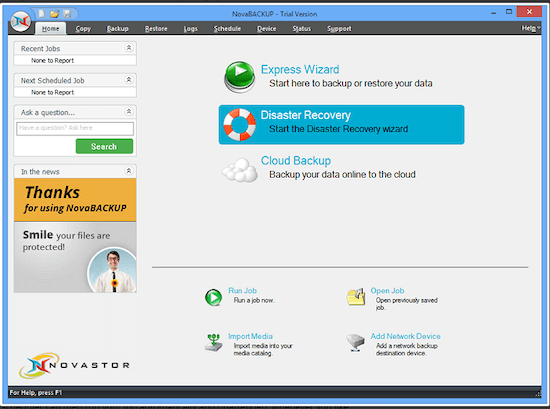
Best Security Features
NovaBackup offers local and online backup options, but has a confusing desktop interface, charges high prices for online storage, and is only compatible with Windows-based hardware, resulting in poor upload speeds in our test.
Rating: 4 out of 5
Features
- If Windows won't boot, you can restore an Image Backup using a Boot Disk to return your system to the state it was in when the backup was taken.
- You can restore a single file from your PC backup, or a single file part of your backup can be restored from any backup created using NovaBackup.
- With automated PC backups, you can schedule a backup job to run even when you're away, as long as your machine is on. This ensures that your important files and data are safely backed up, even if you're not physically present to initiate the process.
- Duplicati offers privacy and security by allowing you to keep a private key (up to 20 characters) that protects each local backup set using technology.
Price: $49.95 yearly
Review: NovaBackup is a standout service that offers both online and local backup options, a rare combination in the backup world. -by Ben Moore from pcmag.com.
Which Is the Imaging Software for Windows Beginners?
The ratings of various software for creating backups are often off the mark, with each having unique features. While some are user-friendly for beginners, others are pricey, but the Qiling Backup stands out with a high rating due to its simplicity and 100% free status for creating image backups for Windows essentials. It offers both file and folder backup, as well as drive/partition imaging, and can fully recover a system by replicating all data on a disk or partition, making it ideal for large amounts of file backup.
Qiling Disk Master offers a comparable rating to other options, with a great pricing rate. It effectively stops cyberattacks in real-time and automatically recovers, providing streamlined security and centralized control through a single console.
FAQs About Imaging Backup Software
If you have any doubts about the usage or any questions, you can see the answers below:
1. How do I pick imaging software?
When selecting an imaging software, consider the following key features:
- Lightweight
- The software is available for various operating systems, including Linux, Unix, and macOS, in addition to Windows.
- Free and easy to use
- Having a tool for emergency disk copying is a good idea, even if your policy doesn't mandate it, as it can be useful for troubleshooting and recovery purposes.
2. What is the best free imaging software?
Qiling Backup is the best free imaging software, offering drive/partition imaging and file/folder backup, with features like adaptability, regular backups, and a user-friendly interface. Its new version boasts a fresh design and cloud storage capabilities, making it an even more powerful tool.
3. Is Imaging Software free to use?
Imaging software has impressive capabilities, with some options being completely free to use. Others offer an affordable price range, while a few may provide a free trial, allowing users to test their features before committing to a purchase.
To Wrap Up
The imaging software has both advantages and disadvantages. On the one hand, it helps store backups of essential data, which is a significant benefit. On the other hand, it requires ample space to store duplicate images, which can be a drawback.
We reviewed 5 tools, testing them to better understand their capabilities. Most have paid versions with additional features, and many are compatible with both Mac and Windows.
We highly recommend Qiling Backup, a top-notch imaging software that offers both drive/partition imaging and file backup capabilities, making it a great download for your needs.
Related Articles
- Windows 7 Guide: Create Schedule Backup on Windows 7
- A Beginner's Tutorial on How to Make Windows 10 Backup to External Hard Drive
- Outlook Backup and Restore in 2 Ways [with Video]
- Windows 11 Backup to External Hard Drive Guide [3-Minutes Solution]
- Solved: Windows Backup Freezes at 97%
If you're experiencing issues with Windows backup freezing at 97%, this tutorial will guide you through a simple solution. However, if you're looking for a reliable and efficient alternative, I recommend using Qiling Disk Master. - Create Windows 10 Backup to USB Flash Drive Easily
This article tells you how to create a Windows system image on a USB flash drive easily in Windows 10 and other systems.
Products
Articles & Tutorials
- Data Recovery
- Data Backup
- File Recovery
- File Backup
- System Backup and Restore
- Disk and Partition Clone
- Technical articles
- Mobile articles
- Disk Master Help
- Windows Data Recovery Tutorials
- Windows Secure Delete Tutorials
- Windows Partition Management Tutorials
- Windows File Backup and Restore Tutorials
- Windows System Backup and Restore Tutorials
- Windows Disk Backup and Restore Tutorials
- Windows Clone Tutorials