Does Windows Fast Startup Affect Your Disk Cache?
Most people assume closing the lid, shutting down, and restarting all leave the machine in the same state. They do not - and the difference decides whether your cache survives the night or starts cold every morning.
This guide explains what Fast Startup actually does, what happens to a RAM cache and an SSD cache in each power state, and why "shutdown" is not the clean reset people treat it as.
PAGE CONTENT
- How Fast Startup Actually Works
- What Happens to a RAM Cache
- What Happens to an SSD Cache
- Why Shutdown Is Not a Clean Reset
- Configure a Cache That Survives
- FAQs About Power States and Caching
- Back Up Windows Before You Change Settings
How Fast Startup Actually Works
Fast Startup, sometimes called hybrid shutdown, changes what the Shut down option does:
- On shutdown, Windows closes your user session as usual, then hibernates the kernel session - the drivers, services, and system state - to a hibernation file on disk.
- On the next start, Windows resumes that saved kernel session instead of initializing everything from scratch, which is why the boot feels quicker.
- Restart ignores it. Choosing Restart performs a genuine full shutdown and a clean boot, which is why support advice is nearly always "restart" rather than "shut down and turn on again".
- The setting is separate from sleep and hibernate, and can be turned off independently if you prefer a true cold boot every time.
That behaviour matters for caching because it changes which parts of the system are rebuilt and which are restored.
What Happens to a RAM Cache
Memory-backed storage is the fragile case, and the answer differs by power state:
- Sleep. Memory stays powered while the rest of the machine idles. A RAM cache survives untouched and is available the moment you wake the machine. This is the best case, and the reason a laptop user may rarely notice a RAM cache warming up.
- Hibernate. Memory contents are written to the hibernation file and read back on resume. The contents do return, but restoring them is itself a large disk read, and it depends on the space being available on the drive.
- Full shutdown or restart. Memory is genuinely cleared. A RAM cache is gone, and the drive it was accelerating goes back to being read from the platter until it warms up again.
- Fast Startup shutdown. This is the confusing one. The kernel session is saved and restored, so a driver's state may appear to persist - but a RAM disk is a volume in memory, and whether its contents come back depends on whether the tool saves an image to disk at shutdown. Many RAM disk tools can do that; not all do it by default.
The practical conclusion: if you want a cache that is still warm after every boot, memory alone will not give you that.
What Happens to an SSD Cache
An SSD tier is the opposite case, and much simpler:
- Its cache files live on a real volume. They are ordinary files, so they survive shutdown, restart, hibernate, and power loss exactly like any other data.
- It is warm immediately after boot. The cache contents are read back from the SSD, which is fast enough that the difference is small.
- It costs disk space instead of memory. That is the trade: persistence for storage.
If your complaint is that the cache resets every morning, an SSD tier solves it. If your complaint is memory pressure, a RAM tier solves that instead.
Why Shutdown Is Not a Clean Reset
- Drivers are not reinitialized. With Fast Startup enabled, a shutdown restores the saved kernel session, so a cache driver can carry an odd state into the next boot.
- Restart is the real reset. When a cache stops working, reports errors, or shows a stale task, restart the machine rather than shutting it down.
- How to turn Fast Startup off. Open Control Panel, go to Power Options, choose "Choose what the power buttons do", select "Change settings that are currently unavailable", and clear "Turn on fast startup". After that, Shut down performs a genuine cold boot.
- Disable it when swapping cache hardware. If you add or remove the SSD that hosts a cache, a true cold boot avoids the driver resuming with a stale view of the drives.
Configure a Cache That Survives
If you want the cache to be warm after every boot, point the task at an SSD tier. Qiling Fast Cache supports both levels, so you can keep a small RAM tier for the hottest data and an SSD tier for persistence.
Step 1. Download, install, and open Qiling Fast Cache. On first run the task list is empty.
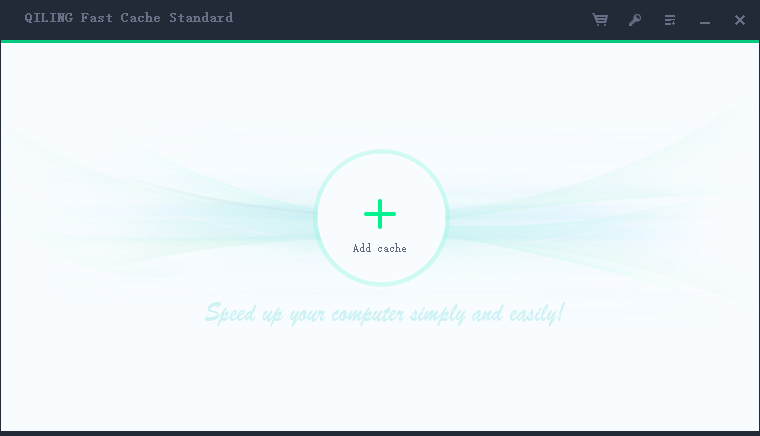
Step 2. Click the "+" button to create a cache task and select the drive you want to accelerate.
Step 3. Choose the medium and size. Add an SSD tier if the cache needs to survive shutdowns, and keep the RAM tier optional for the files read most often.
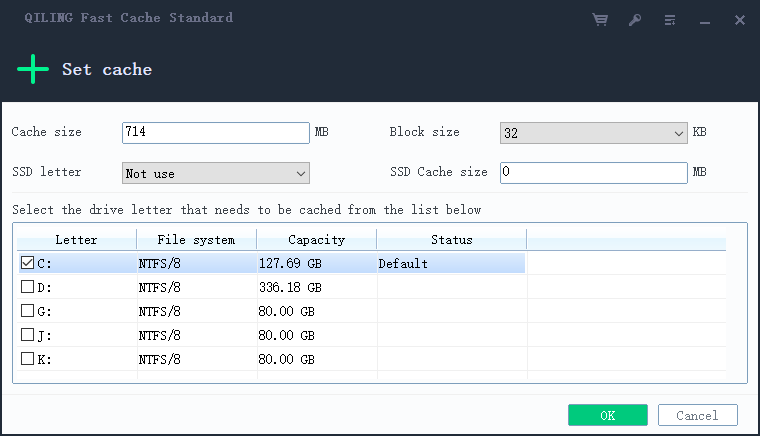
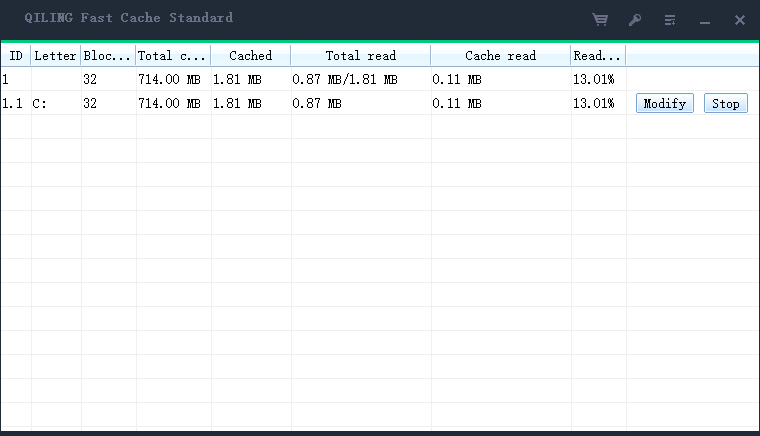
Step 4. Create the task, then shut down and start the machine once to confirm the cache contents are still present after the reboot.
FAQs About Power States and Caching
Does a RAM disk survive a reboot?
Not by default. Memory is cleared on a full shutdown or restart. Hibernation can restore it, and some tools can save an image at shutdown, but neither happens automatically.
Does my SSD cache survive Fast Startup?
Yes. Cache files sit on a real volume, so they persist across shutdown, restart, and hibernation.
Why does my cache reset every morning?
Because it is a RAM tier and the machine was fully shut down. Switch to an SSD tier if you want it warm after every boot.
Should I turn Fast Startup off when using a cache?
Not necessarily; it is safe to leave enabled. Use Restart when troubleshooting, because only Restart fully reinitializes drivers.
Does hibernation hurt an SSD cache?
It writes a large hibernation file each time, which is extra storage traffic, but it does not damage the cache contents.
Back Up Windows Before You Change Settings
Changing power settings and storage configuration is easy to get wrong, and a current image makes it recoverable. Qiling Disk Master creates a full Windows backup you can restore from.
Part 1: Create a Full System Backup
Step 1. Install and open Qiling Disk Master. On the home screen, open "Backup and Recovery" and choose "System Backup". This option automatically includes Windows and the hidden boot partitions, so you do not have to select them one by one.
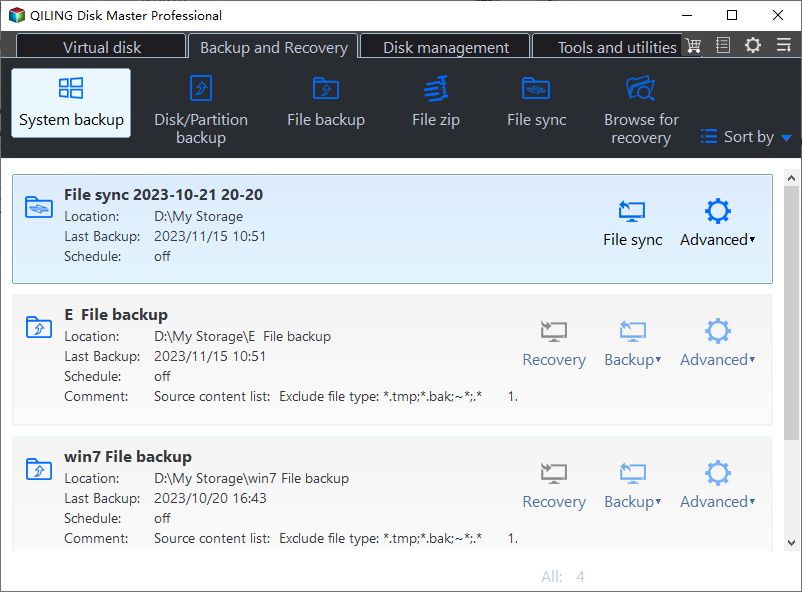
Step 2. Check the source. The disk where Windows is installed and its system partitions are already ticked for you. If you only need your personal documents, run a separate "File Backup" task instead.

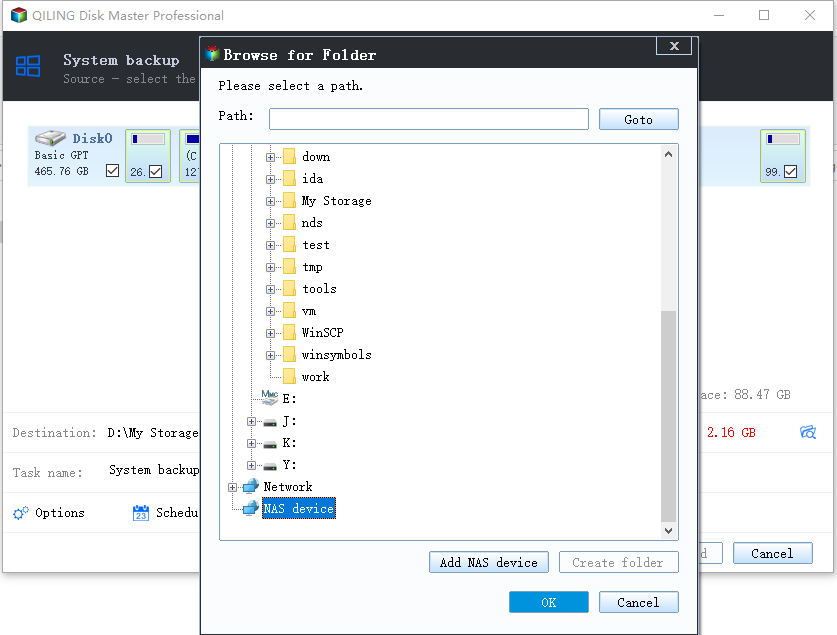
Step 3. Click the destination box and choose where the image should be saved. Use an external HDD or SSD, a NAS, or any drive other than the one Windows is installed on, and make sure it has enough free space.
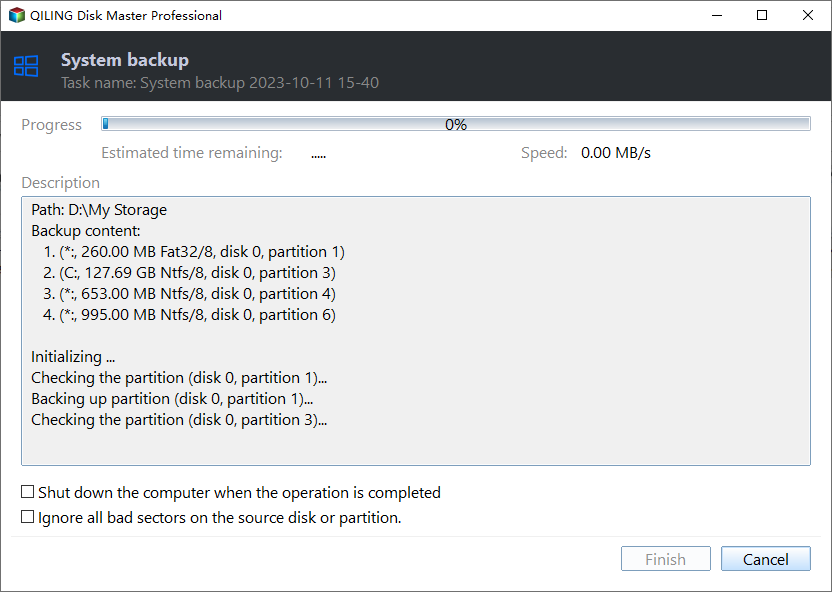
Step 4. Review the task summary and click "Proceed". Wait until the progress bar reaches 100%. Do not unplug the drive or turn off the PC while the backup is running.
Part 2: Restore Windows from the Backup
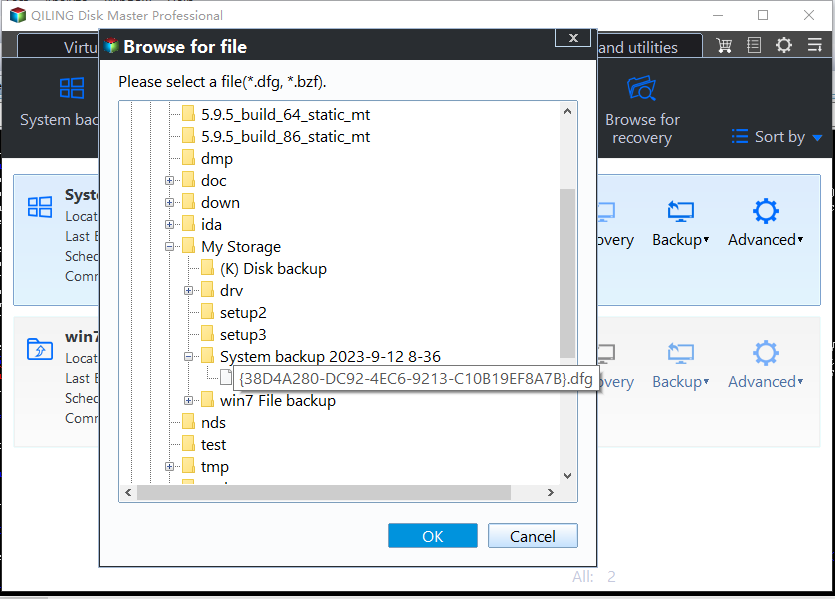
Step 1. Open Qiling Disk Master again, go to "Backup and Recovery", and select the recovery option. Your backup images are listed, so pick the one you created before the changes began.
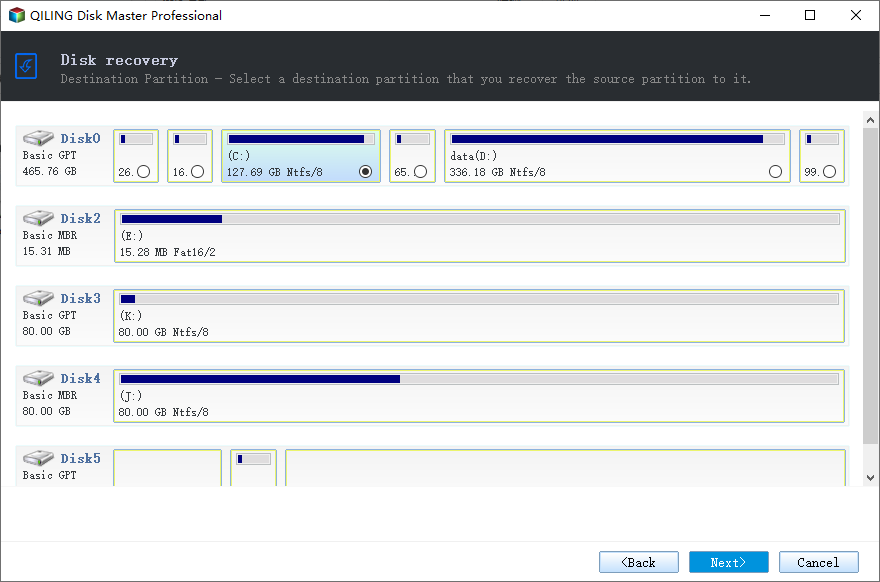
Step 2. Choose the target disk or partition. Normally you restore to the original system disk. If the drive was replaced, select the new disk instead, and the restore rebuilds Windows together with its boot partitions.
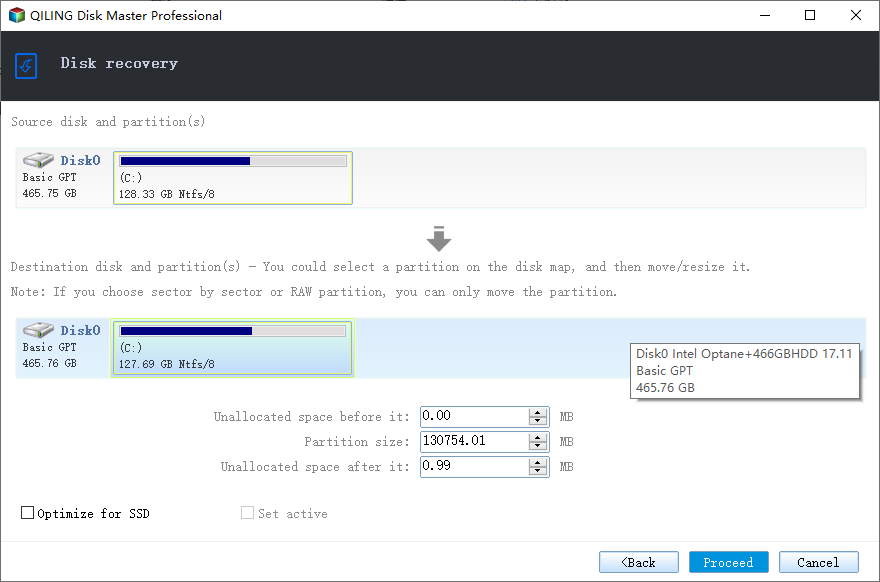
Step 3. Preview the restore plan, click "Proceed", and confirm the warning. The PC restarts to finish the job, and Windows comes back exactly as it was on the day the image was created, with your files and programs intact.
- Note
- Keep the backup image on a separate drive, and refresh it before changing storage cache settings.
Conclusion
Fast Startup, sleep, hibernate, and restart leave your cache in genuinely different states, and knowing which is which prevents a lot of confusion. Sleep keeps a RAM cache intact, hibernate restores it from disk, and a full shutdown or restart clears it. An SSD cache behaves like any other file on disk and survives all of them, which is why it is the better choice when you want the cache warm after every boot. Two practical points follow: for troubleshooting a cache driver, use Restart rather than Shutdown, because only Restart reinitializes everything; and if you want a genuine cold boot, turn Fast Startup off rather than assuming Shut down gives you one.
Protect your PC with Qiling Backup—create a system image before your next round of settings changes.
For more Windows 11 performance guides, see What Is Cache Warm-Up?, What Are L1 and L2 Cache?, How to Reduce Windows 11 Boot Time, Windows 11 Fast Cache, and SSD Cache vs RAM Disk.
Related Articles
- Should You Put the Page File on a RAM Disk? (Short Answer: No)
Hibernation is one of the reasons: the system already needs to write memory to disk when it sleeps deeply. - How to Check Cache Hit Rate and Measure Cache Performance
- How to Move a Disk Cache to Another Drive Safely
- How to Create a RAM Disk in Windows 11
- How Big Should Your Disk Cache Be? A Practical Sizing Guide
- How to Benchmark Disk Cache Performance Correctly
Products
Articles & Tutorials
- Data Recovery
- Data Backup
- File Recovery
- File Backup
- System Backup and Restore
- Disk and Partition Clone
- Technical articles
- Mobile articles
- Disk Master Help
- Windows Data Recovery Tutorials
- Windows Secure Delete Tutorials
- Windows Partition Management Tutorials
- Windows File Backup and Restore Tutorials
- Windows System Backup and Restore Tutorials
- Windows Disk Backup and Restore Tutorials
- Windows Clone Tutorials