Disk Cache and Windows Hibernation Explained
Hibernation is the most disk-intensive thing an ordinary Windows PC does: it writes the entire contents of memory into a single file, then reads it all back the next time you press the power button. That makes it an obvious candidate for caching, and also an easy one to misunderstand.
This guide explains what hibernation actually writes, where a cache can help around it, and why caching the hibernation file itself rarely pays off.
PAGE CONTENT
- What Hibernation Writes to Disk
- Why the File Is So Large
- Where a Cache Helps and Where It Does Not
- Hibernation vs Fast Startup vs Sleep
- Configure a Cache Alongside Hibernation
- FAQs About Hibernation and Caching
- Back Up Windows Before You Change Settings
What Hibernation Writes to Disk
When you hibernate, Windows does not simply close your programs. It freezes the whole session and copies memory to disk:
- Everything open is included. Applications, documents, services, and the kernel state all go into the file.
- The data is compressed. Windows compresses memory before writing, which shrinks the file and reduces the bytes that reach the disk.
- It is one large sequential write. The file is written from beginning to end, not in scattered pieces.
- Resume reads it back in one pass. The same file is streamed back into memory when the PC wakes.
- The technology is shared with fast startup. Fast startup uses the same file, as described in how fast startup affects your disk cache, but covers far less of the system.
Why the File Is So Large
The size of the hibernation file follows the amount of memory installed, not the amount of disk or the number of files you have:
- It must hold the whole session. Anything still open has to survive, so the file has to be large enough for a nearly full memory.
- The default size is a fraction of RAM. Windows reserves a set portion of memory as its estimate; on a machine with 32 GB that is still several gigabytes.
- Compression helps but does not change the shape of the work. Even a well-compressed image is far larger than any typical cache.
- The write and the read happen once. Nothing is reused between the two, which is the classic case described in when a disk cache does not help.
- The faster the drive, the shorter the pause. Hibernate and resume times track drive throughput more closely than any other routine Windows operation.
Where a Cache Helps and Where It Does Not
It helps to separate the hibernation file itself from everything that happens around it:
- The hibernation file is a one-pass workload. A cache cannot store data that is read once and then replaced on the next cycle.
- The same applies to resume. The file is read straight through, so there is nothing to look up a second time.
- What a cache does help is what comes after. Once you resume, your applications re-read their own files, and that is a repeatable pattern. The two kinds of writing are explained in write caching vs read caching.
- Write caching can make hibernation look faster. The data may be acknowledged before it reaches the platters, which shortens the pause but leaves data at risk if power is lost.
- So the honest answer is narrow. A cache improves the minutes after resume, not the resume itself.
Hibernation vs Fast Startup vs Sleep
The three power states are often confused, and only one of them writes a full copy of memory:
- Sleep keeps memory alive. The RAM is refreshed from the power supply, so nothing is written to disk and a power cut loses the session.
- Fast startup writes only the kernel session. The file is much smaller, which is why the pause is short.
- Hibernation writes everything. It is the safe option for a laptop that will sit unused for days, and the slowest of the three.
- Hybrid sleep does both. Memory stays powered while a copy is written, giving safety at the cost of the same large write.
- Battery behaviour changes the picture. On a laptop the trade-off between power saving and disk activity is worth understanding - see whether caching affects battery life.
Configure a Cache Alongside Hibernation
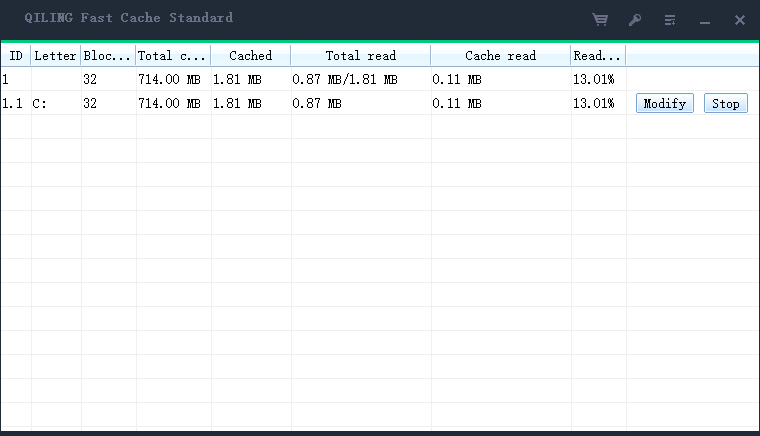
The right target is not the hibernation file but the files your applications read after you resume. Qiling Fast Cache keeps the most reused data in a RAM tier and the rest on an SSD tier, and reports the hit rate in the task list.
Step 1. Install Qiling Fast Cache and open the task list. Time your morning startup routine - the first browser, editor, or mail client you open - before changing anything.
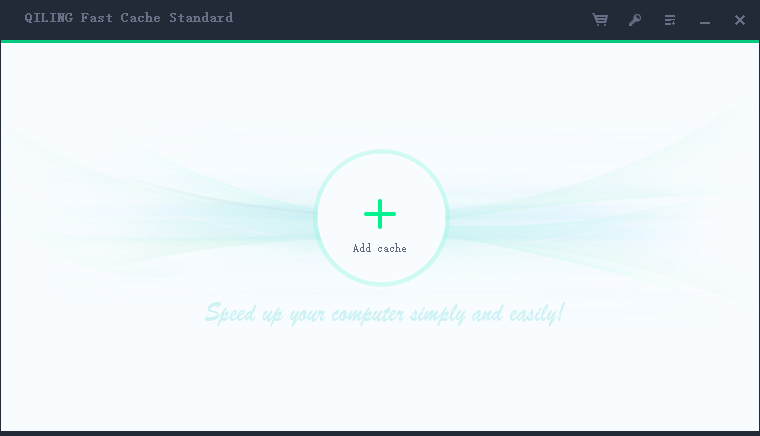
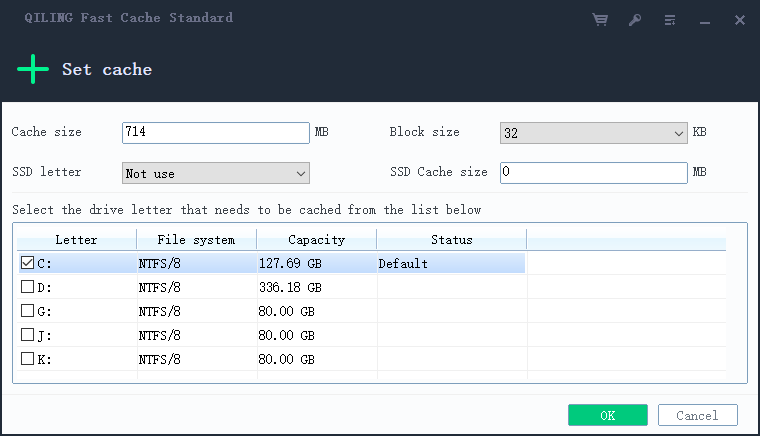
Step 2. Click the "+" button and select the volume that holds your programs and documents, not the volume that holds the hibernation file.
Step 3. Give the SSD tier room for the working set you reopen every day, and keep the RAM tier modest so Windows still has memory to hibernate.
Step 4. Resume from hibernation on several days and repeat the same routine. Compare the times and read the hit rate - see how to check cache hit rate.
FAQs About Hibernation and Caching
Will a disk cache make hibernation faster?
No. Writing the file is a single sequential pass with nothing to reuse, so a read cache cannot shorten it.
Should I cache the hibernation file itself?
No. Windows reads and writes it once per cycle, which is exactly the pattern a cache cannot improve.
Then where does the improvement come from?
From everything you reopen after resume: browsers, editors, mail clients, and project files are read again and again.
Is fast startup better than full hibernation?
It is faster because it stores less. Full hibernation is the safer choice when a laptop will be left unplugged for a long time.
Can I disable the file to save disk space?
Yes, and many people do. You lose hibernation and fast startup, so weigh the free space against the convenience.
Back Up Windows Before You Change Settings
Reconfiguring storage and cache settings is easier to undo when you have a recent image. Qiling Disk Master creates a full Windows backup you can restore from.
Part 1: Create a Full System Backup
Step 1. Install and open Qiling Disk Master. On the home screen, open "Backup and Recovery" and choose "System Backup". This option automatically includes Windows and the hidden boot partitions, so you do not have to select them one by one.
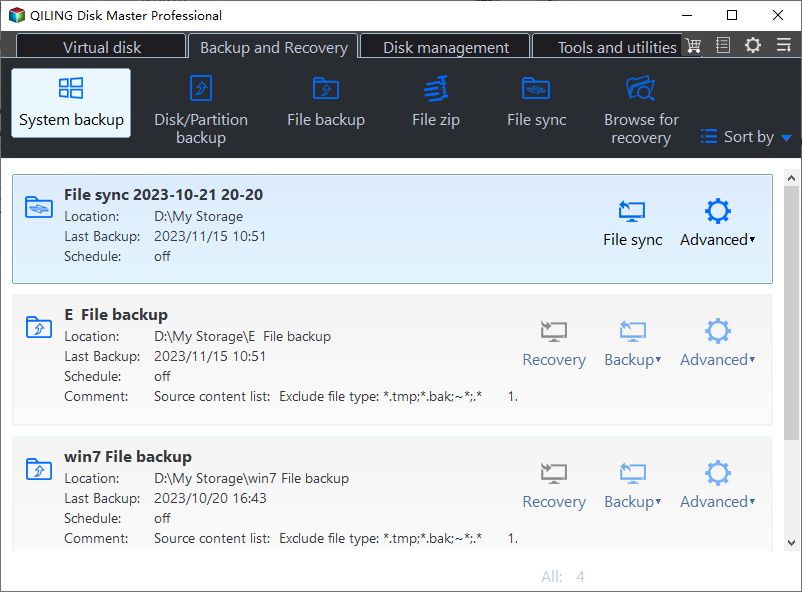
Step 2. Check the source. The disk where Windows is installed and its system partitions are already ticked for you. If you only need your personal documents, run a separate "File Backup" task instead.

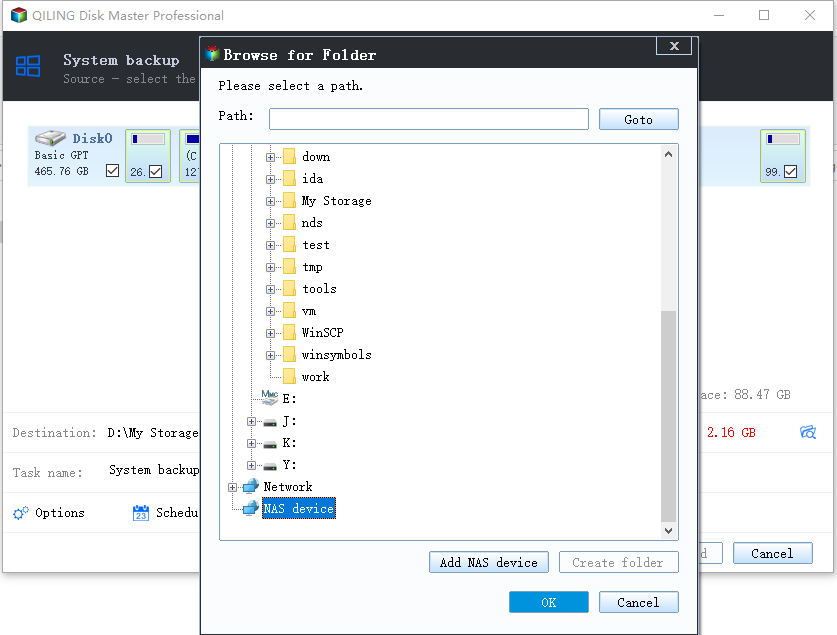
Step 3. Click the destination box and choose where the image should be saved. Use an external HDD or SSD, a NAS, or any drive other than the one Windows is installed on, and make sure it has enough free space.
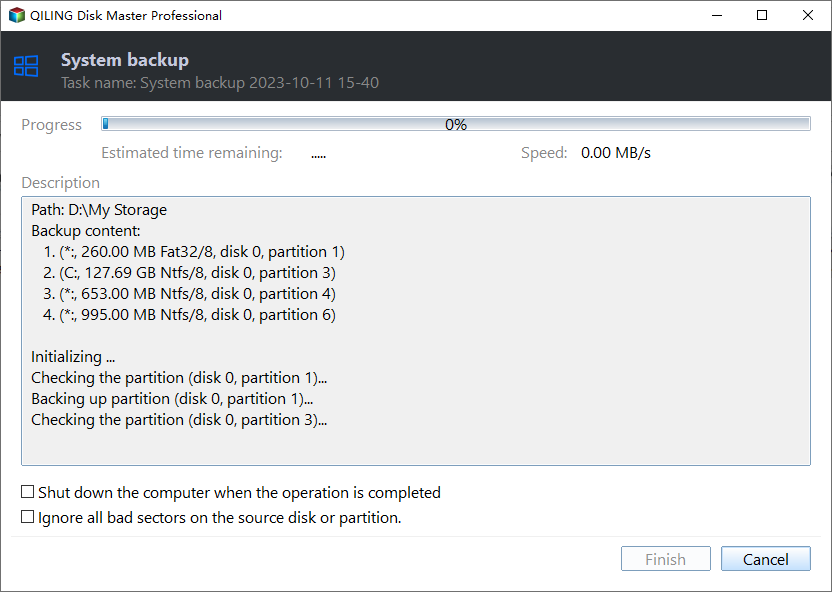
Step 4. Review the task summary and click "Proceed". Wait until the progress bar reaches 100%. Do not unplug the drive or turn off the PC while the backup is running.
Part 2: Restore Windows from the Backup
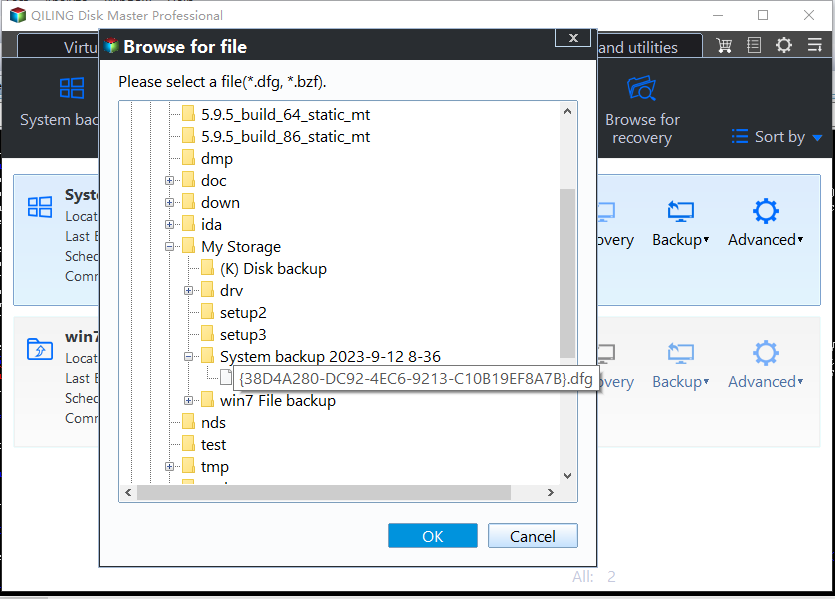
Step 1. Open Qiling Disk Master again, go to "Backup and Recovery", and select the recovery option. Your backup images are listed, so pick the one you created before the changes began.
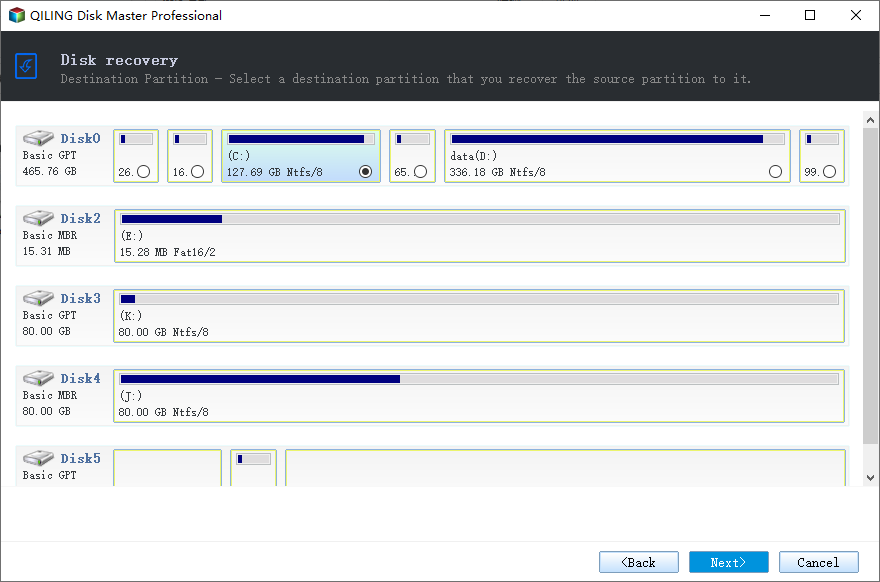
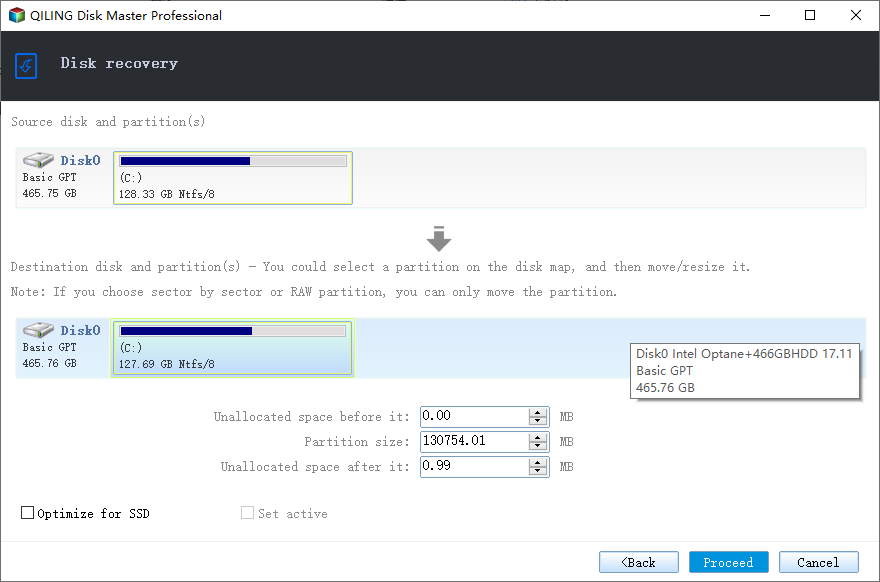
Step 2. Choose the target disk or partition. Normally you restore to the original system disk. If the drive was replaced, select the new disk instead, and the restore rebuilds Windows together with its boot partitions.
Step 3. Preview the restore plan, click "Proceed", and confirm the warning. The PC restarts to finish the job, and Windows comes back exactly as it was on the day the image was created.
- Note
- Keep the backup image on a separate drive, and refresh it before changing storage cache settings.
Conclusion
Hibernation is a single large write followed later by a single large read, and neither of those passes can be cached. What a cache can do is remove the waiting that follows resume, when your browser, editor, and mail client read the same files they read yesterday. Treat the hibernation file as something to leave alone and point the cache at the volume your applications actually use. If you use fast startup instead, the same logic applies: the kernel session is written once, but the desktop you return to is not. Measure the routine you repeat each morning rather than the power button itself.
Protect your PC with Qiling Backup—create a system image before your next round of settings changes.
For more Windows 11 performance guides, see Does Disk Caching Work with BitLocker Encryption?, How to Extend SSD Lifespan by Reducing Writes, Can a Disk Cache Reduce TRIM and Defrag Work?, Windows Update Cache: Why It Grows and How to Clear It Safely, and Should Your Disk Cache Live on the Windows Drive?.
Related Articles
- Do Virtual Machine Snapshots Benefit from a Disk Cache?
A snapshot writes a large image the same way hibernation does, and the same limits apply. - Windows Font Cache and Disk Caching Explained
- How to Reduce Windows 11 Boot Time with an SSD Cache
- How Caching Interacts with System Restore Points
- Does Heat Slow Down Your SSD Cache?
Products
Articles & Tutorials
- Data Recovery
- Data Backup
- File Recovery
- File Backup
- System Backup and Restore
- Disk and Partition Clone
- Technical articles
- Mobile articles
- Disk Master Help
- Windows Data Recovery Tutorials
- Windows Secure Delete Tutorials
- Windows Partition Management Tutorials
- Windows File Backup and Restore Tutorials
- Windows System Backup and Restore Tutorials
- Windows Disk Backup and Restore Tutorials
- Windows Clone Tutorials