Does Heat Slow Down Your SSD Cache?
A drive that is fast for ten minutes and then crawls is showing a classic pattern, and it is usually blamed on caching software. In most cases the cause is temperature, not the cache.
This guide explains what actually gets hot, why both an SSD and its controller slow down when warm, and how to tell thermal throttling apart from a cache that is behaving normally.
PAGE CONTENT
- Two Different Things That Get Hot
- Why a Hot SSD Slows Down
- Why Your Cache Looks Like the Culprit
- Keeping Temperatures in a Safe Range
- Configure a Cache with Thermals in Mind
- FAQs About Heat, Caching, and Throttling
- Back Up Windows Before You Change Settings
Two Different Things That Get Hot
- The SSD controller. It handles every read and write, runs the flash translation layer, and is the hottest part of a modern drive under load.
- The NAND flash itself. Writing to flash needs more voltage than reading, so write-heavy work generates more heat than read-heavy work.
- A cache adds a third heat source if it is RAM. Memory-based caching consumes power, though far less than sustained flash writes.
- An SSD tier adds a fourth. If the cache sits on its own SSD, that drive is now also doing continuous work on top of the source drive.
- Everything shares a case. In a laptop or a small enclosure, the drives, the CPU, and the GPU all contribute to one pocket of hot air.
Why a Hot SSD Slows Down
- Firmware deliberately throttles. When the controller passes a temperature threshold, it reduces speed to protect the data and the hardware.
- The drop can be dramatic. A throttled NVMe drive may fall from several gigabytes per second to a fraction of that, and stay there until it cools.
- Sustained writes trigger it first. Bursts of reading rarely heat a drive as much as a long copy or a large installation.
- The SLC cache complicates the picture. A drive can run fast while the pseudo-SLC area absorbs writes and then slow twice over - once from running out of cache, once from heat - which is easy to misread.
- Small enclosures make it worse. USB and external housings often have no airflow at all, so heat has nowhere to go.
Why Your Cache Looks Like the Culprit
- The timing looks identical. Both a cache filling up and a drive throttling produce the same symptom: fast at first, slow later.
- The cache is the newest change. When something slows down after you install caching software, the software gets the blame by default.
- Pausing the cache appears to fix it. Removing the load lets the drive cool, so the improvement is thermal rather than caused by the cache itself.
- Benchmarks make it worse. Repeated test runs heat the drive faster than normal use, so a benchmark is the worst place to judge a thermal problem.
- The distinction matters. The same confusion appears with SLC caching running out - see SSD SLC cache vs software disk cache.
Keeping Temperatures in a Safe Range
- Watch the drive temperature, not the case. Monitoring utilities report SSD and NVMe temperatures directly, and that is the number that matters.
- Add airflow where you can. A fan near the drive bay, or simply a case with better intake, often solves the problem outright.
- Avoid cheap fanless enclosures for heavy work. External housings with metal bodies and vents handle sustained writes far better than sealed plastic ones.
- Spread heavy writes over time. Copying in several smaller batches lets the drive cool between them instead of throttling halfway through.
- Choose the right cache block size for your workload. Very small blocks mean more transactions and more controller work, which adds heat - see choosing an SSD cache block size.
Configure a Cache with Thermals in Mind
A cache can reduce heat rather than add to it, because serving reads from memory means the drive does less work. Qiling Fast Cache lets you choose the medium and size so the load lands where you want it.
Step 1. Install and open Qiling Fast Cache. On first run the task list is empty, so you can compare temperatures before and after adding a task.
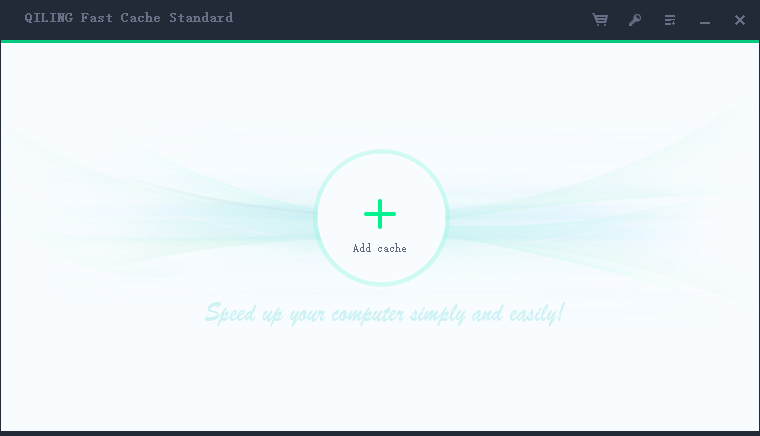
Step 2. Click the "+" button and select the drive that runs hottest under your normal workload.
Step 3. Choose the medium and size. A RAM tier keeps the hottest reads off the drive entirely, while an SSD tier adds work to a second device.
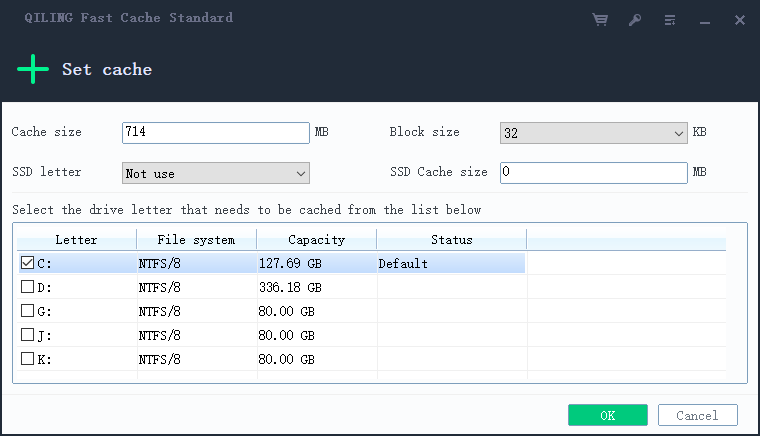
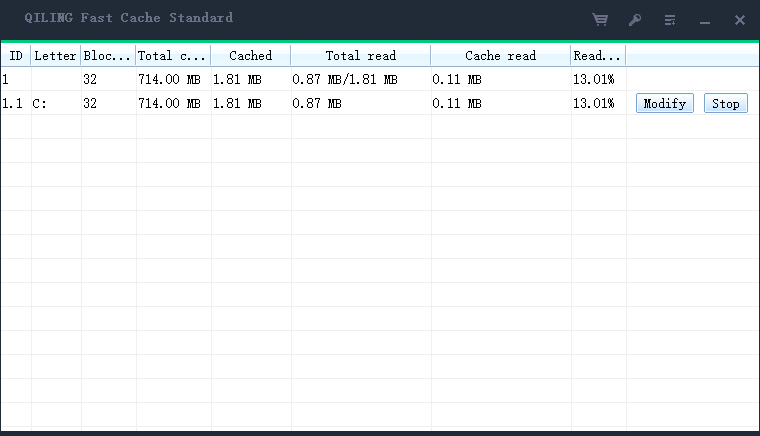
Step 4. Create the task, then repeat the workload that used to slow down and watch both the hit rate and the drive temperature.
FAQs About Heat, Caching, and Throttling
Why is my SSD fast and then suddenly slow?
Two common causes: the drive's SLC cache ran out, or the controller hit its temperature limit and throttled. Check the temperature first.
Does caching software cause overheating?
Usually not. Caching reads reduces drive activity, though an SSD tier does add work to a second device.
How hot is too hot for an SSD?
Behaviour varies by model, but most drives begin throttling somewhere in the region of 70 degrees Celsius and return to full speed once they cool.
Will a heatsink help?
Often yes, especially on NVMe drives that sit under a hot graphics card. A simple heatsink can remove throttling entirely.
Why does it only happen during long copies?
Because sustained writes generate far more heat than short bursts, and that is the workload most likely to push the controller past its limit.
Back Up Windows Before You Change Settings
If you are moving drives to improve cooling, make sure you can get back to a working system. Qiling Disk Master creates a full Windows backup you can restore from.
Part 1: Create a Full System Backup
Step 1. Install and open Qiling Disk Master. On the home screen, open "Backup and Recovery" and choose "System Backup". This option automatically includes Windows and the hidden boot partitions, so you do not have to select them one by one.
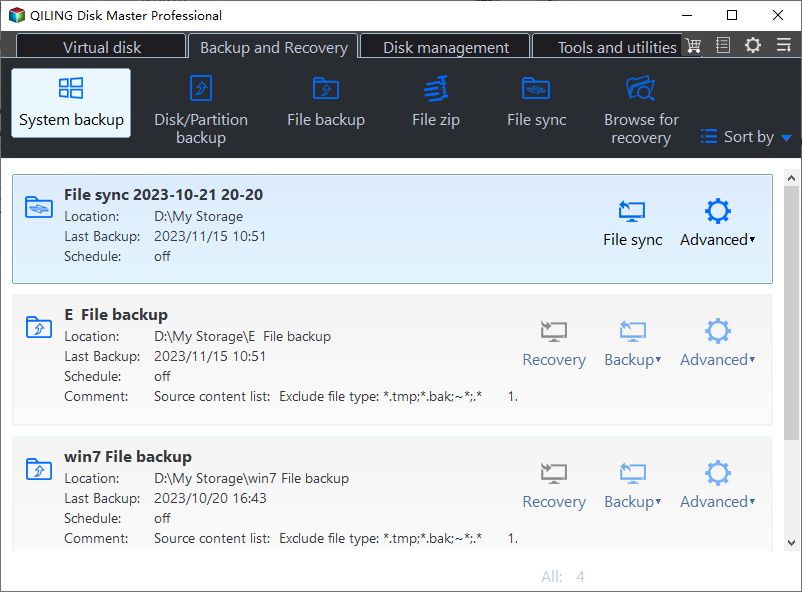
Step 2. Check the source. The disk where Windows is installed and its system partitions are already ticked for you. If you only need your personal documents, run a separate "File Backup" task instead.

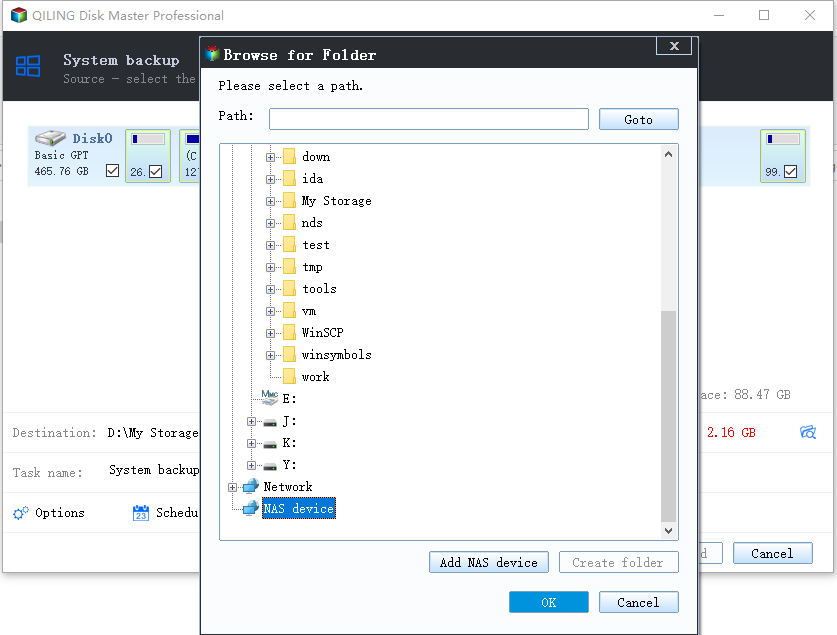
Step 3. Click the destination box and choose where the image should be saved. Use an external HDD or SSD, a NAS, or any drive other than the one Windows is installed on, and make sure it has enough free space.
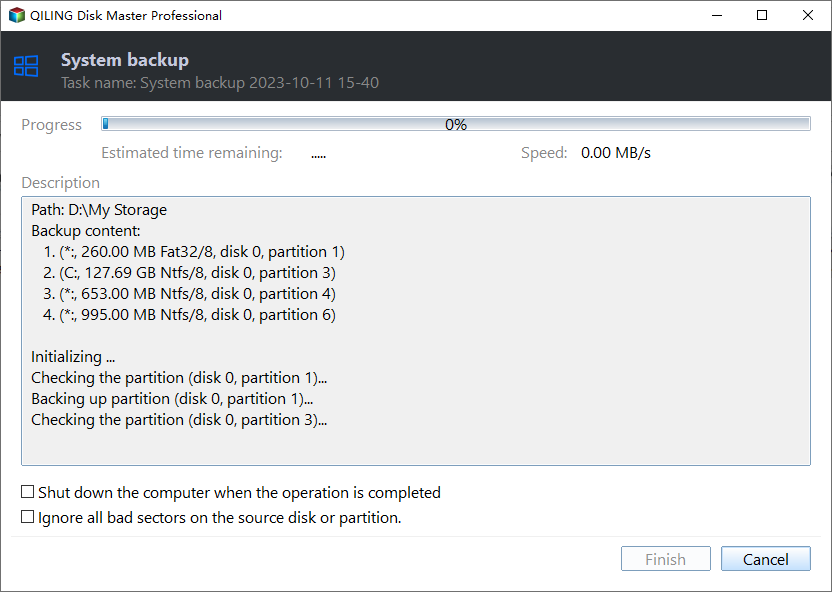
Step 4. Review the task summary and click "Proceed". Wait until the progress bar reaches 100%. Do not unplug the drive or turn off the PC while the backup is running.
Part 2: Restore Windows from the Backup
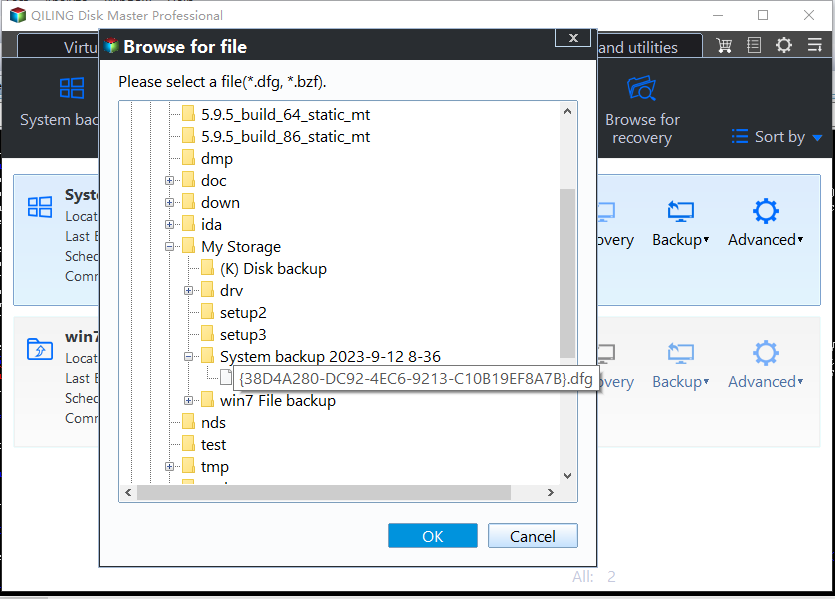
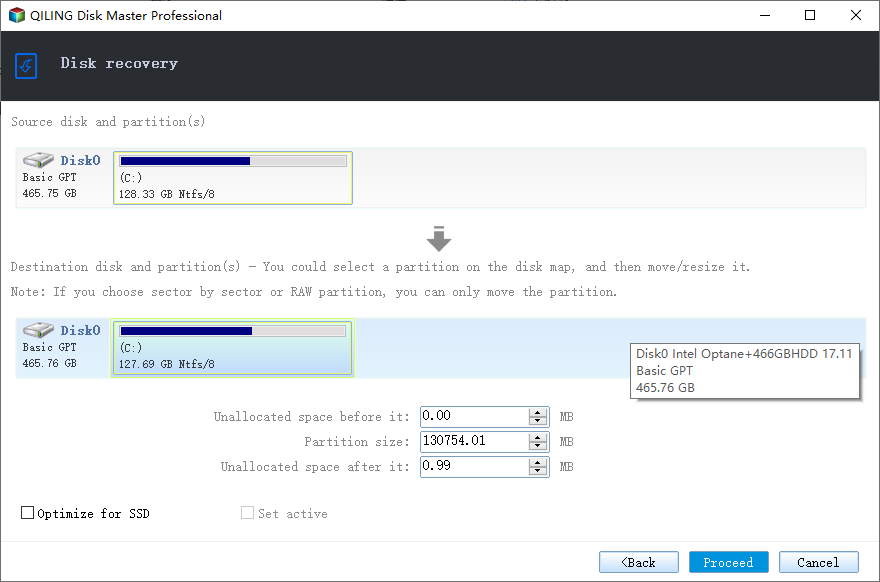
Step 1. Open Qiling Disk Master again, go to "Backup and Recovery", and select the recovery option. Your backup images are listed, so pick the one you created before the changes began.
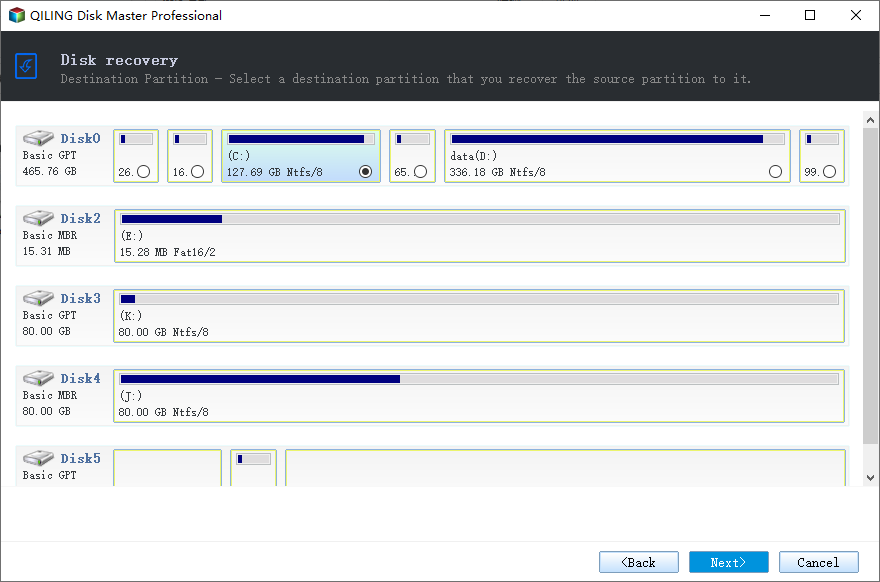
Step 2. Choose the target disk or partition. Normally you restore to the original system disk. If the drive was replaced, select the new disk instead, and the restore rebuilds Windows together with its boot partitions.
Step 3. Preview the restore plan, click "Proceed", and confirm the warning. The PC restarts to finish the job, and Windows comes back exactly as it was on the day the image was created, with your files and programs intact.
- Note
- Keep the backup image on a separate drive, and refresh it before changing storage cache settings.
Conclusion
The "fast, then slow" pattern has two usual explanations, and they are frequently confused. One is the drive's internal SLC cache filling up; the other is the controller hitting its thermal limit and deliberately reducing speed to protect the hardware. Caching software often gets the blame simply because it was installed most recently, but serving reads from memory reduces drive activity rather than increasing it - unless the cache sits on its own SSD, which does add a second device's worth of work. The way to tell them apart is to measure: watch the drive temperature during the slow phase, and repeat the workload after the drive cools. If heat is the cause, airflow, a heatsink, or simply spreading out long writes will fix it far more reliably than any software setting.
Protect your PC with Qiling Backup—create a system image before your next round of settings changes.
For more Windows 11 performance guides, see How to Check Cache Hit Rate, Cache vs Buffer, How to Extend SSD Lifespan, When Caching Does Not Help, and Should You Cache a Slow Drive or Buy a Bigger SSD?.
Related Articles
- Caching for NVR and Surveillance Storage Explained
Continuous writing, which is exactly the workload most likely to make a drive run hot. - Disk Cache vs Windows Memory Compression: Which Wins?
- Does a Disk Cache Help Video Conferencing?
- Does a Disk Cache Help Android Emulators?
- Windows Font Cache and Disk Caching Explained
Products
Articles & Tutorials
- Data Recovery
- Data Backup
- File Recovery
- File Backup
- System Backup and Restore
- Disk and Partition Clone
- Technical articles
- Mobile articles
- Disk Master Help
- Windows Data Recovery Tutorials
- Windows Secure Delete Tutorials
- Windows Partition Management Tutorials
- Windows File Backup and Restore Tutorials
- Windows System Backup and Restore Tutorials
- Windows Disk Backup and Restore Tutorials
- Windows Clone Tutorials