Should You Cache a Slow Drive or Buy a Bigger SSD?
Your PC feels slow, the drive is the suspected cause, and there are two ways forward: cache the drive you already have with software and the storage you own, or replace it with a larger SSD. One costs nothing but your time; the other costs money and a migration. They are not equivalent, and the right answer depends on what is actually wrong.
This guide lays out what each option delivers, what it costs in money and effort, and how to decide in three steps.
PAGE CONTENT
- The Choice in Plain Terms
- What Caching Gives You
- What a Bigger SSD Gives You
- Cost and Effort Compared
- When Caching Is Clearly Enough
- When Replacing the Drive Is Better
- Making the Decision
- FAQs About Caching vs Upgrading
- Back Up Windows Before You Change Settings
The Choice in Plain Terms
Caching keeps copies of the data you read most on faster storage — spare RAM, a spare SSD, or both — and answers repeat reads from there. Your files stay exactly where they are, nothing is reinstalled, and the benefit is transparent to every application.
Replacing the drive moves everything onto faster, usually larger, storage. After a clone or reinstall, the whole volume runs at the new drive's speed, with no caching layer involved.
The key difference is what each one fixes. Caching fixes repeated slow reads. Replacing fixes both speed and capacity, and removes the slow device from the equation entirely.
What Caching Gives You
Advantages:
- It is free if you have the hardware. A spare SSD and some unallocated memory cost nothing extra.
- No migration and no downtime. Install, configure, and keep working. There is no clone to verify and no reinstall.
- It works on the data you already have. Nothing moves, so nothing breaks, and no application needs reconfiguring.
- It can be undone instantly if you do not like the result.
- It accelerates drives you cannot replace, such as a laptop's single internal drive or an external volume.
Limitations:
- It adds no capacity. If your drive is full, caching does not help at all.
- It helps reads far more than large sequential writes. Copying a 20 GB file is limited by the drive's raw speed.
- It needs something to cache with — spare memory or a spare SSD. Without either, there is nothing to install.
- Caches need warming, so a RAM-only cache starts over after every reboot; see What Is Cache Warm-Up?.
- A failing drive stays failing. Caching a drive that is dying only postpones the problem.
What a Bigger SSD Gives You
Advantages:
- Real capacity. Room for the games, projects, or virtual machines your current drive cannot hold.
- Full speed for everything, not just the hot subset. Reads, writes, and large transfers all improve.
- No caching logic. Nothing to tune, no hit rate to watch, no warm-up after a reboot.
- Lower risk long term. A new drive replaces an aging one, which is a reliability improvement as well as a speed one.
Limitations:
- It costs money, and larger capacities cost more.
- It requires migration. A clone takes time and must be verified, and some setups need a reinstall.
- It is irreversible if you buy the wrong size or a drive you do not need.
- It does not fix a CPU, GPU, or memory bottleneck. If the machine is short of RAM, a faster drive will not stop the paging.
Cost and Effort Compared
| Factor | Caching | Bigger SSD |
|---|---|---|
| Money | Free if you own a spare SSD or RAM | The price of the new drive |
| Time | Minutes to set up | Hours, including clone and verification |
| Downtime | None beyond a restart | An evening or a weekend |
| Capacity added | None | The full size of the new drive |
| Speed gained | Large for repeated reads, small for sequential writes | Consistent across everything |
| Reversible | Yes, instantly | No, though the drive can be reused |
| Fixes a full drive | No | Yes |
| Fixes a failing drive | No | Yes |
When Caching Is Clearly Enough
- The drive is healthy but slow. A working hard drive with plenty of free space is an ideal cache target.
- You have a spare SSD or spare memory. The upgrade is free, which makes the decision easy.
- Your work is read-heavy. Browsing media libraries, opening the same projects, launching the same applications, and running the same games all repeat the same reads.
- You cannot take the machine offline. A work PC that cannot be reimaged is a poor candidate for a drive replacement.
- The bottleneck is elsewhere. If the CPU or GPU limits what you do, a faster drive will not change the outcome, so spend nothing.
Step 1. Download and install Qiling Fast Cache to try it.
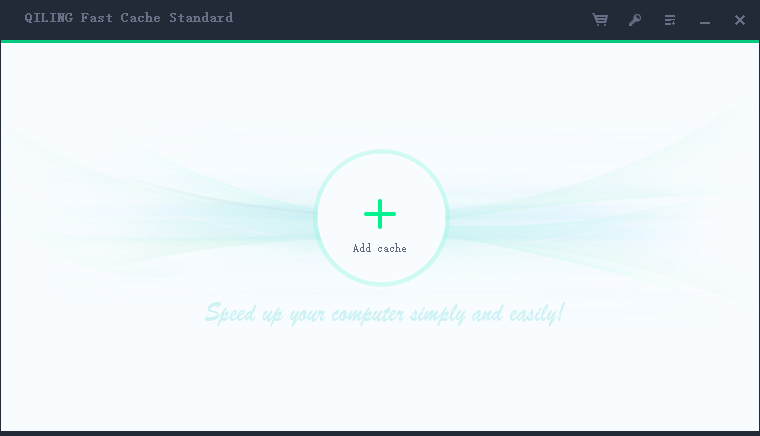
Step 2. Open the program, click the + button, and select the slow drive.
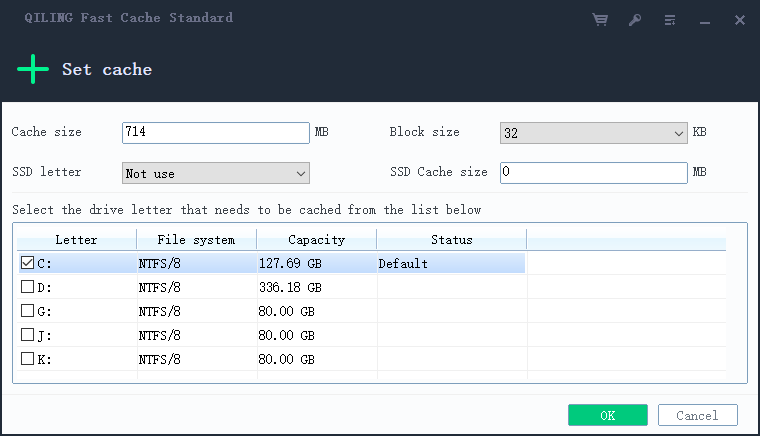
Step 3. Set the size according to How Big Should Your Cache Be? and add the SSD tier if you have a spare drive.
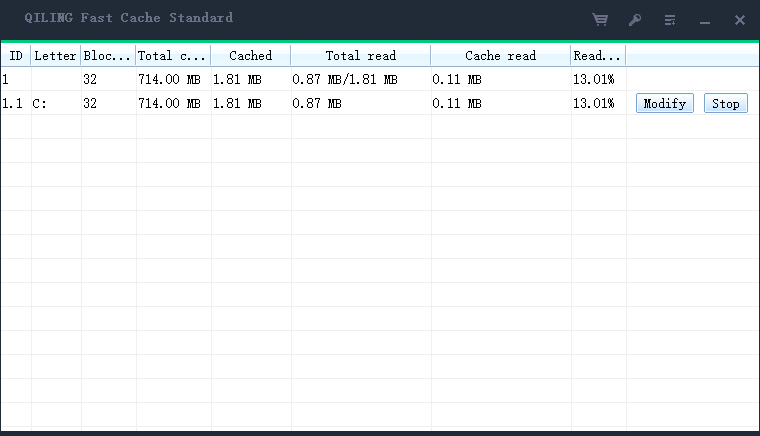
Step 4. Use the PC normally for a few days. If the hit rate settles above 50 percent and the machine feels better, keep it. If nothing changed, you have lost only time and can uninstall.
When Replacing the Drive Is Better
- The drive is failing. Check its health before anything else; caching a dying drive is a bad plan. See How to Extend Your SSD Lifespan for the endurance picture.
- You are out of space. No cache creates capacity, and a full drive is slow for its own reasons.
- You want one simple system. Some people prefer not to run a caching layer at all, and that is a legitimate preference.
- The device already has a fast drive. If the system disk is NVMe, caching it adds little; the real need is probably capacity.
- You are upgrading anyway. If you are replacing an old drive as part of a planned refresh, a larger SSD is the natural choice.
Whatever you decide, do the migration with a proper tool and keep a verified backup. Qiling Disk Master can both image the system and clone a drive, so the old volume remains intact until the new one is proven:
Making the Decision
Step 1. Diagnose the bottleneck. Open Task Manager and watch the Performance tab during the task that feels slow. If the disk is at 100 percent while the CPU and memory are comfortable, storage is the problem. If memory is nearly full, you need RAM, not a drive.
Step 2. Check free space and drive health. If free space is under 10 percent, or the drive reports failing attributes, capacity and replacement take priority over caching.
Step 3. Try the free option first. If you have a spare SSD or spare memory and the drive is healthy, install Qiling Fast Cache and measure for a few days. It costs you an hour and is completely reversible. Only if it fails to deliver — or if you also need space — is it time to buy a drive.
FAQs About Caching vs Upgrading
Is caching a substitute for an SSD upgrade?
For speed, often yes. For capacity and reliability, no. Caching makes a healthy slow drive feel faster; it cannot make it bigger or newer.
Will caching slow my machine down?
Only if you allocate too much RAM to it. Keep at least 8 GB free for Windows and applications, and monitor memory after you change the setting.
Which gives a bigger improvement?
A drive replacement gives a bigger and more consistent improvement, because everything runs at the new drive's speed. Caching gives a large improvement on the subset of data that repeats, which is most everyday work.
Can I do both?
Yes, and it is common: replace a failing or tiny system drive, then use the old SSD as a cache for a large data drive. See What to Do with a Spare SSD.
What if I have neither a spare SSD nor spare RAM?
Then caching is not available, and the choice is between a drive upgrade and accepting current performance. Adding RAM is often the cheapest first step if Task Manager shows memory pressure.
Does caching work on an external drive?
Yes, an external SSD or HDD can be cached like any local volume. See Use an SSD Cache for an External Drive.
Back Up Windows Before You Change Settings
Both paths involve storage changes, so start with a backup. Qiling Disk Master creates a full Windows image you can restore from if anything goes wrong.
Part 1: Create a Full System Backup
Step 1. Install and open Qiling Disk Master. On the home screen, open "Backup and Recovery" and choose "System Backup". This option automatically includes Windows and the hidden boot partitions, so you do not have to select them one by one.
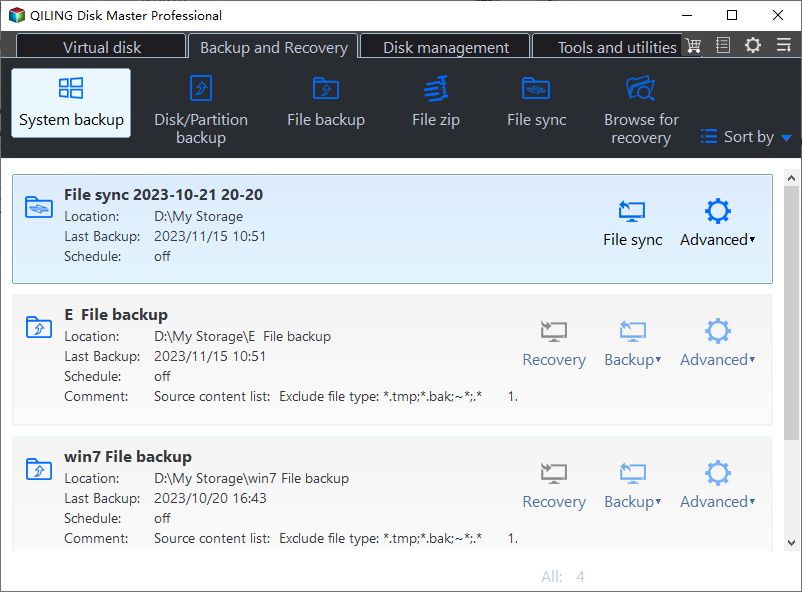
Step 2. Check the source. The disk where Windows is installed and its system partitions are already ticked for you. If you only need your personal documents, run a separate "File Backup" task instead.

Step 3. Click the destination box and choose where the image should be saved. Use an external HDD or SSD, a NAS, or any drive other than the one Windows is installed on, and make sure it has enough free space.
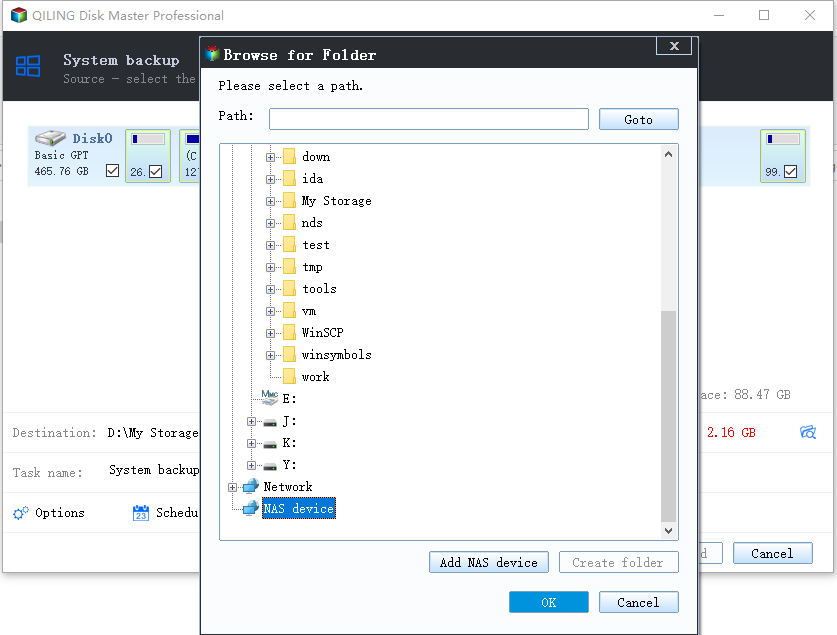
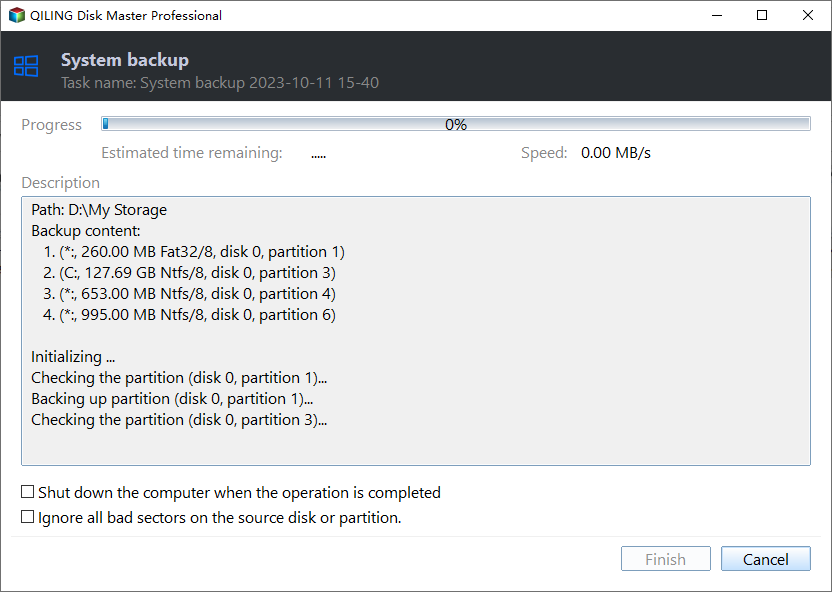
Step 4. Review the task summary and click "Proceed". Wait until the progress bar reaches 100%. Do not unplug the drive or turn off the PC while the backup is running.
Part 2: Restore Windows from the Backup
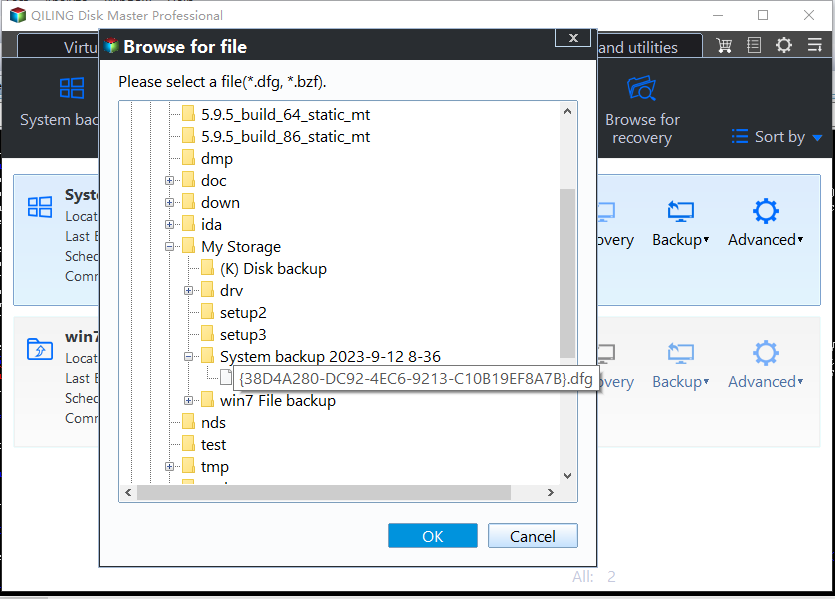
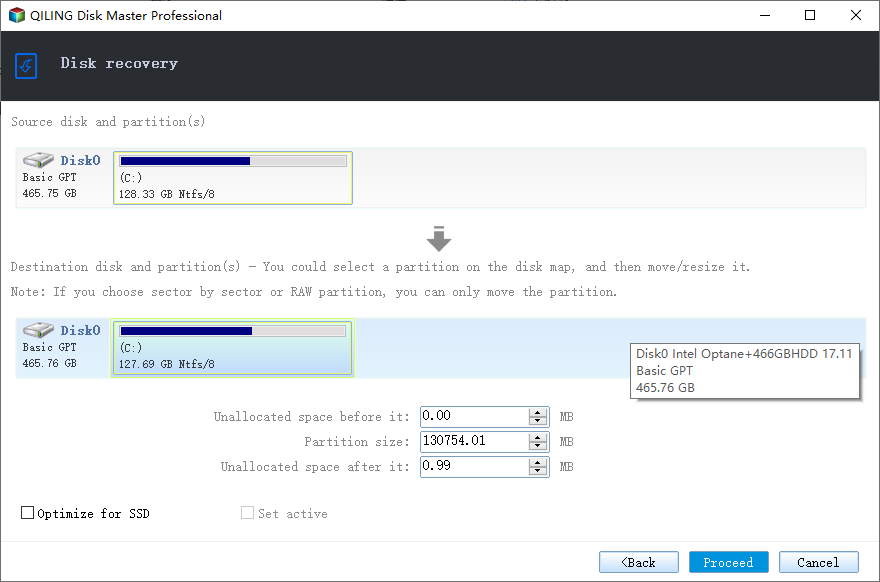
Step 1. Open Qiling Disk Master again, go to "Backup and Recovery", and select the recovery option. Your backup images are listed, so pick the one you created before the changes began.
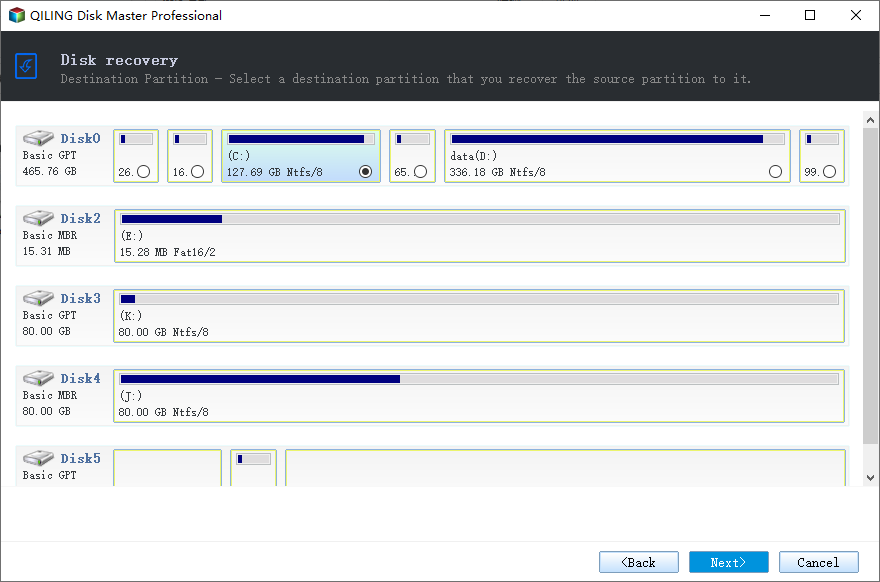
Step 2. Choose the target disk or partition. Normally you restore to the original system disk. If the drive was replaced, select the new disk instead, and the restore rebuilds Windows together with its boot partitions.
Step 3. Preview the restore plan, click "Proceed", and confirm the warning. The PC restarts to finish the job, and Windows comes back exactly as it was on the day the image was created, with your files and programs intact.
- Note
- Keep the backup image on a separate drive, and keep it until the new drive has been running reliably for a week.
Conclusion
Caching and replacing a drive solve overlapping but different problems. Caching fixes repeated slow reads, costs nothing if you already own a spare SSD or spare memory, takes minutes, and is instantly reversible — which is why it deserves to be tried first. Replacing a drive fixes capacity, raw speed, and reliability all at once, at the price of money and a migration. Diagnose the bottleneck in Task Manager, check free space and drive health, and then decide. If the drive is healthy and the problem is speed, start with Qiling Fast Cache; if you need space or the drive is failing, plan the upgrade and let Qiling Disk Master handle the clone or the system image.
Protect your PC with Qiling Backup—create a system image before your next round of settings changes.
For more Windows 11 performance guides, see Windows 11 Fast Cache, How Big Should Your Cache Be?, What to Do with a Spare SSD, How to Check Cache Hit Rate, and How to Use Extra RAM to Speed Up Your PC.
Related Articles
- How Big Should Your Disk Cache Be? A Sizing Guide
Set the cache correctly before you judge the results. - What to Do with a Spare SSD: 5 Practical Uses
The best options once you have an unused drive in hand. - SSD Cache vs RAM Disk: Which Speeds Up Windows 11 More?
- How to Use Extra RAM (16GB/32GB) to Speed Up Your PC
- How to Extend Your SSD Lifespan
Products
Articles & Tutorials
- Data Recovery
- Data Backup
- File Recovery
- File Backup
- System Backup and Restore
- Disk and Partition Clone
- Technical articles
- Mobile articles
- Disk Master Help
- Windows Data Recovery Tutorials
- Windows Secure Delete Tutorials
- Windows Partition Management Tutorials
- Windows File Backup and Restore Tutorials
- Windows System Backup and Restore Tutorials
- Windows Disk Backup and Restore Tutorials
- Windows Clone Tutorials