What to Do with a Spare SSD: 5 Practical Uses
Most people upgrade an SSD and then leave the old one in a drawer. That is a waste, because a drive that feels too small to be a system disk is still many times faster than any hard drive. A spare SSD can accelerate an existing drive, hold the data that is constantly rewritten, or become the safest place in your PC to keep a system image.
Here are five uses worth considering, roughly in order of how much difference they make for the effort involved.
PAGE CONTENT
- Why a Spare SSD Is Worth Using
- Use 1: Cache a Slow Hard Drive
- Use 2: Hold Projects, Scratch Files, and Temp
- Use 3: Store Virtual Machines and Containers
- Use 4 and 5: Stage Builds and Downloads, or Hold Backups
- How to Choose Which Use Fits
- FAQs About Reusing an SSD
- Back Up Windows Before You Change Settings
Why a Spare SSD Is Worth Using
Three properties make an old SSD valuable even when it is small:
- Speed that dwarfs a hard drive. Even a SATA SSD is several times faster than an HDD at the small random reads that dominate everyday use.
- Capacity that is still useful for the right job. A 128 GB or 256 GB drive is a poor system disk but an excellent cache, scratch area, or backup target.
- Sunk cost. You already own it, so any improvement it produces is free.
Before using it, check the drive's health and write endurance with a tool that reports SMART data. A drive with failing attributes should not become a backup target or hold anything you care about.
Use 1: Cache a Slow Hard Drive
This is usually the best use, because it improves everything on the cached drive rather than one specific task. The SSD holds copies of the blocks you read most, so repeated reads come from the SSD instead of the hard drive. Nothing is moved, and no application needs to change.
Step 1. Download and install Qiling Fast Cache.
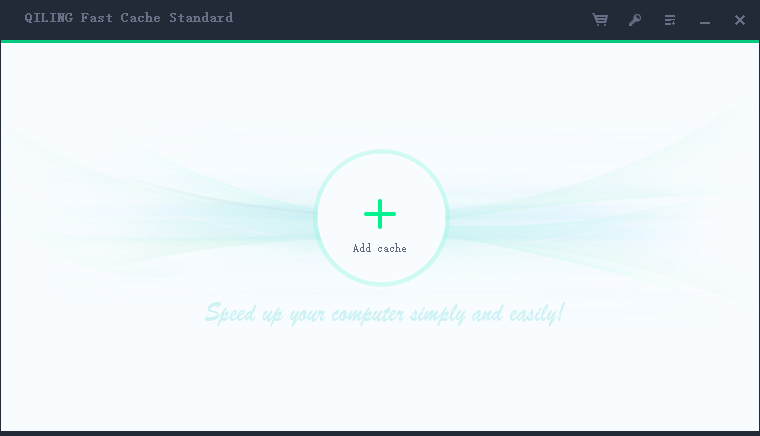
Step 2. Open the program and click the + button to create a cache task.
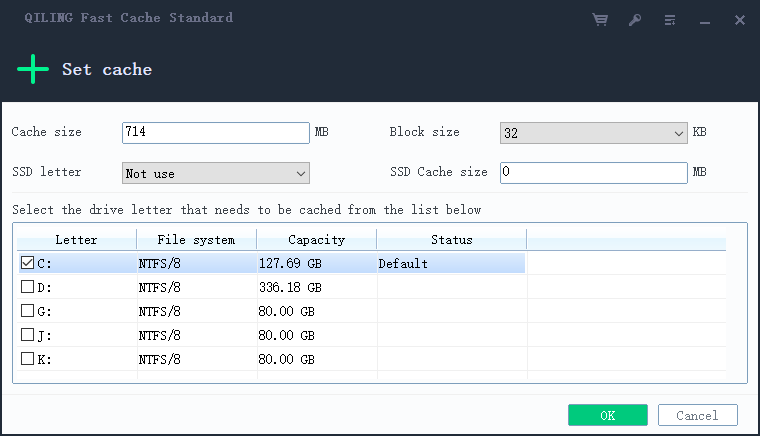
Step 3. Select the drive to accelerate — the small spare SSD becomes the second-level cache. Give it most of its capacity, leaving 10-20 percent free, and add a RAM tier if you have memory to spare.
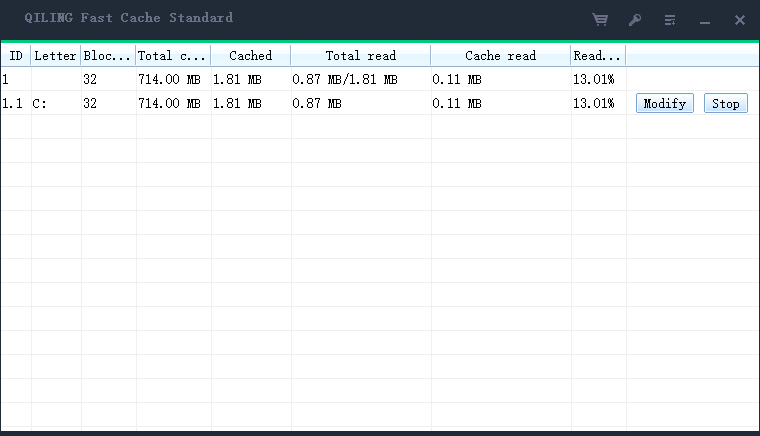
Step 4. Click OK and use the PC normally. Once the cache warms up, check the hit rate to see how much of the reading is now served from the SSD.
For sizing guidance, see How Big Should Your Disk Cache Be?
Use 2: Hold Projects, Scratch Files, and Temp
If your system drive has no room for the files you actively work on, a small SSD makes an excellent working drive. Unlike a cache, this is storage you deliberately use:
- Active project folders that you open and save constantly, while finished work moves to a larger drive.
- Scratch disks for photo and video editing, where temporary render data is written and read back.
- The TEMP folder, so installers and extractors stop writing to your system SSD.
- Browser and application caches that grow large over time.
If the goal is specifically to keep these writes off your main SSD, a RAM disk is the next step up; see Move the TEMP Folder to a RAM Disk.
Use 3: Store Virtual Machines and Containers
Virtual machines generate constant small reads and writes inside large disk image files, which is the worst possible workload for a hard drive. Moving the images to a dedicated SSD transforms the experience, and caching that SSD makes it better still.
- Keep VM images on the spare SSD rather than the system drive, so the guest and the host are not competing for the same device.
- Use fixed-size virtual disks for VMs you use daily to avoid growth overhead.
- Cache the SSD that holds the images if you want faster boots and snapshots; see Speed Up Virtual Machines with a Disk Cache.
- Docker and WSL2 benefit from the same idea; see Docker and WSL2 Performance.
Use 4 and 5: Stage Builds and Downloads, or Hold Backups
Stage builds and downloads. Compilers and package managers create and delete enormous numbers of small files, and downloads write continuously while they arrive. Pointing build temp directories and your download folder at the spare SSD keeps that churn away from your main drive. If the drive is especially small, a RAM disk does the same job faster; see Speed Up Programming Builds with a RAM Disk.
Hold backups. A spare SSD is a fast destination for system images, which makes restoring far quicker than reading the same image from a hard drive. This is also the use that gives the most peace of mind, because a backup that restores quickly is one you will actually use:
Two cautions. Do not use a worn drive as your only backup target, and keep a second copy somewhere else, because a backup on the same machine does not protect you from theft, fire, or a power surge. For off-machine copies, see Can You Use an SSD Cache for a NAS? or keep the drive in an external enclosure and store it elsewhere between backups.
How to Choose Which Use Fits
| If your situation is... | Use the spare SSD for... |
|---|---|
| You still boot from an HDD | Caching that drive (Use 1) — the largest improvement for the least effort |
| Your system SSD is full | Projects and scratch files (Use 2) |
| You run virtual machines | VM images (Use 3) |
| You compile or download constantly | Build temp and downloads (Use 4) |
| You have no backup image | Backup target (Use 5) — do this first |
If two options overlap, prefer the one that removes the most waiting from your typical day. And if the drive is an NVMe model with a free M.2 slot, install it internally: a cache tier and VM storage both benefit from the lower latency, while USB enclosures add overhead that a SATA SSD in a proper port would not have.
FAQs About Reusing an SSD
Is an old SSD safe to use?
Usually yes if it has spare endurance left. Check SMART data for wear indicators and reallocated sectors, and avoid using a worn drive for important or sole backups.
Can I use a spare SSD as a cache if it is smaller than the drive being cached?
Yes, and that is normal. The cache only needs to hold the hot subset of your data, not the entire volume.
Should the spare SSD be internal or in a USB enclosure?
Internal is better for caching and virtual machines because latency is lower and the connection is more reliable. An enclosure is fine for backups, transfers, and portable use.
Will caching wear out the spare SSD?
Caching adds writes, but the amount is modest for typical desktop use. Check its endurance rating and keep 10-20 percent of the drive free.
Can I do more than one of these at once?
Partly. A drive acting as a cache tier is committed to that role, so choose the use that removes the most waiting from your day. If you genuinely need two roles at once, split the drive into two volumes — for example one volume for virtual machine images and one for backups — instead of expecting a single volume to serve both.
What if the SSD is too small for any of these?
Even a 60 GB drive is useful as a cache tier or a scratch volume. If it is genuinely too small, use it as a portable transfer drive rather than leaving it in a drawer.
Back Up Windows Before You Change Settings
Adding a drive and changing where data lives is a good moment to refresh your backup. Qiling Disk Master creates a full Windows image you can restore from if anything goes wrong.
Part 1: Create a Full System Backup
Step 1. Install and open Qiling Disk Master. On the home screen, open "Backup and Recovery" and choose "System Backup". This option automatically includes Windows and the hidden boot partitions, so you do not have to select them one by one.
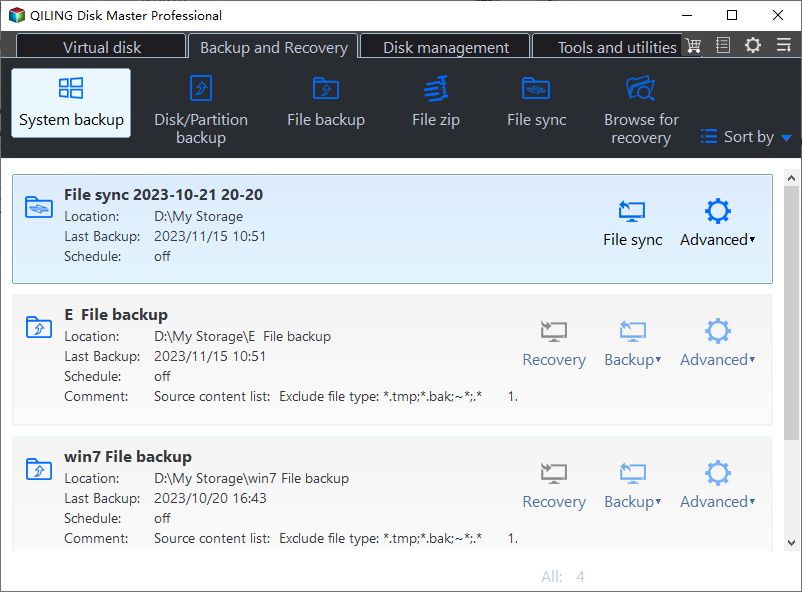
Step 2. Check the source. The disk where Windows is installed and its system partitions are already ticked for you. If you only need your personal documents, run a separate "File Backup" task instead.

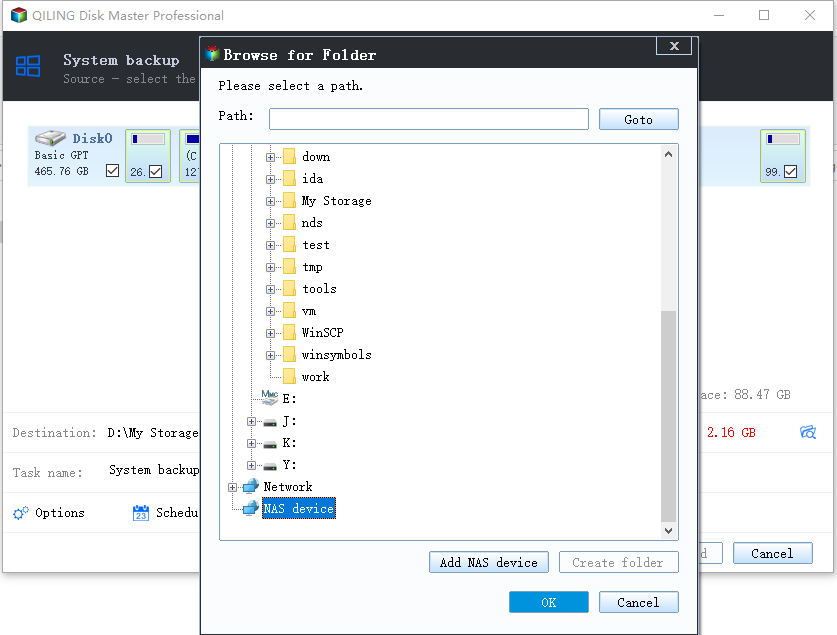
Step 3. Click the destination box and choose where the image should be saved. Use an external HDD or SSD, a NAS, or any drive other than the one Windows is installed on, and make sure it has enough free space.
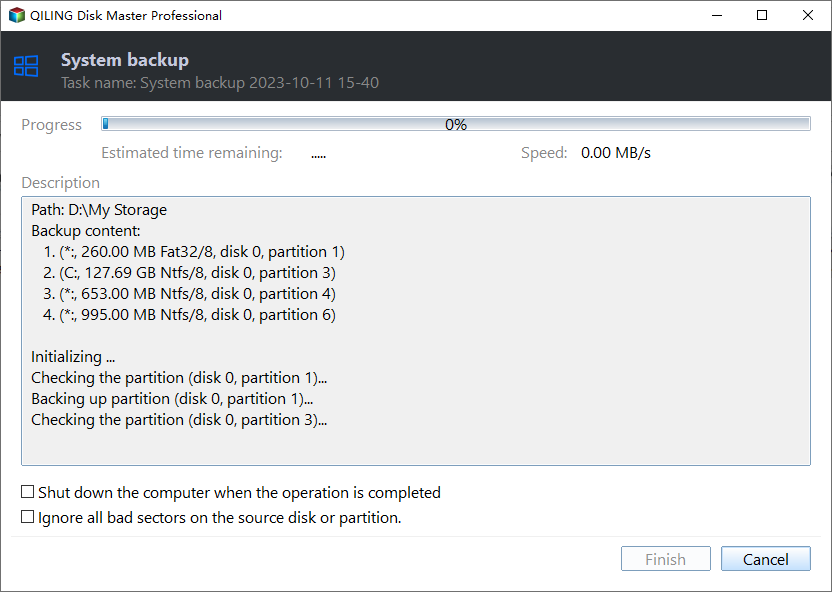
Step 4. Review the task summary and click "Proceed". Wait until the progress bar reaches 100%. Do not unplug the drive or turn off the PC while the backup is running.
Part 2: Restore Windows from the Backup
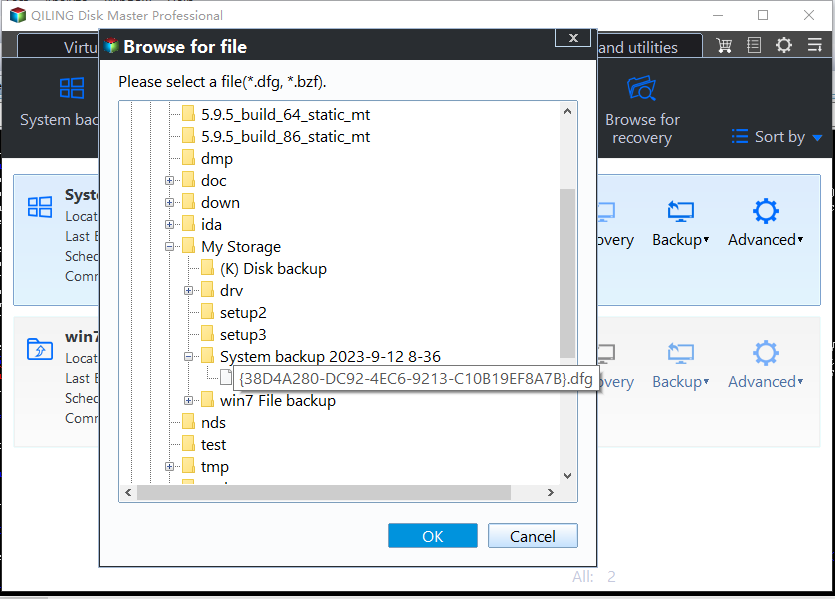
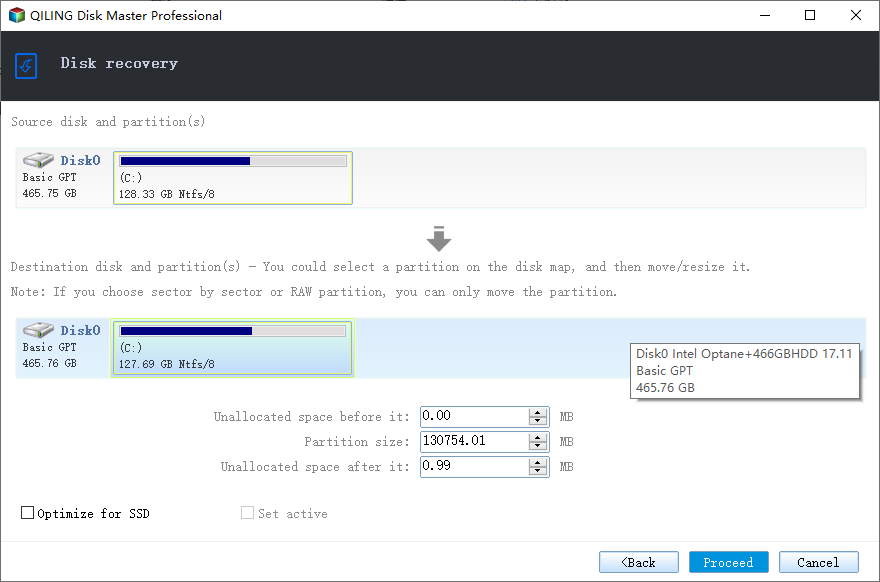
Step 1. Open Qiling Disk Master again, go to "Backup and Recovery", and select the recovery option. Your backup images are listed, so pick the one you created before the changes began.
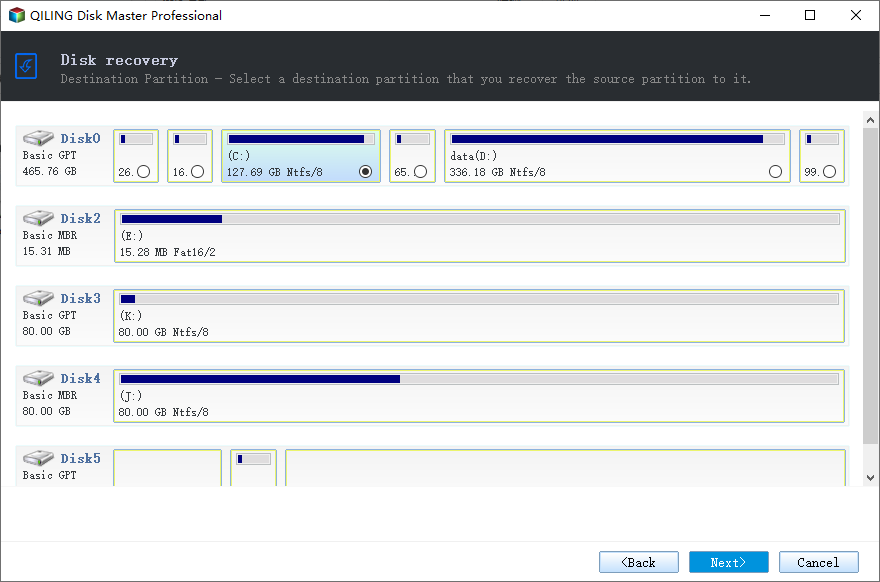
Step 2. Choose the target disk or partition. Normally you restore to the original system disk. If the drive was replaced, select the new disk instead, and the restore rebuilds Windows together with its boot partitions.
Step 3. Preview the restore plan, click "Proceed", and confirm the warning. The PC restarts to finish the job, and Windows comes back exactly as it was on the day the image was created, with your files and programs intact.
- Note
- Keep at least one backup copy on a drive that stays outside the PC, and refresh it before changing storage configuration.
Conclusion
A spare SSD is free performance waiting to be used. The highest-value option for most people is to let Qiling Fast Cache use it as a second-level cache for a slow drive, which speeds up everything on that volume without moving a single file. After that, the drive can hold the data that is constantly rewritten — projects, scratch files, build temp — or become a fast home for virtual machines, and it makes an excellent destination for system images created with Qiling Disk Master, which restore far faster from flash than from a hard drive. Check the drive's health first, keep a copy of anything important elsewhere, and install it internally if you have a free slot.
Protect your PC with Qiling Backup—create a system image before your next round of settings changes.
For more Windows 11 performance guides, see How to Use an M.2 Drive for Cache, Windows 11 Fast Cache, SSD Cache vs RAM Disk, How to Extend Your SSD Lifespan, and How Big Should Your Cache Be?.
Related Articles
- How to Use an M.2 Drive for Cache Data
What to do when the spare drive is an NVMe module. - How to Use an SSD Cache for an External Hard Drive
- How to Speed Up Virtual Machines with a Disk Cache
- How to Extend Your SSD Lifespan
- SSD Cache vs Storage Spaces Tiering: Which Is Better?
- Should Your Disk Cache Live on the Windows Drive?
Products
Articles & Tutorials
- Data Recovery
- Data Backup
- File Recovery
- File Backup
- System Backup and Restore
- Disk and Partition Clone
- Technical articles
- Mobile articles
- Disk Master Help
- Windows Data Recovery Tutorials
- Windows Secure Delete Tutorials
- Windows Partition Management Tutorials
- Windows File Backup and Restore Tutorials
- Windows System Backup and Restore Tutorials
- Windows Disk Backup and Restore Tutorials
- Windows Clone Tutorials