Hybrid Drives and Software Caching Compared
A hybrid drive and a caching tool are both attempts to put flash memory between your programs and a slow mechanical disk. They reach the same goal from opposite ends, and understanding the difference explains why one of them became rare.
This guide compares the two approaches and explains which one fits a given machine.
PAGE CONTENT
- How a Hybrid Drive Caches Data
- How Software Caching Is Different
- Why Hybrid Drives Faded
- Where Each Approach Wins
- Choose and Configure a Cache
- FAQs About Hybrid Drives and Caching
- Back Up Windows Before You Change Settings
How a Hybrid Drive Caches Data
A hybrid drive, usually sold as an SSHD, is a mechanical disk with a small amount of flash memory built into the same enclosure:
- The caching is done by the firmware. The drive decides what to keep, with no help or oversight from Windows.
- The flash is small. Eight gigabytes is a typical figure, which is enough for boot files and a few frequently used programs.
- It needs no software or memory. Nothing has to be installed, configured, or monitored.
- The logic adapts over time. The drive learns which blocks you read repeatedly and moves them into flash.
- It is still a drive-level cache. The flash is one layer in the storage stack, the same way an SSD uses its own internal buffers - see SLC caching inside SSDs.
How Software Caching Is Different
A software cache sits above the drive, in Windows itself, and combines two kinds of memory:
- The RAM tier is the fastest. Data held in memory is returned in microseconds, far quicker than any flash.
- The SSD tier is the persistent one. It survives a reboot, so the cache stays warm across sessions.
- Capacity is chosen by you. A cache can be sized against the workload instead of being fixed at what the drive shipped with.
- It works with any drive. The same tool accelerates an old hard disk, a SATA SSD, or an external drive.
- It overlays the existing hierarchy. Reading memory, SSD, and disk in order is the classic arrangement described in what L1 and L2 cache mean.
Why Hybrid Drives Faded
The idea was sound, but three practical problems caught up with it:
- The cache is very small. A modern working set is far larger than eight gigabytes, so the hit rate falls quickly once you use more than a handful of applications.
- The algorithm is opaque. You cannot see a hit rate, change a block size, or point the cache at a particular folder.
- SSD prices collapsed. A small SSD plus a hard disk costs about what a hybrid drive did, and gives you a real tier you can control.
- The benefit was hardest to keep. Any burst of sequential work, such as a large copy, evicts what the drive had carefully learned - see when a disk cache does not help.
- Nothing here makes the idea wrong. It simply became the less attractive version of the same trade.
Where Each Approach Wins
There are still situations where one clearly beats the other:
- A laptop with one drive bay. A hybrid drive needs no second slot and no memory, which is why it survives in budget portables.
- A desktop with spare RAM. A software cache turns memory you already own into a faster tier, which is the cheaper upgrade.
- A machine with a slow secondary drive. A cache can be pointed at the data drive while the system stays on an SSD.
- A machine with a fast NVMe system drive. There the benefit is small, as covered in SATA vs NVMe for caching.
- The pattern behind both. Dedicated memory used as a cache is the same idea Intel Optane pursued, and the trade-offs are compared in Optane Memory vs SSD caching.
Choose and Configure a Cache
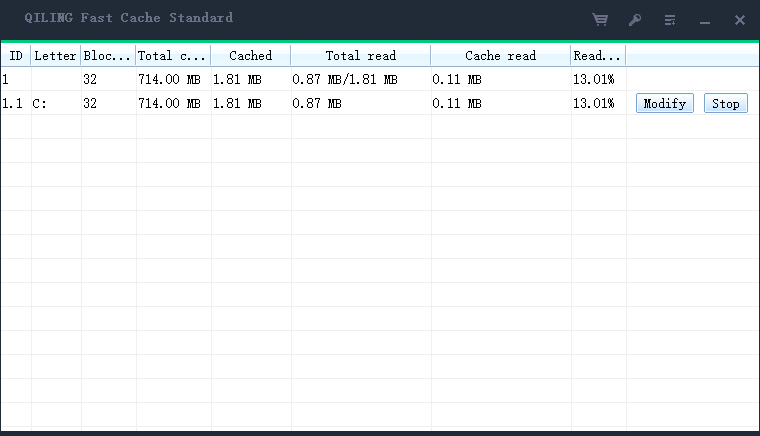
On a machine that still has a mechanical drive, replacing the invisible cache inside it with one you can see and size is the practical step. Qiling Fast Cache combines a RAM tier with an SSD tier and reports the hit rate in the task list.
Step 1. Install Qiling Fast Cache and open the task list. Time the task that feels slow before you configure anything.
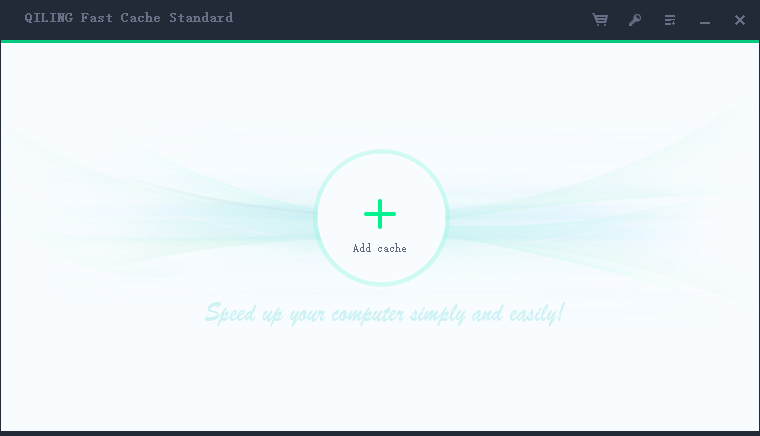
Step 2. Click the "+" button and select the mechanical volume you want to accelerate.
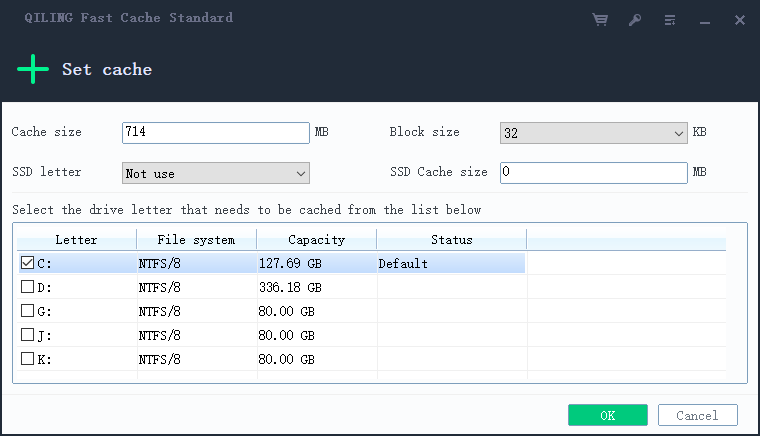
Step 3. Set the SSD tier large enough for the working set you actually reuse. A cache that covers the whole archive will churn instead of learning.
Step 4. Run the same workload for a day and compare. Check the hit rate too - see how to check cache hit rate - because that number tells you whether the cache has learned anything useful.
FAQs About Hybrid Drives and Caching
Is an SSHD better than a hard drive with a cache?
No. A software cache is larger, adjustable, and visible, while the drive's own cache is fixed and hidden.
Can I use both at once?
You can, but the drive normally caches its own hottest blocks, so the software cache adds little beyond what the drive already does.
Why is my hybrid drive fast and then slow?
The flash filled up. Once the working set grows past the built-in cache, every miss goes to the platters.
Does a cache wear out a hybrid drive faster?
Software caching does add a small amount of writing, but modern SSDs and drives are rated for years of normal use.
Should I buy a hybrid drive today?
Rarely. A small SSD alongside a hard drive, optionally with a cache, gives better results for similar money.
Back Up Windows Before You Change Settings
Reconfiguring storage and cache settings is easier to undo when you have a recent image. Qiling Disk Master creates a full Windows backup you can restore from.
Part 1: Create a Full System Backup
Step 1. Install and open Qiling Disk Master. On the home screen, open "Backup and Recovery" and choose "System Backup". This option automatically includes Windows and the hidden boot partitions, so you do not have to select them one by one.
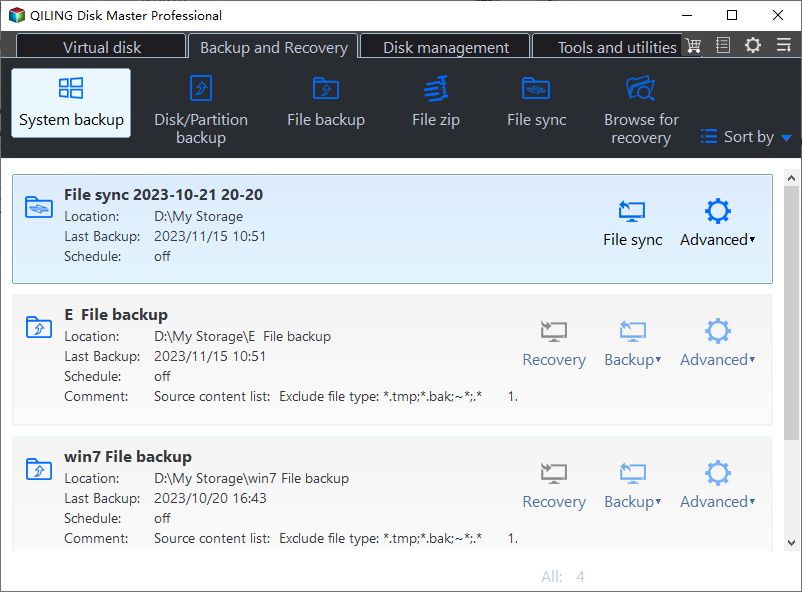
Step 2. Check the source. The disk where Windows is installed and its system partitions are already ticked for you. If you only need your personal documents, run a separate "File Backup" task instead.

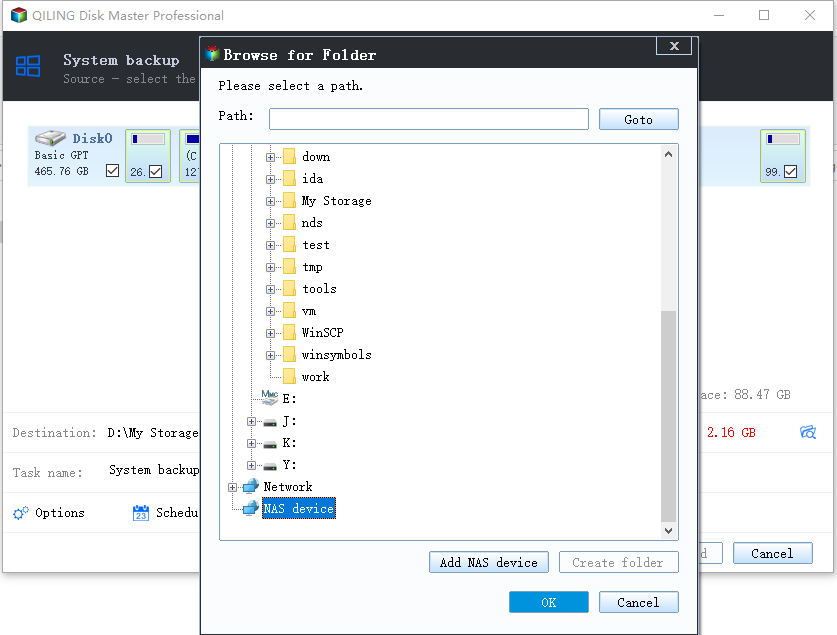
Step 3. Click the destination box and choose where the image should be saved. Use an external HDD or SSD, a NAS, or any drive other than the one Windows is installed on, and make sure it has enough free space.
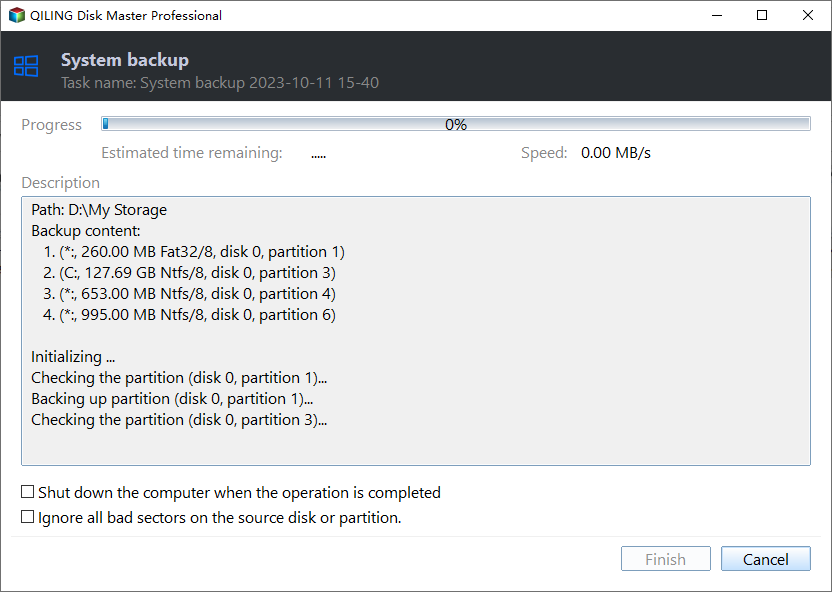
Step 4. Review the task summary and click "Proceed". Wait until the progress bar reaches 100%. Do not unplug the drive or turn off the PC while the backup is running.
Part 2: Restore Windows from the Backup
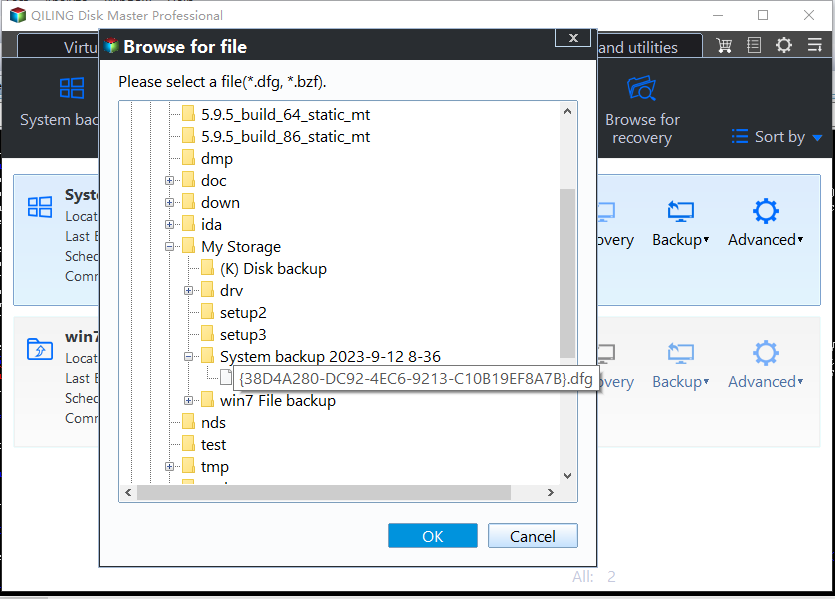
Step 1. Open Qiling Disk Master again, go to "Backup and Recovery", and select the recovery option. Your backup images are listed, so pick the one you created before the changes began.
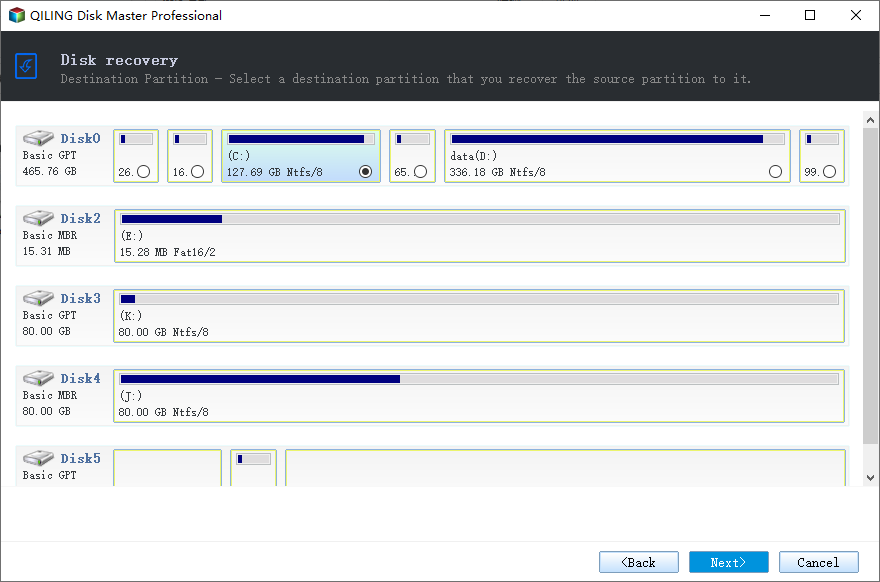
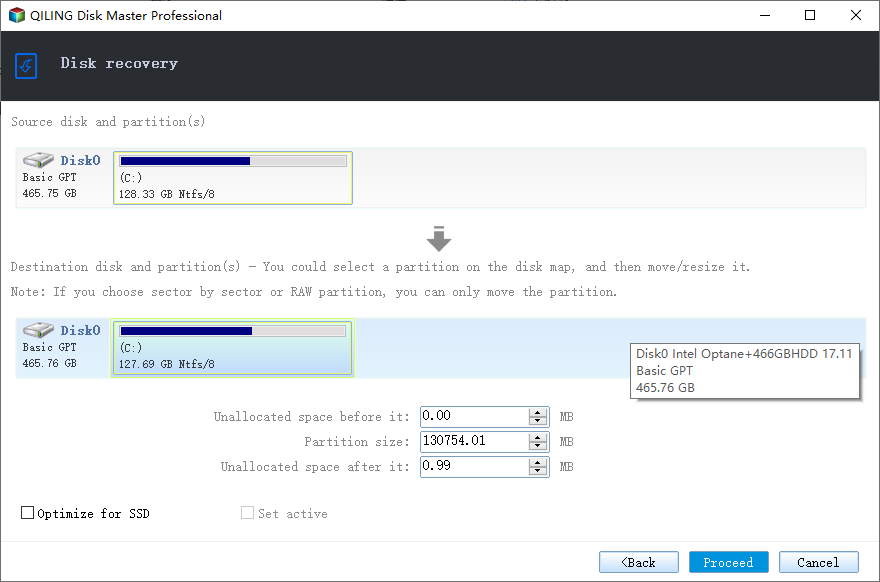
Step 2. Choose the target disk or partition. Normally you restore to the original system disk. If the drive was replaced, select the new disk instead, and the restore rebuilds Windows together with its boot partitions.
Step 3. Preview the restore plan, click "Proceed", and confirm the warning. The PC restarts to finish the job, and Windows comes back exactly as it was on the day the image was created.
- Note
- Keep the backup image on a separate drive, and refresh it before changing storage cache settings.
Conclusion
Hybrid drives and software caches solve the same problem from different directions. The drive hides a small flash buffer inside its own firmware, which is convenient and completely out of your control. A software cache puts the same idea above the drive, where the RAM tier answers instantly, the SSD tier persists, and you choose how much space to give it. The drive's approach lost ground because the cache is small, the limits are invisible, and SSDs became cheap enough to do the job properly. If a mechanical drive is still in the machine, caching the volume it holds is the cheapest way to get modern-feeling performance without replacing hardware.
Protect your PC with Qiling Backup—create a system image before your next round of settings changes.
For more Windows 11 performance guides, see Should You Cache a Slow Drive or Buy a Bigger SSD?, Best SSD Cache Software for Windows 11, How Big Should Your Disk Cache Be?, SSD Cache vs Storage Spaces Tiering, and How to Extend SSD Lifespan by Reducing Writes.
Related Articles
- Disk Cache and SMR Drives Explained
Another case where the drive's own design decides how much a cache can help. - Can You Use an SSD Cache for a NAS or Network Drive?
- Does NTFS Compression Work with a Disk Cache?
- Does a Disk Cache Help Virtual Desktops?
- ReadyBoost vs RAM Disk vs SSD Cache: Which to Use in Windows 11
Products
Articles & Tutorials
- Data Recovery
- Data Backup
- File Recovery
- File Backup
- System Backup and Restore
- Disk and Partition Clone
- Technical articles
- Mobile articles
- Disk Master Help
- Windows Data Recovery Tutorials
- Windows Secure Delete Tutorials
- Windows Partition Management Tutorials
- Windows File Backup and Restore Tutorials
- Windows System Backup and Restore Tutorials
- Windows Disk Backup and Restore Tutorials
- Windows Clone Tutorials