Does NTFS Compression Work with a Disk Cache?
The compressed folder option in Windows file properties is easy to overlook, yet it changes the shape of every read the drive performs. That matters when you are deciding what a cache should hold.
This guide explains what NTFS compression does behind the scenes, how it interacts with a disk cache, and when the combination is actually worth using.
PAGE CONTENT
- What NTFS Compression Actually Does
- How It Changes What Reaches the Disk
- Where a Cache Helps
- Compression, Deduplication, and Caching
- Configure a Cache for Compressed Folders
- FAQs About NTFS Compression and Caching
- Back Up Windows Before You Change Settings
What NTFS Compression Actually Does
It is a filesystem feature rather than a tool you run, and it works entirely behind the scenes:
- You enable it per file or folder. There is no archive to open and no separate program to launch.
- Windows compresses the contents and stores the result. The file keeps its name, path, and behaviour; only the bytes on disk change.
- Reads are transparently expanded. Applications never see the compressed form, which is the part that costs processor time.
- Writes are compressed in place. A save rewrites the file in compressed form rather than appending to it.
- It is a different mechanism from memory compression. One shrinks files on disk, the other shrinks memory pages - see disk cache vs memory compression.
How It Changes What Reaches the Disk
Compression changes both the amount of data and the pattern of access:
- There is less to read. A text-heavy file may occupy a third of its original size, so a slow drive finishes sooner.
- Every read costs processor time. The data must be expanded before the application can use it.
- Access becomes less sequential. Compressed extents are not laid out the way an uncompressed file is, so the drive sees a more scattered pattern.
- Small random writes get worse. Rewriting part of a compressed file means rewriting a whole compression unit - the trade behind write caching vs read caching.
- Some files gain nothing. Already-compressed formats such as video, photos, and archives barely shrink.
Where a Cache Helps
A read cache is a good partner for compressed folders, because it removes the cost of reaching them again:
- Cached reads skip both the drive and the expansion. Data served from memory is already in usable form, so the processor does not repeat the work.
- It smooths the scattered access pattern. Re-reading the same compressed file becomes an ordinary memory access.
- It helps most on a mechanical drive. There, the reduced read size and the scattered layout both matter.
- It does nothing for the first read. Compressing a folder and reading it once for the first time is unchanged - see when a disk cache does not help.
- So the two features complement each other. Compression reduces the bytes, and the cache removes the repeat cost.
Compression, Deduplication, and Caching
These three are often mentioned together, and they operate at different levels:
- Compression shrinks one file. It is applied by the filesystem or by an application.
- Deduplication removes repeated copies. It looks for identical blocks across many files, as described in disk cache and file deduplication.
- A cache stores hot data for reuse. It changes speed rather than size.
- They can be combined, but not always usefully. Compressing a folder that a cache already serves quickly adds processor cost for a small space gain.
- On a fast SSD, space is usually the only reason to compress. On a slow drive, compression plus caching is a reasonable pair.
Quick summary
Compression reduces bytes on disk, deduplication removes repeated blocks, and a cache removes repeat reads. None of them replaces another.
Configure a Cache for Compressed Folders
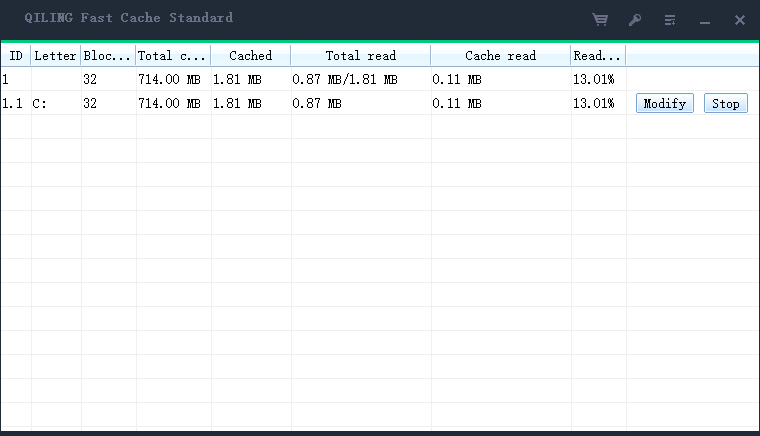
If your files live on a mechanical drive and some folders are compressed, a read cache is the simpler half of the optimisation. Qiling Fast Cache keeps the hottest data in a RAM tier and the rest on an SSD tier, and reports the hit rate in the task list.
Step 1. Install Qiling Fast Cache and open the task list. Time opening and searching the compressed folder before you change anything.
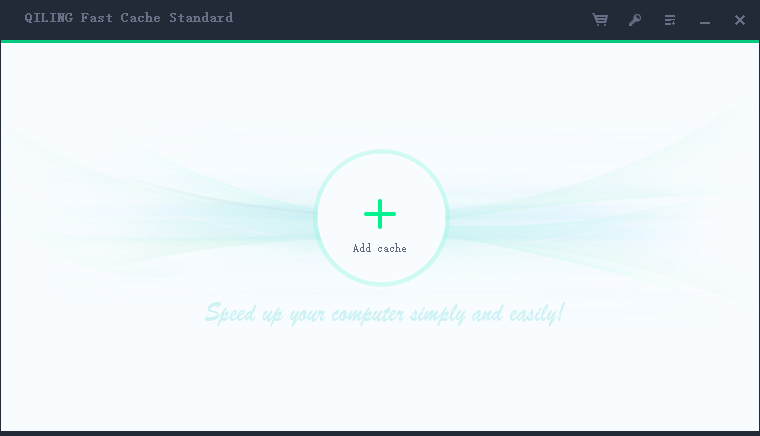
Step 2. Click the "+" button and select the volume that holds the compressed data.
Step 3. Size the SSD tier for the folders you open regularly. There is no benefit in caching an archive you read once a year.
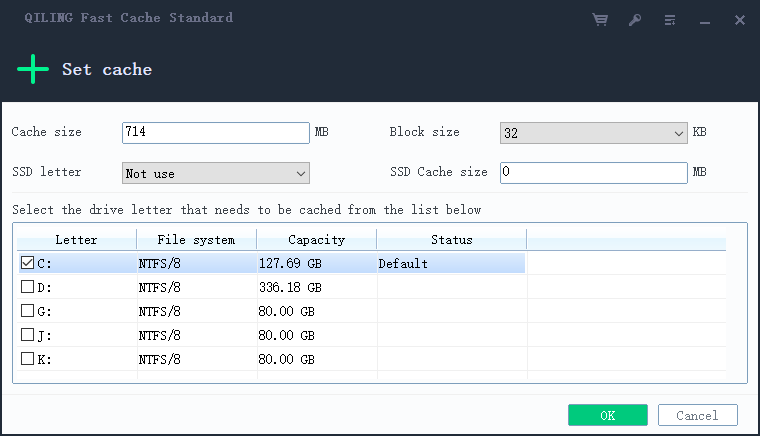
Step 4. Repeat the same task after a day. Compare the times and read the hit rate - see how to check cache hit rate - then decide whether the folder is better left compressed, uncompressed, or cached.
FAQs About NTFS Compression and Caching
Does compressing a folder make it slower?
It depends. On a slow drive the smaller size often wins, while on a fast SSD the extra processor work can make it feel slower.
Do I still need a cache if my folders are compressed?
They solve different problems. Compression saves space and reduces bytes read; a cache removes the cost of reading the same data again.
Should I compress a folder that a cache already handles?
Only if you need the space. Otherwise you pay processor time for a benefit the cache has already provided.
Can I compress the whole system drive?
You can, but it is rarely a good idea. Windows itself is best left uncompressed, and the processor overhead affects everything.
Does compression affect backups?
Backup tools read the uncompressed data, so the image is the same size either way.
Back Up Windows Before You Change Settings
Reconfiguring storage and cache settings is easier to undo when you have a recent image. Qiling Disk Master creates a full Windows backup you can restore from.
Part 1: Create a Full System Backup
Step 1. Install and open Qiling Disk Master. On the home screen, open "Backup and Recovery" and choose "System Backup". This option automatically includes Windows and the hidden boot partitions, so you do not have to select them one by one.
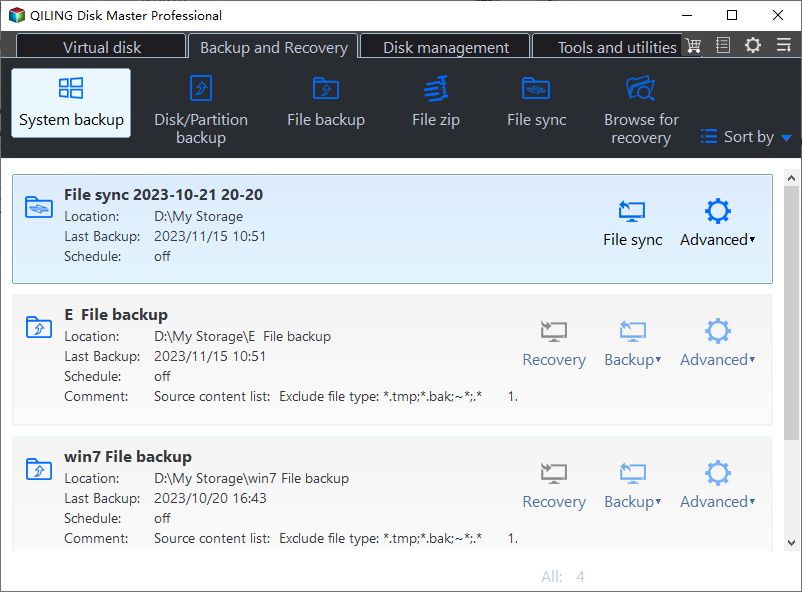
Step 2. Check the source. The disk where Windows is installed and its system partitions are already ticked for you. If you only need your personal documents, run a separate "File Backup" task instead.

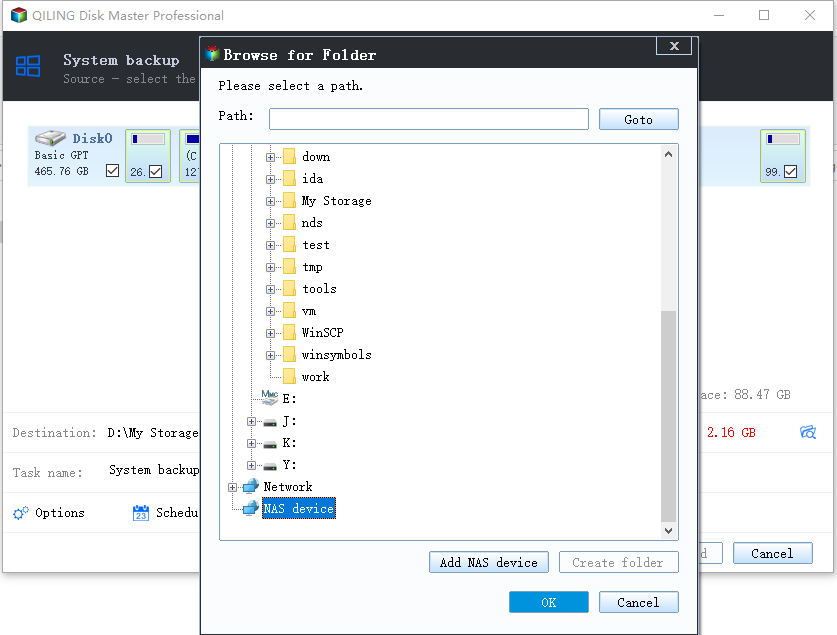
Step 3. Click the destination box and choose where the image should be saved. Use an external HDD or SSD, a NAS, or any drive other than the one Windows is installed on, and make sure it has enough free space.
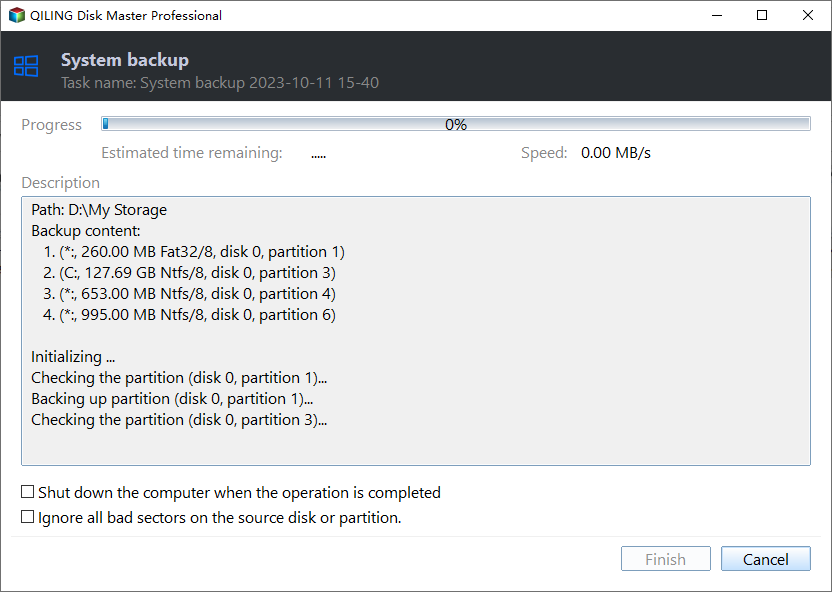
Step 4. Review the task summary and click "Proceed". Wait until the progress bar reaches 100%. Do not unplug the drive or turn off the PC while the backup is running.
Part 2: Restore Windows from the Backup
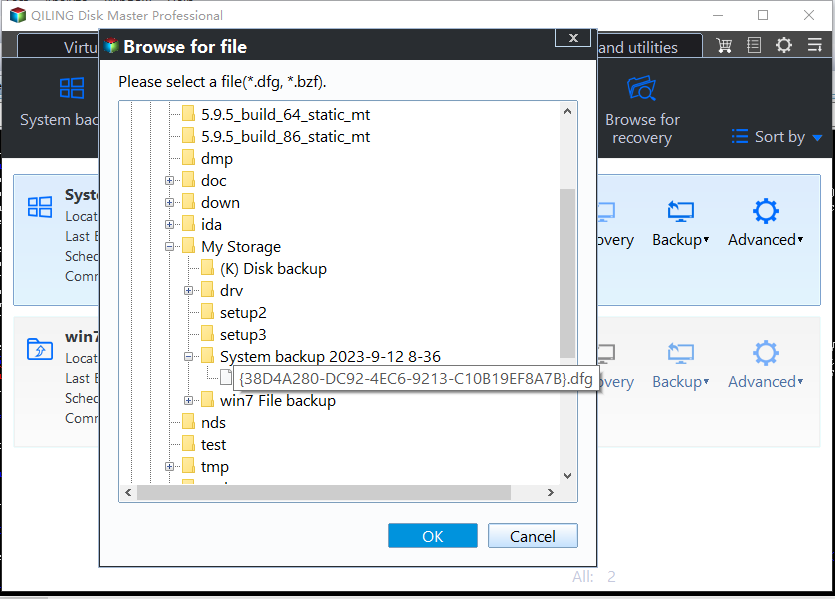
Step 1. Open Qiling Disk Master again, go to "Backup and Recovery", and select the recovery option. Your backup images are listed, so pick the one you created before the changes began.
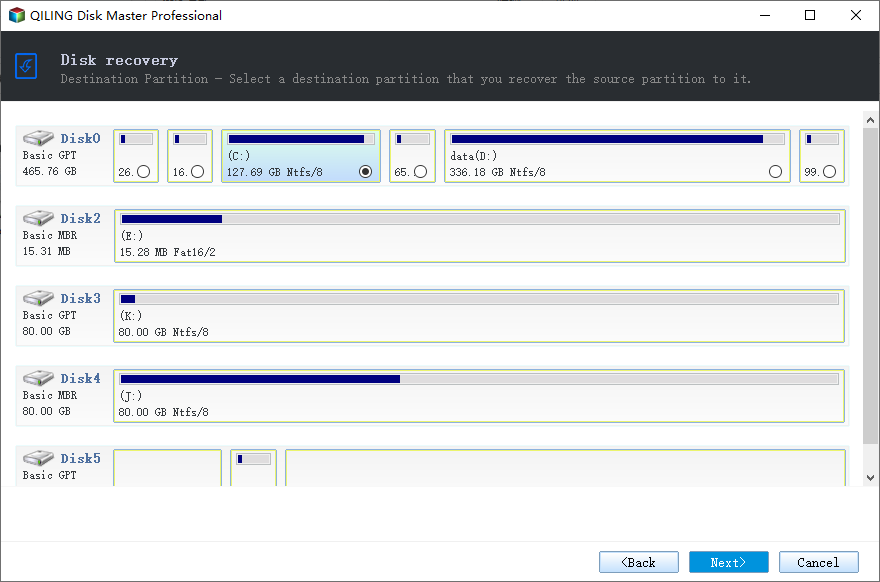
Step 2. Choose the target disk or partition. Normally you restore to the original system disk. If the drive was replaced, select the new disk instead, and the restore rebuilds Windows together with its boot partitions.
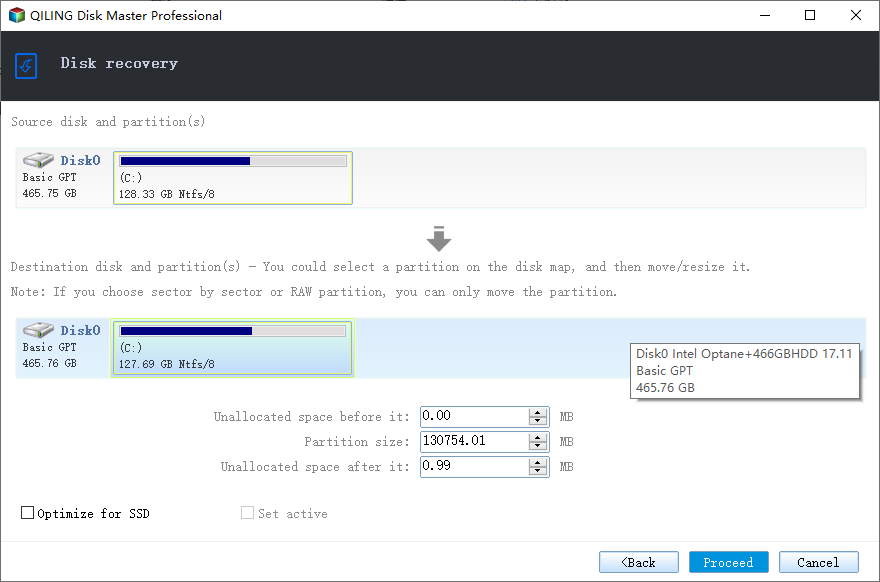
Step 3. Preview the restore plan, click "Proceed", and confirm the warning. The PC restarts to finish the job, and Windows comes back exactly as it was on the day the image was created.
- Note
- Keep the backup image on a separate drive, and refresh it before changing storage cache settings.
Conclusion
NTFS compression is a read-time trade: fewer bytes travel to the disk, but the processor has to expand them. A disk cache changes that calculation because cached data is served already usable, which removes both the drive latency and the repeat expansion cost. That makes the pair a sensible choice on a mechanical drive, and a questionable one on a fast SSD where the space saving is the only real gain. Before enabling compression on a folder, ask what you actually need: space, speed, or both. If the answer is speed and the folder is read repeatedly, a cache is usually the simpler fix.
Protect your PC with Qiling Backup—create a system image before your next round of settings changes.
For more Windows 11 performance guides, see Can a Disk Cache Reduce TRIM and Defrag Work?, SSD Cache Block Size Explained, How Big Should Your Disk Cache Be?, How to Extend SSD Lifespan by Reducing Writes, and SATA vs NVMe: Does a Disk Cache Still Help?.
Related Articles
- Caching for File Compression and Extraction
Archive tools are the other half of the same subject, and they behave differently again. - Windows Print Spooler and Disk Caching Explained
- Does Disk Caching Work with BitLocker Encryption?
- Disk Cache and SMR Drives Explained
- Cache vs Buffer: What's the Difference and Why It Matters
- Windows Storage Sense and Disk Caching Explained
Products
Articles & Tutorials
- Data Recovery
- Data Backup
- File Recovery
- File Backup
- System Backup and Restore
- Disk and Partition Clone
- Technical articles
- Mobile articles
- Disk Master Help
- Windows Data Recovery Tutorials
- Windows Secure Delete Tutorials
- Windows Partition Management Tutorials
- Windows File Backup and Restore Tutorials
- Windows System Backup and Restore Tutorials
- Windows Disk Backup and Restore Tutorials
- Windows Clone Tutorials