Disk Cache and SMR Drives Explained
Two drives with the same capacity and the same platter speed can behave completely differently once you start writing. Shingled magnetic recording, or SMR, is the reason, and a cache is the most practical way to live with it.
This guide explains what makes SMR hardware different, how a write cache changes the picture, and the cases where no cache can rescue the situation.
PAGE CONTENT
- What Makes SMR Drives Different
- How a Cache Masks SMR Slowness
- Where Caching Cannot Help
- Reading vs Writing on an SMR Drive
- Configure a Cache for an SMR Drive
- FAQs About SMR Drives and Caching
- Back Up Windows Before You Change Settings
What Makes SMR Drives Different
A conventional drive uses CMR, or conventional magnetic recording, where each track can be rewritten on its own. SMR overlaps the tracks like roof shingles, which raises capacity but makes writing less of a local operation:
- Tracks overlap, so a small write is not small. Changing one track can force the drive to read, modify, and rewrite a whole block of neighbouring tracks.
- The drive hides this behind an internal cache. Modern SMR drives have a fast media cache on the platter or in flash, and they write there first.
- When that cache fills, throughput falls off a cliff. This is the sharp drop you see late in a large file copy.
- Reads are mostly unaffected. Sequential and even random reads behave much like a CMR drive of the same class.
- The type is not always on the label. Some models are SMR and some are not, and the difference only shows under sustained writes.
How a Cache Masks SMR Slowness
A software cache sits between Windows and the disk, so it can absorb exactly the writes that SMR handles worst:
- It coalesces small writes. Many scattered writes become fewer, larger sequenced writes, which is what the drive's internal cache handles best.
- It absorbs bursts. The quick appearance of a finished copy comes from the cache, not from the platter.
- The correct tool depends on direction. A read cache accelerates repeated reads, while write caching changes how data reaches the disk - the two are covered in write caching vs read caching.
- Windows already does some of this. The built-in write cache can be enabled per disk, with the trade-offs described in how to enable write caching in Windows 11.
- The result is smoothness, not magic. A cache makes an SMR drive feel consistent; it does not turn it into an SSD.
Where Caching Cannot Help
Some SMR workloads defeat caching entirely, and it is worth recognising them early:
- Writes far larger than the cache. Once a single copy exceeds the cache, the drive's own media management takes over and the slowdown returns.
- Sustained sequential writes. These are not helped by reordering, because the order is already optimal - see when a disk cache does not help.
- Rebuilds and scrubs. RAID rebuilds and full-surface scans write across the whole drive without reuse.
- Very full drives. As free space shrinks, an SMR drive has less room to reorganise, and no cache changes that.
- Cleanup that never ends. If background rewriting continues long after your copy finished, the bottleneck has moved back to the platter.
Reading vs Writing on an SMR Drive
The two directions behave so differently that it helps to treat them separately:
- Reads are close to normal. Large media files stream from an SMR drive at the speed its platters allow.
- Large sequential writes start fast and then settle. The first part is absorbed by the drive's internal media cache; the rest runs at the real platter speed.
- Small random writes are the worst case. They trigger the read-modify-write behaviour that SMR is known for.
- A read cache still pays off. Repeated access to media, projects, or game files is a read pattern, and it is unaffected by the type of recording.
- How this compares to tiering. Storage Spaces tiering and a software cache overlap here, and the differences are explained in SSD cache vs Storage Spaces tiering.
Configure a Cache for an SMR Drive
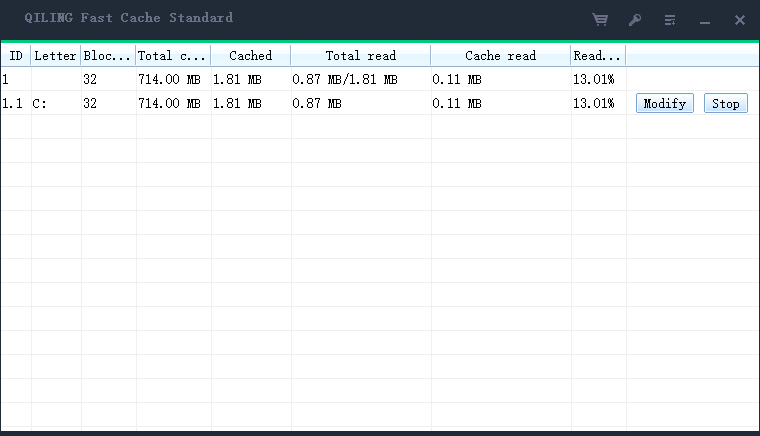
An SMR drive is exactly the case where caching is worth setting up, because the hardware's weakness is predictable. Qiling Fast Cache combines a RAM tier with an SSD tier and shows the hit rate in the task list.
Step 1. Install Qiling Fast Cache and open the task list. Before you change anything, note how long a typical large copy takes, including the slowdown near the end.
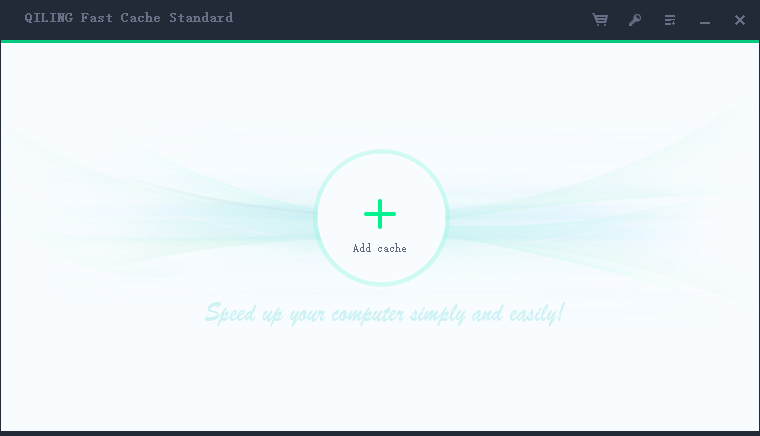
Step 2. Click the "+" button and select the SMR volume as the cached disk.
Step 3. Give the SSD tier enough room for the working set you reuse, and keep the RAM tier modest so Windows still has memory to work with.
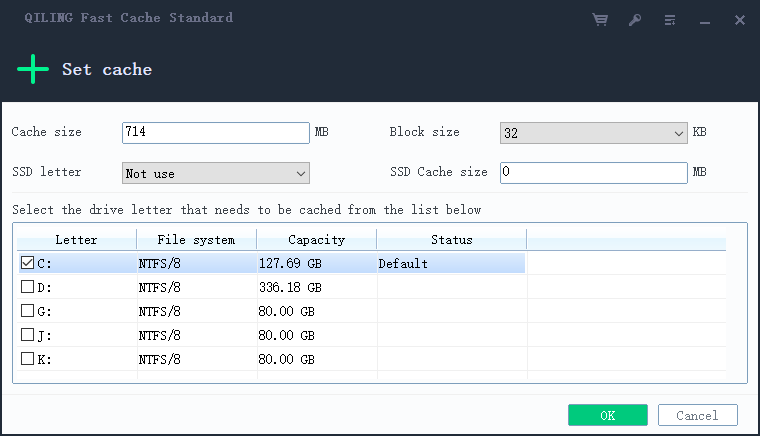
Step 4. Repeat the same copy and compare. Check the hit rate as well, because a high rate with no change means the bottleneck is the platter itself - see how to check cache hit rate.
FAQs About SMR Drives and Caching
How can I tell whether my drive is SMR?
Look for benchmark results that show a sharp drop in write speed after a few gigabytes. Capacity alone will not tell you the answer.
Will a cache fix the slow part of a large copy?
Only while the data fits in the cache. Beyond that, the drive's own media management decides the speed.
Is an SMR drive safe for a NAS?
It works, but rebuilding an array with SMR disks is slow and sometimes unreliable. A cache or a CMR drive is the safer choice.
Does RAID change any of this?
Not really. RAID may hide which disk is slow, but the underlying writes are the same.
Should I defragment an SMR drive?
Only with care. Defragmentation writes heavily, which is the operation SMR handles worst.
Back Up Windows Before You Change Settings
Reconfiguring storage and cache settings is easier to undo when you have a recent image. Qiling Disk Master creates a full Windows backup you can restore from.
Part 1: Create a Full System Backup
Step 1. Install and open Qiling Disk Master. On the home screen, open "Backup and Recovery" and choose "System Backup". This option automatically includes Windows and the hidden boot partitions, so you do not have to select them one by one.
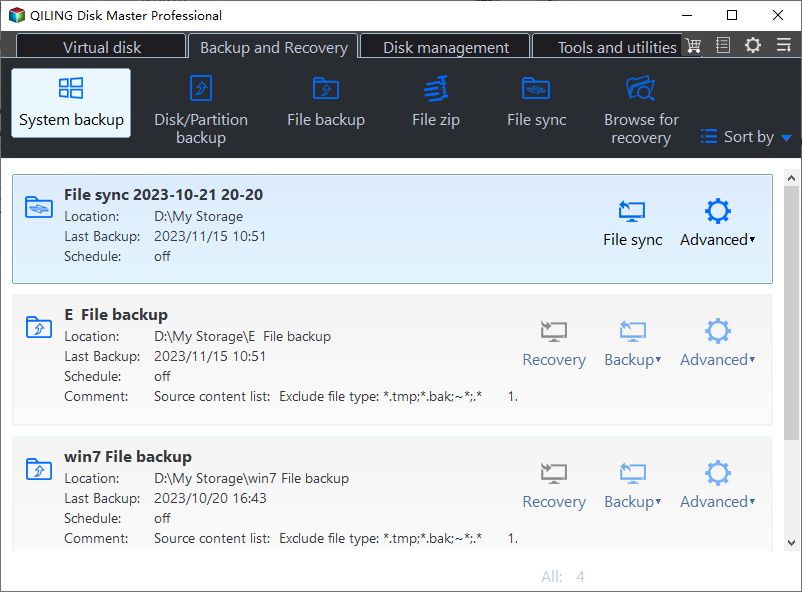
Step 2. Check the source. The disk where Windows is installed and its system partitions are already ticked for you. If you only need your personal documents, run a separate "File Backup" task instead.

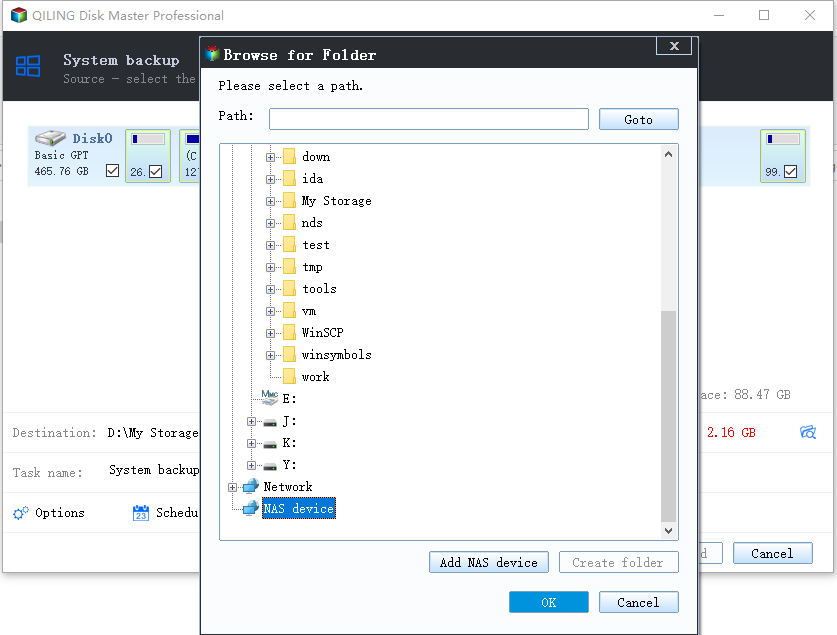
Step 3. Click the destination box and choose where the image should be saved. Use an external HDD or SSD, a NAS, or any drive other than the one Windows is installed on, and make sure it has enough free space.
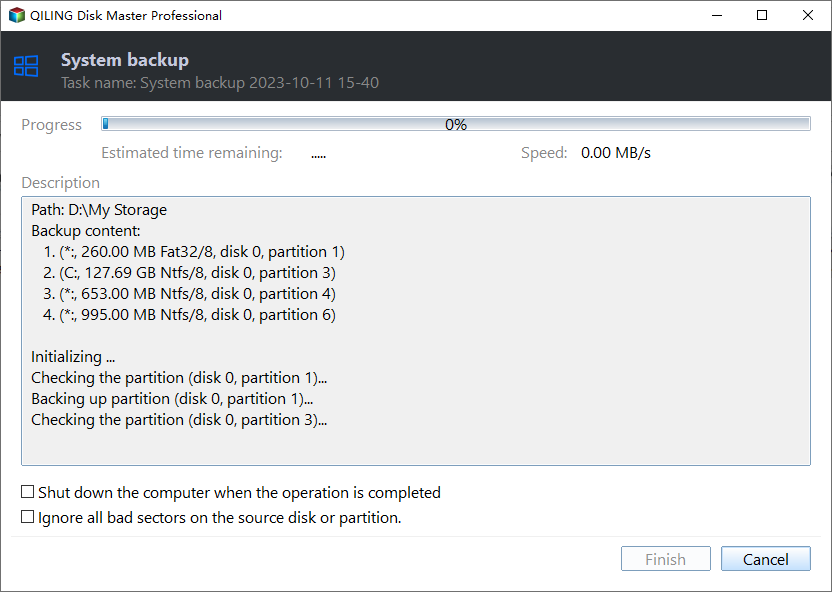
Step 4. Review the task summary and click "Proceed". Wait until the progress bar reaches 100%. Do not unplug the drive or turn off the PC while the backup is running.
Part 2: Restore Windows from the Backup
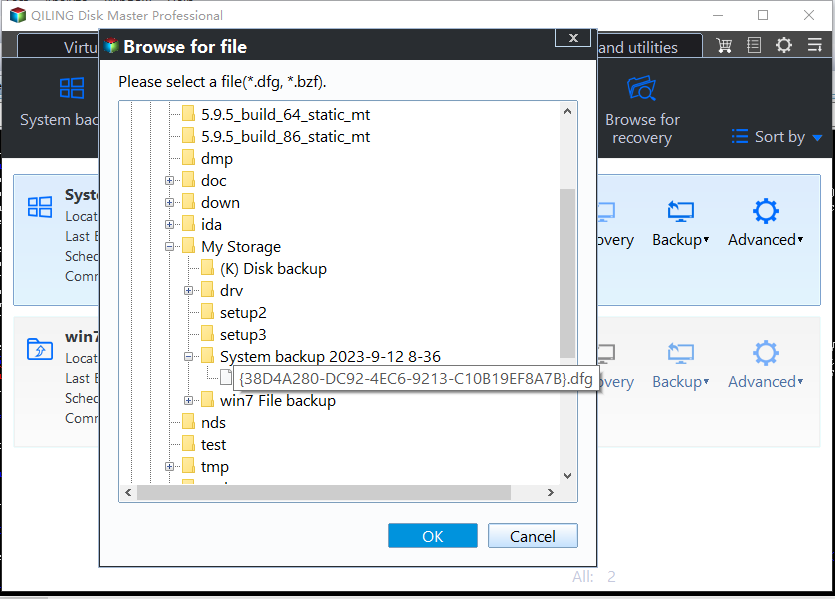
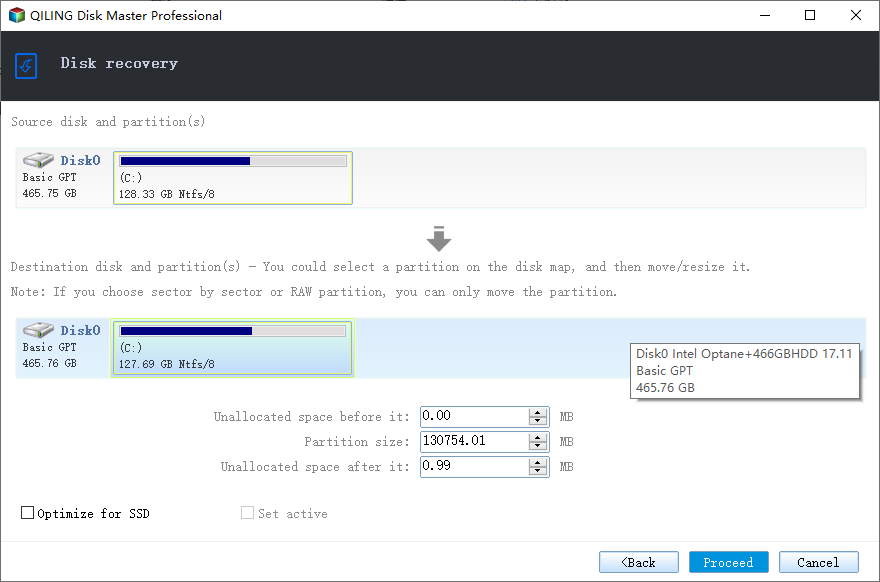
Step 1. Open Qiling Disk Master again, go to "Backup and Recovery", and select the recovery option. Your backup images are listed, so pick the one you created before the changes began.
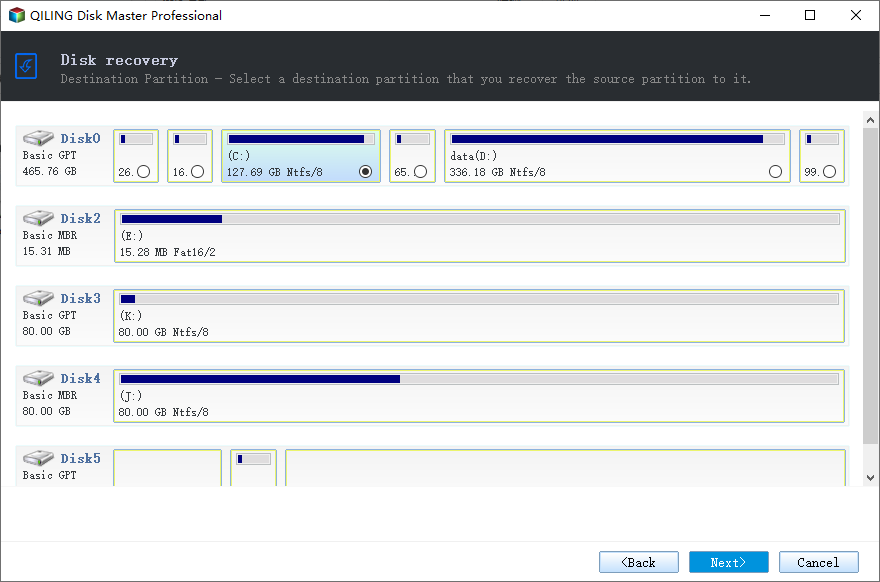
Step 2. Choose the target disk or partition. Normally you restore to the original system disk. If the drive was replaced, select the new disk instead, and the restore rebuilds Windows together with its boot partitions.
Step 3. Preview the restore plan, click "Proceed", and confirm the warning. The PC restarts to finish the job, and Windows comes back exactly as it was on the day the image was created.
- Note
- Keep the backup image on a separate drive, and refresh it before changing storage cache settings.
Conclusion
SMR trades write behaviour for capacity, and no software can undo that trade completely. What a cache can do is absorb the small, scattered writes that SMR handles worst, turn them into larger sequenced writes, and keep the drive from stalling during a copy. The limits are just as important: once a write is larger than the cache, or once the drive is very full, the platter sets the pace again. Treat reads and writes separately, keep a modest RAM tier and a generous SSD tier, and measure the result. An SMR drive with a well-configured cache is a predictable drive, which is usually what matters most.
Protect your PC with Qiling Backup—create a system image before your next round of settings changes.
For more Windows 11 performance guides, see Disk Cache and File Deduplication Explained, Does a Disk Cache Help Data Recovery Scans?, Caching for Backup and Imaging Software Explained, Can a Disk Cache Reduce TRIM and Defrag Work?, and How to Extend SSD Lifespan by Reducing Writes.
Related Articles
- Does a Disk Cache Help Large Git Repositories?
Thousands of small random writes a day, and the same question about what a cache can actually absorb. - Does a Disk Cache Help Console Emulators?
- Does a Disk Cache Help GIS and Mapping Software?
- Can You Use an SSD Cache for a NAS or Network Drive?
- Does a Disk Cache Help on a RAID Array?
- Hybrid Drives and Software Caching Compared
Products
Articles & Tutorials
- Data Recovery
- Data Backup
- File Recovery
- File Backup
- System Backup and Restore
- Disk and Partition Clone
- Technical articles
- Mobile articles
- Disk Master Help
- Windows Data Recovery Tutorials
- Windows Secure Delete Tutorials
- Windows Partition Management Tutorials
- Windows File Backup and Restore Tutorials
- Windows System Backup and Restore Tutorials
- Windows Disk Backup and Restore Tutorials
- Windows Clone Tutorials