Does a Disk Cache Help on a RAID Array?
A RAID array is already several disks working as one, and adding a cache on top can feel redundant. In practice the two do different jobs: RAID protects against a disk failure and pools capacity, while a cache reduces how often any of those disks is read.
This guide explains how RAID and caching interact, what the RAID controller's own cache does, and where adding a software cache stops being useful and starts being risky.
PAGE CONTENT
- How RAID and Caching Interact
- Hardware RAID Write Cache vs Software Disk Cache
- Does an SSD Cache Help a RAID Array?
- Risks of Caching a RAID Volume
- Set Up a Cache on a RAID Array
- FAQs About RAID and Disk Caching
- Back Up Windows Before You Change Settings
How RAID and Caching Interact
RAID and caching solve different problems, and keeping them apart explains most of the confusion:
- RAID 0 stripes data across disks for speed, but it offers no redundancy - one disk dies and the whole array is gone.
- RAID 1 and RAID 10 mirror data so a disk can fail without data loss, which makes them the common choice for a system volume.
- RAID 5 and RAID 6 use parity to survive one or two failures, and their write performance is limited by parity calculation.
- A cache is not redundancy. It speeds up repeated reads; it does not protect data, and it will not rebuild an array.
- Both layers see the same logical volume. A software cache caches the RAID volume that Windows sees, not the individual member disks.
Hardware RAID Write Cache vs Software Disk Cache
These two are often confused because both are called "cache", yet they behave completely differently:
- The controller cache sits on the RAID card. It holds writes in battery-backed or flash-backed memory and confirms them before they reach the disks, which is what makes RAID 5 writes tolerable.
- A software disk cache runs in Windows and caches reads on top of the filesystem. It accelerates what your programs open, not what the controller does with the blocks.
- Only the controller cache is protected by a battery, which is why losing power with write caching enabled is dangerous unless that battery is present.
- They stack, but the gains do not simply add up. A fast controller cache already hides write latency, so a software cache adds mostly read-side benefit.
Does an SSD Cache Help a RAID Array?
For read-heavy work, yes - and for the same reason it helps a single disk:
- Repeated reads come from the cache, so the array's disks spin less and the parity overhead of RAID 5 is avoided for those blocks.
- The bigger the array, the more it helps. A large RAID volume with a broad working set benefits from keeping hot data in fast storage.
- Write-heavy work gains little. A cache accelerates reads far more than writes, and RAID 5 writes remain bound by parity.
- An array on slow mechanical disks gains the most. If the members are already NVMe, the floor is high and the cache has little to add - see when caching does not help.
Risks of Caching a RAID Volume
- Deferred writes can outlive a power cut. Caching writes inside Windows means data that has been "saved" may still be sitting in memory. On a protected array that feels safe, but the cache layer itself has no battery.
- Restore and rebuild operations are heavy. A cache that is busy serving your applications competes with a RAID rebuild, which already reads every member disk.
- Do not cache a degraded array. If a member disk has failed, fix the array first - a cache hides the very slowness that would tell you something is wrong.
- Avoid caching the volume you image to. When a backup writes a large sequential image, a cache adds little and can hold data that has not yet reached the array.
- Keep the cache independent of the array. If the SSD hosting the cache is also a RAID member, a cache fault becomes a data fault - see can a cache hide a failing drive.
Set Up a Cache on a RAID Array
If the array is healthy and the workload is read-heavy, a software cache is a reasonable addition. Qiling Fast Cache caches the logical volume Windows sees, so it works on top of RAID without touching the controller configuration.
Step 1. Confirm the array reports as healthy in its management tool, then install and open Qiling Fast Cache. On first run the task list is empty.
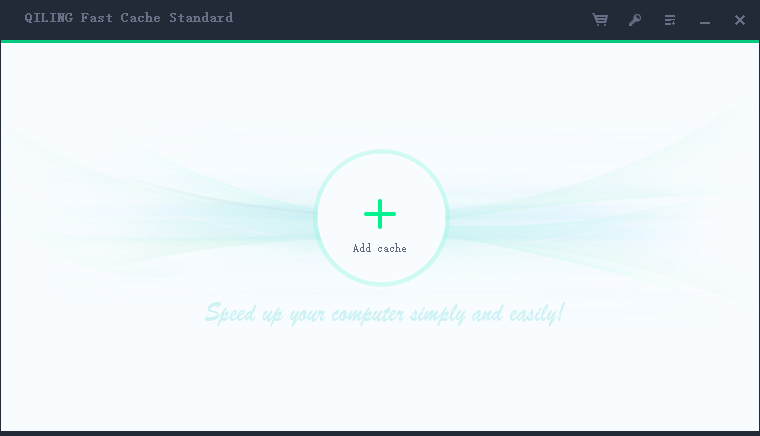
Step 2. Click the "+" button and select the RAID volume you want to accelerate, not an individual member disk.
Step 3. Choose the medium and size. An SSD tier on a separate disk keeps the cache warm across reboots without competing with the array.
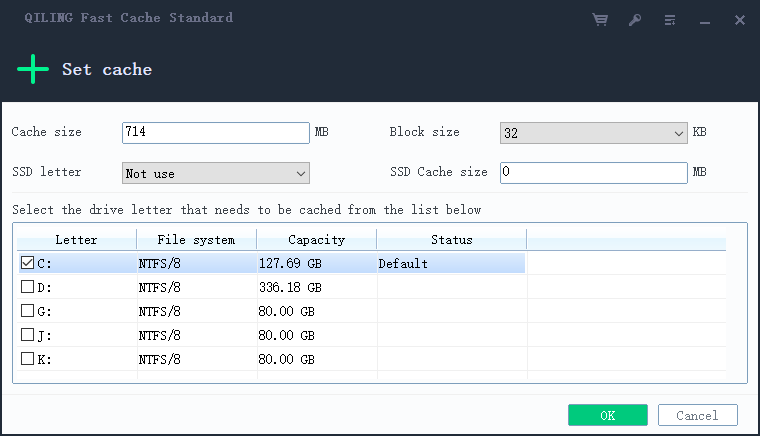
Step 4. Create the task, then run your usual work for a day and check the hit rate and the array's health report side by side.
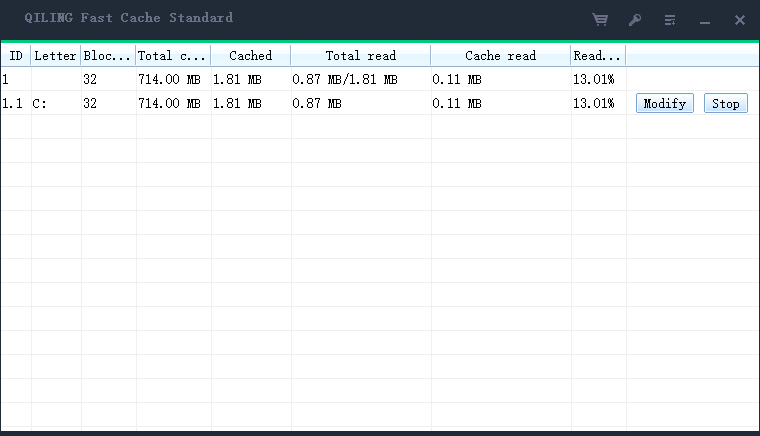
FAQs About RAID and Disk Caching
Does a cache replace RAID?
No. A cache only makes repeated reads faster; it provides no redundancy and cannot rebuild a failed array.
Should I enable the controller's write cache without a battery?
No. Without a battery or flash backup unit, a power failure can lose writes the controller already reported as complete.
Does an SSD cache help RAID 5 writes?
Barely. RAID 5 writes are bound by parity calculation, and a read-oriented cache does not change that.
Which RAID levels benefit most from a cache?
Read-heavy arrays built on mechanical disks, especially RAID 5 and RAID 6 where an uncached read also costs parity work.
Can I cache a RAID volume with a single disk?
Yes. The cache software sees the logical volume Windows presents, so a one-disk array with no redundancy works the same way.
Back Up Windows Before You Change Settings
Changing storage configuration is unforgiving, and a current image is what makes a bad change reversible. Qiling Disk Master creates a full Windows backup you can restore from, whether the system lives on a single disk or an array.
Part 1: Create a Full System Backup
Step 1. Install and open Qiling Disk Master. On the home screen, open "Backup and Recovery" and choose "System Backup". This option automatically includes Windows and the hidden boot partitions, so you do not have to select them one by one.
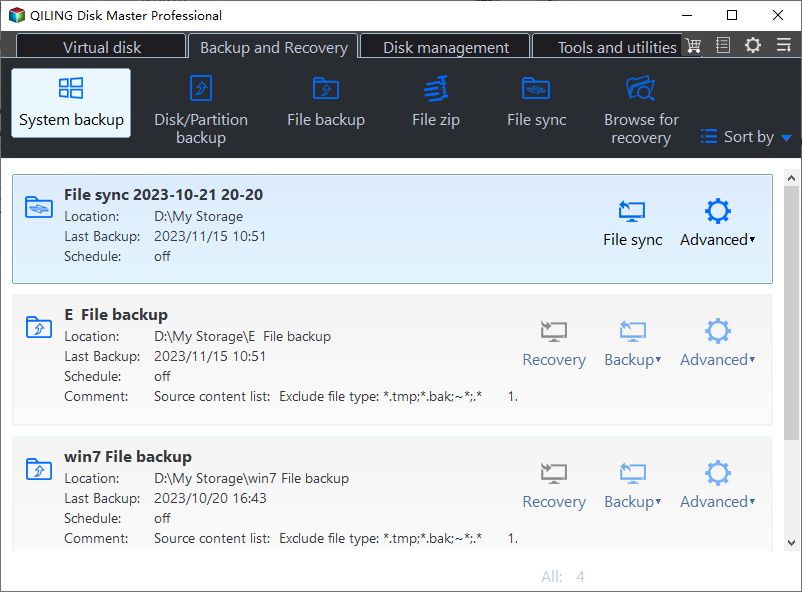
Step 2. Check the source. The disk where Windows is installed and its system partitions are already ticked for you. If you only need your personal documents, run a separate "File Backup" task instead.

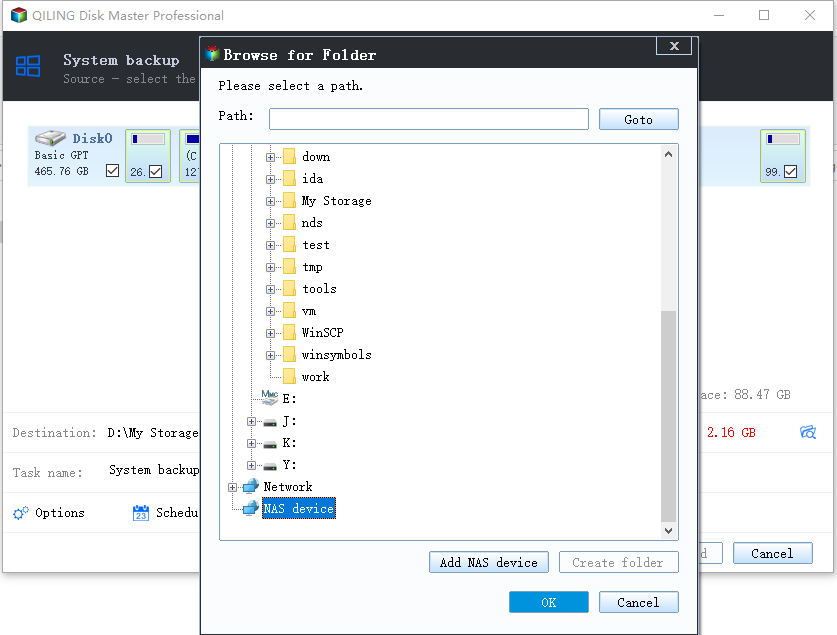
Step 3. Click the destination box and choose where the image should be saved. Use an external HDD or SSD, a NAS, or any drive other than the one Windows is installed on, and make sure it has enough free space.
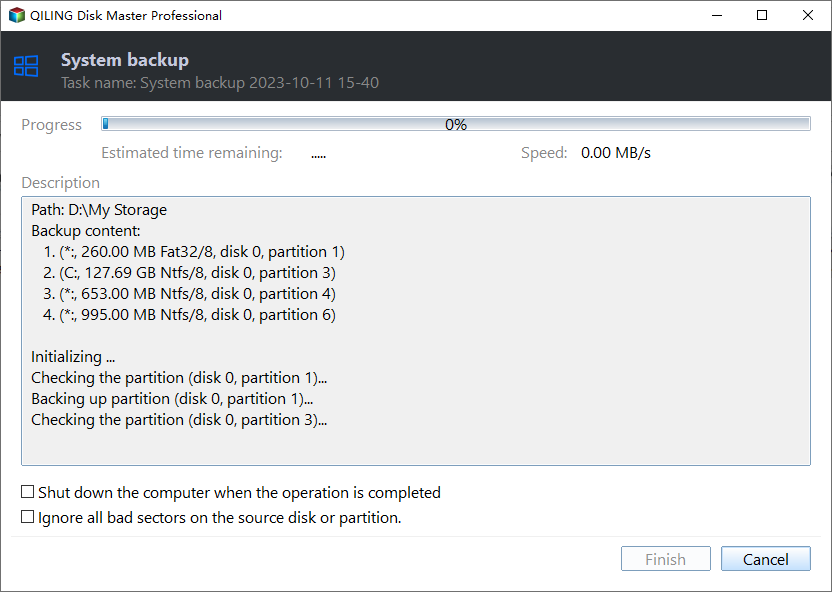
Step 4. Review the task summary and click "Proceed". Wait until the progress bar reaches 100%. Do not unplug the drive or turn off the PC while the backup is running.
Part 2: Restore Windows from the Backup
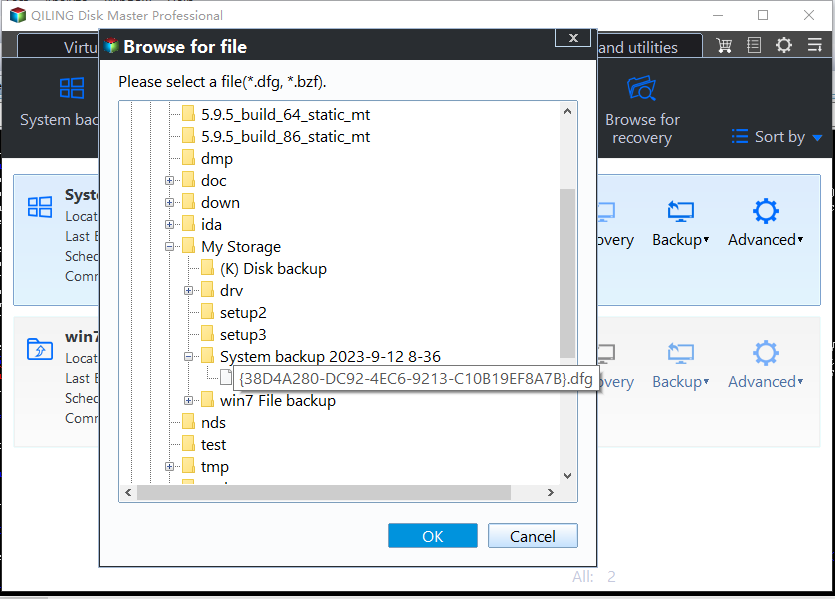
Step 1. Open Qiling Disk Master again, go to "Backup and Recovery", and select the recovery option. Your backup images are listed, so pick the one you created before the changes began.
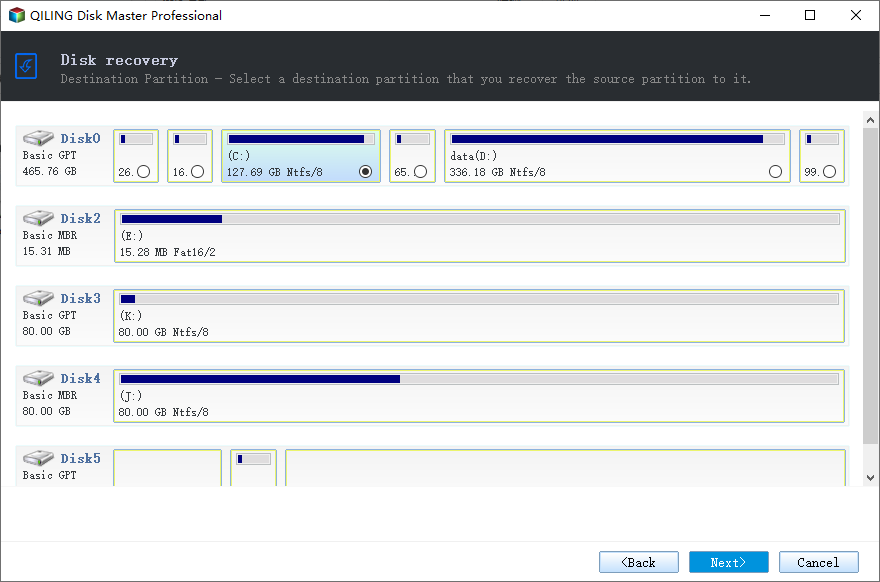
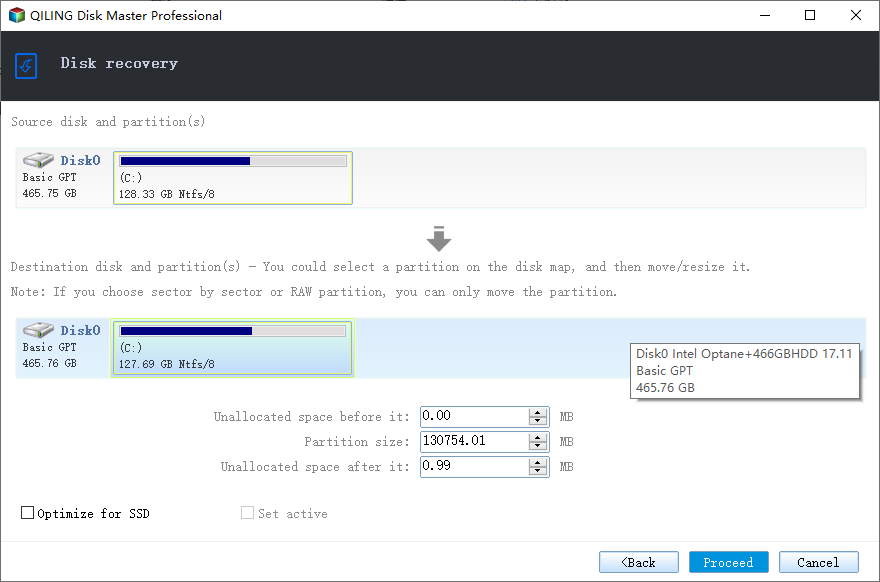
Step 2. Choose the target disk or partition. Normally you restore to the original system disk. If the drive was replaced, select the new disk instead, and the restore rebuilds Windows together with its boot partitions.
Step 3. Preview the restore plan, click "Proceed", and confirm the warning. The PC restarts to finish the job, and Windows comes back exactly as it was on the day the image was created, with your files and programs intact.
- Note
- Keep the backup image on a separate drive, and refresh it before changing storage cache settings.
Conclusion
RAID and caching do different jobs, and once that is clear the advice is straightforward. RAID pools capacity and survives disk failures; a cache only reduces how often the array is read. The controller's own battery-backed write cache is a different animal from a software read cache, and only the former is protected against a power cut. On a healthy, read-heavy array built on mechanical disks, a software cache is a genuine improvement; on a degraded array, a write-heavy workload, or an array of fast NVMe drives, it adds little and can hide the warning signs you need. Fix the array first, keep the cache on independent hardware, and treat caching as an optimisation rather than a safeguard.
Protect your PC with Qiling Backup—create a system image before your next round of settings changes.
For more Windows 11 performance guides, see SSD Cache vs Storage Spaces Tiering, How Big Should Your Disk Cache Be?, Write Caching vs Read Caching, What Are L1 and L2 Cache?, and Should You Cache a Slow Drive or Buy a Bigger SSD?.
Related Articles
- How to Use an SSD Cache for an External Hard Drive
The same read-side logic applied to a single external volume instead of an array. - Choosing the Right SSD Cache Block Size
- Windows 11 Dev Drive vs Disk Cache: Which Helps Developers More?
- Qiling Fast Cache: Best Practices and Settings
- How to Check Cache Hit Rate and Measure Cache Performance
Products
Articles & Tutorials
- Data Recovery
- Data Backup
- File Recovery
- File Backup
- System Backup and Restore
- Disk and Partition Clone
- Technical articles
- Mobile articles
- Disk Master Help
- Windows Data Recovery Tutorials
- Windows Secure Delete Tutorials
- Windows Partition Management Tutorials
- Windows File Backup and Restore Tutorials
- Windows System Backup and Restore Tutorials
- Windows Disk Backup and Restore Tutorials
- Windows Clone Tutorials