Can a Disk Cache Hide a Failing Drive?
A cache sits between your programs and the disk, and that position cuts both ways. It makes repeated reads fast, but it also serves data from memory instead of the platter - which means the drive is never touched when the cache already holds what was asked for.
That is how a cache can delay a diagnosis. This guide explains which failure symptoms it genuinely masks, which ones it cannot, and how to check drive health yourself.
PAGE CONTENT
- Why a Cache Can Mask Disk Trouble
- The Warning Signs a Cache Hides
- The Warning Signs It Cannot Hide
- How to Check Drive Health Directly
- Use a Cache Only on a Healthy Drive
- FAQs About Caching and Failing Drives
- Back Up Windows Before You Change Settings
Why a Cache Can Mask Disk Trouble
The mechanism is simple, and it is worth stating plainly:
- A cache answers from fast storage first. When the data is present, the request never reaches the failing drive, so the slow read or retry that would have exposed the problem does not happen.
- Repeated access to the same files is exactly the pattern a cache serves best. The system files, the browser profile, and the programs you open every day are precisely the blocks most likely to sit in the cache.
- Fractional improvements then hide the trend. A drive that has slowed because of reallocated sectors can still feel fine as long as most of what you open is cached, so the decline is not noticed.
- The masking ends the moment the cache misses. New files, large sequential reads, and files that were evicted all go straight to the failing drive - which is when the trouble suddenly becomes obvious.
The Warning Signs a Cache Hides
- Slower access to frequently used files. The drive may be retrying reads, but the cache covers for it, so the slowdown is invisible until the file is not cached.
- Occasional stalls when opening a new document. A hit on an uncached file is the only moment the underlying latency shows, and users often dismiss it as a one-off.
- Creeping read speeds in benchmarks. A synthetic test run against a cached volume measures the cache, not the age of the drive.
- Higher noise or heat from the drive. This is physical and would still be noticed, but the performance symptom that usually prompts action is being suppressed.
The Warning Signs It Cannot Hide
Several failure indicators are completely independent of caching:
- SMART warnings. The drive's own firmware reports reallocated sectors, pending sectors, and spin-up errors regardless of what the cache is doing. If the firmware says the drive is degrading, it is degrading.
- Write failures. Caches accelerate reads far more than writes, so a failing write path still surfaces as errors, corrupt saves, or a drive that drops to read-only.
- File system corruption. A file that is cached may open, while the copy on disk is damaged. Corruption appears once the cache is cleared, which is a strong sign of a real problem.
- Clicking or beeping. Mechanical symptoms are reported by the hardware itself, not by the storage stack.
- Errors in the event log. Controller resets, bad-block events, and timeout errors are recorded whether or not the cache answered the read.
How to Check Drive Health Directly
Because a cache distorts performance impressions, verify the drive with tools that do not depend on it:
- Read the SMART attributes with a monitoring utility and watch the trend, not a single snapshot. See how to check hard drive health.
- Run a full surface scan, not a quick test. A short test reads a small area and can pass a drive that has bad blocks elsewhere.
- Disable the cache temporarily and repeat a benchmark you already recorded. If the uncached result has dropped sharply, the earlier number was the cache talking.
- Check the event log for controller and disk errors, and note whether they cluster on one drive.
- Compare write performance. A large read mostly reflects the cache, while a large write still exercises the failing hardware.
Use a Cache Only on a Healthy Drive
A cache can make a dying drive feel usable, which is the dangerous part.
- It does not fix anything. It reduces how often the drive is touched; the bad sectors are still there and still spreading.
- It can shorten the warning window. Because symptoms are hidden, you may learn about the failure after the data is already unrecoverable.
- Copy the data off first. If SMART or the event log says the drive is failing, the correct action is to copy the important files to a healthy drive immediately - see when caching does not help.
- Only then decide about the cache. On a healthy drive, a cache is a performance tool. On a failing one, it is a distraction.
Once the drive has passed a health check, a cache is a legitimate way to speed it up. Qiling Fast Cache uses idle memory and SSD space to serve the reads you repeat most, without touching the drive itself.
Step 1. Install and open Qiling Fast Cache. On first run the task list is empty, so you start from a known state.
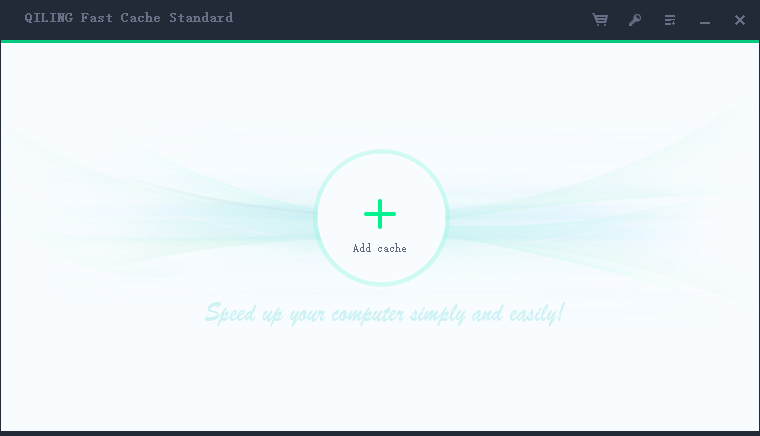
Step 2. Click the "+" button and select the healthy drive you want to accelerate. Do not point a cache at a drive that is being replaced.
Step 3. Choose the medium and size, then create the task. Keep the cache smaller than your free RAM or SSD space so other work is not squeezed out.
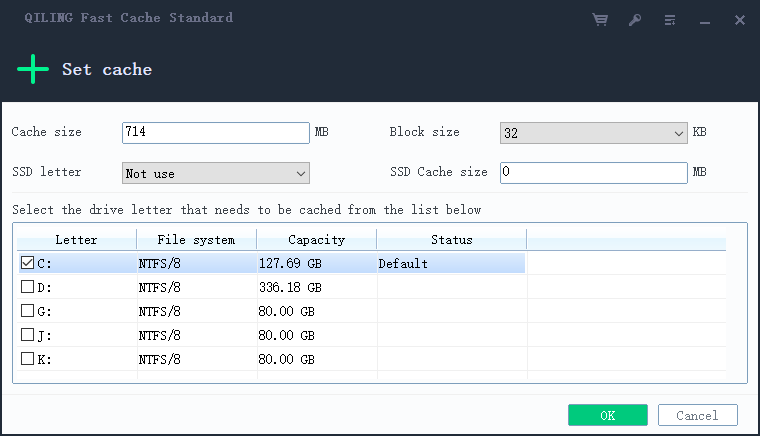
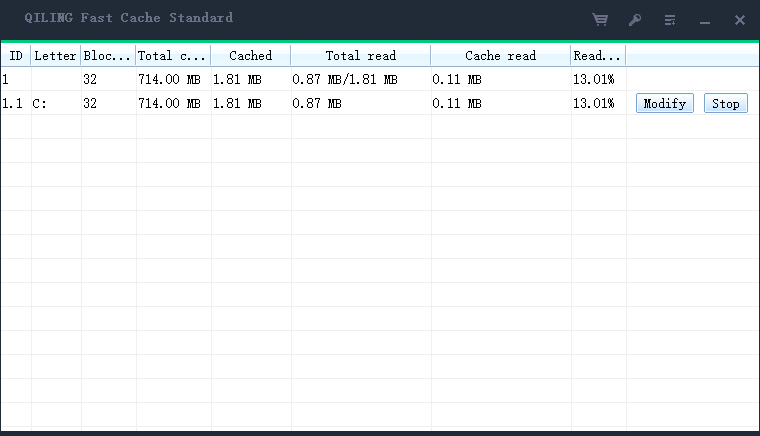
Step 4. Watch the hit rate for a few days. A healthy workload settles at a stable rate, while a rate that keeps falling can point to a drive that is genuinely slowing down.
FAQs About Caching and Failing Drives
Can a cache really hide a failing drive?
It can hide the performance symptoms, because cached reads never reach the drive. It cannot hide SMART warnings, write errors, or corruption.
My drive feels fast, so is it healthy?
Not necessarily. If most of what you open is cached, a drive in decline can still feel responsive. Check SMART and the event log rather than trusting the feel.
Will caching make a bad drive worse?
No, it does not damage the drive, but it can delay your awareness of the problem, which costs you the chance to copy data off in time.
What should I do first if SMART reports a problem?
Copy your important files to another drive immediately, then confirm the diagnosis with a full surface scan. Do not start by installing a cache.
Does clearing the cache help diagnose a drive?
Yes. Clearing it and repeating a test reveals the drive's true performance, which is often much worse than the cached figure.
Back Up Windows Before You Change Settings
Replacing a drive and restoring to new hardware are the moments when a full image proves its worth. Qiling Disk Master creates a Windows backup you can restore to the same disk or to a replacement.
Part 1: Create a Full System Backup
Step 1. Install and open Qiling Disk Master. On the home screen, open "Backup and Recovery" and choose "System Backup". This option automatically includes Windows and the hidden boot partitions, so you do not have to select them one by one.
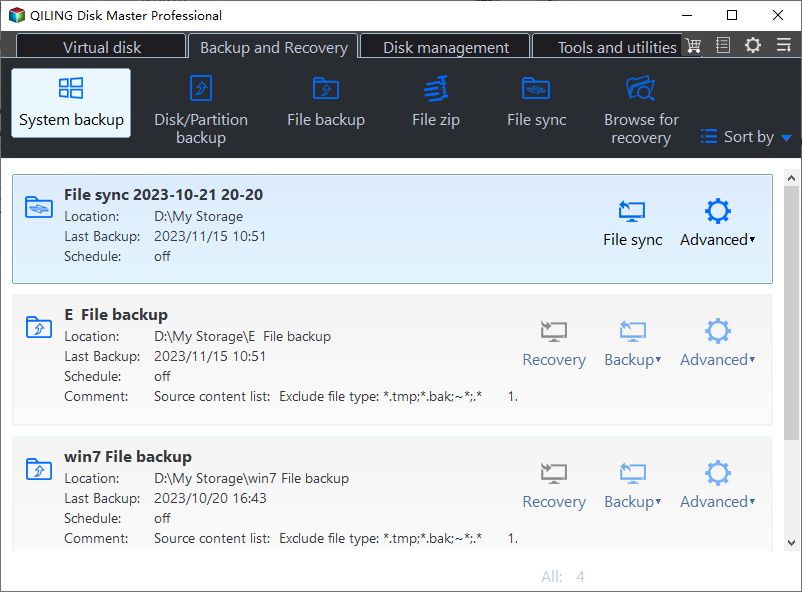
Step 2. Check the source. The disk where Windows is installed and its system partitions are already ticked for you. If you only need your personal documents, run a separate "File Backup" task instead.

Step 3. Click the destination box and choose where the image should be saved. Use an external HDD or SSD, a NAS, or any drive other than the one Windows is installed on, and make sure it has enough free space.
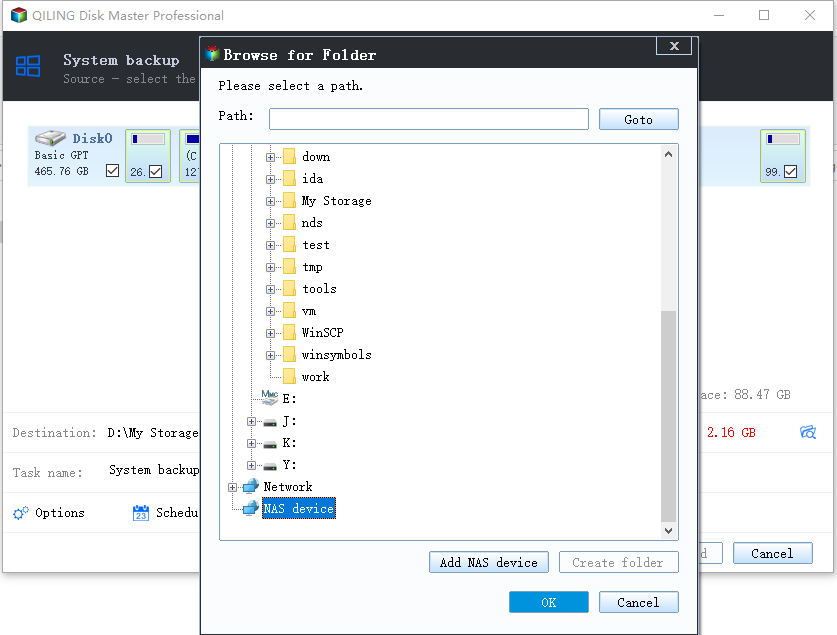
Step 4. Review the task summary and click "Proceed". Wait until the progress bar reaches 100%. Do not unplug the drive or turn off the PC while the backup is running.
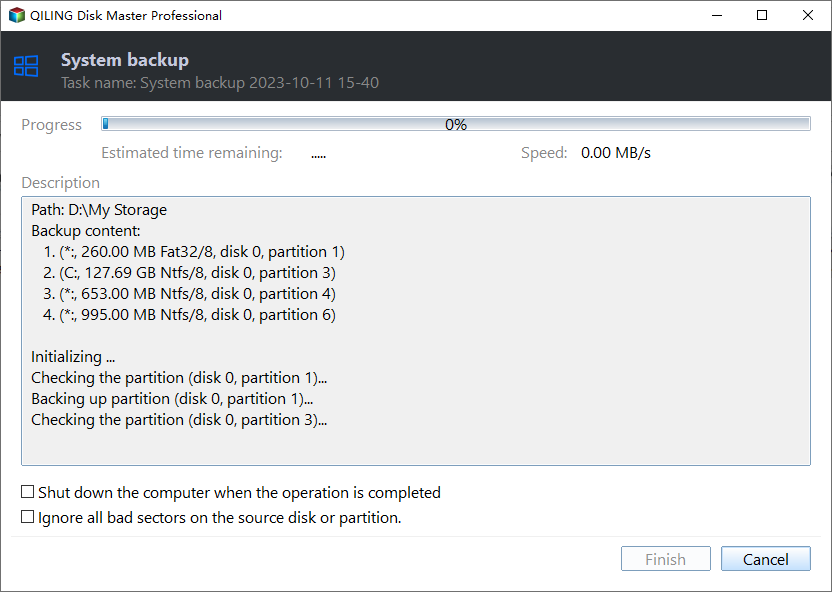
Part 2: Restore Windows from the Backup
Step 1. Open Qiling Disk Master again, go to "Backup and Recovery", and select the recovery option. Your backup images are listed, so pick the one you created while the drive was still healthy.
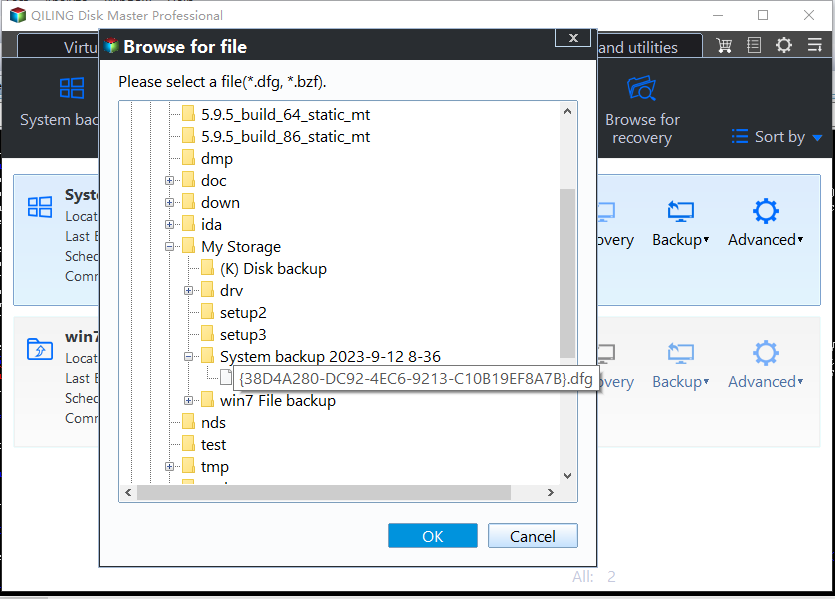
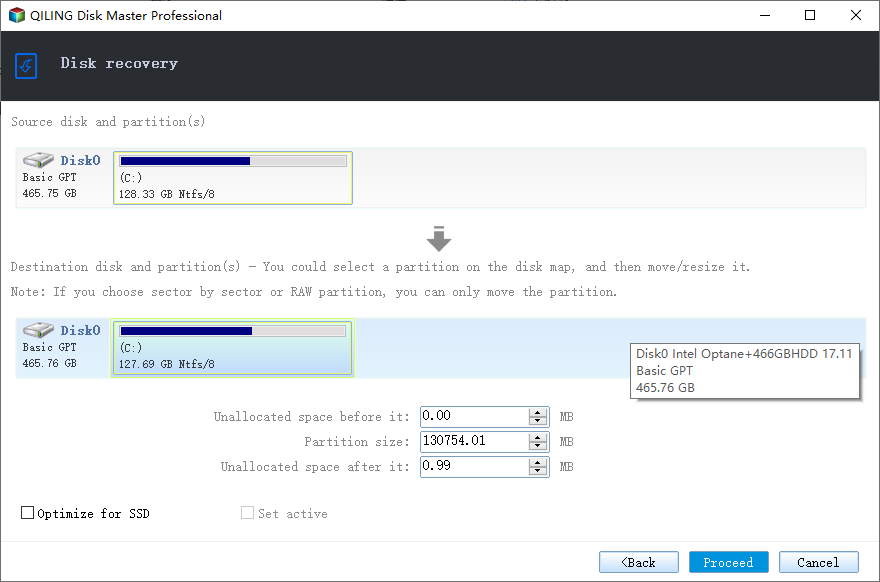
Step 2. Choose the target disk or partition. Normally you restore to the original system disk. If the drive was replaced, select the new disk instead, and the restore rebuilds Windows together with its boot partitions.
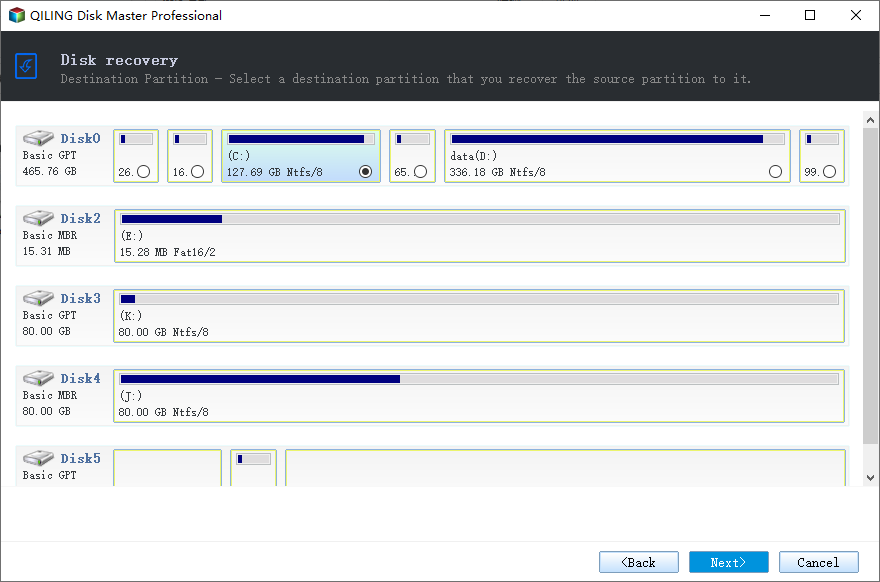
Step 3. Preview the restore plan, click "Proceed", and confirm the warning. The PC restarts to finish the job, and Windows comes back exactly as it was on the day the image was created, with your files and programs intact.
- Note
- Keep the backup image on a separate drive, and refresh it before changing storage cache settings.
Conclusion
A cache sits between your programs and the disk, which is why it can mask the performance symptoms of a drive in decline: cached reads never reach the failing hardware, so the slowdown is never felt. It cannot mask SMART warnings, write failures, file system corruption, or event-log errors, and those are the signals to act on. If a drive is reported as failing, copy your data to a healthy drive first and confirm the diagnosis with a full scan; only then consider a cache. On a healthy disk, caching is a performance tool worth having - on a dying one, it is a false sense of security.
Protect your PC with Qiling Backup—create a system image before your next round of settings changes.
For more Windows 11 performance guides, see When Caching Does Not Help, How to Extend SSD Lifespan, What Are L1 and L2 Cache?, How to Check Cache Hit Rate, and SSD Cache vs RAM Disk.
Related Articles
- Does Windows Fast Startup Affect Your Disk Cache?
Power state decides whether the cache is still warm after boot, which changes how soon the drive itself is exercised. - Caching and Cloud Sync Clients
- Using a Cache with BitLocker Encryption
- Does Caching Affect Battery Life?
- Caching for Antivirus Scans
- Caching for Backup and Imaging Software Explained
Products
Articles & Tutorials
- Data Recovery
- Data Backup
- File Recovery
- File Backup
- System Backup and Restore
- Disk and Partition Clone
- Technical articles
- Mobile articles
- Disk Master Help
- Windows Data Recovery Tutorials
- Windows Secure Delete Tutorials
- Windows Partition Management Tutorials
- Windows File Backup and Restore Tutorials
- Windows System Backup and Restore Tutorials
- Windows Disk Backup and Restore Tutorials
- Windows Clone Tutorials