Does a Disk Cache Help Console Emulators?
Emulators are usually limited by the processor and the graphics card long before the disk matters. Yet there is one clear exception, and it is the reason a cache often helps more than people expect on the second launch.
This guide looks at what an emulator actually reads, when a cache removes real stutter, and when it cannot change anything at all.
PAGE CONTENT
- What Console Emulators Ask of the Disk
- Shader Compilation and Texture Streaming
- Where a Disk Cache Helps Emulation
- Where the Bottleneck Really Is
- Configure a Cache for Emulation
- FAQs About Emulators and Caching
- Back Up Windows Before You Change Settings
What Console Emulators Ask of the Disk
An emulator translates instructions from one console to a completely different PC, and the disk is only one part of that job:
- Game images. Disc-based titles are often stored as one very large image file, read in bursts as levels load.
- Shaders and pipelines. Modern emulators translate console shaders into PC ones, and cache the result to avoid repeating the work.
- Textures and audio streams. Many titles stream both from the image continuously rather than loading everything up front.
- Save states and savestates. Large, compressed, and written in bursts.
- The pattern repeats across sessions. The same level loads the same blocks every time you play it, which is exactly what a cache can learn - the mobile equivalent is covered in caching for Android emulators.
Shader Compilation and Texture Streaming
The shader compiler is the most important emulator cache, and it lives inside the emulator itself:
- Compiling a shader costs CPU time. The first time a scene appears, the emulator translates and compiles the shaders it needs, which is the stutter you feel in a new area.
- Caching the result removes that cost. The translated shaders are stored on disk and reused, which is what the Windows shader cache does for native games.
- A disk cache speeds up reloading the shader cache. Startup and level transitions read those files again and again.
- Texture streaming is a read pattern too. Large games read the same texture blocks on every replay of the same area.
- The two interact. A faster disk shortens the wait after a shader cache is rebuilt, but it cannot stop the rebuild from happening.
Where a Disk Cache Helps Emulation
The gains are real but specific, and they are easiest to notice on a mechanical drive:
- Second and later launches. Once the shader cache and game image blocks are cached, startup is noticeably shorter - see what cache warm-up means.
- Level reloads and fast travel. Replaying the same areas reads the same blocks from the same image file.
- Repeated sessions of one title. Playing the same game every day gives the cache a stable working set to learn.
- Games stored on an external or slow drive. An external USB disk is the clearest case, because the cache can hold the parts you actually reuse.
- What it cannot do. It will not raise the average frame rate of a title that is already limited by the CPU - see when a disk cache does not help.
Where the Bottleneck Really Is
Before spending memory on a cache, it is worth knowing which limit you are actually hitting:
- CPU translation. Emulating a different architecture costs a lot of processor time, especially on high-level emulators.
- GPU accuracy settings. Raising the internal resolution or accuracy level moves the limit to the graphics card.
- Shader compilation on first sight. This is a processor task that causes stutter no matter how fast the disk is.
- Disk load times. This is the only one a cache genuinely addresses, and it shows up as waiting, not as low frames per second.
- Separate the symptoms. A frame rate that stays low points to the CPU or GPU; a long pause with a black screen points to the disk.
Configure a Cache for Emulation
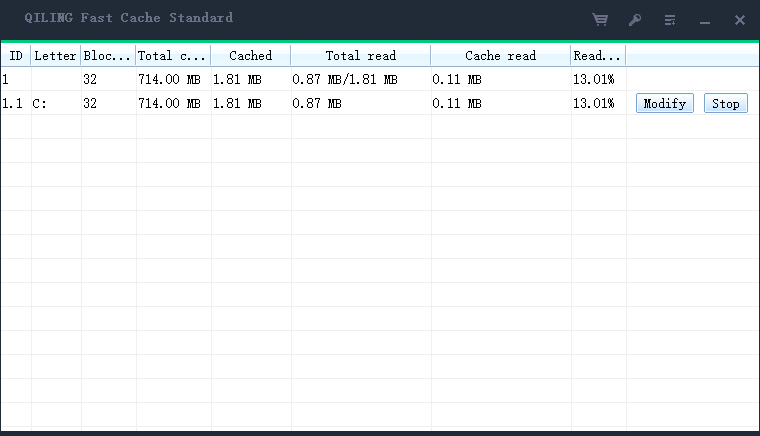
If your game library sits on a mechanical or external drive, a read cache is the cheapest upgrade available. Qiling Fast Cache uses a RAM tier for the newest data and an SSD tier for the rest, and reports the hit rate in the task list.
Step 1. Install Qiling Fast Cache and open the task list. Time a level reload before you change anything, so you have something to compare against.
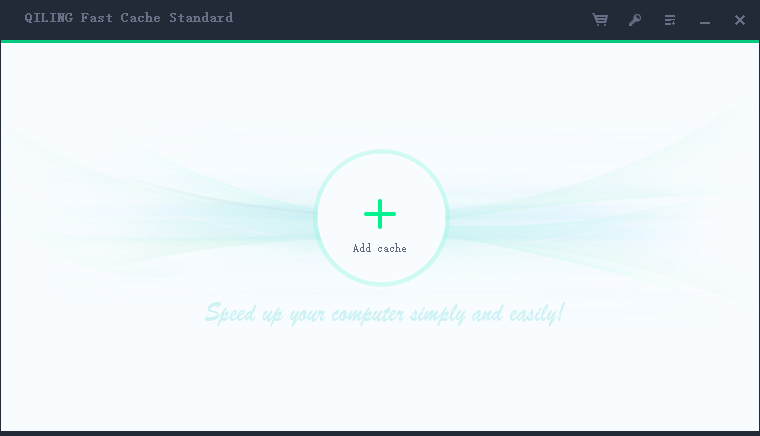
Step 2. Click the "+" button and select the volume that holds your game images and shader cache.
Step 3. Size the SSD tier around the two or three titles you play most. A cache aimed at a huge library will simply churn.
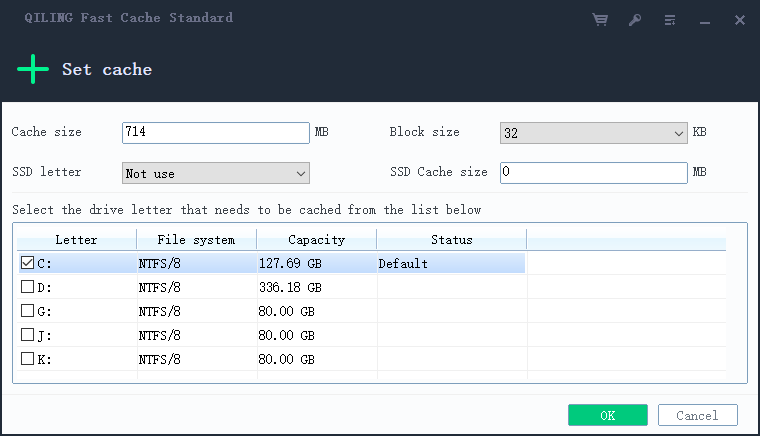
Step 4. Play normally for a few days, then repeat the same level reload. If the hit rate is high and the load is still slow, the bottleneck was never the disk - see how to check cache hit rate.
FAQs About Emulators and Caching
Will a cache stop shader compilation stutter?
No. That stutter comes from the processor translating shaders, not from the disk. A cache only shortens the wait after the shader cache is rebuilt.
Is a RAM disk better for emulator game images?
It is faster but entirely volatile, and modern game images are far too large to hold in RAM. A cache is the practical middle ground.
Should I put the emulator's shader cache on an SSD?
Yes, that helps. It is a small folder that is read at every launch, so it is an ideal candidate for caching.
My frame rate is low even with a high hit rate. Why?
Because the emulator is limited by the CPU or the GPU. Adjusting emulation settings will help; the disk will not.
Does the type of drive matter for emulation?
It matters for load times and for how much a cache can hide, but not for the emulated processor's speed.
Back Up Windows Before You Change Settings
Reconfiguring storage and cache settings is easier to undo when you have a recent image. Qiling Disk Master creates a full Windows backup you can restore from.
Part 1: Create a Full System Backup
Step 1. Install and open Qiling Disk Master. On the home screen, open "Backup and Recovery" and choose "System Backup". This option automatically includes Windows and the hidden boot partitions, so you do not have to select them one by one.
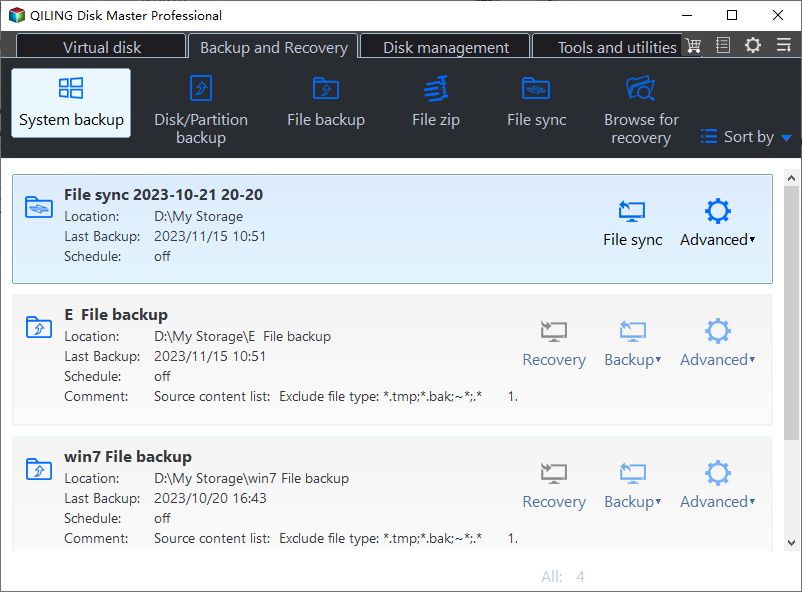
Step 2. Check the source. The disk where Windows is installed and its system partitions are already ticked for you. If you only need your personal documents, run a separate "File Backup" task instead.

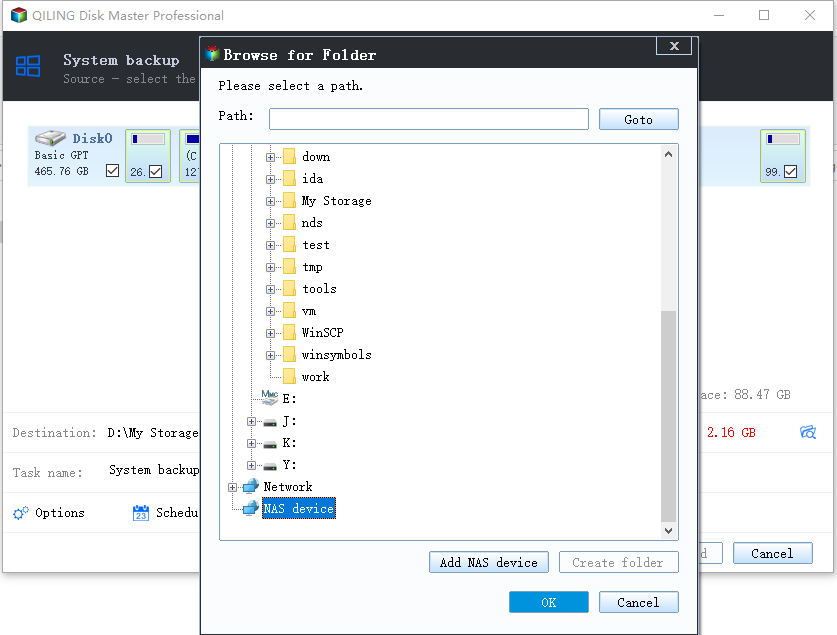
Step 3. Click the destination box and choose where the image should be saved. Use an external HDD or SSD, a NAS, or any drive other than the one Windows is installed on, and make sure it has enough free space.
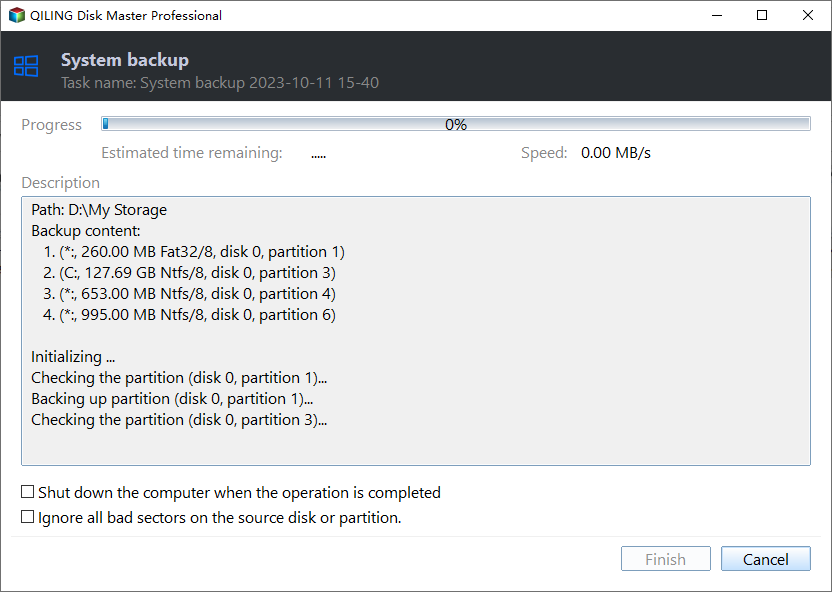
Step 4. Review the task summary and click "Proceed". Wait until the progress bar reaches 100%. Do not unplug the drive or turn off the PC while the backup is running.
Part 2: Restore Windows from the Backup
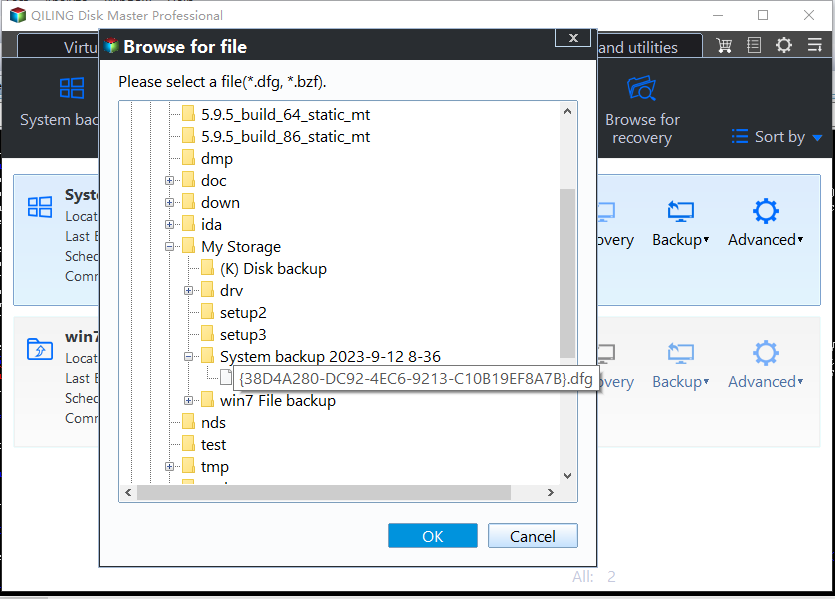
Step 1. Open Qiling Disk Master again, go to "Backup and Recovery", and select the recovery option. Your backup images are listed, so pick the one you created before the changes began.
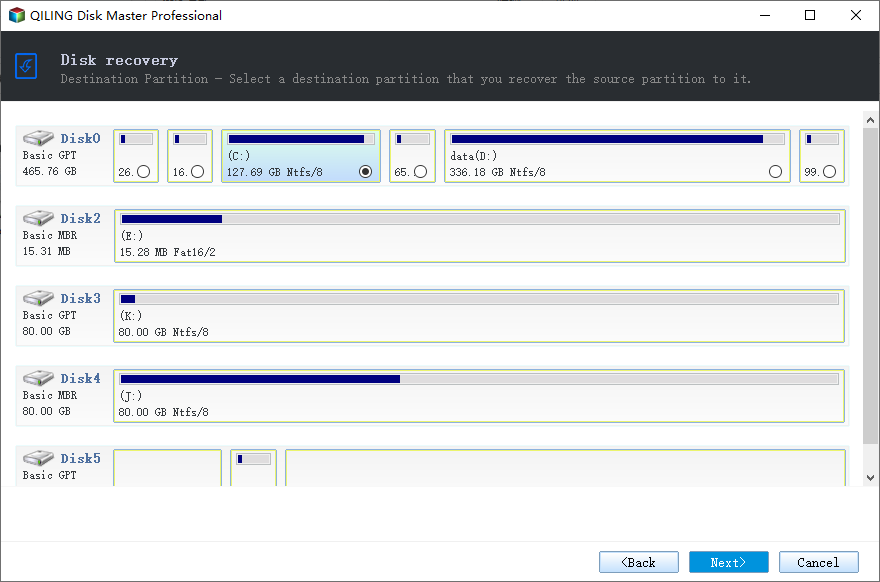
Step 2. Choose the target disk or partition. Normally you restore to the original system disk. If the drive was replaced, select the new disk instead, and the restore rebuilds Windows together with its boot partitions.
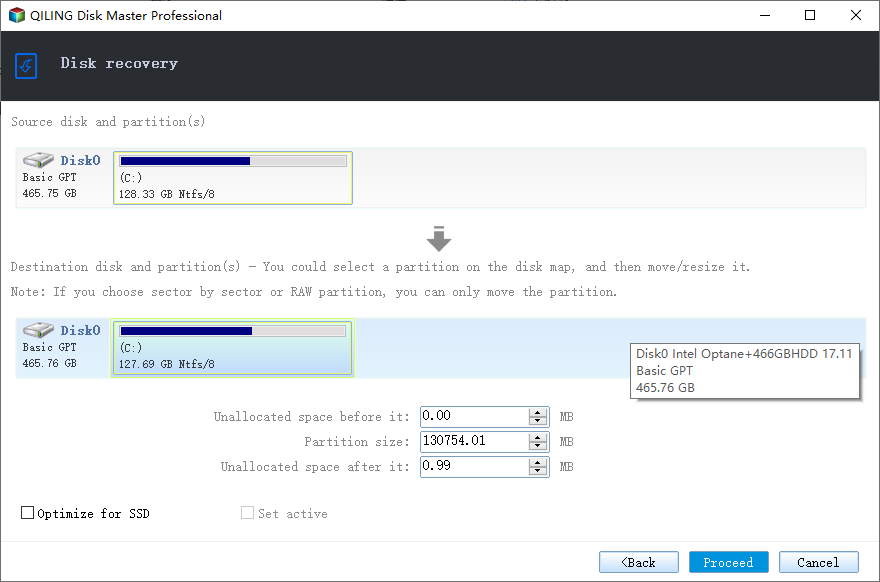
Step 3. Preview the restore plan, click "Proceed", and confirm the warning. The PC restarts to finish the job, and Windows comes back exactly as it was on the day the image was created.
- Note
- Keep the backup image on a separate drive, and refresh it before changing storage cache settings.
Conclusion
An emulator's hardest work - translating instructions and compiling shaders - is done by the CPU and GPU, and a disk cache will not change it. What a cache does change is the part that is genuinely disk-bound: loading a level again, restarting a game, and reading back the shader cache the emulator already built. That is why the second launch often feels so different from the first. Use the symptoms to tell the two apart: low frame rates belong to the CPU or GPU, while long pauses with a black screen belong to the disk. Cache the volume that holds your game images and shader cache, size it around the titles you actually play, and measure the reload rather than the frame counter.
Protect your PC with Qiling Backup—create a system image before your next round of settings changes.
For more Windows 11 performance guides, see How to Use a RAM Disk for Gaming, Faster Gameplay with Fast Cache, Does a Disk Cache Help Steam Game Libraries?, Speed Up Game Development with a RAM Disk and Disk Cache, and How Big Should Your Disk Cache Be?.
Related Articles
- Disk Cache and SMR Drives Explained
Large game files are exactly the sustained-write case that shingled drives handle worst. - What Are L1 and L2 Cache? Disk Caching Explained
- SSD Cache Block Size Explained: Does It Affect Performance?
- How to Move a Disk Cache to Another Drive Safely
- How to Run a Game Server on a RAM Disk in Windows 11
Products
Articles & Tutorials
- Data Recovery
- Data Backup
- File Recovery
- File Backup
- System Backup and Restore
- Disk and Partition Clone
- Technical articles
- Mobile articles
- Disk Master Help
- Windows Data Recovery Tutorials
- Windows Secure Delete Tutorials
- Windows Partition Management Tutorials
- Windows File Backup and Restore Tutorials
- Windows System Backup and Restore Tutorials
- Windows Disk Backup and Restore Tutorials
- Windows Clone Tutorials