Does a Disk Cache Help Steam Game Libraries?
A modern game library is hundreds of gigabytes of large files, and Steam touches it constantly - launching, updating, and verifying. Some of that repeated access is a good caching target, and some is not.
This guide explains how Steam uses your drives, where a cache shortens waits, and how to arrange libraries across multiple disks so the right data sits on the fastest one.
PAGE CONTENT
- How Steam Uses Your Disks
- Where a Cache Helps Most
- Where It Makes No Difference
- Organizing a Steam Library Across Drives
- Configure a Cache for Your Game Library
- FAQs About Caching and Steam Libraries
- Back Up Windows Before You Change Settings
How Steam Uses Your Disks
- Launching a game reads a fixed set of files. The executable, engine data, and the first level or map are read at the start of every session.
- Downloads and updates are large sequential writes. Steam unpacks compressed packages into the library, which is a one-pass write with no repetition.
- Verifying files reads the whole installation. The client hashes every file against the manifest, which is a complete read of the game folder.
- Shaders are compiled on first run. Modern engines build a shader cache that is then reused on later launches.
- Cloud saves and the client itself stay small. Neither puts meaningful load on the drive.
Where a Cache Helps Most
- Repeated launches of the same game benefit. The files read at start-up are identical each time, which is genuine repeat access.
- Level loading within a session benefits. Re-entering the same area reads the same assets again.
- A small set of multiplayer maps benefits. If you rotate through a few maps, those stay warm in cache.
- Verifying a library benefits on a second run. A second verification pass reads the same files as the first.
- Mod-heavy installs benefit. A long mod list means many small files read in a consistent order - see using a RAM disk for gaming.
Where It Makes No Difference
- Downloads are limited by the internet connection. However fast the drive, the data has to arrive first.
- A first-time install is a large sequential write, which no read cache can accelerate.
- Frame rate is a graphics and CPU matter. Storage affects loading, not rendering - see caching for game development for the same distinction on the build side.
- A working set larger than the cache thrashes. Caching a library of hundreds of gigabytes is not realistic; caching the game you are playing is.
- Anti-cheat and launcher overhead is unaffected. Those run in memory and on the network.
Organizing a Steam Library Across Drives
- Keep the games you play most on the SSD. Steam supports multiple library folders, so the active titles can live on fast storage while the archive sits elsewhere.
- Use a large hard disk for the backlog. Games you have not touched in months do not need fast storage.
- Moving a game between libraries is built in. Use Steam's own move function rather than copying folders manually, so the manifests stay consistent.
- Do not cache a whole library. Point the cache at the library holding your current games, not at every install on the machine.
- Leave room for updates. Steam needs temporary space to unpack an update before replacing files, and a full drive makes patching slow.
Configure a Cache for Your Game Library
Pointed at the library you are actively playing, Qiling Fast Cache keeps the files read at launch and level load in fast storage, which shortens the wait between clicking Play and getting in.
Step 1. Install and open Qiling Fast Cache. On first run the task list is empty, so you can judge the change cleanly.
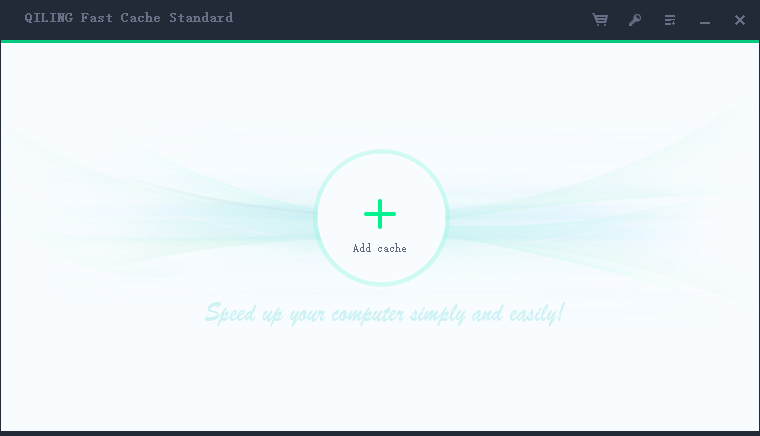
Step 2. Click the "+" button and select the drive that holds your current Steam library.
Step 3. Choose the medium and size. Size it for one or two active games rather than the whole library, and keep memory free for the game itself.
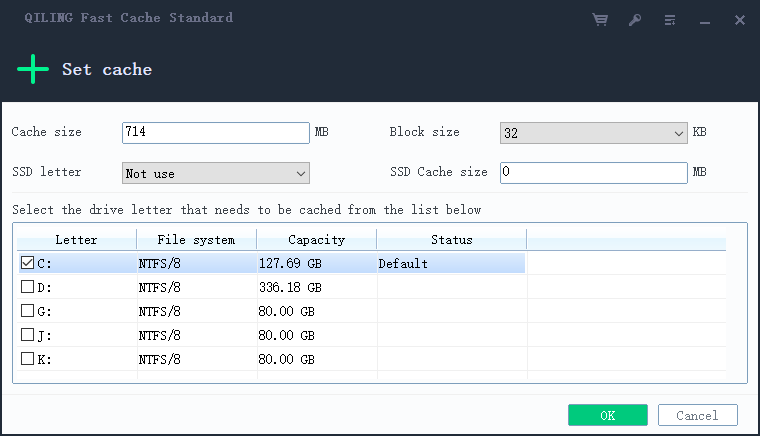
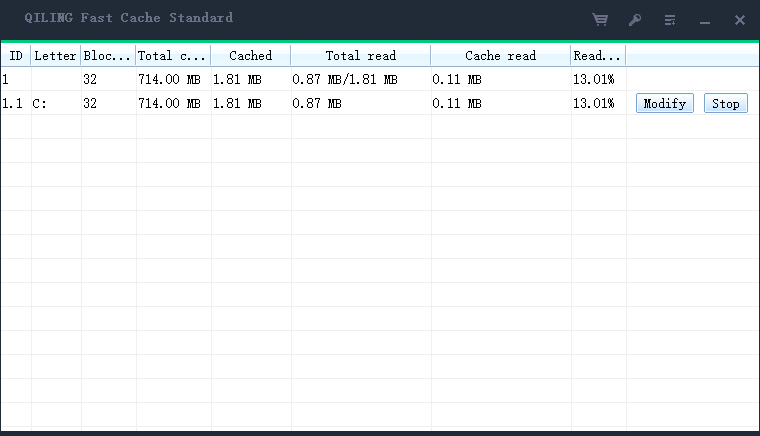
Step 4. Create the task, then time a level load and a second load of the same area to see the difference caching makes.
FAQs About Caching and Steam Libraries
Will a cache make my Steam downloads faster?
No. Downloads are limited by your internet connection, and the data has to arrive before any drive is involved.
Does a cache help game loading times?
Yes, for the files a game reads repeatedly - start-up data, frequently used maps, and assets reused across sessions.
Can I cache my entire library?
Practically, no. A library is far larger than any sensible cache. Point the cache at the games you are currently playing.
Is a RAM disk or an SSD cache better for gaming?
A RAM disk is faster but limited by memory and lost on reboot, while an SSD cache is larger and survives restarts.
Why does verifying files take so long?
It reads and hashes every installed file. That is a full pass over the game folder, and a second verification is faster with a cache.
Back Up Windows Before You Change Settings
Game libraries take hours to reinstall, which makes a system image worth having. Qiling Disk Master creates a full Windows backup you can restore from.
Part 1: Create a Full System Backup
Step 1. Install and open Qiling Disk Master. On the home screen, open "Backup and Recovery" and choose "System Backup". This option automatically includes Windows and the hidden boot partitions, so you do not have to select them one by one.
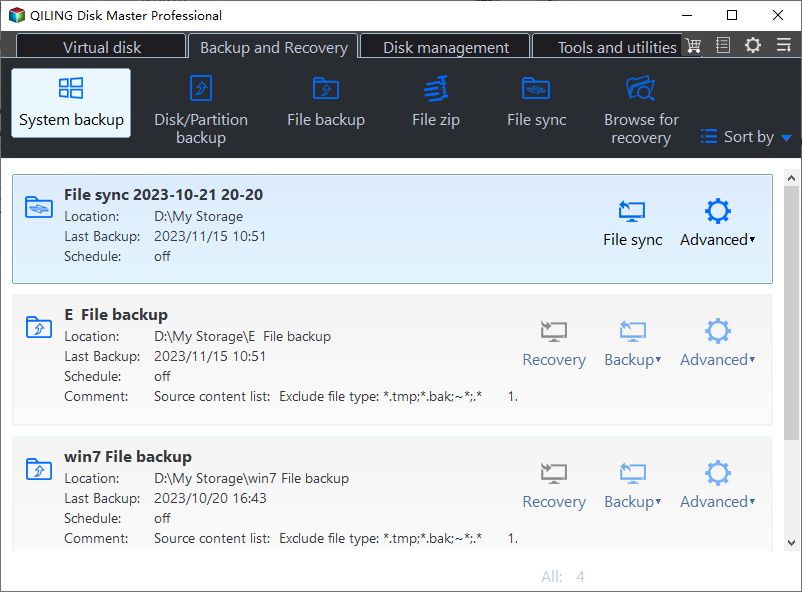
Step 2. Check the source. The disk where Windows is installed and its system partitions are already ticked for you. If you only need your personal documents, run a separate "File Backup" task instead.

Step 3. Click the destination box and choose where the image should be saved. Use an external HDD or SSD, a NAS, or any drive other than the one Windows is installed on, and make sure it has enough free space.
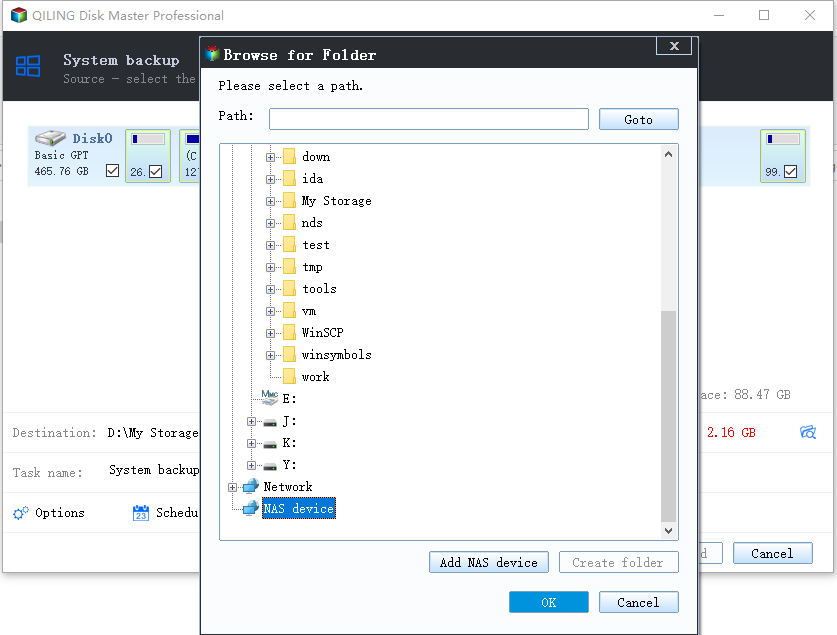
Step 4. Review the task summary and click "Proceed". Wait until the progress bar reaches 100%. Do not unplug the drive or turn off the PC while the backup is running.
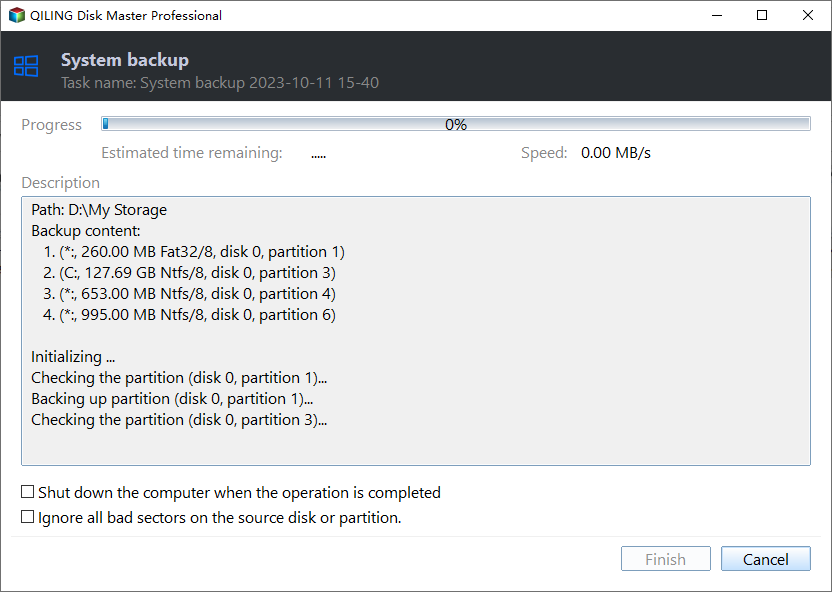
Part 2: Restore Windows from the Backup
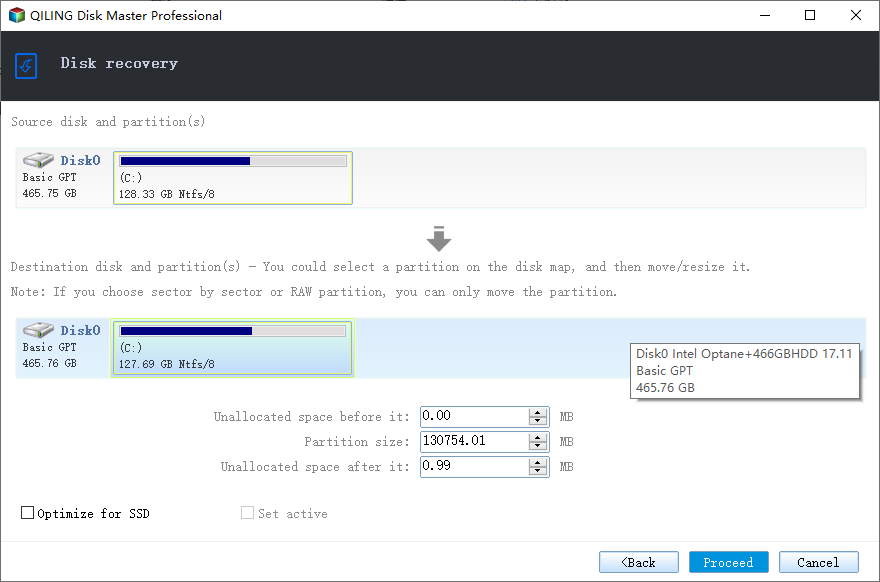
Step 1. Open Qiling Disk Master again, go to "Backup and Recovery", and select the recovery option. Your backup images are listed, so pick the one you created before the changes began.
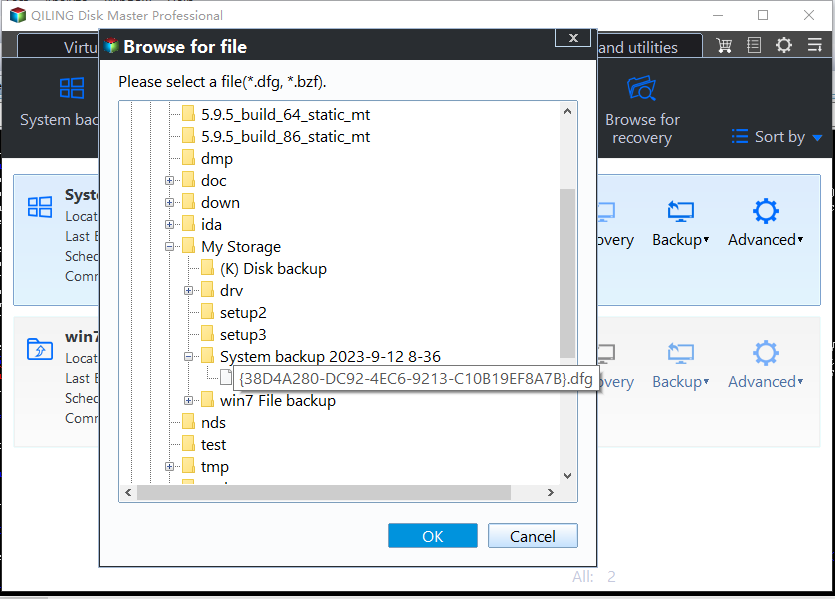
Step 2. Choose the target disk or partition. Normally you restore to the original system disk. If the drive was replaced, select the new disk instead, and the restore rebuilds Windows together with its boot partitions.
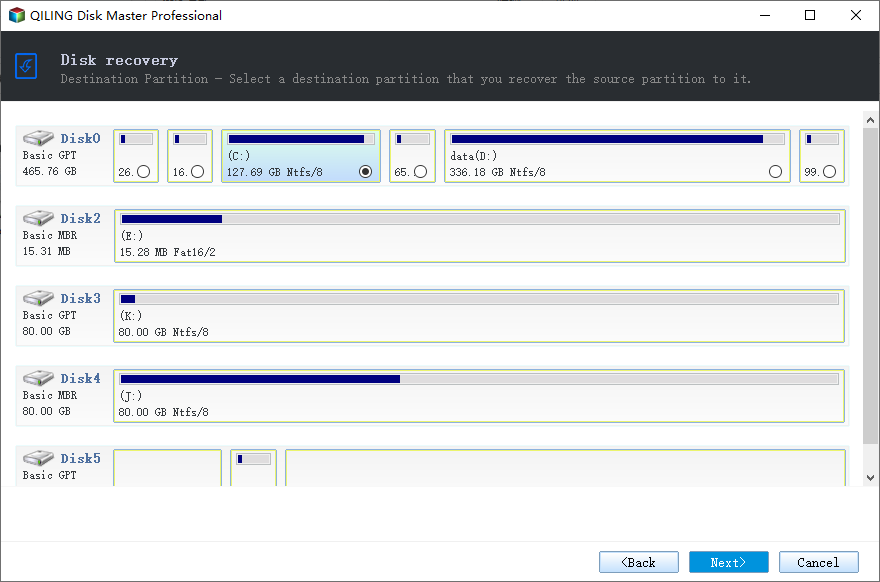
Step 3. Preview the restore plan, click "Proceed", and confirm the warning. The PC restarts to finish the job, and Windows comes back exactly as it was on the day the image was created, with your files and programs intact.
- Note
- Keep the backup image on a separate drive, and refresh it before changing storage cache settings.
Conclusion
A Steam library is a mixed workload, and separating the parts tells you what caching can do. Downloads, installs, and updates are large sequential writes bound by your connection, and a cache changes nothing there. What does repeat is everything around playing - the fixed set of files read at every launch, the maps and assets loaded again and again, the second verification pass, and the small files in a heavily modded install. That is where a modest cache earns its keep, provided you point it at the library you are actually playing rather than the whole collection. Keep the active titles on an SSD, leave the backlog on a large hard disk, use Steam's own move function instead of copying folders, and leave room for updates to unpack.
Protect your PC with Qiling Backup—create a system image before your next round of settings changes.
For more Windows 11 performance guides, see Cache vs Buffer, How to Check Cache Hit Rate, Choosing the Right SSD Cache Block Size, GPU Shader Cache Explained, and How to Make Your Games Load Faster.
Related Articles
- Caching for File Compression and Extraction
Why unpacking a game update behaves like any other decompression job. - Does Heat Slow Down Your SSD Cache?
- Caching for NVR and Surveillance Storage Explained
- Windows Delivery Optimization and Disk Caching Explained
- Does a Disk Cache Help When Cloning a Disk?
Products
Articles & Tutorials
- Data Recovery
- Data Backup
- File Recovery
- File Backup
- System Backup and Restore
- Disk and Partition Clone
- Technical articles
- Mobile articles
- Disk Master Help
- Windows Data Recovery Tutorials
- Windows Secure Delete Tutorials
- Windows Partition Management Tutorials
- Windows File Backup and Restore Tutorials
- Windows System Backup and Restore Tutorials
- Windows Disk Backup and Restore Tutorials
- Windows Clone Tutorials