Caching for NVR and Surveillance Storage Explained
A surveillance recorder is the opposite of a normal PC workload. It writes constantly, almost never reads, and values reliability far more than speed. That changes what caching can usefully do.
This guide explains how NVR storage behaves, why a read cache helps playback but not recording, and why write caching belongs nowhere near a machine holding evidence.
PAGE CONTENT
- How NVR Storage Actually Behaves
- Why a Cache Helps Playback More Than Recording
- Why Write Caching Is a Bad Idea Here
- Choosing Drives and Sizing a Cache for an NVR
- Configure a Cache for Surveillance Storage
- FAQs About Caching and Surveillance Storage
- Back Up Windows Before You Change Settings
How NVR Storage Actually Behaves
- Writes never stop. Every camera streams continuously, so the recorder is writing multiple video files at once, all day.
- The write pattern is largely sequential per camera, but many streams interleave, which produces a mixed pattern on the physical drive.
- Reads are bursty and rare. Nobody looks at footage unless something happened, and then several people may review clips at once.
- Old footage is overwritten automatically. Retention rules delete the oldest recordings, which adds a steady stream of deletions.
- Uptime matters more than throughput. A recorder that keeps writing reliably beats one that is fast but drops frames.
Why a Cache Helps Playback More Than Recording
- Recording gains almost nothing. Continuous writes are exactly the pattern a read cache cannot touch - see when caching does not help.
- Playback benefits. Reviewing the same clip repeatedly, scrubbing back and forth, and exporting a segment are all repeat reads.
- Motion search and thumbnails benefit. Generating previews and scanning for events reads the same footage again.
- Concurrent reviewers benefit. When several people open the same incident at once, a cache serves all of them from fast storage.
- Retention processing benefits least. Deleting old files is metadata work, and it happens regardless of what is cached.
Why Write Caching Is a Bad Idea Here
- Confirmed writes that never landed can vanish. If the recorder reports a segment as saved while it is still in memory, a power failure destroys the evidence.
- Surveillance data is often legally relevant. Footage that cannot be produced because a cache lost it is worse than footage that was never captured.
- Unexpected shutdowns are common. Recorders sit in cabinets and get power-cycled without warning, which is the worst case for deferred writes.
- Read caching carries none of that risk. It only affects how fast stored data can be served back.
- Protecting the archive matters more than speed. The same reasoning as caching for backup software.
Choosing Drives and Sizing a Cache for an NVR
- Use drives rated for continuous recording. Surveillance-oriented disks are built for 24/7 writing, while desktop drives are not.
- Separate the system disk from the recording volume. The recorder's own operating system should not compete with the video stream.
- Add an SSD read cache, not a RAM-heavy one. A modest SSD tier speeds up playback without taking memory the recorder software may need.
- Size the cache for review sessions, not for the archive. Nobody expects months of footage to be cached - only the clips being examined.
- Keep an eye on drive health. Continuous writing wears drives faster, and a surveillance disk that fails silently is worse than one that stops - see extending SSD lifespan.
Configure a Cache for Surveillance Storage
On a Windows-based recorder, Qiling Fast Cache can accelerate playback and clip export without putting the recording archive at risk, because it caches reads rather than writes.
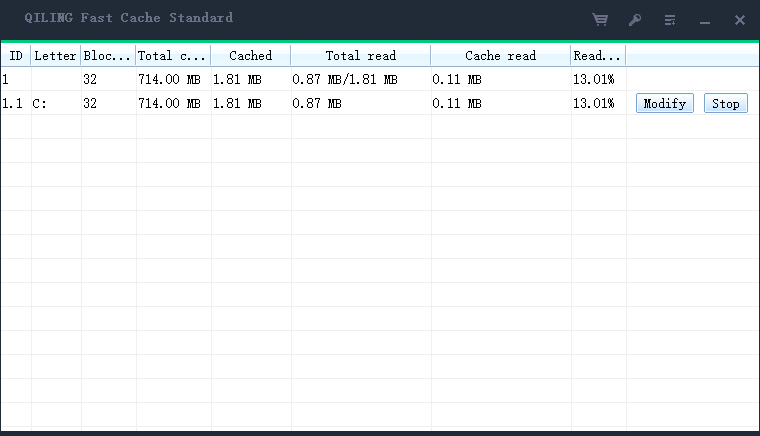
Step 1. Install and open Qiling Fast Cache on the recorder. On first run the task list is empty, so nothing changes until you add a task.

Step 2. Click the "+" button and select the volume that holds recorded footage, which is the one being read during review.
Step 3. Choose the medium and size, and keep write caching disabled. A small SSD tier is enough for playback and clip export.
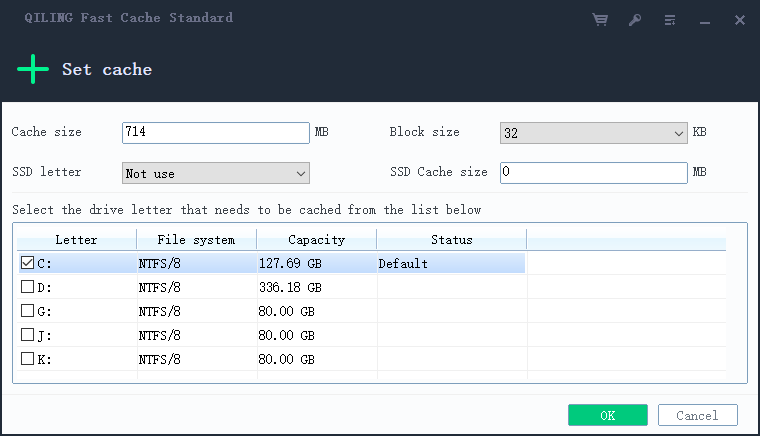
Step 4. Create the task, then review a few clips and confirm the recorder's own health monitoring still reports the drives as normal.
FAQs About Caching and Surveillance Storage
Will a cache speed up recording?
No. Recording is a continuous write stream, and a read cache does nothing for it. Only faster drives help.
Where does caching help an NVR?
Playback, repeated review of the same clip, clip export, and thumbnail or motion preview generation.
Is write caching safe on a recorder?
No. Recorders are power-cycled unexpectedly, and a lost write can mean missing footage that was reported as saved.
Should I cache the whole archive?
No. Size the cache for the review sessions you actually run, not for months of footage that is rarely opened.
Do I need an SSD in an NVR?
Not for recording. An SSD is useful as a read cache for playback, while the archive itself belongs on surveillance-rated hard disks.
Back Up Windows Before You Change Settings
A recorder's configuration is worth protecting along with its footage. Qiling Disk Master creates a full Windows backup you can restore from.
Part 1: Create a Full System Backup
Step 1. Install and open Qiling Disk Master. On the home screen, open "Backup and Recovery" and choose "System Backup". This option automatically includes Windows and the hidden boot partitions, so you do not have to select them one by one.
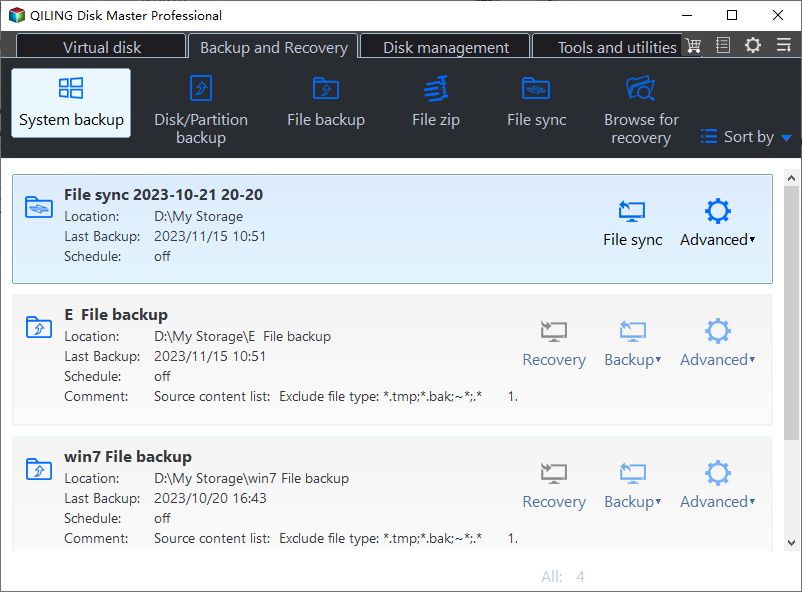
Step 2. Check the source. The disk where Windows is installed and its system partitions are already ticked for you. If you only need your personal documents, run a separate "File Backup" task instead.

Step 3. Click the destination box and choose where the image should be saved. Use an external HDD or SSD, a NAS, or any drive other than the one Windows is installed on, and make sure it has enough free space.
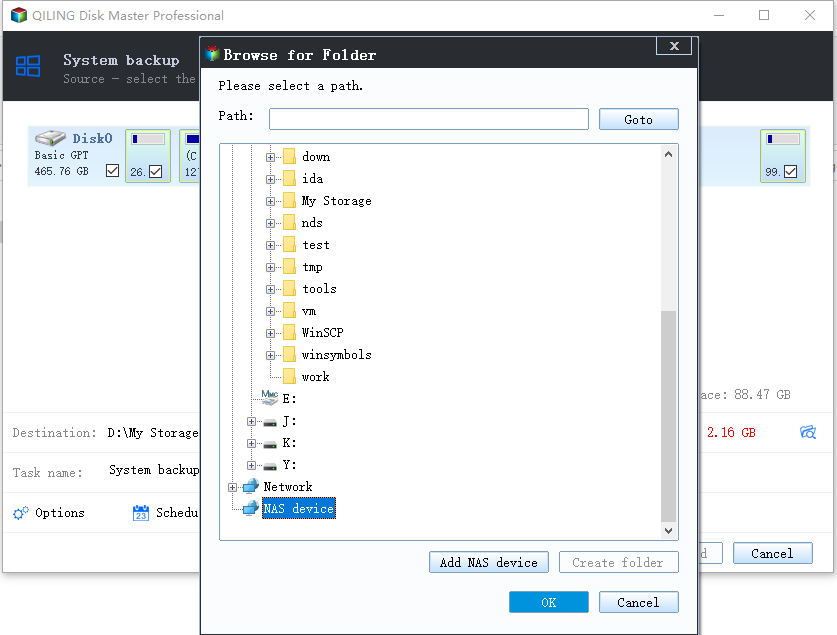
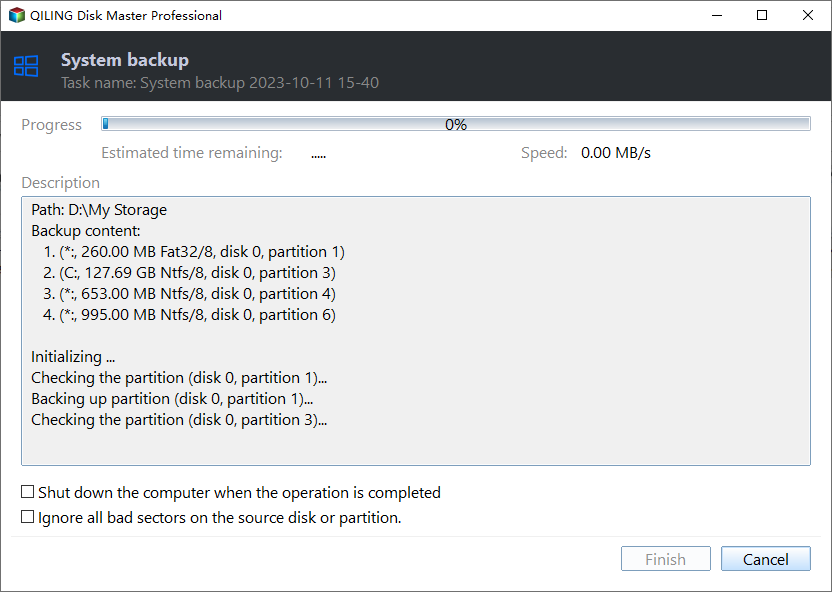
Step 4. Review the task summary and click "Proceed". Wait until the progress bar reaches 100%. Do not unplug the drive or turn off the PC while the backup is running.
Part 2: Restore Windows from the Backup
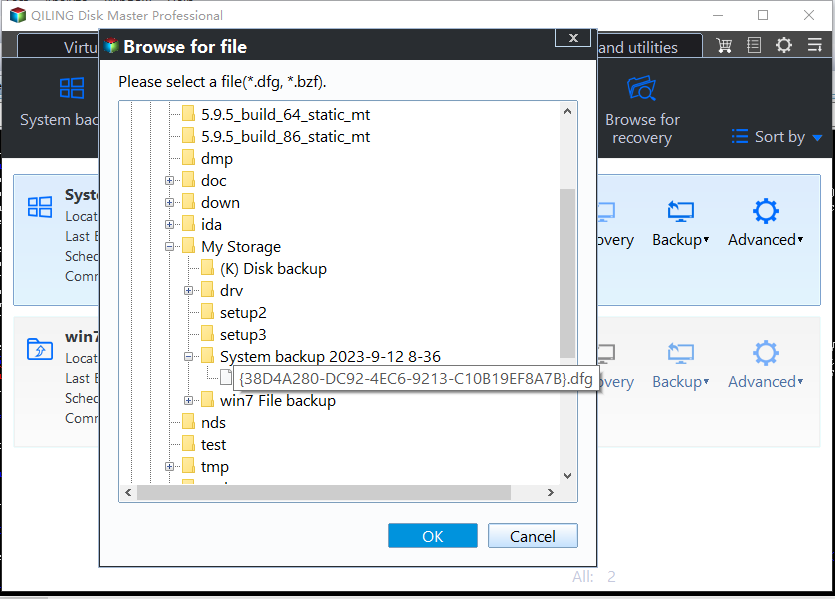
Step 1. Open Qiling Disk Master again, go to "Backup and Recovery", and select the recovery option. Your backup images are listed, so pick the one you created before the changes began.
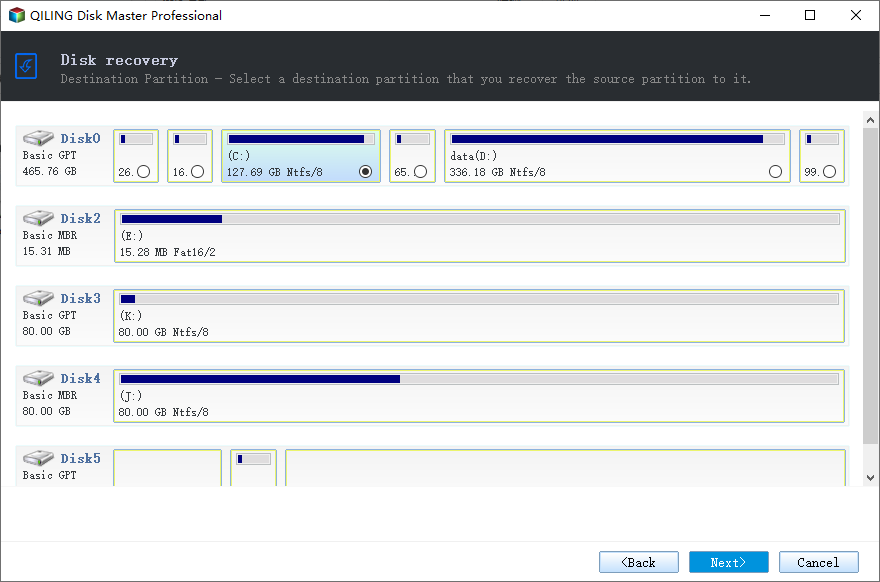
Step 2. Choose the target disk or partition. Normally you restore to the original system disk. If the drive was replaced, select the new disk instead, and the restore rebuilds Windows together with its boot partitions.
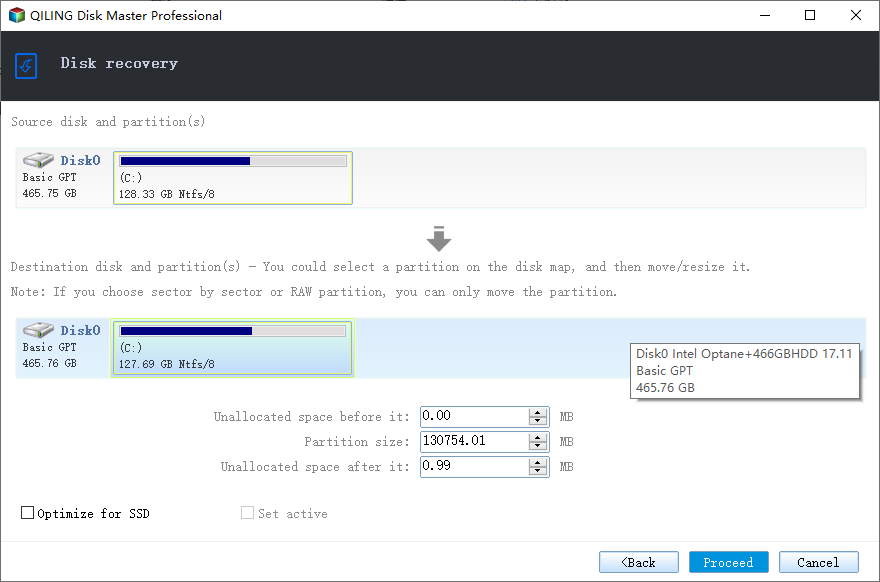
Step 3. Preview the restore plan, click "Proceed", and confirm the warning. The PC restarts to finish the job, and Windows comes back exactly as it was on the day the image was created, with your files and programs intact.
- Note
- Keep the backup image on a separate drive, and refresh it before changing storage cache settings.
Conclusion
A surveillance recorder is a write-only workload with occasional bursts of reading, and that shapes the advice. Caching does almost nothing for recording, because the write stream is continuous and sequential per camera; what it does help is the part people actually notice - reviewing a clip, scrubbing back and forth, exporting a segment, and generating previews, all of which read the same footage repeatedly. Write caching, meanwhile, has no place on a machine holding evidence: recorders get power-cycled without warning, and a segment reported as saved but still in memory can be lost entirely. Use drives rated for continuous recording, separate the system disk from the archive, disable write caching, and add a modest SSD read cache sized for your review sessions rather than for the whole archive.
Protect your PC with Qiling Backup—create a system image before your next round of settings changes.
For more Windows 11 performance guides, see Cache vs Buffer, How to Check Cache Hit Rate, How to Use an SSD Cache for a NAS, Does a Disk Cache Work on iSCSI and Network Storage?, and Write Caching vs Read Caching.
Related Articles
- Does a Disk Cache Help Video Conferencing?
The other real-time media case, where the network and the GPU decide the experience. - SSD SLC Cache vs Software Disk Cache: What's the Difference?
- Disk Cache vs Windows Memory Compression: Which Wins?
- Does a Disk Cache Help Video Transcoding?
- Does a Disk Cache Help Data Recovery Scans?
- Does a Disk Cache Help Screen Recording and Streaming?
Products
Articles & Tutorials
- Data Recovery
- Data Backup
- File Recovery
- File Backup
- System Backup and Restore
- Disk and Partition Clone
- Technical articles
- Mobile articles
- Disk Master Help
- Windows Data Recovery Tutorials
- Windows Secure Delete Tutorials
- Windows Partition Management Tutorials
- Windows File Backup and Restore Tutorials
- Windows System Backup and Restore Tutorials
- Windows Disk Backup and Restore Tutorials
- Windows Clone Tutorials