Does a Disk Cache Help Video Transcoding?
Encoding a video is a processor task from beginning to end. The disk has to keep up, but it almost never sets the pace, which is why transcoding is one of the worst candidates for a read cache.
This guide explains where the time actually goes, the few cases where storage does matter, and how to tell the two apart.
PAGE CONTENT
- What Transcoding Actually Does
- Where the Time Goes
- When a Cache Still Helps
- Batch Encoding and Multiple Files
- Configure a Cache for Encoding
- FAQs About Transcoding and Caching
- Back Up Windows Before You Change Settings
What Transcoding Actually Does
Transcoding decodes a video and re-encodes it in a different format, resolution, or bitrate:
- The source is read from beginning to end. A finished file is processed in order, and nothing is revisited.
- Every frame is decoded and re-encoded. That is the expensive part, and it happens in the processor or on a dedicated encoder.
- The output is written as a new file. It grows steadily for the whole job, much like a recording - the capture side is covered in screen recording and streaming.
- Nothing is reused. Even encoding the same file twice reads different sources, so there is no repeated pattern for a cache to learn.
- That shape is the problem. A cache exists to serve data a second time, and transcoding never asks twice.
Where the Time Goes
Almost every slow transcode is limited by something other than the disk:
- Software encoding. Quality presets such as a slow x265 profile can take many times the length of the video, using every core you have.
- Hardware encoding. A graphics encoder is far quicker, at a small cost in quality at the same bitrate.
- Filters and scaling. Deinterlacing, denoising, and resizing all add processor work per frame.
- The source and destination drive. These matter only if they cannot sustain the read and write rate the encoder needs.
- The classic one-pass case. Reading once and writing once is exactly what a cache cannot improve - see when a disk cache does not help.
When a Cache Still Helps
There are narrower situations where a cache is worth having, and they are all about what happens around the encode:
- Repeated preview renders. Editors that preview the timeline re-read the same clips again and again, which is a genuine repeat pattern.
- Proxy workflows. A project built from low-resolution proxies is read many times before the final render - see what cache warm-up means.
- Shared source folders. Several encoders working from one library of clips read the same files.
- Source media on an external drive. A USB drive is the case where caching the source library pays off most.
- What it will not do. It will not shorten a single long encode, because that job is bound by the encoder.
Batch Encoding and Multiple Files
Media servers and converters often queue dozens of files at once, which changes the picture slightly:
- The jobs run in sequence or in parallel. Parallel jobs share the processor, so each one takes longer than it would alone.
- Reading and writing compete. Every job reads a source and writes a destination at the same time.
- Buffers absorb the mismatch. A memory buffer lets the encoder continue during a short write stall, which is the difference between cache and buffer.
- Running the queue twice is the repeat case. Re-encoding a library after changing a setting re-reads the same sources.
- Temporary files are written too. Large intermediate files benefit from a faster destination more than from a cache.
Quick summary
A cache helps when the same source is read more than once. A single transcode reads it once, so the encoder, not the disk, decides how long it takes.
Configure a Cache for Encoding
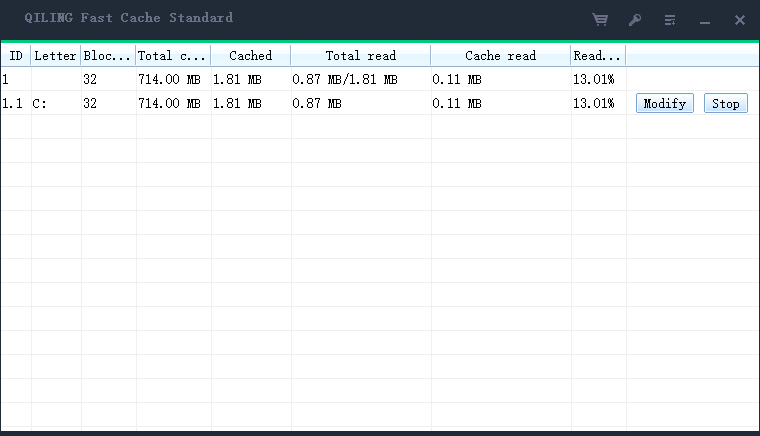
If your media library sits on a mechanical or external drive, caching the library volume is the sensible move, while the encode itself remains a processor job. Qiling Fast Cache keeps the newest data in a RAM tier and the rest on an SSD tier, and shows the hit rate in the task list.
Step 1. Install Qiling Fast Cache and open the task list. Note how long a typical clip takes to open in your editor, not how long it takes to encode.
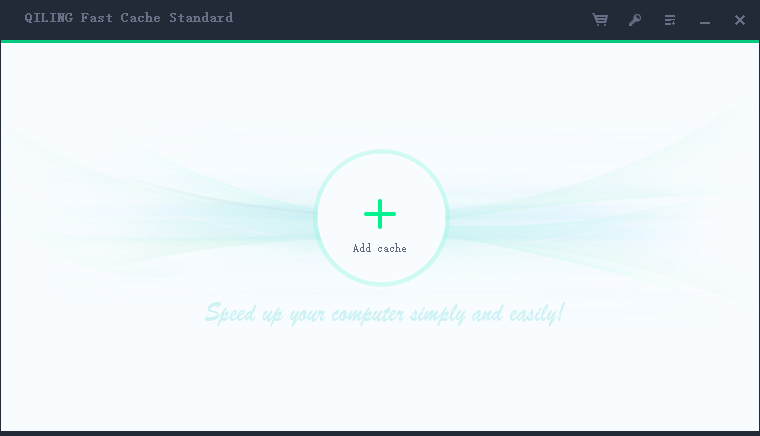
Step 2. Click the "+" button and select the volume that holds the source clips and proxies.
Step 3. Size the SSD tier around the project you are working on rather than the whole library, so the cache can actually hold what you reuse.
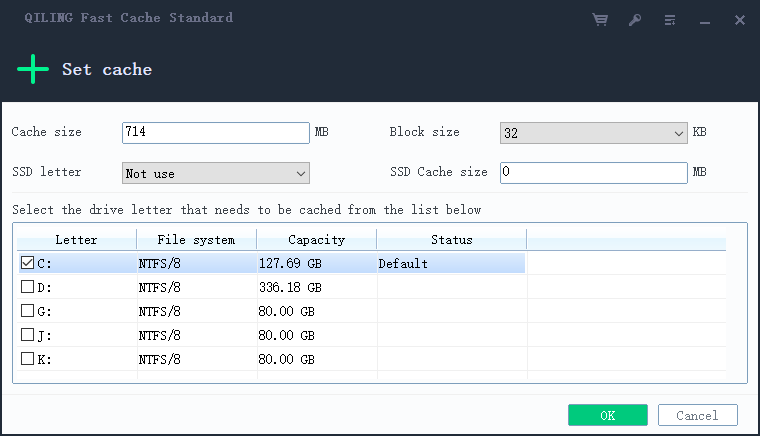
Step 4. Work for a few days and compare clip opens and preview renders. Check the hit rate as well - see how to check cache hit rate - but judge the result by playback and scrubbing rather than by encode times.
FAQs About Transcoding and Caching
Will a cache make HandBrake or FFmpeg faster?
Almost never. Those tools read each source once, and the encoder decides the runtime.
Is a RAM disk better for transcoding?
Only for temporary files. Holding source videos in RAM rarely fits and does not speed up the encode itself.
Why is my transcode running at 0.3x speed?
A quality preset is using heavy compression settings. Lower the preset or switch to a hardware encoder instead of changing storage.
Does moving the destination to an SSD help?
Slightly, if the old destination could not keep up. It will not change the encoder's speed.
Should I cache the temporary folder?
You can, and it sometimes helps with previews, but the final encode remains bound by the processor or the graphics card.
Back Up Windows Before You Change Settings
Reconfiguring storage and cache settings is easier to undo when you have a recent image. Qiling Disk Master creates a full Windows backup you can restore from.
Part 1: Create a Full System Backup
Step 1. Install and open Qiling Disk Master. On the home screen, open "Backup and Recovery" and choose "System Backup". This option automatically includes Windows and the hidden boot partitions, so you do not have to select them one by one.
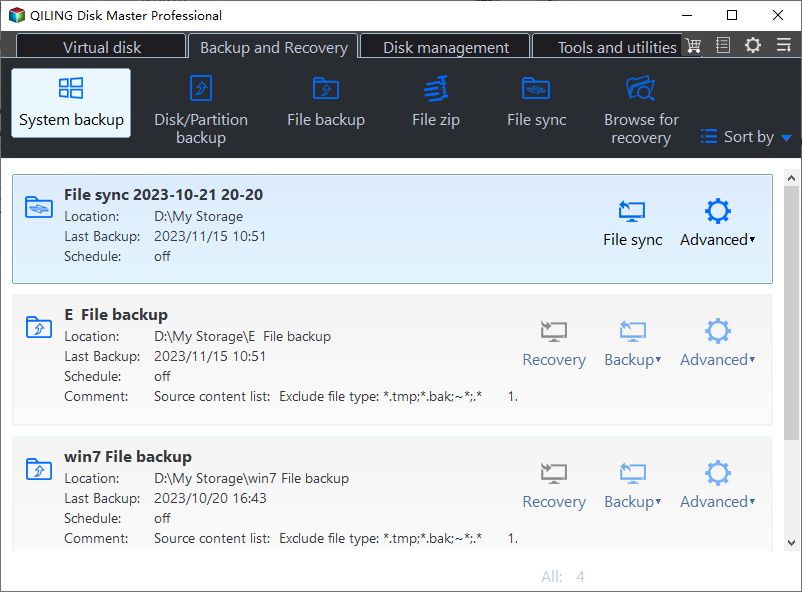
Step 2. Check the source. The disk where Windows is installed and its system partitions are already ticked for you. If you only need your personal documents, run a separate "File Backup" task instead.

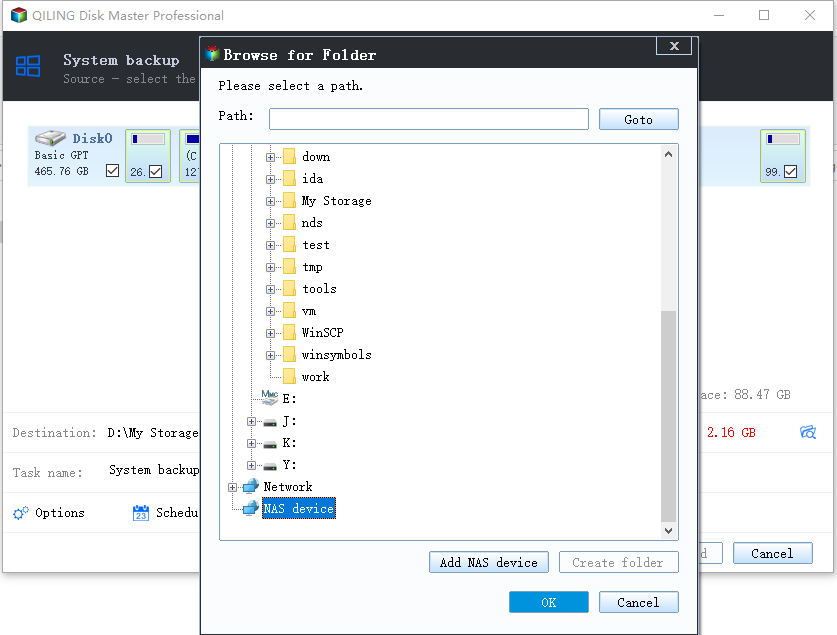
Step 3. Click the destination box and choose where the image should be saved. Use an external HDD or SSD, a NAS, or any drive other than the one Windows is installed on, and make sure it has enough free space.
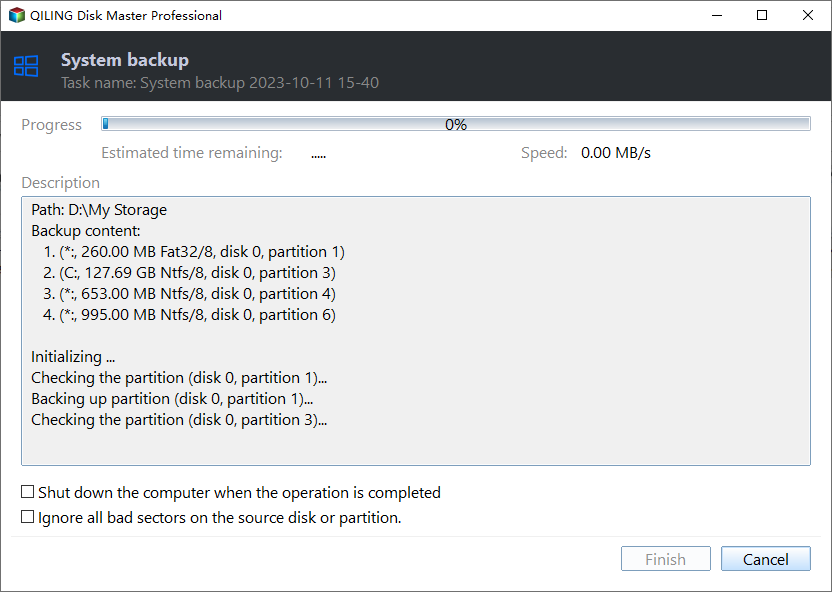
Step 4. Review the task summary and click "Proceed". Wait until the progress bar reaches 100%. Do not unplug the drive or turn off the PC while the backup is running.
Part 2: Restore Windows from the Backup
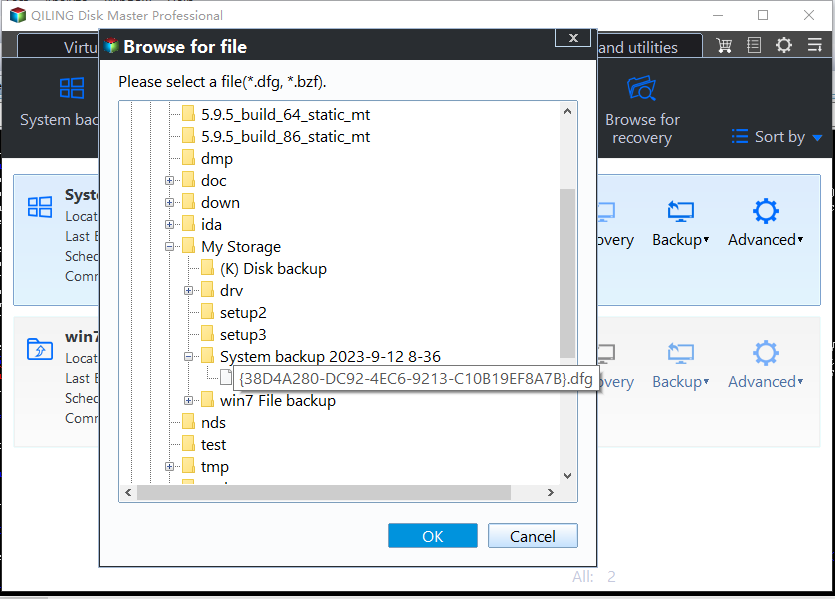
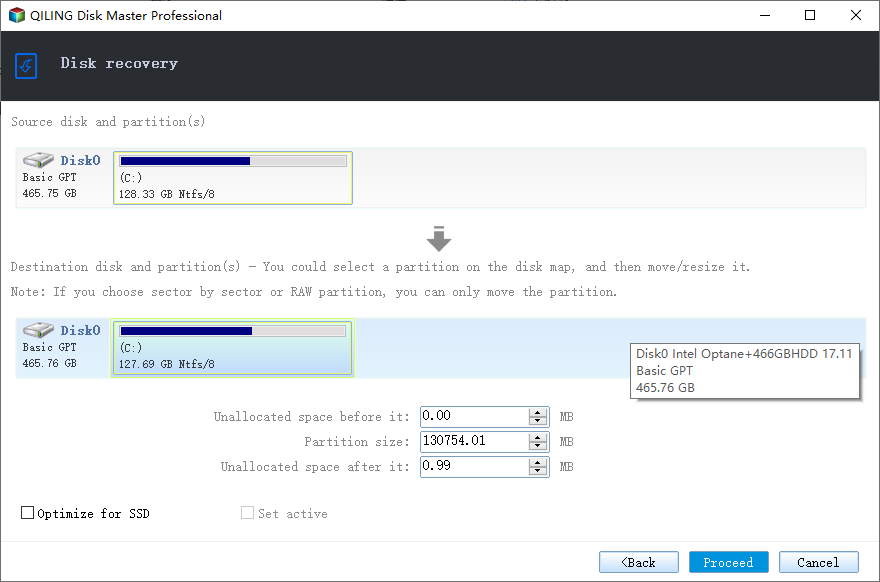
Step 1. Open Qiling Disk Master again, go to "Backup and Recovery", and select the recovery option. Your backup images are listed, so pick the one you created before the changes began.
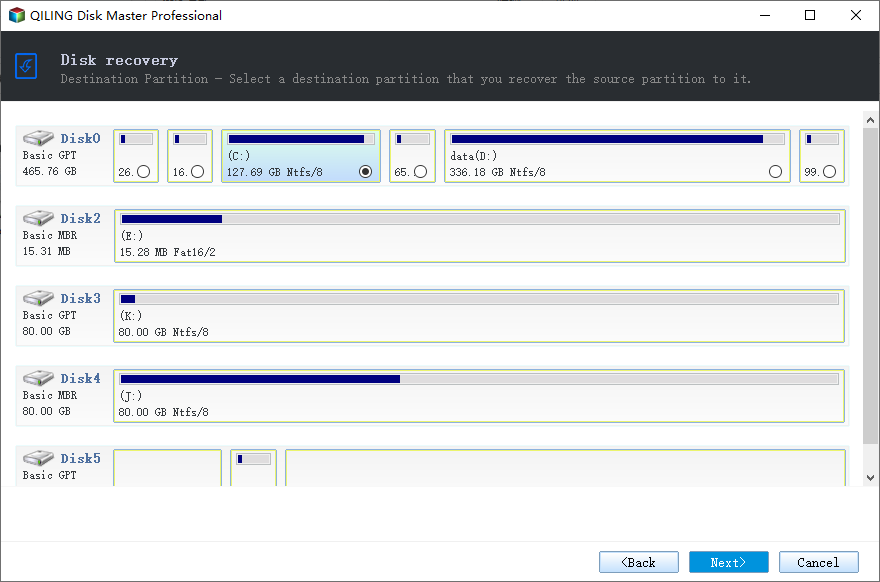
Step 2. Choose the target disk or partition. Normally you restore to the original system disk. If the drive was replaced, select the new disk instead, and the restore rebuilds Windows together with its boot partitions.
Step 3. Preview the restore plan, click "Proceed", and confirm the warning. The PC restarts to finish the job, and Windows comes back exactly as it was on the day the image was created.
- Note
- Keep the backup image on a separate drive, and refresh it before changing storage cache settings.
Conclusion
Transcoding is a one-pass workload, and that single fact answers the question: a read cache has nothing to reuse, so it cannot shorten an encode. The time goes into decoding and re-encoding frames, whether that happens on the processor or in a hardware encoder. Where a cache does earn its place is around the encode, in the editing and preview work that re-reads the same clips and proxies many times, and in libraries kept on a mechanical or external drive. Judge the improvement by how quickly a project opens and scrubs, not by the encode counter, and fix a slow encode with the preset rather than with storage.
Protect your PC with Qiling Backup—create a system image before your next round of settings changes.
For more Windows 11 performance guides, see How to Speed Up 3D Rendering with a RAM Disk and Disk Cache, How to Speed Up a Plex Media Server with a Disk Cache, Caching for NVR and Surveillance Storage Explained, How to Extend SSD Lifespan by Reducing Writes, and Does Heat Slow Down Your SSD Cache?.
Related Articles
- Does NTFS Compression Work with a Disk Cache?
Another place where compressed data, processor time, and disk reads meet. - How to Use a RAM Disk as a Scratch Disk for Video Editing
- Speed Up Music Production with a RAM Disk and SSD Cache
- Lightroom Classic Cache: Where It Lives and How to Speed It Up
- How Big Should Your Disk Cache Be? A Practical Sizing Guide
Products
Articles & Tutorials
- Data Recovery
- Data Backup
- File Recovery
- File Backup
- System Backup and Restore
- Disk and Partition Clone
- Technical articles
- Mobile articles
- Disk Master Help
- Windows Data Recovery Tutorials
- Windows Secure Delete Tutorials
- Windows Partition Management Tutorials
- Windows File Backup and Restore Tutorials
- Windows System Backup and Restore Tutorials
- Windows Disk Backup and Restore Tutorials
- Windows Clone Tutorials