Does a Disk Cache Help Large Git Repositories?
A large repository is mostly small files: thousands of loose objects, an index that changes every time you stage something, and a working tree full of source code. That is exactly the mix a disk cache handles best, which is why the runtime of some Git commands can drop noticeably.
Other commands barely move, because they read every byte once and never look at it again. This guide separates the two cases so you know what to expect from a cache on your machine.
PAGE CONTENT
- What Git Actually Reads and Writes
- Where a Cache Helps Git Operations
- Where a Cache Does Not Help
- RAM Disk vs SSD Cache for Repositories
- Configure a Cache for a Repository
- FAQs About Caching and Git
- Back Up Windows Before You Change Settings
What Git Actually Reads and Writes
Git keeps a larger amount of state on disk than most people expect, and not all of it is read the same way:
- The object database. Loose objects are one file each, while packed objects live inside a few large packfiles. Loose objects produce heavy random reads; packfiles produce long sequential reads.
- The index. A single file that records what is staged. Almost every command rewrites part of it.
- The working tree. Your actual source files, read by diff, grep, and checkout.
- Reflog, config, and hooks. Small files touched on nearly every command.
- Why the pattern matters. Repeated access to the same small files is what a cache is designed for, and an editor or language server reading the same tree benefits for the same reason - see caching for IDE indexing.
Where a Cache Helps Git Operations
The commands that revisit the same data on a regular basis are the ones that improve:
- git status and git diff. They re-read the index and check every tracked file, so the same data comes back again and again.
- Branch switching. Moving between the same few branches re-reads the same working tree files every time.
- git grep across a project. Searching a repository you searched yesterday gives the cache a second chance at the same data.
- Build and test loops. Editors, language servers, and test runners read the same source tree, so it warms once and then serves all of them.
- Why it works. It is the repeat runs that get fast, not the first one - see what cache warm-up means.
Where a Cache Does Not Help
Some Git work is a single pass over data that will never be read again, and no cache can improve it:
- git clone. The first read of a repository has nothing to reuse, so the transfer is limited by the network or the disk rather than by caching.
- git fetch and incoming packs. New objects arrive once and are written once.
- git gc and repacking. These rewrite packfiles from beginning to end.
- Repositories far larger than the cache. Once the working set dwarfs the cache, the hit rate collapses and the benefit disappears.
- The general rule. One-pass work is covered in more detail in when a disk cache does not help.
RAM Disk vs SSD Cache for Repositories
A RAM disk and an SSD cache solve different halves of the same problem:
- A RAM disk is the fastest option and the most fragile. A repository kept there answers status and grep instantly, but it disappears on reboot and it consumes memory Windows may need elsewhere.
- An SSD cache is persistent and automatic. It learns which files you reuse and keeps them warm across reboots without you moving anything.
- Do not put a repository on a RAM disk lightly. A crash or power cut can cost you uncommitted work that was never flushed to the real disk.
- Most developers want the SSD cache. It leaves the repository in its normal location while accelerating the reads that repeat.
- The trade-off in detail. See SSD cache vs RAM disk for the full comparison.
Configure a Cache for a Repository
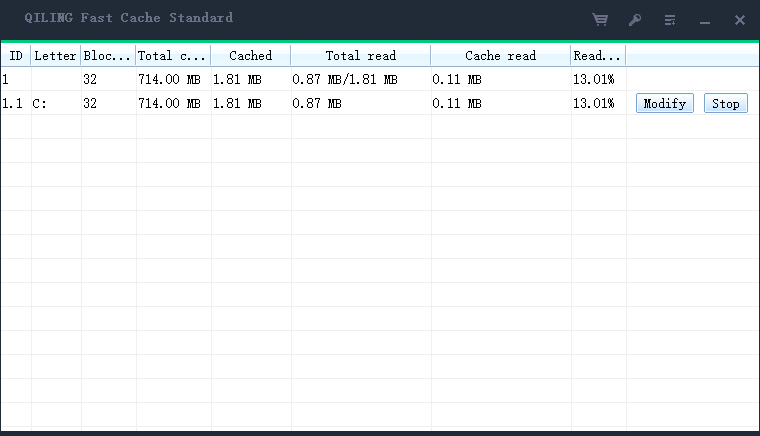
If your repository lives on a hard drive or a slow external SSD, a read cache is the simplest way to make repeated Git work feel faster. Qiling Fast Cache combines a small RAM tier with a larger SSD tier and reports the hit rate directly in the task list.
Step 1. Install Qiling Fast Cache and open the task list. Before you configure anything, note how long a branch switch and a full status take today.
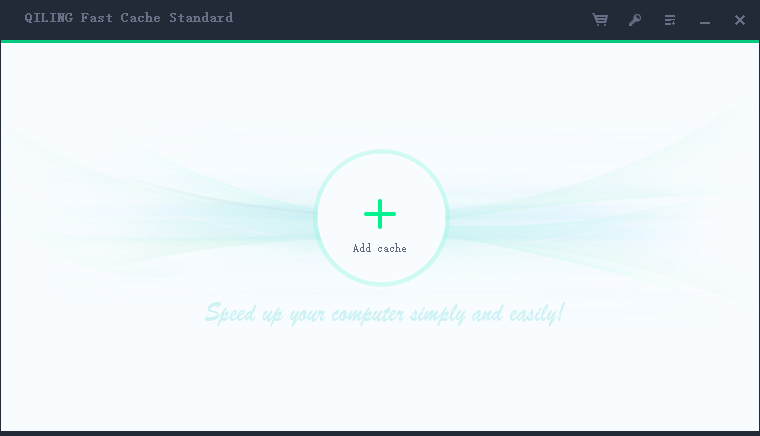
Step 2. Click the "+" button and point the task at the volume that actually holds your repository. A repo on drive D gains nothing from a cache configured on drive C.
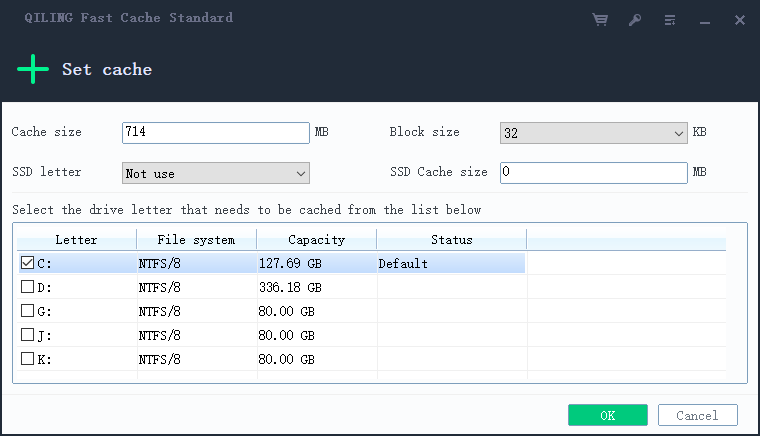
Step 3. Choose a small RAM tier for the most recent data and an SSD tier for the rest, then leave the settings alone while you work normally.
Step 4. Work for a day, then repeat the same branch switch. Compare the timings and read the hit rate - see how to check cache hit rate if the number is unfamiliar.
FAQs About Caching and Git
Will a cache speed up git clone?
Almost never. Cloning reads a repository for the first time, so there is nothing to reuse, and the transfer is limited by the network or the source disk.
My repository is on an NVMe SSD. Is a cache still useful?
Rarely for speed. An NVMe drive already answers random reads quickly, so the gain is small compared with the memory you give up for it.
Is a RAM disk better than a cache for a repository?
It is faster but volatile and manual. Losing a repository held only in RAM to a crash can cost uncommitted work.
Why is the first command of the day always slow?
Because the cache is cold. The first run fills it and the following runs are served from it. That pattern is what warm-up describes.
Should I exclude the .git folder from antivirus instead?
That can also help, but it removes a safety layer. Caching the folder is the safer half of the same optimisation.
Back Up Windows Before You Change Settings
Reconfiguring storage and cache settings is easier to undo when you have a recent image. Qiling Disk Master creates a full Windows backup you can restore from.
Part 1: Create a Full System Backup
Step 1. Install and open Qiling Disk Master. On the home screen, open "Backup and Recovery" and choose "System Backup". This option automatically includes Windows and the hidden boot partitions, so you do not have to select them one by one.
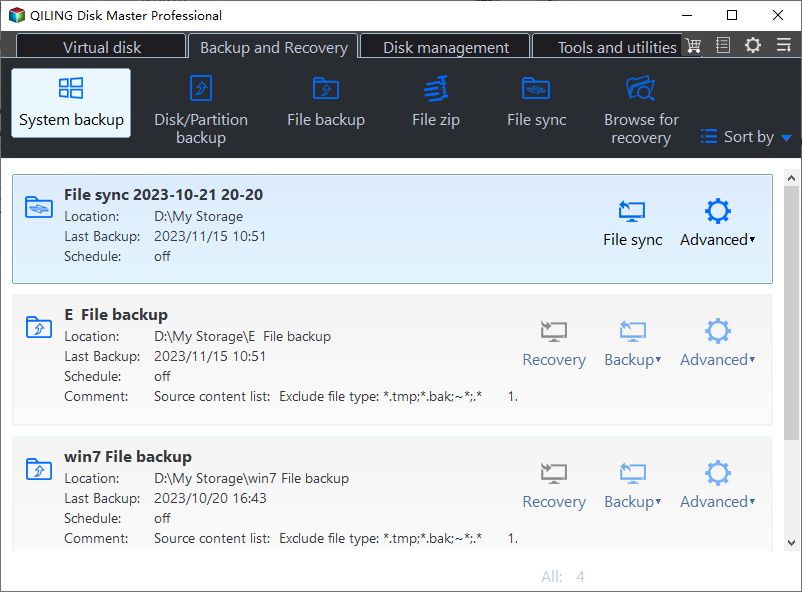
Step 2. Check the source. The disk where Windows is installed and its system partitions are already ticked for you. If you only need your personal documents, run a separate "File Backup" task instead.

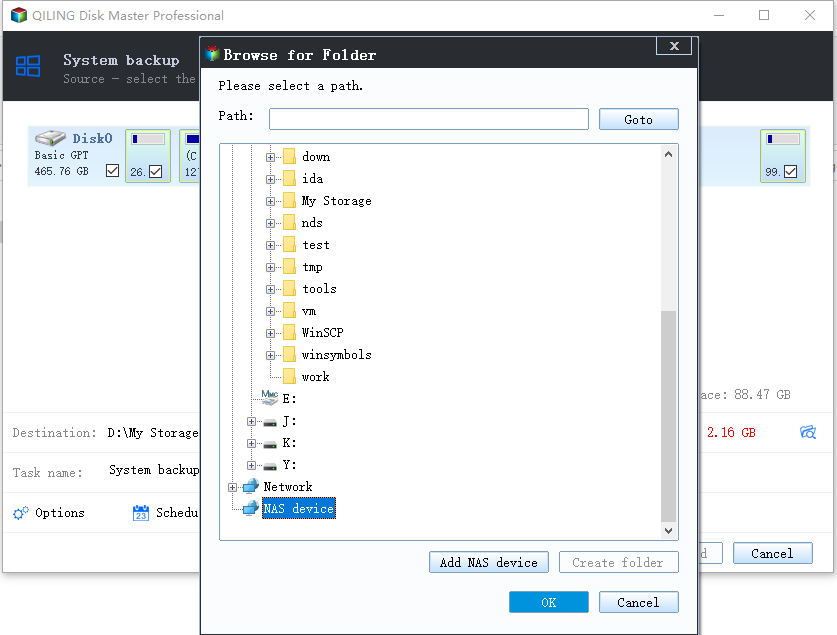
Step 3. Click the destination box and choose where the image should be saved. Use an external HDD or SSD, a NAS, or any drive other than the one Windows is installed on, and make sure it has enough free space.
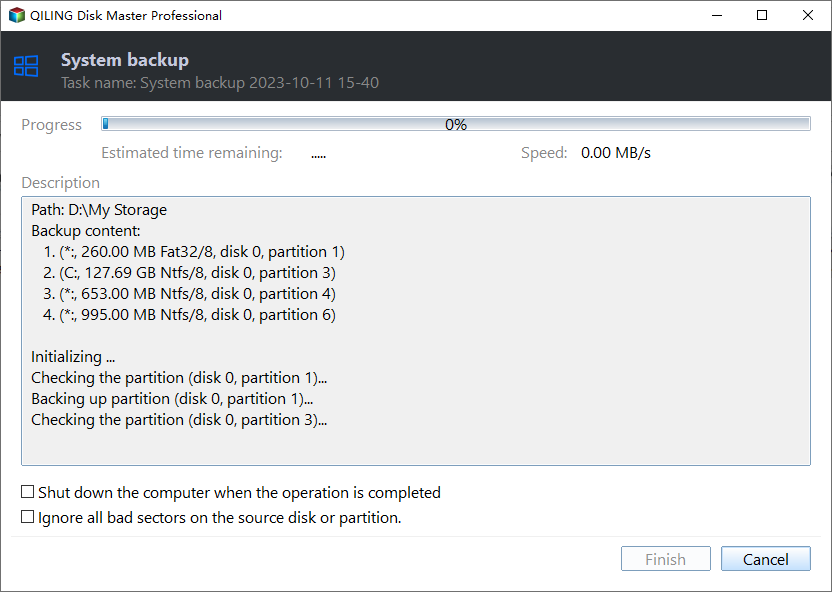
Step 4. Review the task summary and click "Proceed". Wait until the progress bar reaches 100%. Do not unplug the drive or turn off the PC while the backup is running.
Part 2: Restore Windows from the Backup
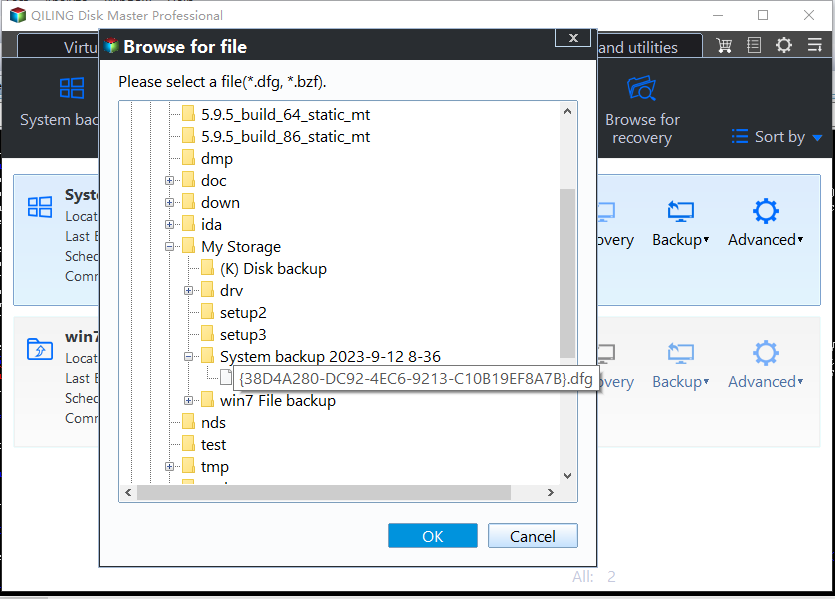
Step 1. Open Qiling Disk Master again, go to "Backup and Recovery", and select the recovery option. Your backup images are listed, so pick the one you created before the changes began.
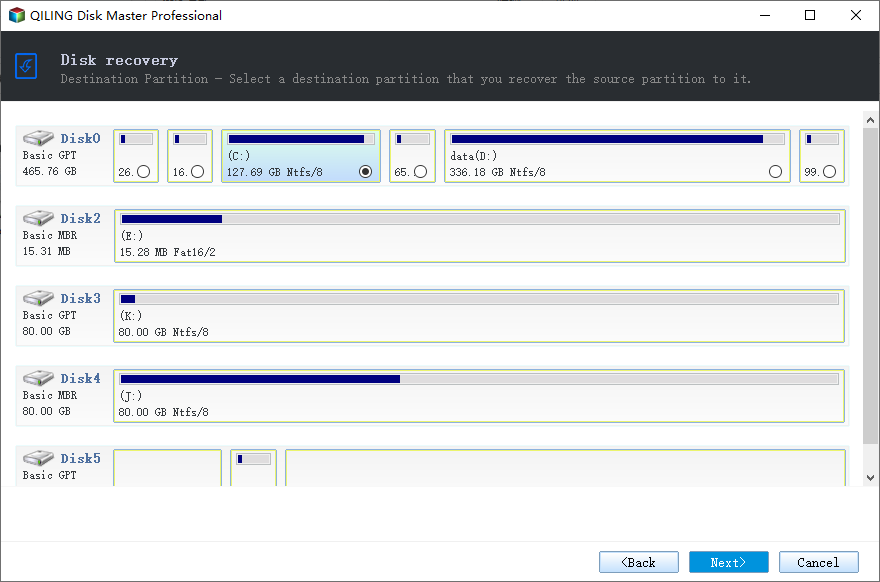
Step 2. Choose the target disk or partition. Normally you restore to the original system disk. If the drive was replaced, select the new disk instead, and the restore rebuilds Windows together with its boot partitions.
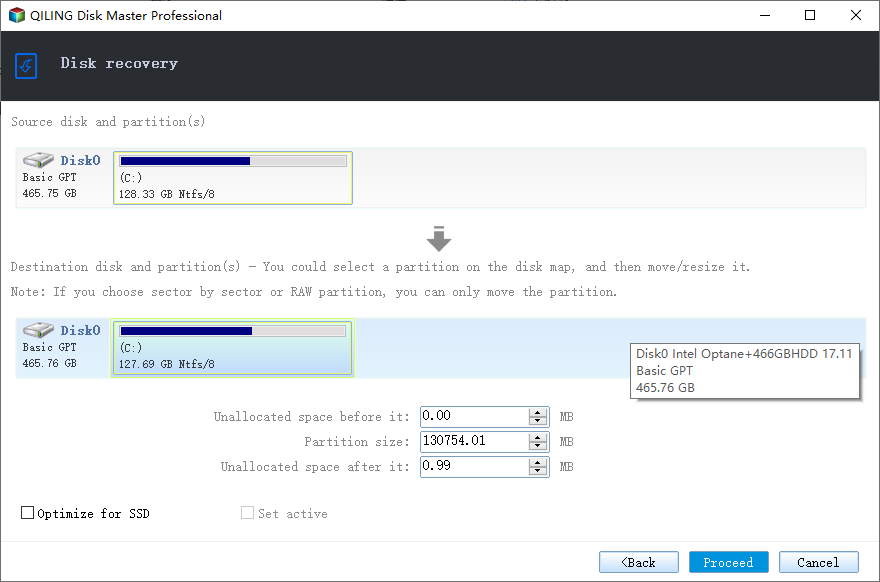
Step 3. Preview the restore plan, click "Proceed", and confirm the warning. The PC restarts to finish the job, and Windows comes back exactly as it was on the day the image was created.
- Note
- Keep the backup image on a separate drive, and refresh it before changing storage cache settings.
Conclusion
A disk cache changes which Git commands feel slow rather than making all of them fast. Commands that revisit the same index, working tree, and source files - status, diff, branch switching, repeated greps, and build loops - benefit the most. One-pass work such as clone, fetch, and repack does not, because the data is read once and never reused. If your repository lives on a hard drive or a slow external SSD, an SSD cache is usually the practical choice: it keeps the repository where it belongs and accelerates the reads that repeat. A RAM disk is faster still, but it is volatile, so use it only for data you can afford to lose.
Protect your PC with Qiling Backup—create a system image before your next round of settings changes.
For more Windows 11 performance guides, see How to Speed Up Programming Builds with a RAM Disk, Caching for CI/CD Build Machines, How to Benchmark Disk Cache Performance Correctly, Caching for Large Spreadsheets and Excel Files, and Cache vs Buffer.
Related Articles
- Disk Cache and SMR Drives Explained
The drive technology underneath the workload, and why random writes are the part that suffers most. - How Big Should Your Disk Cache Be? A Practical Sizing Guide
- Docker and WSL2 Performance: RAM Disk and Disk Cache Tips
- Should Your Disk Cache Live on the Windows Drive?
- Windows 11 Dev Drive vs Disk Cache: Which Is Faster?
Products
Articles & Tutorials
- Data Recovery
- Data Backup
- File Recovery
- File Backup
- System Backup and Restore
- Disk and Partition Clone
- Technical articles
- Mobile articles
- Disk Master Help
- Windows Data Recovery Tutorials
- Windows Secure Delete Tutorials
- Windows Partition Management Tutorials
- Windows File Backup and Restore Tutorials
- Windows System Backup and Restore Tutorials
- Windows Disk Backup and Restore Tutorials
- Windows Clone Tutorials