Caching for Large Spreadsheets and Excel Files
A workbook with hundreds of thousands of rows is slow for reasons that have little to do with the disk. Still, the file is opened, recalculated, and autosaved repeatedly, and some of that touches storage.
This guide separates the three bottlenecks - memory, processor, and disk - and shows where a cache genuinely shortens the wait on heavy spreadsheet work.
PAGE CONTENT
- Why Large Spreadsheets Feel Slow
- Where a Cache Helps Excel
- Where RAM and CPU Dominate
- Working With Large Workbooks Efficiently
- Configure a Cache for Office Work
- FAQs About Caching and Large Spreadsheets
- Back Up Windows Before You Change Settings
Why Large Spreadsheets Feel Slow
- Opening a workbook reads and parses the whole file. Nothing appears until the parser has been through the data, and the file is read once in order.
- Recalculation is pure computation. Volatile functions, lookups across large ranges, and array formulas run in the processor.
- Autosave writes the whole file. Every recovery save rewrites the workbook rather than patching part of it.
- Files on a network share add another delay. Opening and saving over SMB turns each of those steps into network traffic.
- Temporary files accompany editing. Office writes lock files and recovery data alongside the workbook as you work.
Where a Cache Helps Excel
- Reopening the same workbook benefits. Analysts open and close the same model repeatedly, and those reads repeat exactly.
- Linked workbooks benefit. A model that reads several source files touches the same data every time it refreshes.
- Recovery and autosave reads benefit. When Office reopens a recovered file, it re-reads what it just wrote.
- Files on a network share benefit twice. A local cache removes both the read and the round trip - see caching for SMB file sharing.
- Repeated exports and reports benefit. Generating the same report from the same data is a recurring read pattern.
Where RAM and CPU Dominate
- Memory is the first limit. A workbook larger than available RAM will page, and paging is far slower than any cache can compensate for - see disk cache vs memory compression.
- Recalculation is processor-bound. Volatile formulas recalculate on every edit, and the disk is idle while they do.
- Single-threaded calculation is common. Many spreadsheet operations use one core, so a faster processor helps more than faster storage.
- Excessive formatting and whole-column references cost memory. These are structural problems in the workbook, not storage problems.
- A huge cache can make it worse. Memory given to a cache is memory the spreadsheet no longer has.
Working With Large Workbooks Efficiently
- Move the workbook off the network share. Copy it locally, work on it, then copy it back. This removes the largest single delay.
- Close other applications. A browser with many tabs competes for the same memory the workbook needs.
- Break the model into linked files. Smaller workbooks open faster and keep fewer cells in memory at once.
- Trim the used range. Stray formatting across millions of empty cells inflates the file and slows every operation.
- Turn off automatic calculation while editing. Switch to manual, make your edits, then recalculate once.
Configure a Cache for Office Work
For a workflow that reopens the same models and source files all day, Qiling Fast Cache keeps those reads close at hand - but the cache should stay small, because the spreadsheet needs that memory too.
Step 1. Install and open Qiling Fast Cache. On first run the task list is empty, so the effect is easy to isolate.
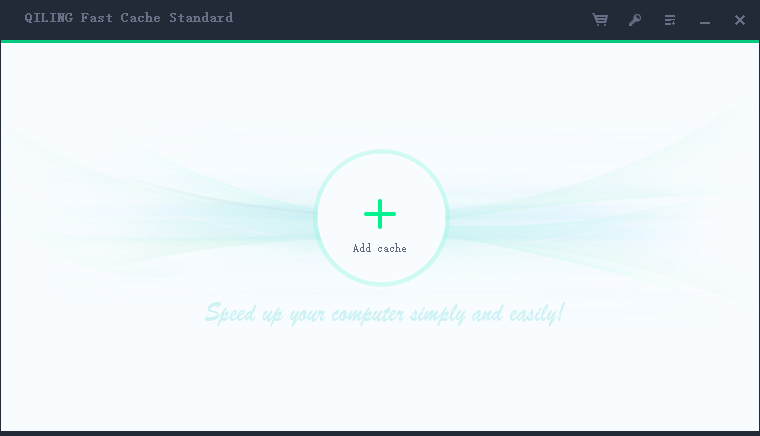
Step 2. Click the "+" button and select the local drive that holds your workbooks and source files.
Step 3. Choose the medium and size. An SSD tier is usually the better choice here, because it frees RAM for the spreadsheet itself.
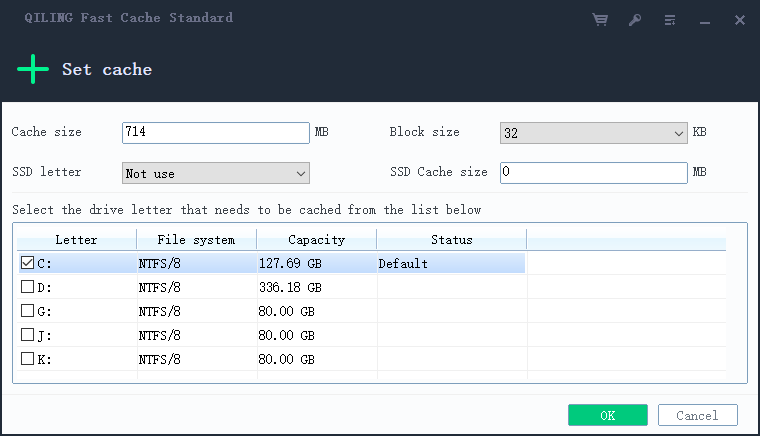
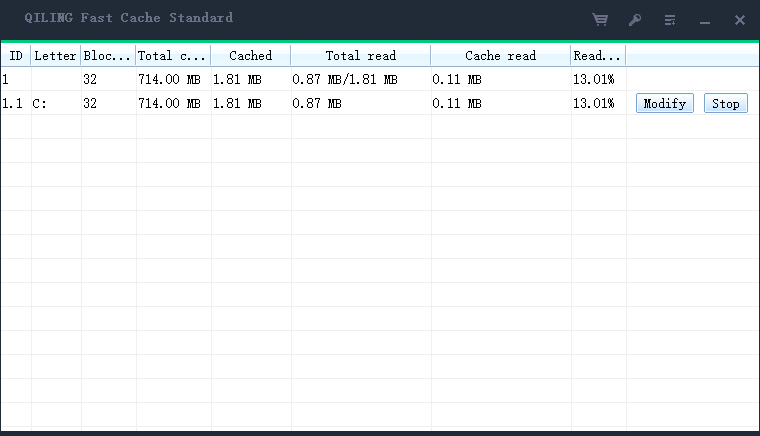
Step 4. Create the task, then time opening the same workbook twice and confirm recalculation speed has not changed.
FAQs About Caching and Large Spreadsheets
Will a cache make Excel recalculate faster?
No. Recalculation runs in the processor, and the disk is idle while it works.
Does a cache speed up opening a workbook?
For files you open repeatedly, yes - especially linked workbooks and files stored on a network share.
Why is my spreadsheet slow even with an SSD?
Because the limit is usually memory or formula design rather than storage. Check RAM usage while the file is open.
Should I put workbooks on a RAM disk?
Only short-lived scratch copies. A RAM disk is lost on reboot, and an unexpected shutdown takes your work with it.
What helps most with huge workbooks?
Working locally instead of over the network, enough RAM, simpler formulas, and a tidier used range.
Back Up Windows Before You Change Settings
Business models and reports are often irreplaceable, so keep a system image alongside them. Qiling Disk Master creates a full Windows backup you can restore from.
Part 1: Create a Full System Backup
Step 1. Install and open Qiling Disk Master. On the home screen, open "Backup and Recovery" and choose "System Backup". This option automatically includes Windows and the hidden boot partitions, so you do not have to select them one by one.
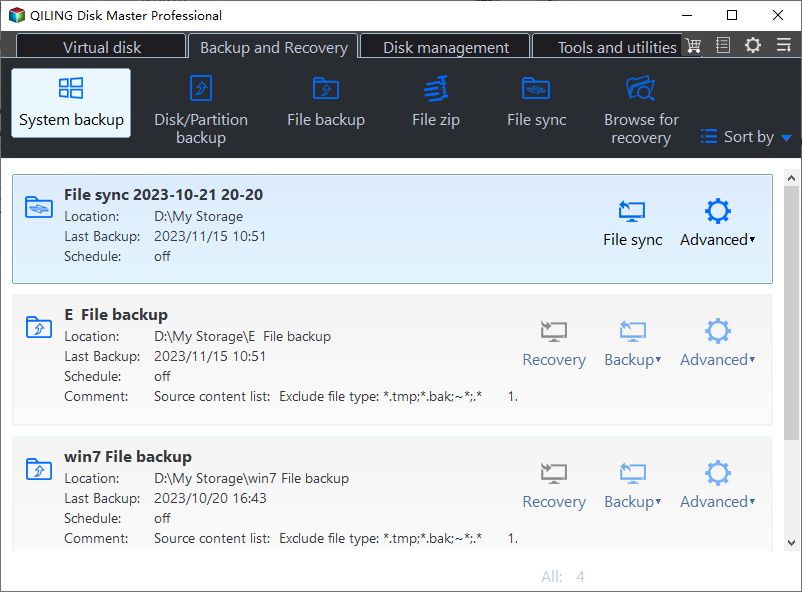
Step 2. Check the source. The disk where Windows is installed and its system partitions are already ticked for you. If you only need your personal documents, run a separate "File Backup" task instead.

Step 3. Click the destination box and choose where the image should be saved. Use an external HDD or SSD, a NAS, or any drive other than the one Windows is installed on, and make sure it has enough free space.
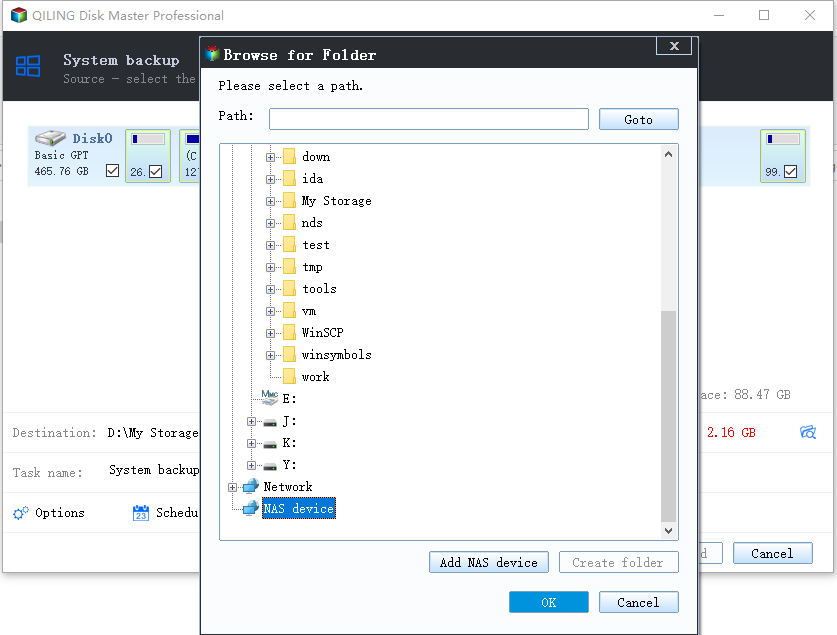
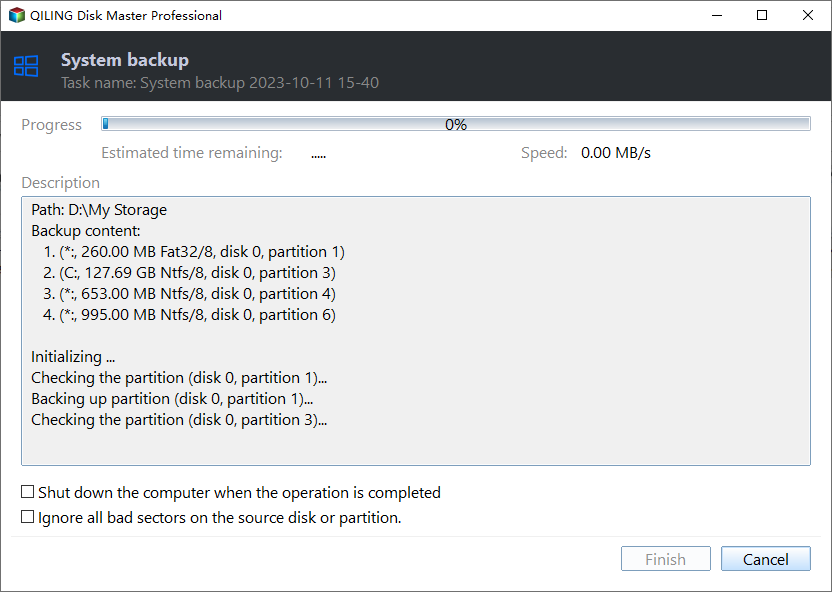
Step 4. Review the task summary and click "Proceed". Wait until the progress bar reaches 100%. Do not unplug the drive or turn off the PC while the backup is running.
Part 2: Restore Windows from the Backup
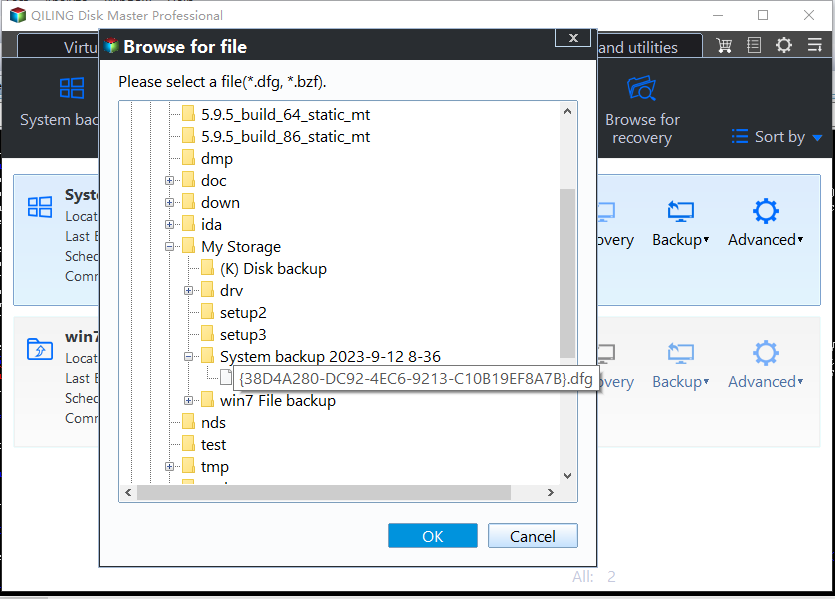
Step 1. Open Qiling Disk Master again, go to "Backup and Recovery", and select the recovery option. Your backup images are listed, so pick the one you created before the changes began.
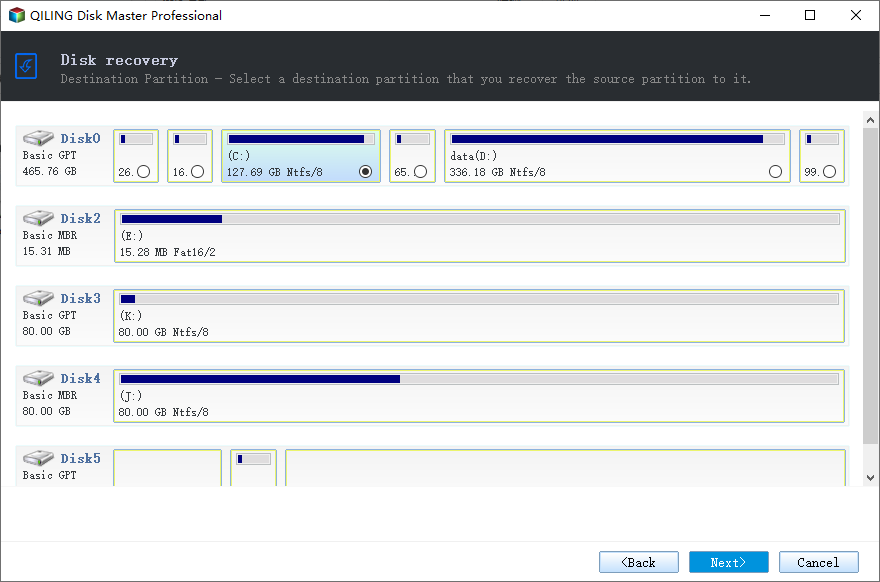
Step 2. Choose the target disk or partition. Normally you restore to the original system disk. If the drive was replaced, select the new disk instead, and the restore rebuilds Windows together with its boot partitions.
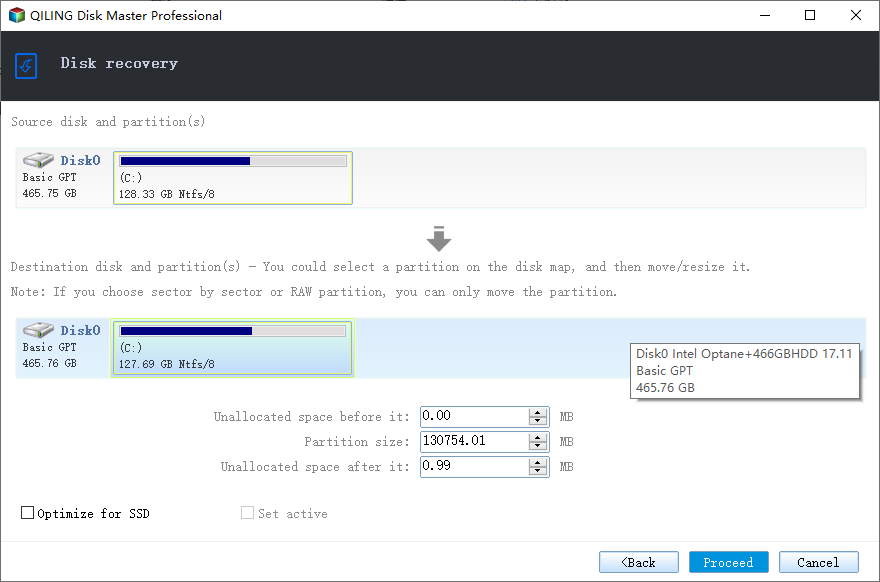
Step 3. Preview the restore plan, click "Proceed", and confirm the warning. The PC restarts to finish the job, and Windows comes back exactly as it was on the day the image was created, with your files and programs intact.
- Note
- Keep the backup image on a separate drive, and refresh it before changing storage cache settings.
Conclusion
A large workbook is slow for three separable reasons, and only one of them is storage. Opening the file is a full read and parse; recalculating it is processor work with the disk idle; and keeping it in memory is where most machines run out of room first. A cache helps with the part that repeats - reopening the same model, refreshing linked workbooks, re-reading source files, and anything accessed over a network share, where it removes both the read and the round trip. It cannot make recalculation faster, and an oversized allocation can actively hurt by taking memory the spreadsheet needs. Work locally, keep RAM free, simplify formulas, trim the used range, and turn off automatic calculation while you edit.
Protect your PC with Qiling Backup—create a system image before your next round of settings changes.
For more Windows 11 performance guides, see How to Check Cache Hit Rate, Cache vs Buffer, How Big Should Your Disk Cache Be?, When Caching Does Not Help, and Speed Up IDE Indexing with a RAM Disk and Disk Cache.
Related Articles
- Using a Disk Cache for Databases
The closest cousin: another data-heavy workload limited by memory and query work as much as by storage. - Does a Disk Cache Help Steam Game Libraries?
- Caching for Windows To Go and USB Boot Drives
- Caching for Windows Sandbox
- Blender 3D and Disk Caching Explained
Products
Articles & Tutorials
- Data Recovery
- Data Backup
- File Recovery
- File Backup
- System Backup and Restore
- Disk and Partition Clone
- Technical articles
- Mobile articles
- Disk Master Help
- Windows Data Recovery Tutorials
- Windows Secure Delete Tutorials
- Windows Partition Management Tutorials
- Windows File Backup and Restore Tutorials
- Windows System Backup and Restore Tutorials
- Windows Disk Backup and Restore Tutorials
- Windows Clone Tutorials