Caching for CI/CD Build Machines
A build server is a machine that runs the same steps over and over: check out, install dependencies, compile, test, package. Some of that is highly repetitive, and some of it is a stream of new data every time.
This guide separates the two, explains where a disk cache fits in a pipeline, and why the build tool's own cache usually matters more than a filesystem-level one.
PAGE CONTENT
- What a Build Machine Actually Does
- Where a Disk Cache Helps a Build Server
- Build Caches You Should Not Duplicate
- Sizing and Scoping on a Shared Builder
- Configure a Cache for a Build Server
- FAQs About Caching and Build Servers
- Back Up Windows Before You Change Settings
What a Build Machine Actually Does
- Checking out source writes many small files. A fresh clone of a large repository is thousands of writes, not one big copy.
- Restoring dependencies reads a lot, then writes it all again. Package managers unpack into a workspace on every run.
- Compilation reads headers and libraries repeatedly. The same include files and toolchain binaries are opened across many translation units.
- Tests generate and consume temporary data. Fixtures, databases, and report files are written and read within the same run.
- The workspace is usually thrown away. Containerised or ephemeral builders discard everything between runs, which is very different from a developer workstation.
Where a Disk Cache Helps a Build Server
- The toolchain and system libraries benefit most. Compilers, SDKs, and runtimes are read on every build and rarely change.
- Dependency caches on a persistent builder benefit. A warmed package cache turns a download-and-unpack step into a local read.
- Repeated builds of the same project benefit. Sources and intermediate objects are re-read across attempts.
- Container layers benefit if they stay on the same host. Image layers pulled once and reused are ordinary repeat reads - see caching for Docker and WSL2.
- Long-lived self-hosted runners benefit far more than ephemeral cloud agents. A cache needs a device that persists between jobs.
Build Caches You Should Not Duplicate
- The build tool already caches. Compilers, package managers, and test runners have their own content-addressed caches, and they are usually closer to the problem.
- Two caches can fight. A filesystem cache layered under a tool cache adds memory pressure without removing the work the tool already avoids.
- Ephemeral runners wipe everything anyway. On a container that is destroyed after each job, a host-level cache has nothing to reuse.
- Incremental build state must stay consistent. Caching in-memory output or scratch directories reduces the benefit those tools get from their own tracking.
- Scratch space benefits from RAM, not from a cache. Build intermediates belong on a fast local volume - see using a RAM disk for programming builds.
Sizing and Scoping on a Shared Builder
- Cache the toolchain volume, not the whole workspace. Toolchains are stable and reused; workspaces are large and replaced constantly.
- Leave memory for the build itself. Compilers and test processes are memory hungry, and a large RAM cache competes with them.
- Prefer an SSD tier on a shared builder. It persists between jobs and does not take memory away from parallel tasks.
- Measure job duration, not disk metrics. The number that matters is how long a pipeline takes, not what the cache reports internally.
- Do not cache on the machine that stores artefacts. Keep the artefact volume out of the cache so large sequential writes are not competing with it.
Configure a Cache for a Build Server
On a self-hosted runner that keeps its toolchain between jobs, Qiling Fast Cache keeps compilers, SDKs, and dependency caches in fast storage.
Step 1. Install and open Qiling Fast Cache on the builder. On first run the task list is empty, so you can measure the change honestly.
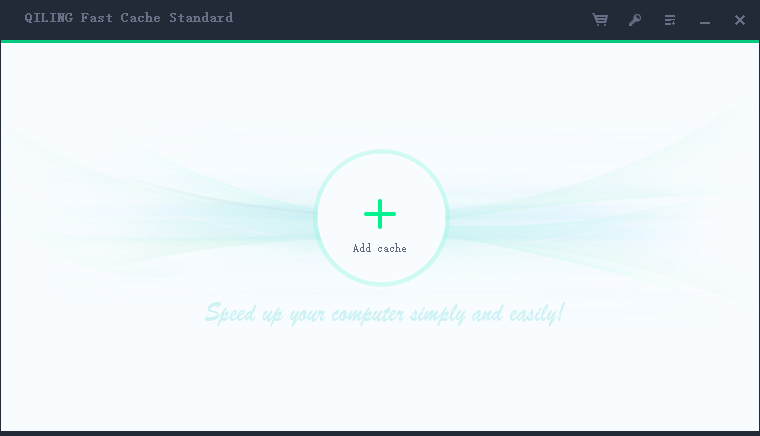
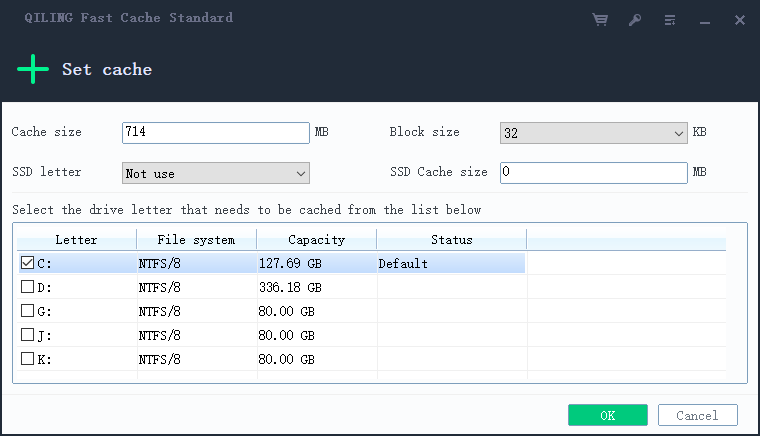
Step 2. Click the "+" button and select the volume holding your toolchains, SDKs, and package caches.
Step 3. Choose the medium and size. An SSD tier suits a shared runner, because it survives between jobs without taking memory from parallel builds.
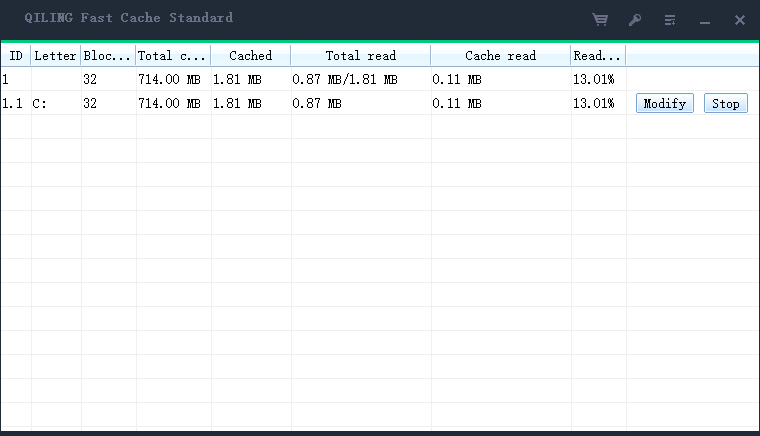
Step 4. Create the task, then compare average pipeline duration over a week of similar jobs rather than a single run.
FAQs About Caching and Build Servers
Will a disk cache speed up my CI pipeline?
On a persistent builder, yes - mostly by speeding up toolchain and dependency reads. On fully ephemeral agents, usually not.
Should I cache the build workspace?
No. Workspaces are large and replaced every run. Cache the toolchain and dependency volumes instead.
My build tool already has a cache. Do I need another one?
Often not. The tool's own cache is closer to the problem, and layering another one adds memory pressure for little gain.
Is a RAM cache or an SSD cache better for a build server?
An SSD tier on a shared machine, because it persists between jobs and leaves memory for compilers and test processes.
How do I know whether it helped?
Compare average job duration over a week of comparable pipelines. Single runs vary too much to judge.
Back Up Windows Before You Change Settings
A self-hosted runner holds credentials and configuration that are tedious to rebuild. Qiling Disk Master creates a full Windows backup you can restore from.
Part 1: Create a Full System Backup
Step 1. Install and open Qiling Disk Master. On the home screen, open "Backup and Recovery" and choose "System Backup". This option automatically includes Windows and the hidden boot partitions, so you do not have to select them one by one.
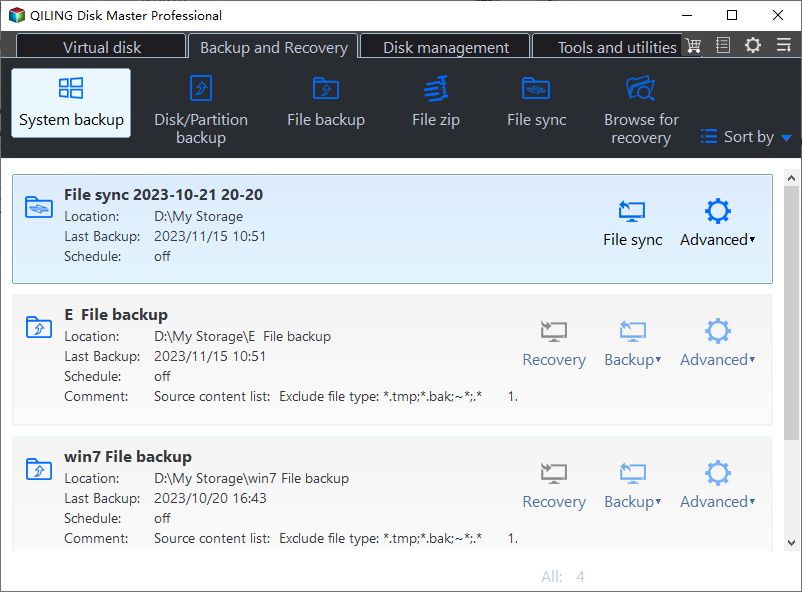
Step 2. Check the source. The disk where Windows is installed and its system partitions are already ticked for you. If you only need your personal documents, run a separate "File Backup" task instead.

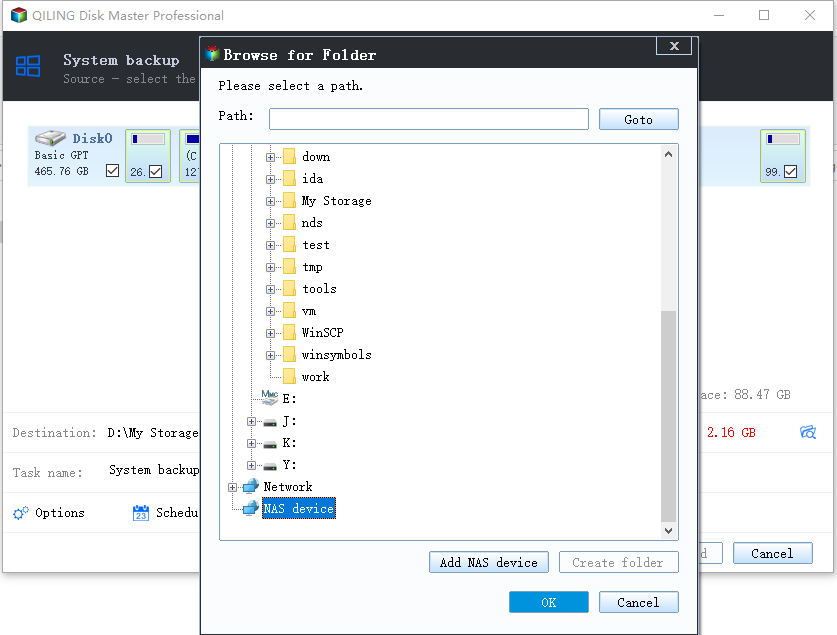
Step 3. Click the destination box and choose where the image should be saved. Use an external HDD or SSD, a NAS, or any drive other than the one Windows is installed on, and make sure it has enough free space.
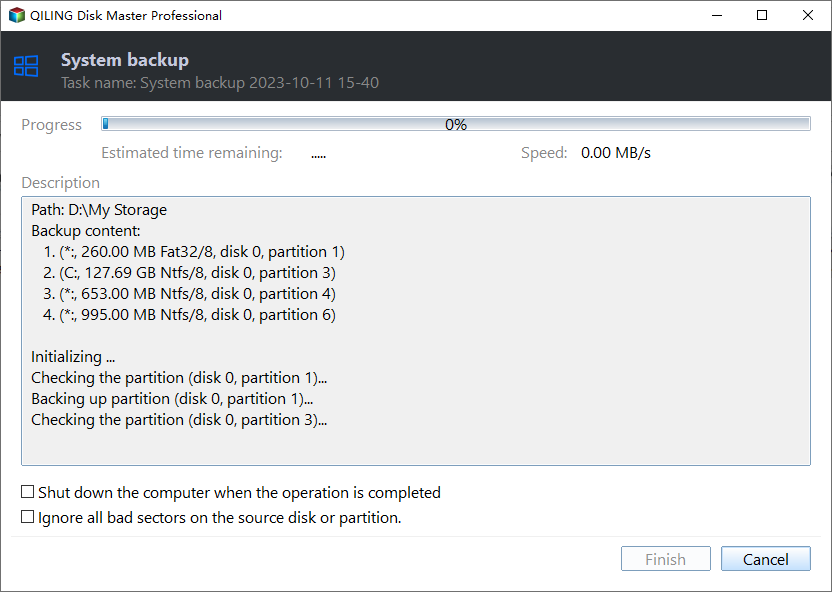
Step 4. Review the task summary and click "Proceed". Wait until the progress bar reaches 100%. Do not unplug the drive or turn off the PC while the backup is running.
Part 2: Restore Windows from the Backup
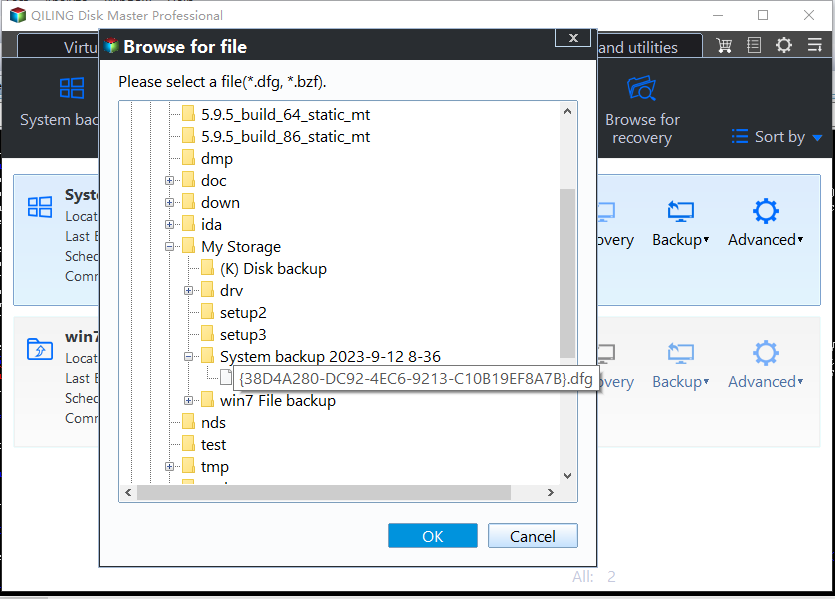
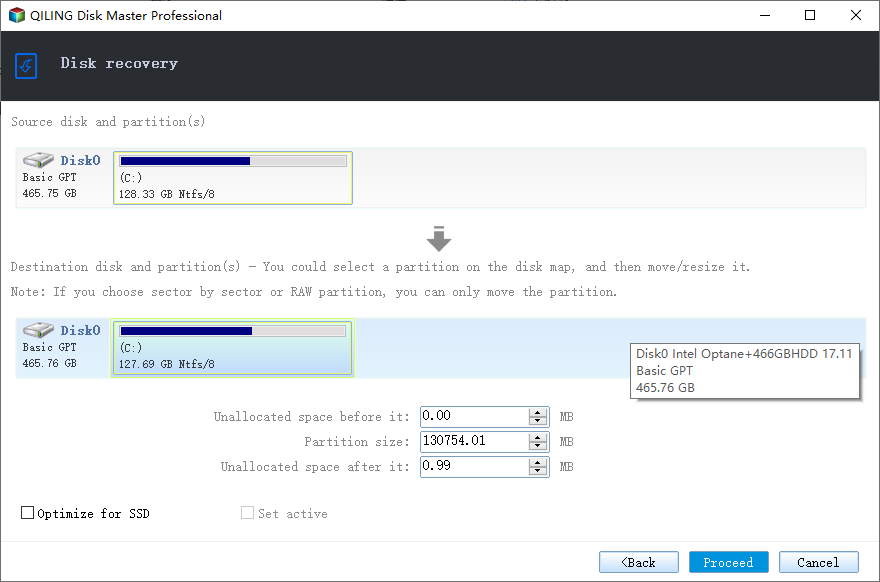
Step 1. Open Qiling Disk Master again, go to "Backup and Recovery", and select the recovery option. Your backup images are listed, so pick the one you created before the changes began.
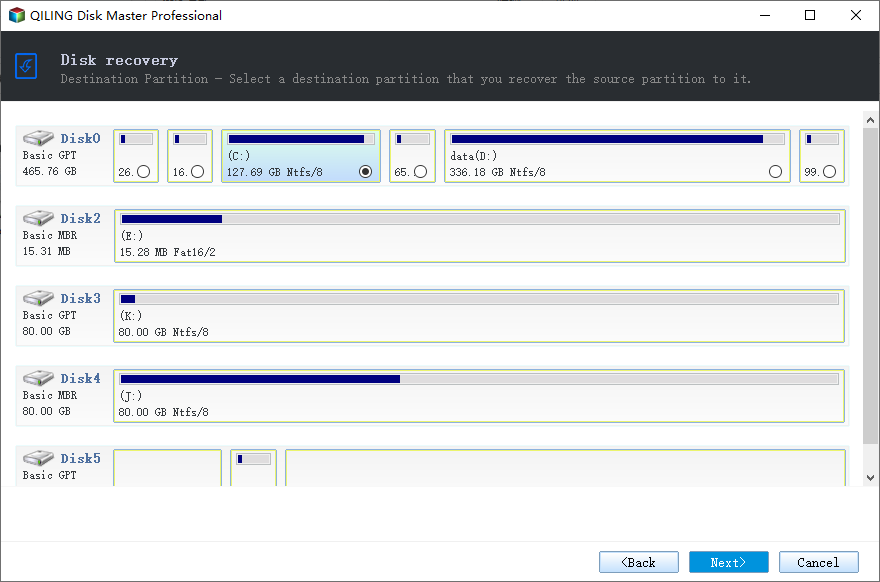
Step 2. Choose the target disk or partition. Normally you restore to the original system disk. If the drive was replaced, select the new disk instead, and the restore rebuilds Windows together with its boot partitions.
Step 3. Preview the restore plan, click "Proceed", and confirm the warning. The PC restarts to finish the job, and Windows comes back exactly as it was on the day the image was created, with your files and programs intact.
- Note
- Keep the backup image on a separate drive, and refresh it before changing storage cache settings.
Conclusion
A build server looks like an ideal caching target, and partly it is: compilers, SDKs, system libraries, and a warmed dependency cache are read on every job and rarely change, so they belong in fast storage. The rest of a pipeline does not benefit. Workspaces are written fresh each run, ephemeral agents discard everything between jobs, and the build tool usually maintains a cache of its own that is better placed than a filesystem one. The practical rule is to cache what persists - the toolchain volume - keep memory free for compilers and tests, and judge the result by average pipeline duration over many comparable jobs rather than a single run. Where runners are destroyed after every job, the honest answer is that a host-level cache has nothing to work with.
Protect your PC with Qiling Backup—create a system image before your next round of settings changes.
For more Windows 11 performance guides, see Cache vs Buffer, How to Check Cache Hit Rate, Choosing the Right SSD Cache Block Size, Speed Up IDE Indexing with a RAM Disk and Disk Cache, and When Caching Does Not Help.
Related Articles
- Disk Cache Not Working? A Troubleshooting Guide
How to tell a cache that is failing from a workload that never needed one. - Disk Cache and Power Loss Protection Explained
- Caching for Large Spreadsheets and Excel Files
- Does a Disk Cache Help SMB File Sharing?
- Does a Disk Cache Help Steam Game Libraries?
Products
Articles & Tutorials
- Data Recovery
- Data Backup
- File Recovery
- File Backup
- System Backup and Restore
- Disk and Partition Clone
- Technical articles
- Mobile articles
- Disk Master Help
- Windows Data Recovery Tutorials
- Windows Secure Delete Tutorials
- Windows Partition Management Tutorials
- Windows File Backup and Restore Tutorials
- Windows System Backup and Restore Tutorials
- Windows Disk Backup and Restore Tutorials
- Windows Clone Tutorials