Does a Disk Cache Help Virtual Desktops?
A remote desktop session and a virtual desktop look the same on screen and behave very differently on disk. One runs on the local PC, while the other runs on a host whose storage is shared with everyone else.
This guide explains what a virtual desktop actually reads, why the morning login is the hardest moment, and where a cache is genuinely useful.
PAGE CONTENT
- How Virtual Desktops Use Storage
- The Boot Storm Problem
- Where a Cache Helps
- Where Shared Storage Decides
- Configure a Cache on a Desktop or Small Host
- FAQs About VDI and Caching
- Back Up Windows Before You Change Settings
How Virtual Desktops Use Storage
A virtual desktop is a virtual machine that a user connects to, either from an office or from home:
- The base image is shared. Most desktops are cloned from a small number of templates, so the same blocks are read by many users.
- Each user writes to a delta. Personal changes go to a separate file rather than back into the shared image.
- Sessions read constantly. Browsers, office suites, and line-of-business applications all pull data from the same image and profile.
- The client is thin. The local PC mostly renders a stream, which is the situation described in remote desktop and remote work.
- So the load is many-small-reads. That is a different pattern from a single desktop, and it is what makes caching decisions harder.
The Boot Storm Problem
The hardest moment for any virtual desktop deployment is the start of the working day:
- Everyone logs in at once. Hundreds of machines boot inside a few minutes and read their images simultaneously.
- Storage queues build up. The array is asked for far more random reads than it handles comfortably.
- Logins slow down together. Each session waits behind the others, so the delay is shared rather than individual.
- The pattern repeats daily. The same blocks are read every morning, which is what makes it a caching problem at all.
- It is also a sizing problem. When the working set is far larger than any cache, the queue returns - see when a disk cache does not help.
Where a Cache Helps
Because so many sessions read the same base image, a cache has an unusually good hit rate on a virtual desktop host:
- The shared base image is read repeatedly. Blocks requested by one user are usually wanted by many others.
- The first login of the day warms it. Once the common blocks are cached, later logins are served from memory - see what cache warm-up means.
- It reduces load on the array. Even when no single session is faster, the storage tier sees far fewer requests.
- It helps small deployments most. A handful of home-office or lab desktops on one workstation is exactly the case where a local cache is practical.
- It cannot fix a badly sized array. If demand exceeds performance at the storage level, a cache buys time rather than solving the problem.
Where Shared Storage Decides
On larger deployments most of the constraints sit outside the machine you are configuring:
- Network storage adds a hop. When images live on a share, the link sets a ceiling that a local cache cannot raise - see caching for SMB file sharing.
- The array has its own cache. Most storage systems already buffer writes and hold hot blocks, so a second layer may overlap with the first.
- Thin provisioning can stall. Growing an image costs time, and that cost appears as latency for the user.
- Antivirus and scanning add reads. Guest-level scanning multiplies the number of requests the array sees.
- Concurrency, not capacity, is usually the limit. The array may have plenty of free space and still be unable to answer enough requests at once.
Quick summary
A local cache is most useful on a workstation or small host. At data-centre scale, the shared array and the network usually decide the outcome.
Configure a Cache on a Desktop or Small Host
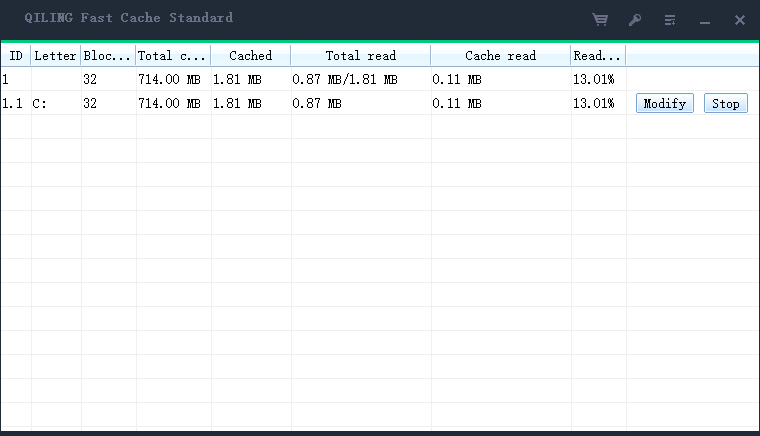
If a Windows workstation runs a few virtual desktops from local or direct-attached storage, a read cache pointed at the image folder is a practical improvement. Qiling Fast Cache combines a RAM tier with an SSD tier and reports the hit rate in the task list.
Step 1. Install Qiling Fast Cache and open the task list. Time a login on one virtual desktop before you change anything.
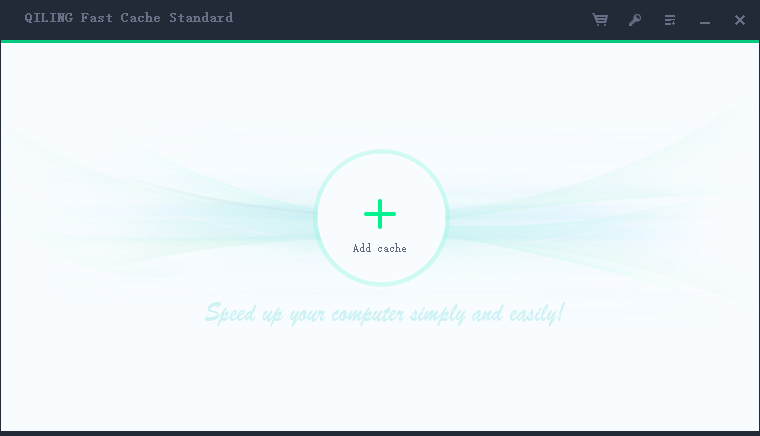
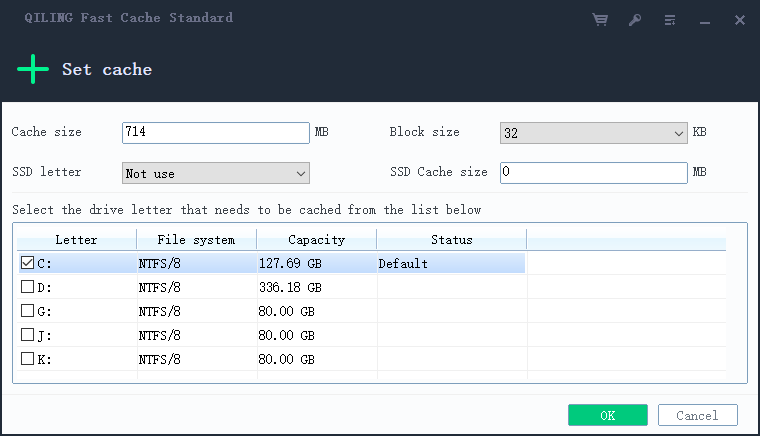
Step 2. Click the "+" button and select the volume that holds the virtual desktop images and templates.
Step 3. Size the SSD tier for the number of images you run at the same time, not for the whole archive.
Step 4. Log in repeatedly over several days and compare. Read the hit rate as well - see how to check cache hit rate - because a high rate with slow logins points at memory or the network instead.
FAQs About VDI and Caching
Will a cache fix a slow morning login?
It can help when the same base image is read by everyone, but only if the storage is the actual bottleneck.
Should I cache the user delta files?
Rarely. They are written by one user and read by one user, so they are not shared the way a base image is.
Is a cache useful on the client PC?
No. The client mainly renders a stream, so its disk has little influence on the session.
Do virtual desktops need more memory or more storage?
Both matter, but memory pressure inside the guest is often mistaken for a storage problem.
Is caching worth it on a large deployment?
Only as a supplement. There, the array and the network are the right places to invest.
Back Up Windows Before You Change Settings
Reconfiguring storage and cache settings is easier to undo when you have a recent image. Qiling Disk Master creates a full Windows backup you can restore from.
Part 1: Create a Full System Backup
Step 1. Install and open Qiling Disk Master. On the home screen, open "Backup and Recovery" and choose "System Backup". This option automatically includes Windows and the hidden boot partitions, so you do not have to select them one by one.
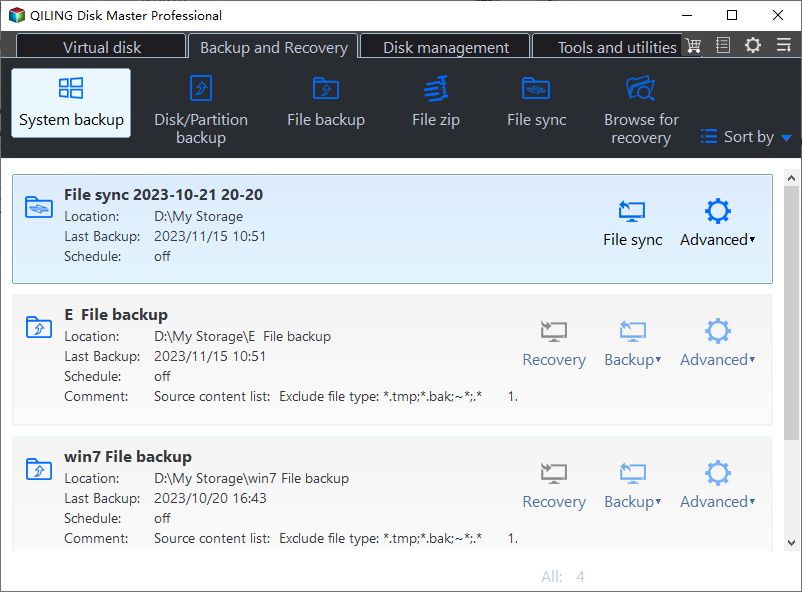
Step 2. Check the source. The disk where Windows is installed and its system partitions are already ticked for you. If you only need your personal documents, run a separate "File Backup" task instead.

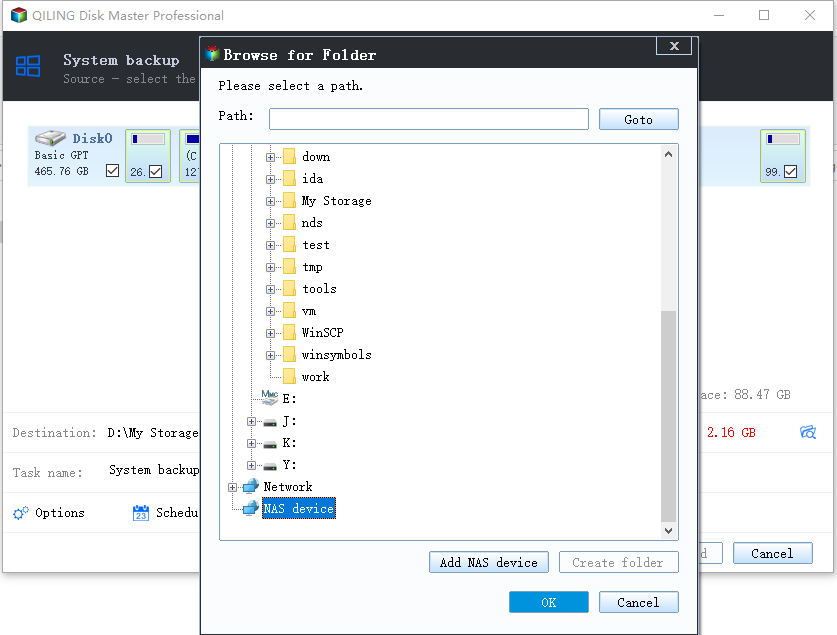
Step 3. Click the destination box and choose where the image should be saved. Use an external HDD or SSD, a NAS, or any drive other than the one Windows is installed on, and make sure it has enough free space.
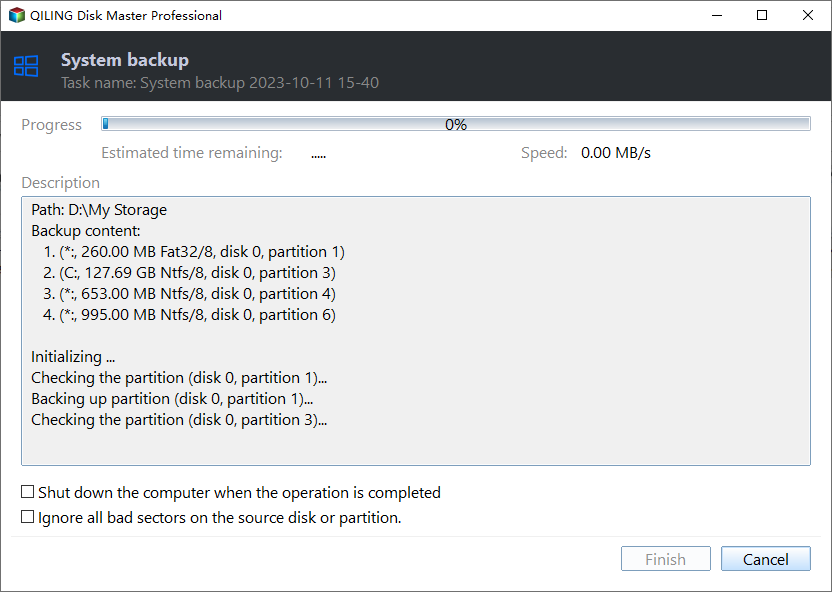
Step 4. Review the task summary and click "Proceed". Wait until the progress bar reaches 100%. Do not unplug the drive or turn off the PC while the backup is running.
Part 2: Restore Windows from the Backup
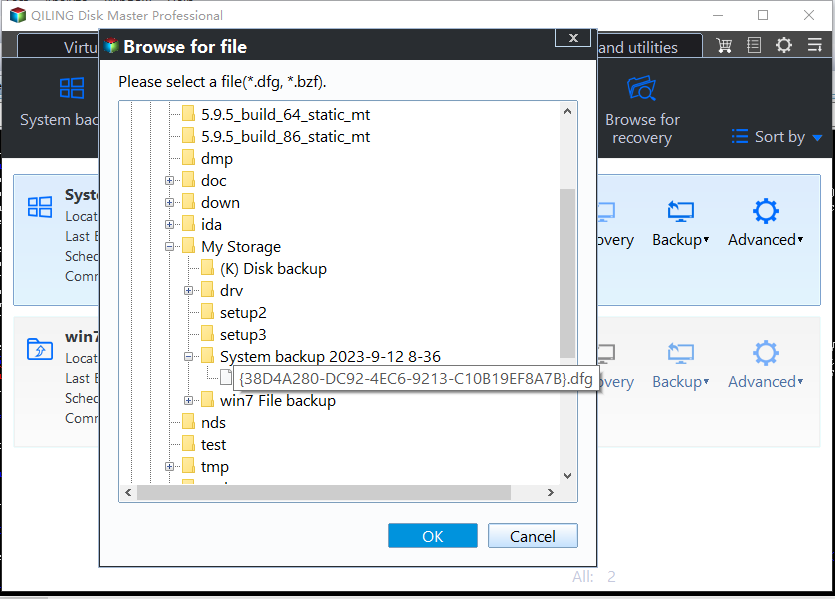
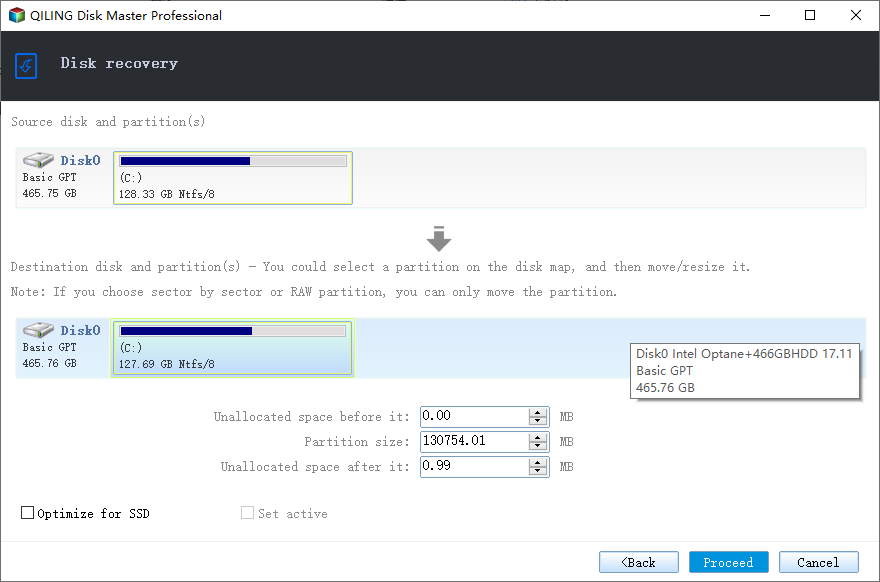
Step 1. Open Qiling Disk Master again, go to "Backup and Recovery", and select the recovery option. Your backup images are listed, so pick the one you created before the changes began.
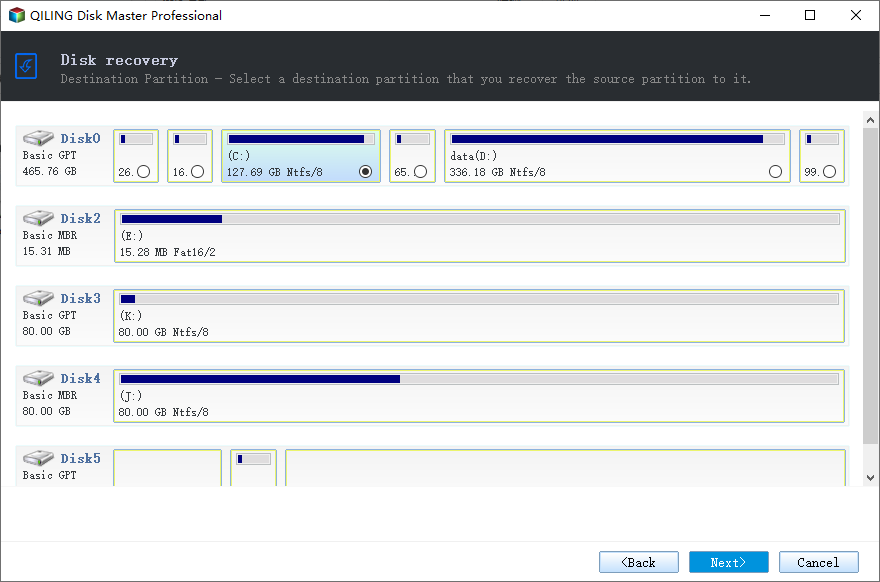
Step 2. Choose the target disk or partition. Normally you restore to the original system disk. If the drive was replaced, select the new disk instead, and the restore rebuilds Windows together with its boot partitions.
Step 3. Preview the restore plan, click "Proceed", and confirm the warning. The PC restarts to finish the job, and Windows comes back exactly as it was on the day the image was created.
- Note
- Keep the backup image on a separate drive, and refresh it before changing storage cache settings.
Conclusion
Virtual desktops are a shared-read workload, which is why a cache can be surprisingly effective: everyone reads the same base image, so blocks warmed by one login serve the next one. Where the deployment is small, such as a workstation running a few desktops, a local cache pointed at the image folder is a practical improvement. At data-centre scale the constraints move to the storage array and the network, and a local cache becomes a supplement rather than a solution. Understand which of the two situations you are in before sizing anything, and measure a login rather than a benchmark.
Protect your PC with Qiling Backup—create a system image before your next round of settings changes.
For more Windows 11 performance guides, see Does a Disk Cache Help When Cloning a Disk?, Disk Cache and File Deduplication Explained, Does a Disk Cache Help on a RAID Array?, How Big Should Your Disk Cache Be?, and Can You Use an SSD Cache for a NAS or Network Drive?.
Related Articles
- Do Virtual Machine Snapshots Benefit from a Disk Cache?
The same images, a different operation, and another case where one-pass work cannot be cached. - Hybrid Drives and Software Caching Compared
- Does a Disk Cache Work on iSCSI and Network Storage?
- How to Speed Up Virtual Machines with a Disk Cache on Windows 11
- VMware Workstation VMs and Disk Caching Explained
Products
Articles & Tutorials
- Data Recovery
- Data Backup
- File Recovery
- File Backup
- System Backup and Restore
- Disk and Partition Clone
- Technical articles
- Mobile articles
- Disk Master Help
- Windows Data Recovery Tutorials
- Windows Secure Delete Tutorials
- Windows Partition Management Tutorials
- Windows File Backup and Restore Tutorials
- Windows System Backup and Restore Tutorials
- Windows Disk Backup and Restore Tutorials
- Windows Clone Tutorials