Windows 11 23H2 End of Support: November 10, 2026 Guide
Windows 11 version 23H2 is the last of the older releases still receiving security updates, and its final date is now fixed. For business and school devices, Windows 11 23H2 reaches end of support on November 10, 2026, when the November 2026 security update becomes the last one those editions will receive.
This guide explains which editions are affected, what actually changes, and how to move to Windows 11 25H2 with minimal disruption.
PAGE CONTENT
- Windows 11 23H2 End of Support Dates
- Home and Pro versus Enterprise and Education
- What Stops After the Last Update
- How to Check Your Version and Edition
- Upgrade from 23H2 to 25H2
- Prepare Your PC Before the Upgrade
- FAQs About Windows 11 23H2 End of Support
- Back Up and Restore Windows with Qiling Disk Master
Windows 11 23H2 End of Support Dates
Windows 11 version 23H2 originally shipped in late 2023. Because Home and Pro editions follow the shorter consumer lifecycle and Enterprise and Education editions follow the longer business lifecycle, the same version has two different end dates.
| Edition | End of Updates |
|---|---|
| Windows 11 23H2 Home and Pro | November 11, 2025 |
| Windows 11 23H2 Enterprise and Education | November 10, 2026 |
| Windows 11 24H2 Enterprise and Education | October 12, 2027 |
| Windows 11 25H2 Enterprise and Education | October 2028 |
In practice this means most personal laptops have already moved on, while managed business and school fleets are the group that still needs to plan for November 2026.
Home and Pro versus Enterprise and Education
These two groups should do completely different things, and mixing them up causes avoidable problems.
Home and Pro editions of 23H2 stopped receiving updates on November 11, 2025. If your personal PC still reports 23H2, it has already been without security patches for months, and devices that are not managed by an IT department are normally offered the upgrade to Windows 11 25H2 automatically. Check Windows Update and install the update if it is waiting.
Enterprise and Education editions receive monthly security updates until November 10, 2026. If your device is managed by a company or school, do not change versions on your own. Your IT department controls the schedule, the update method, and any compatibility testing.
What Stops After the Last Update
End of updates does not disable the operating system. Windows keeps starting, and your applications keep working. What ends is the flow of fixes:
- No more monthly security updates, so newly discovered vulnerabilities stay unpatched
- No more fixes for known issues in that version
- No more time zone and daylight saving updates
- No more technical support from Microsoft
- No more non-security preview updates that would deliver quality improvements
- Note
- As a version ages, third-party software eventually stops supporting it too. Browsers, office suites, and security products usually drop old Windows builds first, so the practical lifespan of 23H2 is shorter than the official date suggests.
How to Check Your Version and Edition
Step 1. Press Win + R, type winver, and press Enter.
Step 2. In the About Windows dialog, read the version line. "Version 23H2" means this article applies to you. "Version 24H2" or "Version 25H2" means you are already on a newer release.
Step 3. To confirm your edition, open Settings > System > About and look at the "Edition" line. Home and Pro are consumer editions, while Enterprise, Education, and Enterprise multi-session are business editions.
Step 4. Write down both values. They determine which end date applies to your device, and they are useful if you need to open a support case.
Upgrade from 23H2 to 25H2
Windows 11 25H2 is the current release and the recommended destination. For personal devices the upgrade is usually an in-place update that keeps your programs and files.
Step 1. Back up the system first. A feature update rewrites system files, so create a full system image before you begin. The Qiling Disk Master steps are at the end of this article.
Step 2. Confirm the PC meets the requirements, including TPM 2.0 and Secure Boot support, and that the system disk uses the GPT partition scheme with UEFI boot.
Step 3. Free up space on the Windows drive so the update has room to download and unpack.
Step 4. Open Settings > Windows Update and click "Check for updates". If there is a pending optional update for the current version, install it first.
Step 5. When the option to download and install Windows 11, version 25H2 appears, select it and follow the prompts. Choose a restart time that suits you.
Step 6. After the restart, run winver again to confirm the version now reads 25H2.
Step 7. On a managed device, do not perform these steps manually. Ask your administrator to schedule the upgrade, which also lets them apply the same process to the whole fleet at once.
Prepare Your PC Before the Upgrade
Step 1. Create a full system backup image and keep it on a separate drive.
Step 2. Record your Windows product key and your BitLocker recovery keys before touching firmware or boot settings.
Step 3. Install all pending cumulative updates so the upgrade starts from a fully patched baseline.
Step 4. Update chipset, storage, and graphics drivers from your PC manufacturer.
Step 5. Disconnect unusual peripherals such as capture cards, RGB lighting controllers, and legacy printers during the update, since these are a common cause of failures.
Step 6. Keep laptops plugged in and do not interrupt the restart sequence.
- Important
- Never start a feature update without a tested system image. The built-in "Go back" option only works for about ten days, and it can fail if the update damaged the recovery environment.
FAQs About Windows 11 23H2 End of Support
Is Windows 11 23H2 still supported?
It depends on the edition. Home and Pro editions stopped receiving updates on November 11, 2025, while Enterprise and Education editions are supported until November 10, 2026.
Will my PC stop working on November 10, 2026?
No. Windows continues to start and run your software. What ends is the delivery of security updates, bug fixes, time zone updates, and technical support.
Which version should I upgrade to?
Windows 11 25H2 is the current release and Microsoft's recommendation. It shares the same servicing branch as 24H2, so the move from 23H2 or 24H2 is smaller than it used to be.
Do I have to upgrade before the deadline?
Strictly speaking no, but delaying leaves the device unprotected against new threats. On a managed fleet, upgrading late usually means compressing the same amount of work into a shorter window.
Is 23H2 the same on Home and Enterprise?
The version number is the same, but the lifecycle is not. Consumer editions get roughly two years of support, while business editions get longer, which is why the two end dates differ by a year.
What happens if the upgrade fails?
Restore the system image you created beforehand. That returns Windows, its drivers, and your files to the exact state of the backup, which is far more reliable than trying to repair a partially updated system.
Back Up and Restore Windows with Qiling Disk Master
Before you upgrade from 23H2 to 25H2, convert your disk to GPT, or change firmware settings, create a full system backup. A feature update touches system files and drivers across the whole machine, so a system image is the fastest way back to a known-good state. Qiling Disk Master handles both the backup and the restore.
Part 1: Create a Full System Backup
Step 1. Install and open Qiling Disk Master. On the home screen, open "Backup and Recovery" and choose "System Backup". This option automatically includes Windows and the hidden boot partitions, so you do not have to select them one by one.
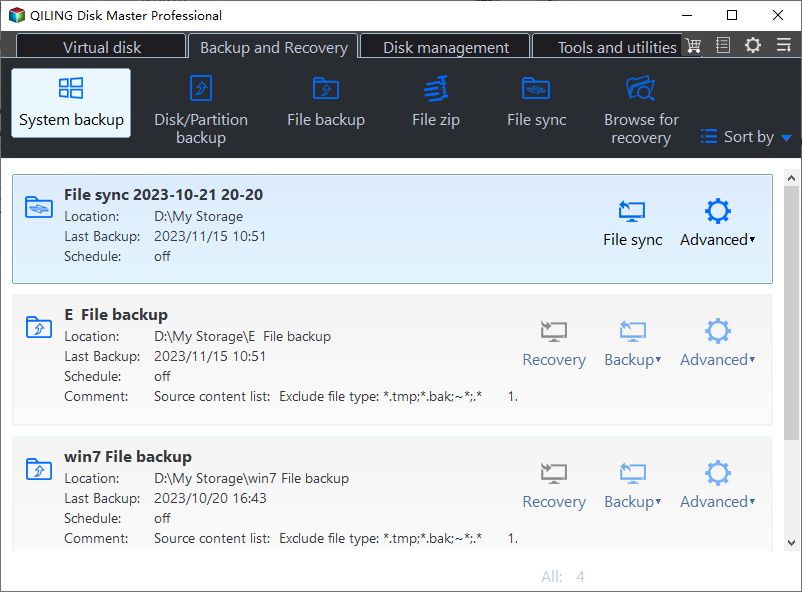
Step 2. Check the source. The disk where Windows is installed and its system partitions are already ticked for you. If you only need your personal documents, run a separate "File Backup" task instead.

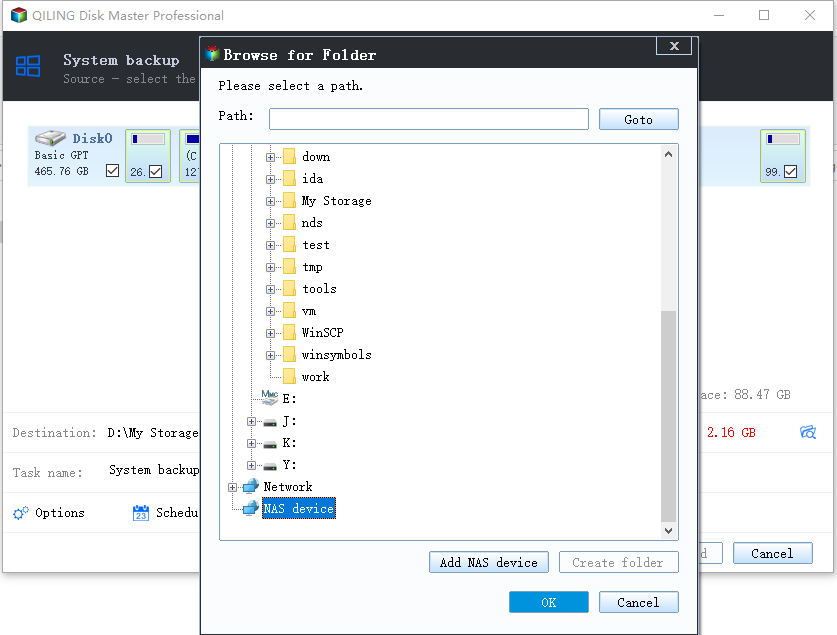
Step 3. Click the destination box and choose where the image should be saved. Use an external HDD or SSD, a NAS, or any drive other than the one you are about to upgrade, and make sure it has enough free space.
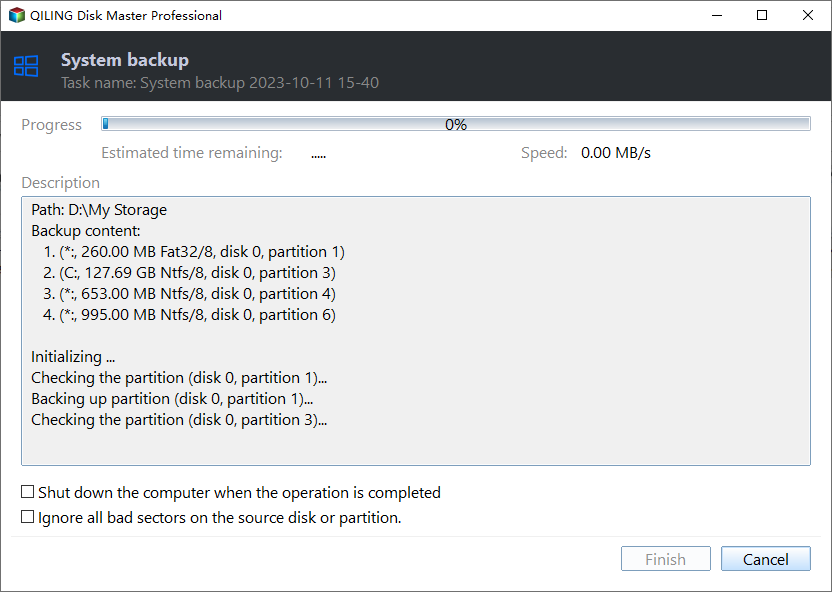
Step 4. Review the task summary and click "Proceed". Wait until the progress bar reaches 100%. Do not unplug the drive or turn off the PC while the backup is running.
Part 2: Restore Windows from the Backup
Step 1. Open Qiling Disk Master again, go to "Backup and Recovery", and select the recovery option. Your backup images are listed, so pick the one you created before the upgrade.
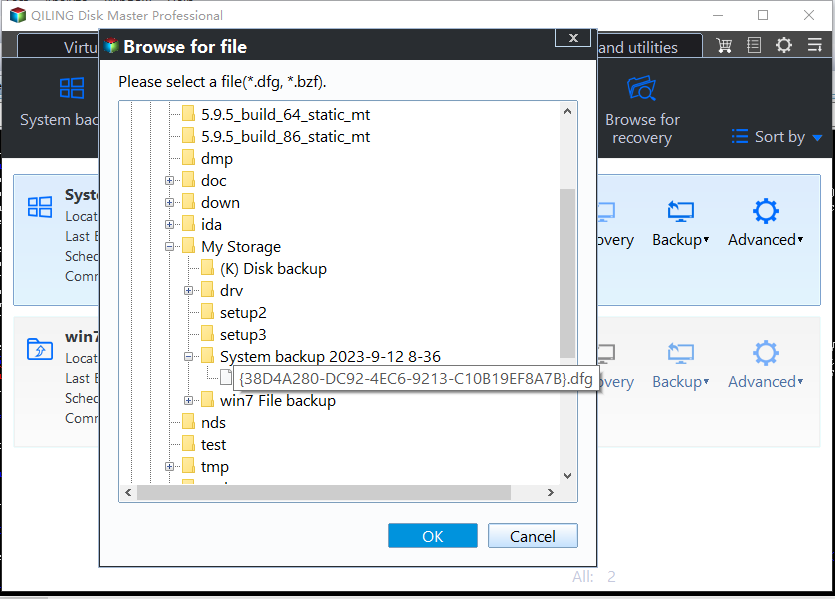
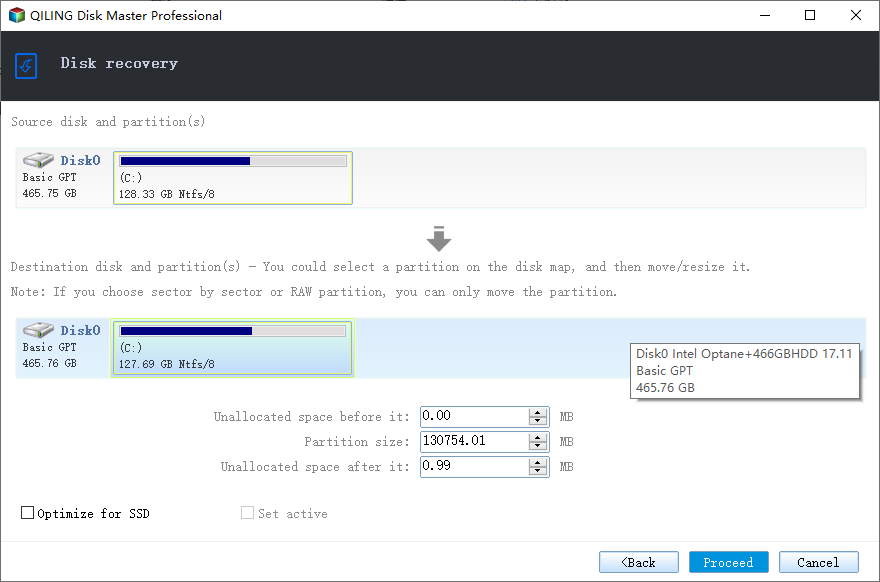
Step 2. Choose the target disk or partition. Normally you restore to the original system disk. If the drive was replaced, select the new disk instead, and the restore rebuilds Windows together with its boot partitions.
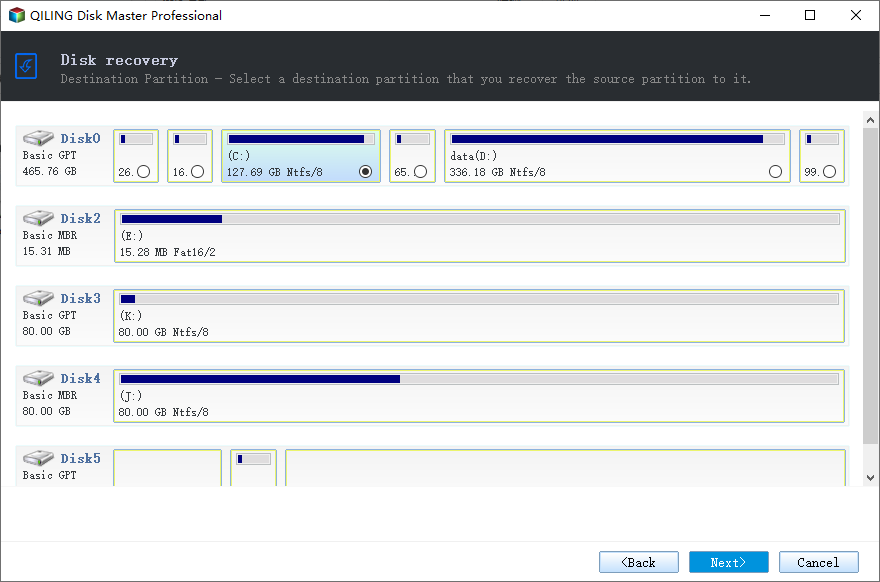
Step 3. Preview the restore plan, click "Proceed", and confirm the warning. The PC restarts to finish the job, and Windows comes back exactly as it was on the day the image was created, with your files and programs intact.
- Note
- Keep the backup image on a separate drive, and refresh it before every major change, such as a Windows feature update, a driver upgrade, or a disk operation.
Conclusion
Windows 11 23H2 end of support falls on November 10, 2026 for Enterprise and Education editions, while Home and Pro editions already stopped receiving updates on November 11, 2025. The version keeps working after those dates, but it no longer receives security patches or bug fixes. Confirm your version and edition with winver, create a full system backup, and move to Windows 11 25H2 while the upgrade is still a small in-place change.
Protect your PC with Qiling Backup—create a system image before your next Windows update.
Related Articles
- Windows 11 24H2 End of Support: What to Do Next (2026)
- Windows 11 26H2: Release Date, Features and How to Get It
- How to Fix Windows 11 23H2 Update Failure in 5 Ways
If the 23H2 update will not install or keeps rolling back, these five fixes clear the blocked update so you can move forward to a supported version. - Windows 11 25H2 Problems and How to Fix Them (2026 Guide)
- Windows 11 End of Support Date and What to Do Next
Products
Articles & Tutorials
- Data Recovery
- Data Backup
- File Recovery
- File Backup
- System Backup and Restore
- Disk and Partition Clone
- Technical articles
- Mobile articles
- Disk Master Help
- Windows Data Recovery Tutorials
- Windows Secure Delete Tutorials
- Windows Partition Management Tutorials
- Windows File Backup and Restore Tutorials
- Windows System Backup and Restore Tutorials
- Windows Disk Backup and Restore Tutorials
- Windows Clone Tutorials