Can't See Files on External Hard Drive Mac? Find Missing Files Here
Many Mac users opt for external hard drives as a budget-friendly solution to supplement their MacBook or iMac's storage, but some encounter an issue where they can't see files on the external drive, despite them existing.
* The same issue happens to many Windows users as well, and we've solved the problem already in this post: Hard drives not showing files though they still exist.
If your Mac can't see your external hard drive, check the linked post for troubleshooting steps to resolve the issue.External hard drive not showing up on Mac.
| Workable Solutions | Step-by-step Troubleshooting |
|---|---|
| 1. Using Mac Recovery Software | Correctly connect your external hard drive...Full steps |
|
2. Make Files Show up |
1. Mount The external hard drive in disk utility...Full steps 2. Repair the external hard drive with first aid...Full steps 3. Reformat the external hard drive on Mac...Full steps |
Do You Know Where Goes Wrong? Pre-Check Is Necessary

The potential factors that cause files to go missing from a Mac's external hard drive include accidental deletion, formatting, corruption, or physical damage. To recover the missing files, it's essential to identify the cause of the issue and take appropriate measures to prevent further damage. This may involve checking the drive's file system, running disk utilities, or seeking professional help if necessary.
You may have used the external HDD or USB drive extensively on various computers or operating systems, and it's possible that you didn't safely eject the storage drive each time you disconnected it. Additionally, you may have recently formatted the drive or changed the file system on it, which can cause issues. Furthermore, if the drive makes a clicking sound or loud noise when spinning, it could be a sign of a problem. The most common reasons for a failed external hard drive and lost files are likely due to these factors.
- Accidental deletion/formatting without notice
- Virus and malware infection
- Files were hidden by macOS
- File system corruption
- Disk drive corruption
Recover Files on External Hard Drive with Mac Recovery Software
Losing important files on your Mac can be a disaster, so it's essential to take immediate action to recover them. This may involve some effort and potentially a cost. Victims of lost files may have different needs, such as retrieving missing files or repairing a malfunctioning external hard drive. Don't panic, as we'll provide solutions to address these demands.
First, try the most efficient Mac data recovery method, which prioritizes finding missing files. Attach your external hard drive to your Mac and follow the guide to run Deep Data Recovery for Mac to scan the entire drive. This may reveal files you didn't see before, even if the hard drive had an issue at the moment.
Step 1. Connect your external hard drive to your Mac, then launch Deep Data Recovery for Mac. Select the file types you want to recover and click "Fast Scan" to start the process.
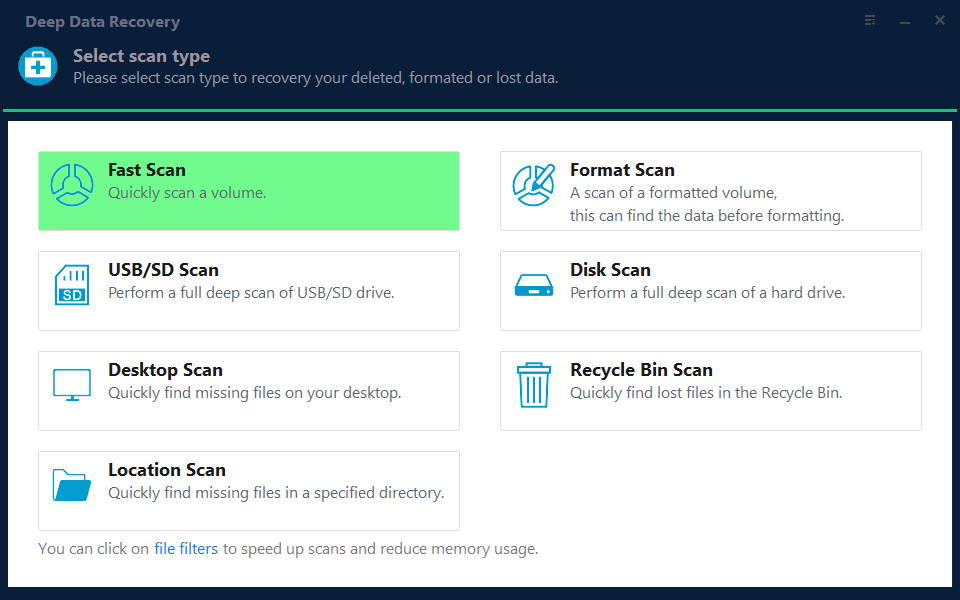
Note: You can choose different search modes based on where and why the data was lost.
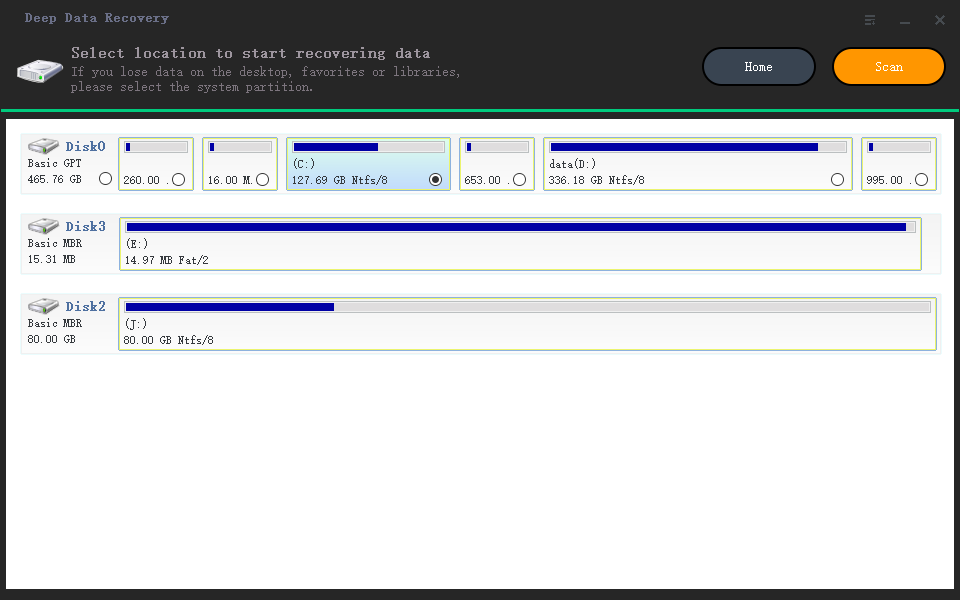
Step 2. To recover lost files from an external disk, select the disk and click "Scan" to initiate the search process.
Step 3. After scanning, all files will be displayed in the left panel of the scan results, following a quick scan and deep scan.
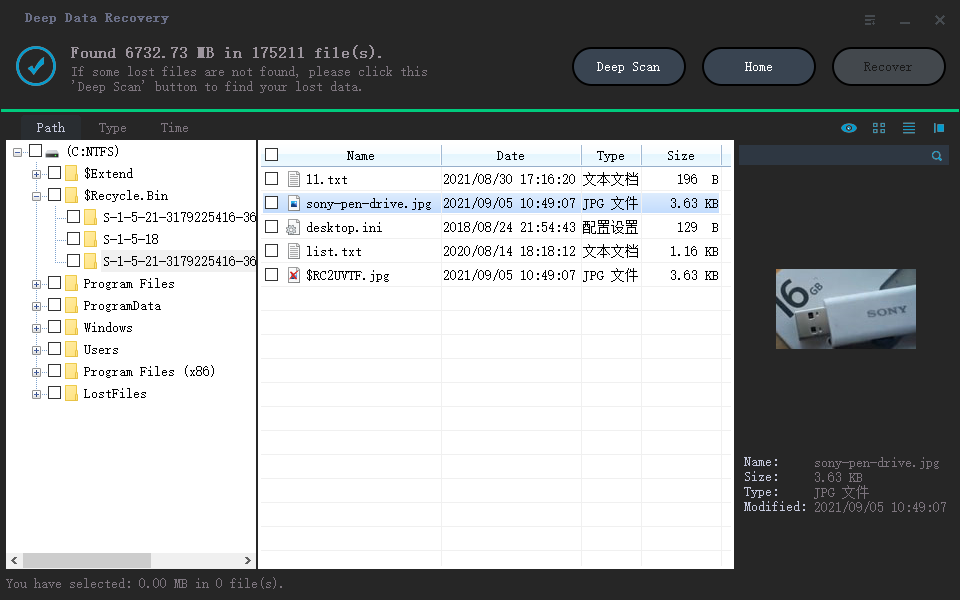
Step 4. Select the files you want to recover and click the "Recover" button, but avoid saving the recoverable files to the external hard drive to prevent data overwriting.
What Else Can You Do to Make External Hard Drive Files Show up on Mac?
It may take some time for Qiling software to complete the scan, so you can use the waiting period to explore other methods for recovering data files on the external hard drive or check the drive's health and take immediate action to repair it if any errors are found.
Solution 1. Mount The External Hard Drive in Disk Utility
If your external hard drive isn't showing files on your Mac, it might be because it's not properly mounted in the Disk Utility. To resolve this, you can re-mount it by opening the Disk Utility app, selecting the external drive from the left-hand sidebar, and then clicking the "Eject" button. Wait a few seconds, then click the "Mount" button.
Step 1. Open a new Finder window, click "Application" and open "Utilities".
Step 2. To launch Disk Utility, locate and double-click on the "Disk Utility" icon. Then, in the left panel, look for the external hard drive under the "External" section and double-click on it. This will open the drive's information and allow you to perform various tasks on it.
The external hard drive is greyed out and marked as "Untitled" on a Mac computer, indicating it's unmounted.
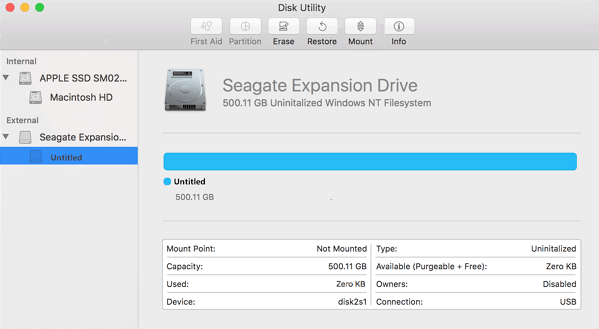
Step 3. Select the untitled external hard drive and click the "Mount" button from the Disk Utility bar.
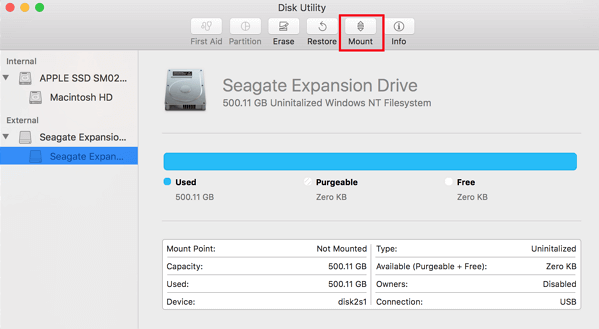
Step 4. Restarting your Mac should resolve the issue, and if files still exist on the external hard drive, they should be visible again.
Solution 2. Repair The External Hard Drive with First Aid
If you notice any of the following issues, such as disk not mounting, disk not appearing, or errors during startup, it's a good idea to run the Disk Utility's First Aid function to repair your disk. This can help identify and fix any problems with your disk's structure, ensuring it continues to function properly.
- System crashes or apps flashback
- Files vanishing or corrupt
- Starting issues on Mac
- External hard drive not working properly on Mac
Step 1. Connect the external hard drive to your Mac and open Applications > Utilities.
Step 2. Select the external hard drive that you can't see files on it and click on First Aid at the top, and then click Run.
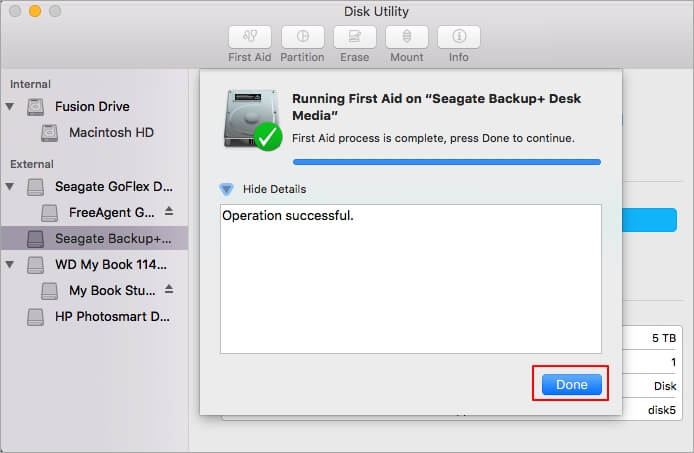
Step 3. Once complete, the external hard drive health status will display on the screen and Disk Utility will attempt to repair any issues it finds.
Solution 3. Reformat the External Hard Drive on Mac
File system corruption can lead to such errors, too. External hard drive for Mac was usually formatted with exFAT or HFS, if there is corruption in it, it cannot be detected by macOS, or even it has been detected, you cannot open it nor view files in it. One general solution to this issue is to try reformatting the external hard drive.
If you still want to keep the data, try to back it up before proceeding with the disk formatting.recover data from the formatted external hard drive later with the help of Deep Data Recovery for Mac.
Step 1. Connect the external hard drive to your Mac and open Applications > Utilities, then double-click Disk Utility to launch it.
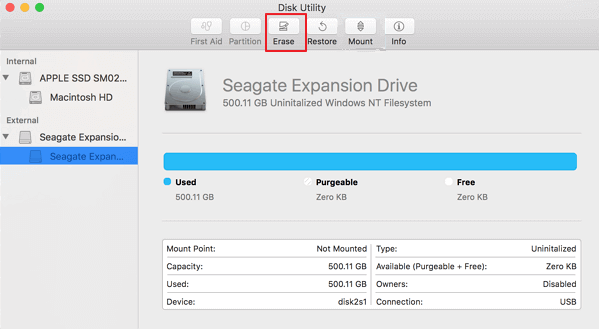
Step 2. Select the external hard drive in Disk Utility and click "Erase" at the top pane.
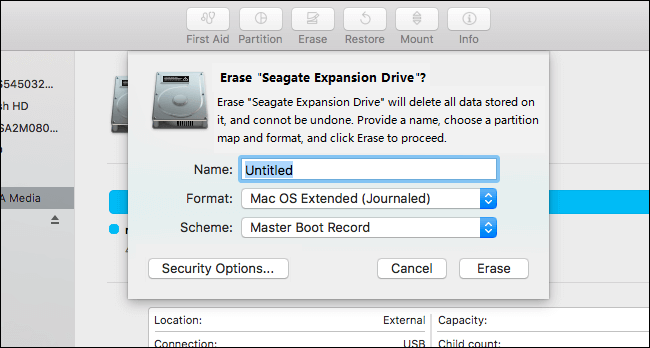
Step 3. Set the external hard drive to Mac OS Extended (Journaled) under the "Format" option.
Step 4. If you want to rename the drive, do so and then click "Erase" to confirm the deletion.
Final Thoughts
When valuable data files on a storage device go missing on your Mac, Qiling's Mac data recovery software can be a lifesaver. This software can help restore missing files from any device in various data loss disasters, and is surprisingly easy to use, requiring only three simple steps to recover all lost data.
Related Articles
- 100% Working Qiling Data Recovery Key and License Code for Mac
- Mac Photo Recovery: How to Recover Deleted Photos on Mac
- [Mac Recovery] Mac Catalina/Mojave Update Deleted Everything
- How to Format USB Flash Drive to FAT32 on Mac without Data Loss
- Fallout 4 Accidentally Deleted Saves, How to Recover?
Have you accidentally deleted saves from Fallout 4? This article will teach you how to recover your Fallout 4 accidentally deleted save with Qiling data recovery software. Download this free data recovery software to restore lost data as soon as possible. - Your File History Drive Was Disconnected for Too Long, How to Reconnect File History Drive
Windows 10 users may encounter the error “Reconnect your drive. Your File History drive was disconnected for too long.” This error can occur for various reasons, the solutions in this article can help fix the problem and restore lost files.
Products
Articles & Tutorials
- Data Recovery
- Data Backup
- File Recovery
- File Backup
- System Backup and Restore
- Disk and Partition Clone
- Technical articles
- Mobile articles
- Disk Master Help
- Windows Data Recovery Tutorials
- Windows Secure Delete Tutorials
- Windows Partition Management Tutorials
- Windows File Backup and Restore Tutorials
- Windows System Backup and Restore Tutorials
- Windows Disk Backup and Restore Tutorials
- Windows Clone Tutorials