Apps Unresponsive? Force Quit on Mac when Frozen
Quick Navigation:
| Workable Solutions | Step-by-step Troubleshooting |
|---|---|
| 1. Force Quit Apps when Frozen | Select the Apple logo from the menu...Full steps |
|
2. Force Quit Apps using Keyboard |
Hold down the Command + Option...Full steps |
|
3. Other Ways to Force Quit on Mac |
1. Force quit from activity monitor...Full steps 2. Force quit from the Dock...Full steps |
Apps Unresponsive? Force Quit on Mac when Frozen
Learn how to force quit on Mac when apps become unresponsive, freeze, or hang and fail to close normally. Even with the best Mac applications, situations like that can occur, and a "Force Quit" is necessary.
Mac users may force quit an application that is taking too long to work smoothly, but this should be done only after confirming that it won't close normally. If the app is frozen, waiting a bit to see if it unfreezes might be a good idea, but if it's taking too long, force quitting it will result in the loss of any unsaved work.
Force Quit Apps when Frozen
A frozen app is one that fails to respond to normal commands such as quit. To resolve this issue, one can force quit the app from the menu bar, which is a quick solution.
Step 1. Select the Apple logo from the menu bar.
Step 2. From the dropdown menu, choose the Force Quit option.
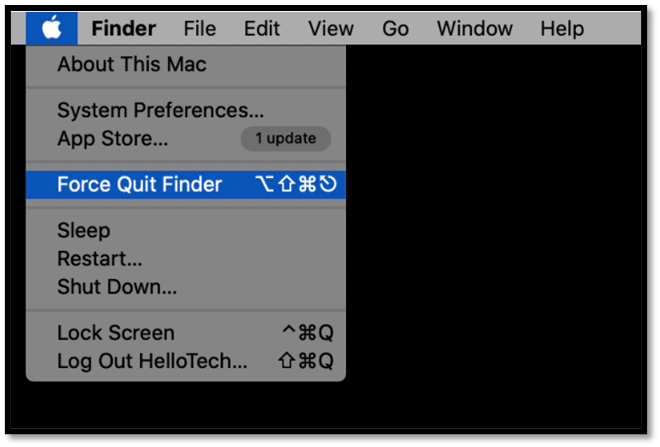
Step 3. When an app freezes or becomes unresponsive, a "Force Quit Applications" window appears, allowing you to select and close the problematic app, which is often indicated by a "Not Responding" message next to it.
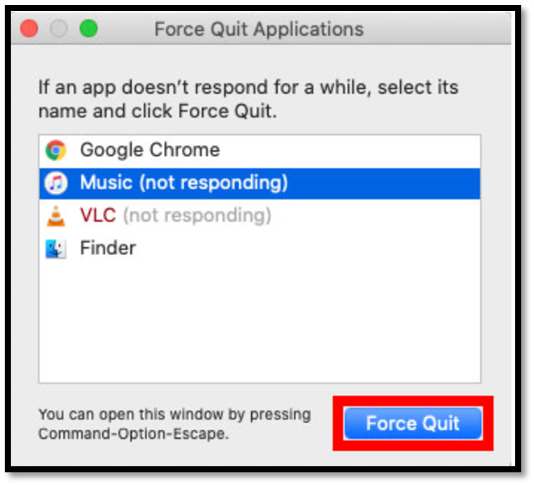
Step 4. Confirm the targeted app and click on the Force Quit button on the bottom right side.
Shortcut tip: To open the Force Quit Applications window quickly, press the keys Command + Option + Escape together.
Force Quit Apps using Keyboard
Severe app freezes where the mouse fails to respond can be frustrating, but there's a quicker way to force quit on Mac using keyboard shortcuts. Instead of relying on the mouse, you can use command keys to resolve the issue.
Step 1. Hold down the Command + Option + Esc keys to open the Force Quit window.
Step 2. Locate the unresponsive app and select it.
Step 3. Click Force Quit.
Step 4. A pop window appears. Click the Force Quit option.
Other Ways to Force Quit on Mac
Here are the two methods to force quit on a Mac:
- Force quit from Activity Monitor
- Force quit from the Dock
Force quit from activity monitor
This how-To force quit an application on a Mac, open the Activity Monitor, which can be found in the Applications > Utilities folder. From there, you can see a list of all running processes, including the application you want to quit. Select the application from the list, click on the "X" button in the top left corner, and confirm the action to force quit the application. This method is simple and effective for closing an application that is not responding or frozen.
Step 1. To open Finder, click the desktop and press the Command + N keys, or select the half-white, half-blue icon in your Dock.
Step 2. To open the Applications folder, you can either press Command + Shift + A keys or check the left sidebar of the Finder environment.
Step 3. Check through the folders and open the one named Utilities, or press Command + Shift + U.
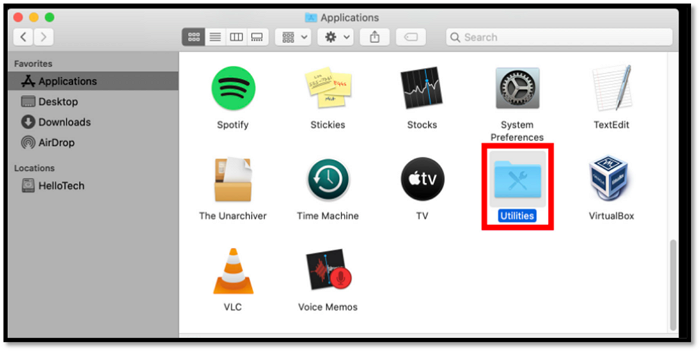
Step 4. To view all active app processes, open the Utilities window and select Activity Monitor. This will open a window displaying a list of all currently running app processes.
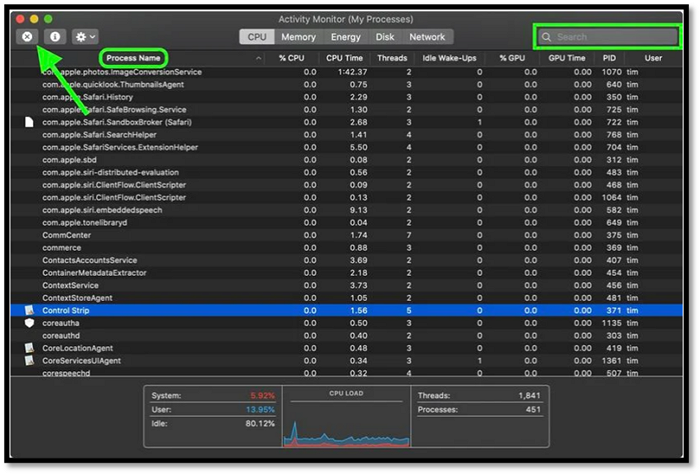
Step 5. To force quit an application on a Mac, open the Force Quit Applications window by pressing Command (⌘) + Option (⌥) + Esc keys simultaneously, or by clicking the Apple menu and selecting "Force Quit".
Step 6. Click on the X button at the top-left corner of the Activity Monitor window.
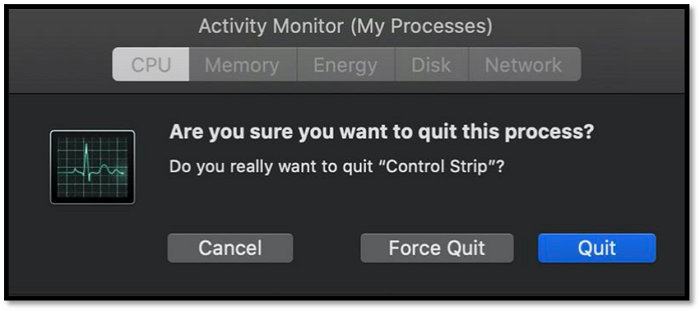
Step 7. A message appears asking if you want to quit the process. Click Quit to close the app.
Force quit from the Dock
To force quit an application on a Mac from the Dock, click and hold on the application's icon until a menu appears, then select "Quit" from the menu. If the application is not responding, you can also click and hold on the application's icon in the Dock, then select "Force Quit" from the menu. This will immediately close the application and end any processes it may have running.
Step 1. To resolve an issue with a misbehaving app, right-click the desktop icon of the problematic application in the Dock, which is the bar at the bottom of the screen that displays icons for all installed apps. This action will open a context menu with various options related to the selected app.
Step 2. Press and hold down the Option key on the keyboard, and the Quit option should change to Force Quit.

FAQs about Force Quit on Mac
1. Will force quit cause data loss?
Force quitting an app can cause data loss if previous progress wasn't saved before the app froze or became unresponsive, potentially leading to lost work or unsaved changes.
2. What to do when force quit doesn't work?
To force restart a Mac, press and hold down the Control + Command + Power keys if other methods like Force Quit don't work. This will immediately restart your Mac.
3. What is the force quit shortcut?
Use the Command + Option + Escape keys.
Force Quit Data Loss – How to Recover Unsaved Data?
Beyond understanding how to force quit on Mac, it's also essential to learn how to recover unsaved files after a forced quit. While some applications like MS Office have built-in data recovery features, not all Mac apps have this capability, making it crucial to know how to recover lost data.
In applications where data is not saved frequently, the likelihood of recovering unsaved data is low. A better option would be to check the Time Machine backup for any available data. Additionally, searching online for a reliable third-party data recovery software can help prevent data loss.
Deep Data Recovery for Mac
- To recover deleted files, start by selecting a hard drive to scan. Then, use a recovery software to scan the drive and locate any deleted files.
- Recover lost data from the emptied Trash Bin, accidental deletion, or other causes with simple steps, saving unlimited data.
- Solve different data loss scenarios and undelete files, regardless of size, from a single Office Word document to large collections of photos stored on Mac.
Related Articles
- Recover Deleted Safari Bookmarks on Mac with/without Time Machine [Big Sur Compatible]
- Follow 5 Effective Ways to Fix Mac Fusion Drive Not Showing Up
- Downgrade macOS/Mac OS X without Losing Data 2022 (Big Sur/Catalina Applicable)
- How to Recover Formatted USB Flash Drive Mac
- How to Restore Database in SQL Server 2014 from .Bak File
To create a.bak file backup in SQL Server 2014, follow these steps: first, open SQL Server Management Studio and connect to your database server. Then, right-click on the database you want to backup and select “Tasks” > “Backup...” from the context menu. Finally, click “OK” to create the.bak - How to Recover Deleted YouTube Videos with or Without Link
You can recover deleted YouTube videos by using various methods, including the WayBackMachine, which can retrieve videos from archived web pages, or data recovery programs that scan your device for deleted files.
Products
Articles & Tutorials
- Data Recovery
- Data Backup
- File Recovery
- File Backup
- System Backup and Restore
- Disk and Partition Clone
- Technical articles
- Mobile articles
- Disk Master Help
- Windows Data Recovery Tutorials
- Windows Secure Delete Tutorials
- Windows Partition Management Tutorials
- Windows File Backup and Restore Tutorials
- Windows System Backup and Restore Tutorials
- Windows Disk Backup and Restore Tutorials
- Windows Clone Tutorials