How to Show Hidden Files on Mac
To view and find hidden files on your Mac, you can use the "Command + Shift + ." shortcut. This will reveal hidden files and folders in the current directory. Alternatively, you can also use the "Go" menu in the Finder, select "Go to Folder..
It is possible to find hidden files on a Mac hard drive. To do so, you can follow the provided methods to show the hidden files on your Mac computer or hard disk, external storage devices.
| Workable Solutions | Step-by-step Troubleshooting |
|---|---|
| Fix 1. Show Hidden Files With Finder | Open a new Finder window > click on the name of your Mac under "Devices" > click on System...Full steps |
| Fix 2. View Hidden Files With Terminal | Open Terminal > Copy and paste the command into the Terminal window...Full steps |
| Fix 3. Restore Disappeared Files With Software | Download Qiling file recovery software for Mac > Choose a drive to scan > preview and recover...Full steps |
If you're a Windows user, to make hidden files show up on your PC, refer to the article on how to recover hidden files on a PC.
Method 1. Show Hidden Files using Keyboard Shortcut
To quickly find hidden files on your Mac using the keyboard, follow these steps. First, press the "Command" key and the "Shift" key at the same time, and then press the "Period" key. This will toggle the display of hidden files, allowing you to see them in the Finder window.
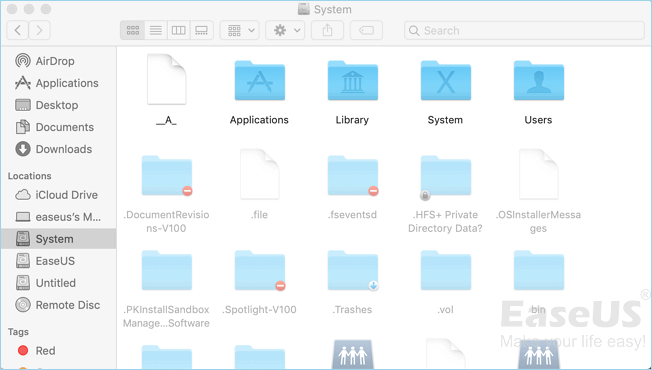
Step 1. To access the System Information, open a new Finder window and click on the name of your Mac under "Devices" in the sidebar.
Step 2. To reveal or hide hidden folders in the Finder on a Mac, click on System in the top left corner and press Command (⌘) + Shift + . (period) on your keyboard. This will toggle the display of hidden folders.
Step 3. To rehide hidden folders, press Command + Shift + . again.
Method 2. View Hidden Files and Folder on Mac With Terminal
To view hidden files and folders on a Mac using the Terminal command-line interface, you can use the command "ls -a" to list all files, including hidden ones, in the current directory. This command will display all files, including those that start with a dot, which are typically hidden. You can also use the command "ls -d .
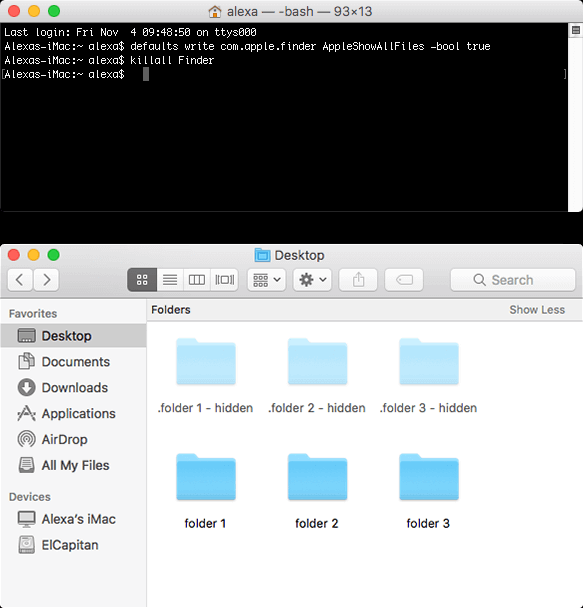
Step 1. Open Terminal application from Launchpad.
Step 2. Copy and paste the following command into the Terminal window:
defaults write com.apple.finder AppleShowAllFiles -bool true
Step 3. Restart Finder with a command: killall Finder.
To view hidden files and folders in the Finder on your Mac, you can hold down the Option (⌥) key while navigating to the folder you want to view. This will reveal any hidden files and folders, allowing you to access them.
Method 3. Restore Disappeared Files With Mac File Recovery Software
In some cases, files might get hidden due to a virus attack or OS fault, requiring the use of third-party data recovery software. One recommended tool is Deep Data Recovery for Mac, which can help find and restore hidden files on a Mac computer or external storage devices. This software offers several features that make it a valuable asset for recovering lost data.
- Data recovery software can help you recover lost data from the emptied Trash Bin, accidental deletion, or other causes, allowing you to restore important files and information that were previously thought to be irretrievable.
- The software supports the recovery of corrupted Word, Excel, and PDF files by repairing them during the recovery process.
- The recovery process is surprisingly straightforward, requiring only three simple steps. It's a relief to know that the journey back to health is manageable and uncomplicated.
- Supports users to preview all recoverable files.
This method can be used by both experienced and novice Mac users, requiring no specific knowledge. If you've lost files on your Mac, you can download and install the software to give it a try.
Note: If your hidden files are less than 2GB, Deep Data Recovery for Mac Free Edition can help, and this free file recovery software doesn't require any payment.
Step 1. Launch Deep Data Recovery, select file types, and click "Fast Scan" to begin the recovery process.
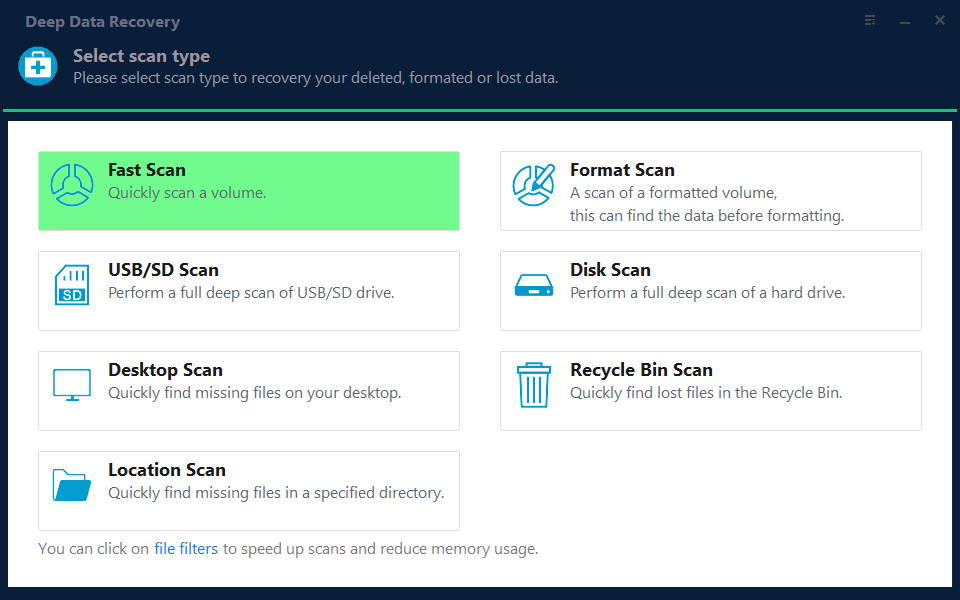
Note: You can choose different search modes based on where and why the data was lost.
Step 1. Select the disk location where you lost data and files, then click the "Scan" button.

Step 2. Deep Data Recovery for Mac will immediately scan your selected disk volume and display the scanning results on the left pane.

Step 3. To recover the selected file(s), click the "Recover" button in the scan results. This will restore the files back to their original state.
Why Do Files Suddenly Disappear on Mac?
Sometimes users find their Mac files got disappeared but usually they don't know the reason. Here we list the most common reasons that would lead to file disappear on the Mac or external hard drive.
1. Accidental Deletion.
If you delete files without notice, you can often recover them from the Trash bin if you haven't emptied it.
2. Hidden by the System.
Files on an external hard drive may be hidden by the operating system, making them invisible, which could be due to accidental hiding or the system's default to hide sensitive files.
3. File System Error.
Files are not showing on an external hard drive because its file system is corrupted, preventing the computer from accessing and displaying the files.
4. Virus Attack.
Your Mac or external hard drive may be compromised by a virus or malware, which can hide, delete, or encrypt files on the drive.
Conclusion
On a Mac, if you're looking to access hidden files, there are steps you can take. Whether your files have been lost or intentionally hidden by the system, this guide can help you recover them. However, please exercise caution when dealing with hidden files, as improper handling can lead to significant damage. If you're unsure about the process, it's best to proceed with caution to avoid any potential issues.
Related Articles
- What is Other on Mac Storage? Clear Other Storage Without Deleting Wrong Data
- Is Your SD Card Not Detected on Mac (Big Sur/Catalina)? Fix It Now
- Can't Find My WD Passport on Mac! How to Fix?
- Time Machine Restore Button Greyed Out, How to Fix?
- 7 Fixes | This Device Cannot Start Code 10!
Learn how to fix this device cannot start code 10 via seven fixes in this guide. Besides, you can get top-rated data recovery software for Windows to recover files. - [Fixed] Windows File Recovery There Was an Error Parsing Your Command
How to fix the "Windows File Recovery there was an error parsing your command" error? The troubleshooting tutorial is ready for you.
Products
Articles & Tutorials
- Data Recovery
- Data Backup
- File Recovery
- File Backup
- System Backup and Restore
- Disk and Partition Clone
- Technical articles
- Mobile articles
- Disk Master Help
- Windows Data Recovery Tutorials
- Windows Secure Delete Tutorials
- Windows Partition Management Tutorials
- Windows File Backup and Restore Tutorials
- Windows System Backup and Restore Tutorials
- Windows Disk Backup and Restore Tutorials
- Windows Clone Tutorials