How to Fix Hard Drive Won't Boot [Top 6 Fixes🏅]
If your computer won't boot due to a "Disk boot failure, insert System disk, and press Enter" error, you're not alone. This frustrating issue can be caused by a malfunctioning hard drive. Fortunately, there are ways to resolve it. In this post, we'll explain the problem and provide five helpful methods to fix the issue, so you can get back to using your computer as usual.
How to Fix Hard Drive Won't Boot - 6 Ways
Hard drive boot failure can be caused by various reasons, and there are five effective solutions to fix this problem. The solutions include recovering from hard drive won't boot, which can be achieved through various methods, including using a tool, and the process can take a certain duration and have a certain difficulty level.
| ⏱️Duration | 5-8 Minutes |
| 💻Goal | Fix the hard drive won't boot |
| 🧰Required tool |
Disk problem-solving tool - Qiling Disk Master🥇 |
| 🛠️Methods |
|
If your hard drive won't boot, the first step is to ensure that all cables and connectors are properly connected. If this initial check doesn't resolve the issue, you can try the following methods to troubleshoot and potentially fix the problem.

How to Fix BIOS Recognizes SSD But Won't Boot
If your BIOS recognizes your SSD but won't boot, don't worry - there are effective fixes and solutions to resolve this issue. To troubleshoot, try checking the SSD's power connection, ensuring it's properly seated in the motherboard, and verifying that the BIOS settings are configured correctly.
Method 1. Perform Boot Repair via Qiling Disk Master
To resolve the hard drive cannot boot problem, Qiling Disk Master offers the "Boot Repair" tool, which simplifies the process of resolving black/blue screen of death errors with its clear interface and easy steps.
To fix the "hard drive won't boot" error, start by checking the power cord and outlet to ensure they're working properly. If the issue persists, try booting in safe mode, which can help identify if the problem is related to a specific program or driver.
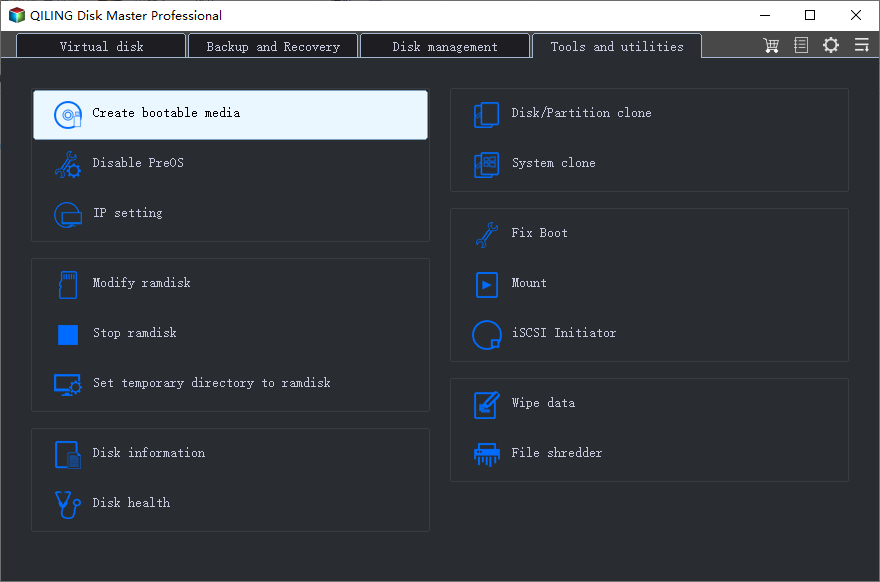
Step 1. To create a bootable USB drive or external drive using Qiling Disk Master (RE), simply connect the drive to a working computer, open Qiling Disk Master, and click on the "Create Bootable Media" option.
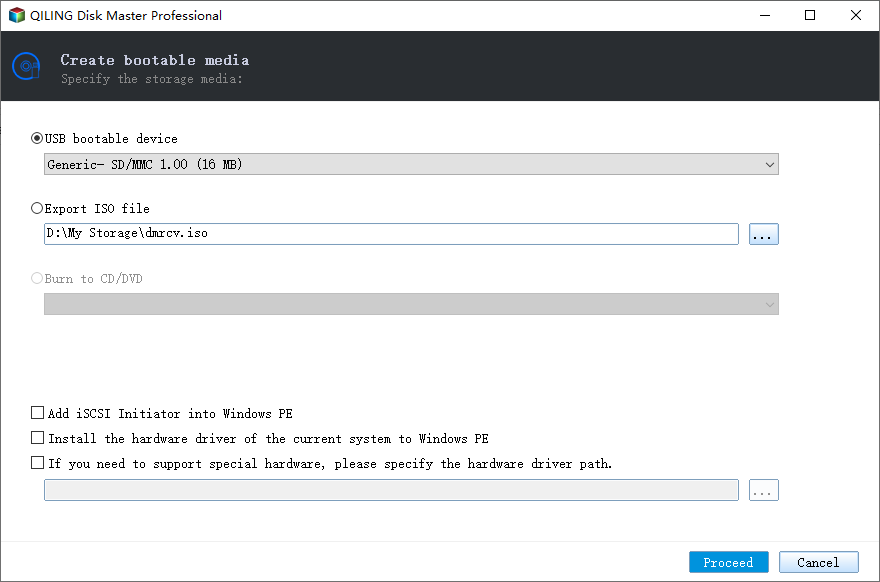
Step 2. To create a bootable Windows USB drive, select your movable device (such as a USB drive or external drive) and create an image on it. Alternatively, you can burn the Windows ISO file to the storage media.
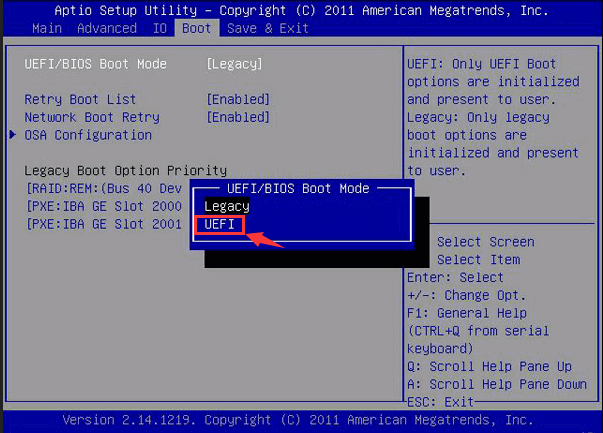
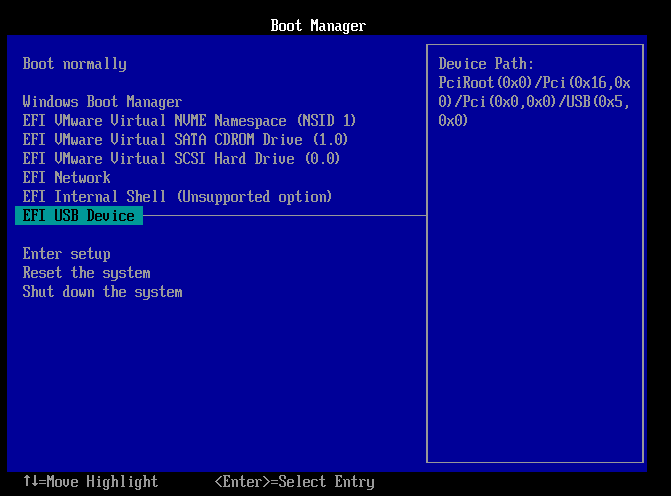
Step 3. Connect a bootable drive to the faulty computer, enter the BIOS by pressing "F2"/"Del", set the bootable drive as the boot disk, and exit the BIOS by pressing "F10".
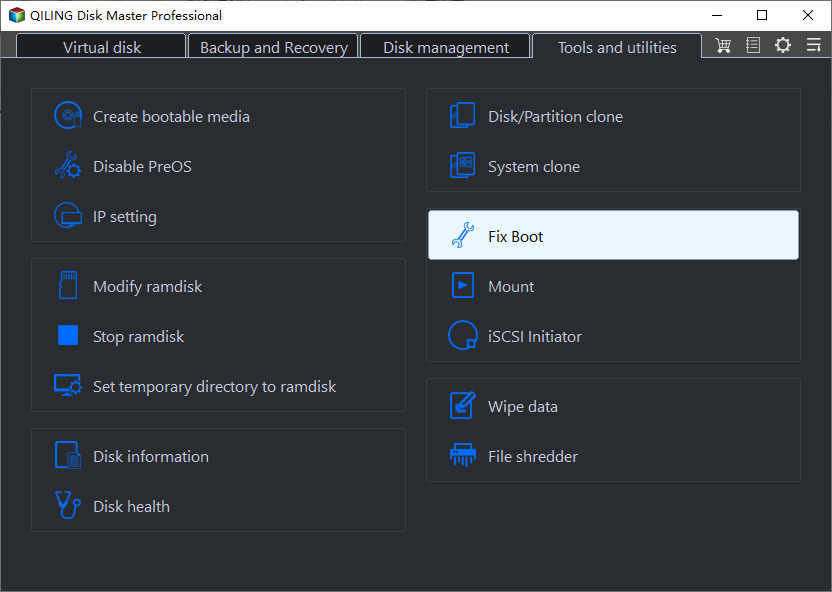
Step 4. The computer will enter WinPE desktop, and by clicking "Fix boot" in the tools tab, you can select the system you want to repair.
Step 5. Wait a moment, and you will receive an alert that the system has been successfully repaired.
Related Key Features of Qiling Disk Master
The Qiling Disk Master can assist in various scenarios, including rebuilding the Master Boot Record (MBR) using bootable media, apart from that. It also offers support in other situations.
- To safely adjust the boot order, set the Solid-State Drive (SSD) as the primary boot drive, ensuring the computer boots from the correct device and preventing potential data loss or system crashes.
- Repair computer UEFI boot errors in Windows 11/10/8/7
- Boot from USB on Windows 11
Thus, if you are experiencing annoying boot issues, install this powerful software and let Qiling Disk Master help you out:
Method 2. Rebuild MBR via Bootable Media
You may accidentally corrupt the system boot file in the MBR disk, causing the hard drive to fail to boot, but rebuilding MBR is a more convenient and less time-consuming solution compared to reinstalling the Windows system.
Qiling Disk Master is a software that offers a range of hard drive management features, including rebuilding the Master Boot Record (MBR), creating bootable media, and repairing boot issues. This tool simplifies the transfer process, saving time and effort with its user-friendly interface and clear solutions.
To rebuild the Master Boot Record (MBR) using Qiling Disk Master, follow these steps. First, download and install Qiling Disk Master on your computer.
Step 1. Create a WinPE bootable disk
- Launch Qiling Disk Master, click "Bootable Media" on the toolbar, and select "Create bootable media".
- Click "Next" to finish the process.
Step 2. Boot Qiling Disk Master Bootable USB
- Connect the bootable USB or CD/DVD to your PC.
- To enter the BIOS screen, press F2 or Del when restarting the computer. Once in the BIOS, set the boot order to "Removable Devices" or "CD-ROM Drive". After doing so, the computer will automatically run Qiling Disk Master when booted.
Step 3. Rebuild MBR
- Click "Toolkit" and choose "Rebuild MBR".
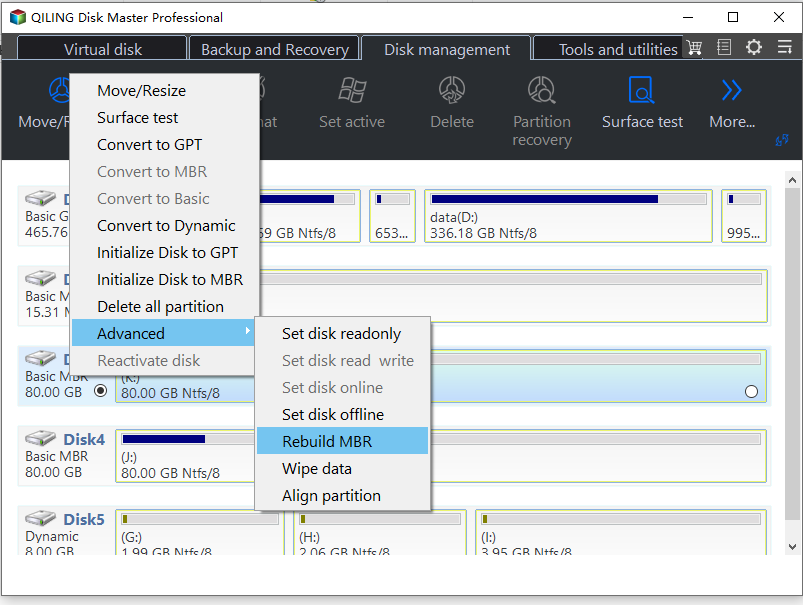
- To fix the MBR, select the disk and the type of MBR, then click "Rebuild".
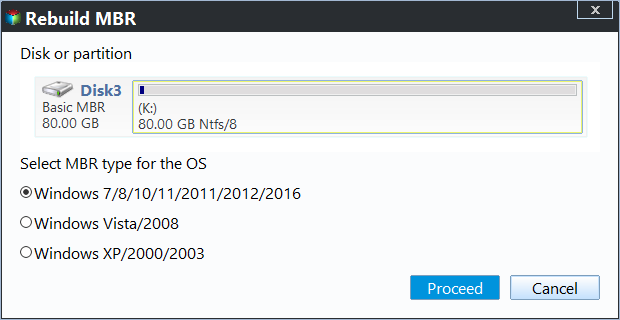
- The message indicates that the Master Boot Record (MBR) has been successfully rebuilt on the disk labeled as "Disk X".
Method 3. Change BIOS Boot Order
To change the boot order in the BIOS setup utility, you'll need to access the BIOS settings, which is usually done by pressing a key such as F2, F12, or Del during the boot process. Once in the BIOS, look for the "Boot Order" or "Boot Priority" section and select the new drive as the first boot device. Save the changes and exit the BIOS settings. This should allow your computer to boot from the new drive.
Step 1. To access the BIOS settings, you need to restart your computer and then press a specific key (usually F2, Del, F8, F10, or F12) repeatedly as the computer boots up. The key you need to press may vary depending on your computer model, so you might need to try a few different keys to find the one that works for you.
Step 2. Navigate to the Boot tab, use the arrow keys to change the order.
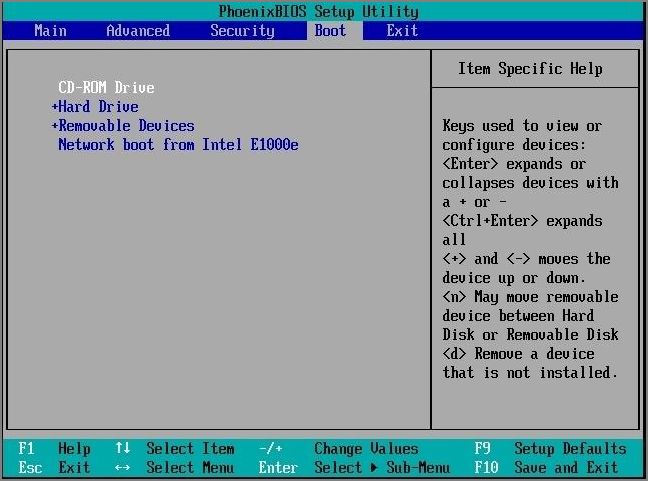
Step 3. Save these settings and then restart the computer.
To fix the "boot device not found" error, you can try booting your computer from a different device, such as a USB drive or CD/DVD. If that doesn't work, you can try resetting the BIOS settings to their default values, or updating the BIOS to the latest version.
[Fixed] Boot Device Not Found Error in Windows 10/8/7
When restarting your computer, a "boot device not found" error may occur. However, there are five proven ways to fix this issue, which can be used to resolve the problem.

Method 4. Enable Windows Computer Repair Option
If you're unable to boot from a hard drive after setting the boot order correctly, it's likely due to a corrupted OS or system disk. You can try using the Windows computer repair feature, which may be able to fix your Operating System. To do this, you can follow these steps:
Step 1. Insert the installation media, such as a CD, DVD, or USB drive, into your computer. Then, restart your computer and configure the BIOS or UEFI settings to prioritize booting from the installation media.
Step 2. In the Windows Setup window, click "Next" and then select "Repair your computer" followed by "Troubleshoot" to access the advanced options window.
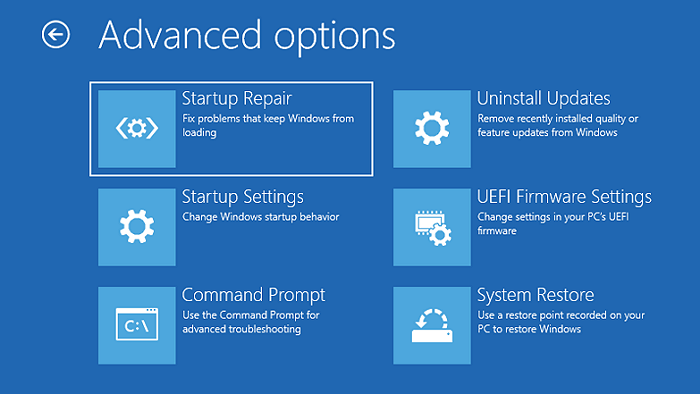
Step 3. If the "Startup Repair" feature can't automatically fix the issue, you can try using the "System Restore" feature instead. This can potentially restore your computer to a previous working state, resolving the problem.
Method 5. Run chkdsk to Repair Corrupted Disk
CHKDSK, short for "check disk," is a Windows utility that scans your hard drive, repairs errors, and detects bad sectors. It can be used to repair your computer and make it bootable, and can be accessed through specific commands.run chkdsk to check and repair the drive on your own:
Step 1. Boot from a Windows install disc and select the preferred language, time, and keyboard input options.
Step 2. To repair your computer, click the "Repair your computer" option, locate the Windows installation drive, which is typically labeled as C:\, and then click "Next" to proceed.
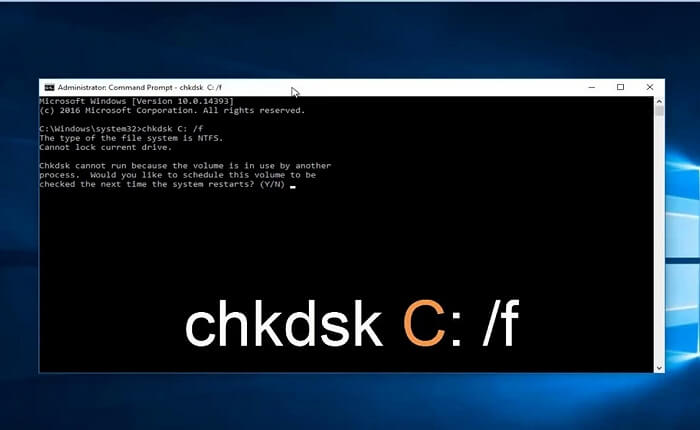
Step 3. To recover your system, go to the "System Recovery Options" box, select Command Prompt, and type the command: `
chkdsk C: /f The command line to run the command prompt as administrator is: `C:\Windows\System32\cmd.exe /k "C:\Windows\System32\cmdkey.exe /add MACHINE=your_server_name /user:your_username /pass:your_password /store=C:\Windows\System32\cmdkey.
Method 6. Fix BCD Error
Boot Configuration Data (BCD) is a crucial file in computing that stores the key boot file, allowing you to boot from your hard drive. If BCD becomes corrupted, you may be unable to boot from the hard drive. However, you can run a command to repair the BCD error and resolve the issue.
Step 1. Press the "Windows +R" keys to open the run window, type "cmd" in the box, and press "Enter" to open the Command Prompt.
Step 2. Write the following CMD and press "Enter" for each:
- Bcdedit /export C:\BCD_Backup
- ren c:\boot\bcd bcd.old
- Bootrec /rebuildbcd
Step 3. Type exit to quit and reboot your computer.
Follow these steps to resolve a hard drive boot problem:
Why Hard Drive Won't Boot
The hard drive won't boot problem can be caused by a variety of reasons, making it a fragile computer accessory. After learning how to solve this issue, it's essential to understand the underlying causes, which can include hardware failures, software glitches, or physical damage to the drive. Understanding these reasons can help in taking preventive measures to avoid such problems in the future.
Power issue: If the hard disk won't start and the cables are damaged, it's often easier to replace them rather than trying to repair the connections to the hard disk.
Wrong boot sequence: If you haven't changed the boot order after moving your system to a new hard drive, your BIOS can't find the new bootable drive, causing the hard drive to be unbootable.
Damaged hard drive: A damaged hard drive can cause a system to not boot due to logical issues or physical corruption, requiring professional repair. Regular backups can help prevent data loss in such situations.
Bad sectors or corrupted boot files: If there's a bad sector on your hard drive or a virus corrupts the boot file, it can prevent the hard drive from booting.
Undone OS update: If you don't update your hard disk driver on time, it may cause boot issues, which can be resolved by updating the driver to the latest version.
Conclusion
We've discussed five ways to fix a hard drive that won't boot, including using Qiling Disk Master, a versatile tool for disk management that can also help with many boot problems. The issue often occurs due to various reasons, which we've explained comprehensively. Qiling Disk Master is the most effective solution and can provide practical tools for many boot issues, making it a reliable software to download and use.
FAQs About How to Fix Hard Drive Won't Boot
If you're still experiencing issues with your hard drive not booting, you can refer to this FAQ section for answers to your questions.
1. What are the signs your hard drive won't boot?
If your hard drive fails to boot in Windows, you may experience symptoms such as the Windows logo not appearing, the Windows loading screen freezing, or the computer crashing during boot. The hard drive may also produce unusual noises, such as grinding, clicking, or whirring sounds, or it may become very hot.
- Overheating.
- Innormal sounds.
- Blue Screen of Death
- Corrupted files or folders.
- Significant slowdowns.
- Receive error messages.
- System crashes.
2. How to fix "Disk boot failure" in Windows 10?
Based on the common reasons for disk boot failure, you can fix disk boot failure in Windows 10 by changing the boot order in BIOS, repairing the corrupted disk, rebuilding MBR, and removing newly installed hardware. To do this, you can change the boot order in BIOS, run the built-in Check Disk utility to repair the corrupted disk, use the Command Prompt to rebuild the Master Boot Record, and safely remove any newly installed hardware, such as a USB drive or external hard drive, that may be causing the issue.
Step 1. To troubleshoot the issue, remove any newly added hardware, reboot the computer, and verify if the problem persists. This step is crucial to determine if the hardware is causing the problem.
Step 2. Check the cables and jumpers of the Windows system drive.
3. How to fix the hard drive detected in BIOS but won't boot?
If your hard drive can be detected in the BIOS but won't boot, it's likely due to a missing driver letter or an incompatible file system. To resolve this issue, you'll need to format the hard drive, which involves erasing all data and reinstalling the operating system. This process provides you a clean slate, allowing you to start fresh and ensure that the hard drive is properly configured to work with your system.
Step 1. Back up your hard drive and launch Qiling Disk Master.
Step 2. Right-click the target hard drive, choose "Format," and then modify the partition label, file system, and cluster size.
Step 3. To proceed, click the "Proceed" button to format the hard drive to the right file system. Then, select "Yes" in the warning window.
Related Articles
- How to Copy Dynamic Volume
- What Is NTFS File System and Do I Need It? [Check The Answer Here]
- Windows 10 Won't Boot After Update? Easy Fixes
- How to Perform Xbox Series S Internal SSD Upgrade💡
- How Do I Format a Disk in Windows 10? Follow and Learn How To [Beginners' Guide]
Formatting a disk on Windows 10 and other modern operating systems can be done efficiently with reliable solutions. Whether you're a beginner or experienced, this page will guide you through the process, providing you with a straightforward and successful disk formatting experience. - How to Decrypt and Format Encrypted SD Card [2026 Updated]
When your SD card gets encrypted, you cannot directly format encrypted SD card. You'll have to decrypt the SD card first and then format it. On this page, you'll learn the full process of decrypting SD card even without a password and format the encrypted SD card to a normal state again.
Products
Articles & Tutorials
- Data Recovery
- Data Backup
- File Recovery
- File Backup
- System Backup and Restore
- Disk and Partition Clone
- Technical articles
- Mobile articles
- Disk Master Help
- Windows Data Recovery Tutorials
- Windows Secure Delete Tutorials
- Windows Partition Management Tutorials
- Windows File Backup and Restore Tutorials
- Windows System Backup and Restore Tutorials
- Windows Disk Backup and Restore Tutorials
- Windows Clone Tutorials