How to Change Drive Letter [Full Tutorial]🔥
Windows typically assigns drive letters to partitions, with A and B reserved for floppy and tape drives, C for the system partition, and other partitions on hard drives, USB drives, optical drives, or card readers assigned a letter by Windows.
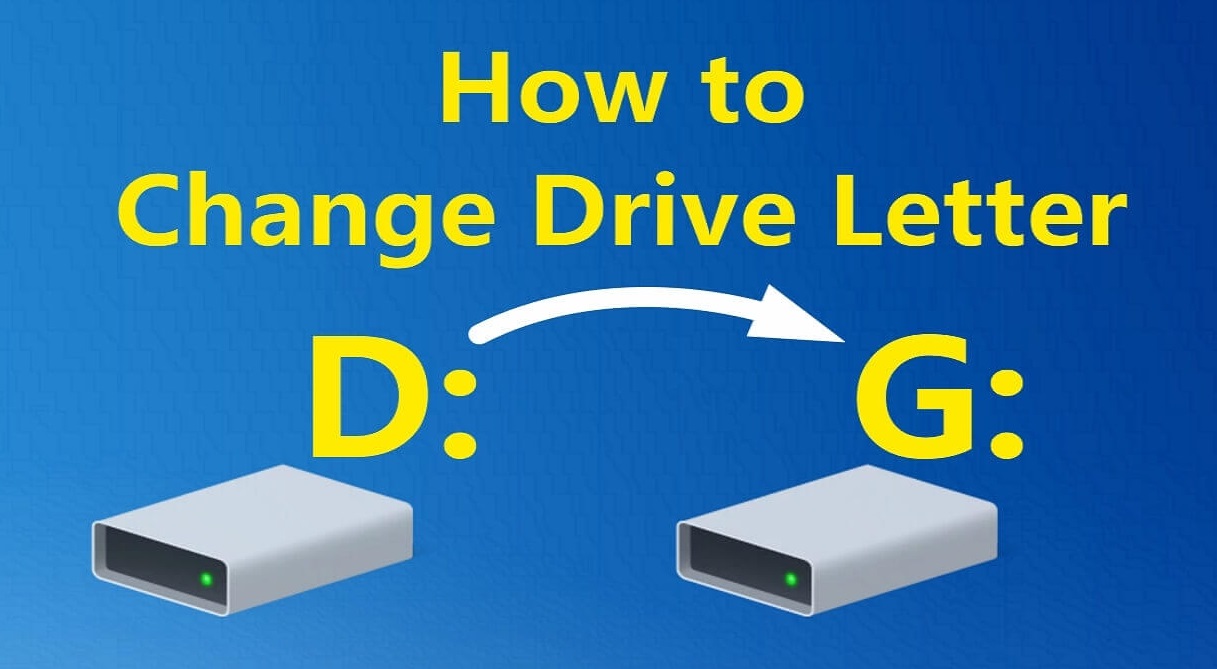
Assigning letters to drives in alphabetical order is an easy way to keep them organized, but in Windows, the letters allocated to hard disks, optical drives, and USB devices are not fixed. For various reasons, you may want to change the drive letter allocated to a particular device.
Changing a drive letter can make it easier to recognize your programs or personal files, and it's also necessary when an external drive is assigned a letter that's already in use. To learn more about changing drive letters for your PC or laptop, read this article from Qiling.
How to Change Drive Letter in 5 Ways
For convenience or to troubleshoot unique situations, you can learn how to operate by following this guide.
Method 1. Use Qiling Disk Master
To easily and quickly change drive letters, consider downloading Qiling Disk Master, a professional and dependable third-party tool that provides the necessary features. This tool allows you to change drive letters on Windows 11/10/8/7.
To do it without effort, download the software now and follow the steps below.
Step 1. Run Qiling Disk Master, right-click the target partition, and select "Change Drive Letter" from the context menu.
Step 2. Choose a drive letter from the drop-down menu for the partition.
Step 3. Waiting for a memont, it will change the drive letter of the selected partition.
This software not only allows you to change a drive letter, but also offers more advanced features such as partitioning a hard drive, cloning a disk, migrating the operating system, resetting a Windows 10 password, and repairing a boot. It's a convenient tool to have.
The article discusses the importance of sharing the article on social media to help more people. It emphasizes that sharing the article will allow more people to read and learn from the content, which can have a positive impact on their lives.
Method 2. Use Disk Management
A built-The Disk Management tool, provided by Microsoft, allows users to change drive letters, among other functions, making it suitable for those new to Windows.
Step 1. Hit "Windows + R" to open the Run box.
Step 2. Type in diskmgmt.msc and hit "Enter" to open Disk Management.
Step 3. Select the drive you want to change the letter of, right-click on it, then choose "Change Drive Letter and Paths" from the context menu.
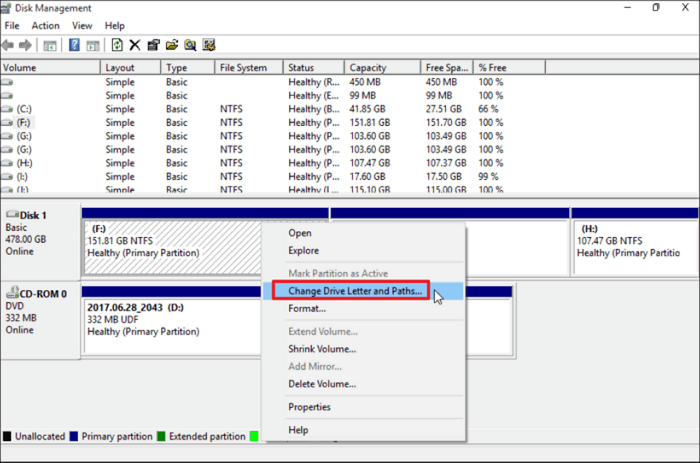
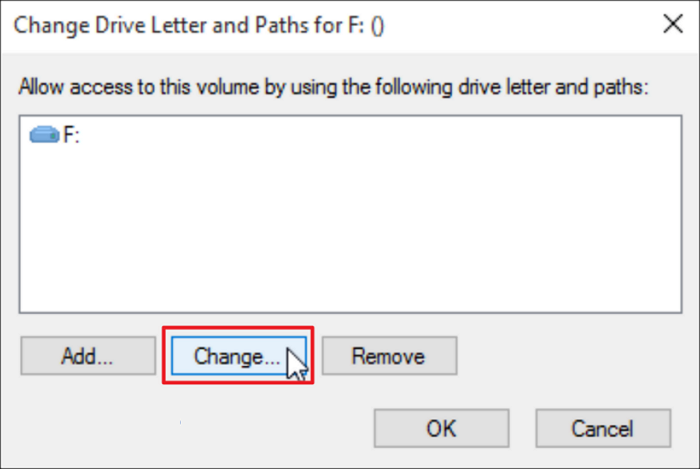
Step 4. Click "Change", and another window will appear.
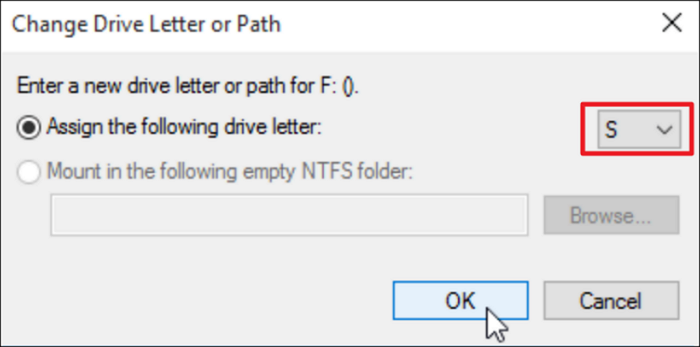
Step 5. Please select a drive letter from the list and click "OK".
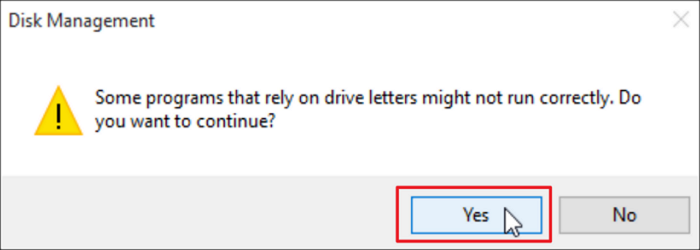
Step 6. Confirm the message and click "Yes".
Method 3. Use PowerShell
To change a drive letter using PowerShell, you can use the "Get-PSDrive" command to identify the drive you want to change, and then use the "Set-PSDrive" command with the "-Name" and "-PSProvider" parameters to specify the new drive letter. For example, if you want to change the drive letter of the "C" drive to "D", you would use the command "Set-PSDrive -Name C -PSProvider FileSystem -Root D:" to set the new drive letter. This process requires only two commands and is a straightforward way to change a drive letter using PowerShell.
Step 1. To access Windows PowerShell, open PowerShell, press "Windows + S" to open the search box, and type in "Windows PowerShell" to find and open it.
Step 2. Right-click Windows PowerShell, and click on "Run as administrator".
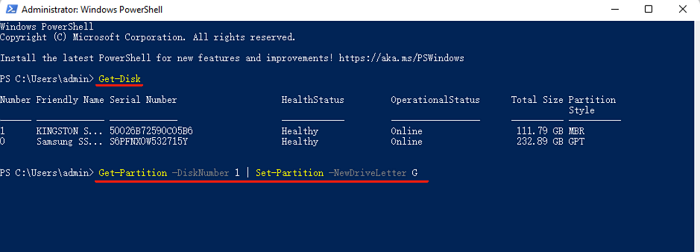
Step 3. Type Get-Disk and press "Enter".
Step 4. To assign a drive letter to a drive, select the drive in File Explorer, type the command `mountvol x: /d` (where "x" is the desired drive letter) in Command Prompt, and press "Enter" to assign the drive letter to the selected drive.
Get-Partition -DiskNumber 1 | Set-Partition -NewDriveLetter G
(Replace "1" with another number of the drive you want to format. Change the letter "G" as you prefer.)
Method 4. Use Command Prompt
To change drive letters using the Command Prompt, you can open the Command Prompt, type `diskpart`, and press Enter. Then, type `list disk` and press Enter to view a list of available disks. Select the disk you want to change by typing `select disk #`, where `#` is the number of the disk you want to change. Next, type `list partition` and press Enter to view a list of partitions on the selected disk. Select the partition you want to change by typing `select partition #`, where `#` is the number of the partition you want to change. Finally, type `assign letter=X`, where `X` is the new drive letter you want to assign, and press Enter to complete the process.
Step 1. To open the Command Prompt in Windows, press the "Windows" key and the "S" key at the same time, then type in cmd in the search box, and press Enter. This will open the Command Prompt window where you can type commands.
Step 2. Right-click "command prompt", and then click on "Run as administrator".
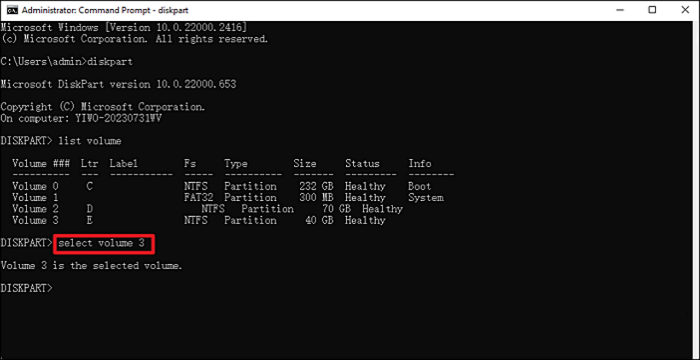
Step 3. In the Command Prompt, type `diskpart` and press Enter. Then, type `list volume` and press Enter, and a list of simple volumes will appear.

Step 4. To choose a volume, type "select volume 3" and press Enter. The volume number is based on your personal preference.
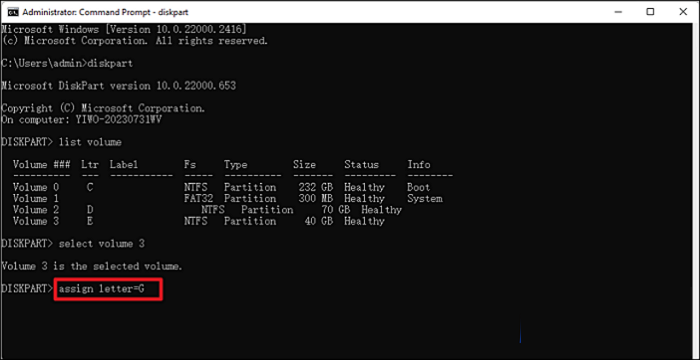
Step 5. Type assign letter=G and hit "Enter". (Choose an available letter from the alphabet yourself.)
Close the Command Prompt tool and restart your computer. The new letter should be assigned to the drive now.
Method 5. Change Drive Letter in Settings
If you don't want to download third-party software or use commands to change a drive letter, you can perform this task in settings, which only takes a few steps. This method is a good alternative if you find other methods difficult to manage.
Step 1. Click "Start" and open Windows settings.
Step 2. To access advanced storage settings, go to System > Storage > Advanced storage settings > Disk & volumes. This path may vary slightly depending on your Windows version.
Step 3. Select the drive you want to change the letter for and click on the "Properties" button.
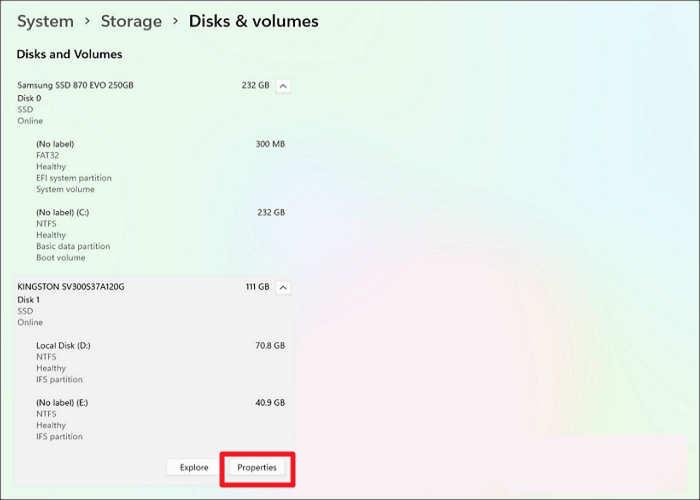
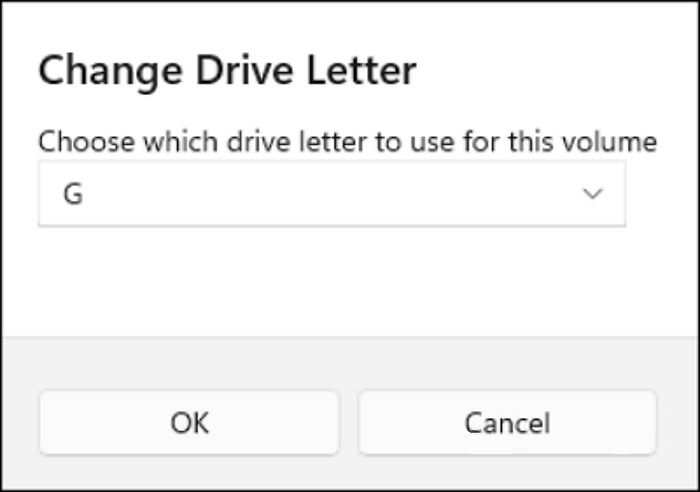
Step 4. To change the drive letter, go to "Computer" or "This PC", right-click on the drive you want to change, select "Properties", then click on the "Change drive letter and path" button, and follow the prompts to select a new letter.
During the drive letter changing process, you might encounter some related problems. Check the two articles below and see if they resolve your doubts.
Is It Safe to Change Drive Letter
It is safe to change a drive letter, but there are risks. Changing drive letters can cause data loss and system instability, as it can lead to incorrect associations between files and their corresponding drive letters, resulting in data being written to the wrong partition. This can lead to data loss and system crashes. Additionally, changing drive letters can also cause issues with system files and programs that rely on specific drive letters, leading to system instability and potential crashes.
- Changing the drive letter of a drive with installed software will likely cause the software to malfunction, potentially requiring a reinstall to function properly.
- The operating system may struggle to locate your files if you change the drive letter, potentially causing confusion about where your files are stored.
Pro Tip: Do Not Change the OS Drive Letter
Changing the drive letter where Windows is installed can lead to serious consequences, including system instability and potential data loss. It's not recommended to alter the drive letter of the operating system drive. This change can cause issues with system files, registry entries, and other critical components, making it difficult to boot or run the system properly.
- If you alter the OS drive letter, Windows won't be able to boot up due to the inability to change encrypted files corresponding to the altered drive letter.
- If you attempt to change the drive letter with Disk Management, you'll receive a message stating that some programs dependent on drive letters might not function properly.
To avoid installing Windows on a different drive with a different letter, it's recommended to perform a fresh install of Windows on the original drive, ensuring a clean and proper installation. This approach is preferred to prevent potential issues and complications.
Conclusion
Changing drive letters can be done using various methods, but using a third-party tool like Qiling Disk Master is the easiest and safest way. Before executing the process, it's essential to be careful with the drives you want to change letters for, as incorrect operations can lead to critical results, including data and program loss.
FAQs on Change Drive Letter
Below are the questions that are frequently discussed. Read and see if they solve your doubts.
1. How many drive letters can Windows have?
Windows has a limited number of drive letters, specifically 26, due to the legacy of floppy drives, which used letters A and B. This limitation restricts the number of drives that can be installed on a computer, making it difficult to assign letters to additional drives.
2. Does changing drive letter affect programs?
Changing the drive letter of a drive that already has Windows or applications installed is not recommended, as it may cause issues with running or finding the drive. It is best to avoid making such changes to prevent potential problems.
3. Can I remove a drive letter?
You can use Disk Management to remove the drive letter, but it will make the partition inaccessible on your computer.
4. Can I change a drive letter without losing data?
Changing the drive letter of an external drive, like a USB drive, is generally safe and won't cause significant problems if you only have the documents you rarely use on it. However, if you have frequently used files on the drive, it's recommended to be cautious and consider the potential consequences before making the change. This is because changing the drive letter can sometimes cause issues with software or system configurations that rely on the original drive letter.
Related Articles
- 3 Ways: How to Increase C Drive Space in Windows 10/8/7
- How to Reset Windows 11 Password with USB - 3 Easy Tips
- How to Format External Hard Drive to FAT32 on Windows 10? [FAT32 Guide]
- How to Format New Hard Drive [QuickStart]
Formatting a new hard drive before storing files is crucial. There are two common ways to achieve this: using professional disk partition software, such as Qiling Disk Master, or utilizing Windows Disk Management. Let's start with the process! - How to Fix Windows 10 Won't Install on SSD | 100 % Working⭐
This guide offers three efficient solutions to resolve the issue of Windows 10 not installing on an SSD, in addition to identifying the underlying reasons that may be causing the problem. - How to Fix Windows 11 Black Screen with Cursor| 100% Works
If your Windows 11 PC is stuck on a black screen with a cursor, you can fix it quickly. Follow this guide to troubleshoot and resolve the issue, getting your PC back to a normal state.
Products
Articles & Tutorials
- Data Recovery
- Data Backup
- File Recovery
- File Backup
- System Backup and Restore
- Disk and Partition Clone
- Technical articles
- Mobile articles
- Disk Master Help
- Windows Data Recovery Tutorials
- Windows Secure Delete Tutorials
- Windows Partition Management Tutorials
- Windows File Backup and Restore Tutorials
- Windows System Backup and Restore Tutorials
- Windows Disk Backup and Restore Tutorials
- Windows Clone Tutorials