Fix Error Code 0x8007025D When Installing Windows
Many users have encountered error code 0x8007025D when attempting to fresh install Windows 10, which can prevent the installation process from completing and the system from being fully operational. This frustrating error can be caused by various factors, and Qiling will explore the possible causes and provide step-by-step solutions to fix it in this article.
What Is the Error Code 0x8007025D?
Any changes made to your computer won't be saved.
Windows Setup
The error code 0x8007025D on Windows indicates that the operating system is unable to install the necessary files for the installation process. This issue can be resolved by ensuring that all required files are available and then restarting the installation. This may involve checking the installation media or the download location for any corrupted or missing files, and then attempting the installation again.
The "Installation was canceled" error occurs when a Windows installation or update process is interrupted, often due to corrupted or missing files, issues with the installation media, or hardware-related problems, preventing the installation from completing successfully.
As an effective and all-Qiling Disk Master is a Windows tool that can help resolve various Windows update and installation errors. It supports multiple operating systems, including Windows 10, 8, 7, and XP, and can fix issues related to Windows updates, installations, and system files.
Causes of the 0x8007025D Error
Error Code 0x8007025D may occur due to various reasons, including issues with Windows Update, corrupted system files, or problems with the Windows Update service. It could also be caused by a conflict with another program or service running on the system.
- Corrupted installation files: The installation files on the USB drive or DVD may be corrupted or incomplete, leading to errors during the installation process.
- Faulty installation media: The installation process may be interrupted due to a faulty or damaged USB drive or DVD used for the installation.
- Bad Sectors on the hard drive(HDD/SSD): Error Code 0x8007025D can occur due to various reasons, including corrupted system files, missing or corrupted registry entries, and bad sectors on the hard drive. This error code can also be triggered by a corrupted Windows Update cache, which can cause issues with installing updates.
- Damaged or corrupted RAM: Random Access Memory (RAM) is a critical component in a computer's functioning, particularly during system installations and updates. A faulty RAM can cause data corruption, system instability, and errors like 0x8007025D, making it essential to ensure the RAM is functioning properly to prevent such issues.
The error code 0x80070005 is typically caused by a permissions issue or a corrupted system file. This can occur when a user tries to access a file or folder that they do not have permission to access, or when a system file becomes corrupted.
How to Repair Error Code 0x8007025D in Windows 10
To resolve Error Code 0x8007025D, try the following steps. You can start by running the System File Checker (SFC) tool to scan and replace corrupted system files.
Way 1. Remove the Connected Device
Remove all connected devices, including USB and external hard drives, from your PC to resolve Windows update issue error code 0x8007025d. A damaged peripheral can interfere with the update installation. Restart your computer after removing all peripherals.
Way 2. Reduce the Partition Size and Format It
During the system update process, you'll need to choose the partition where you want to install Windows. The space required varies, with Windows 10 needing less than 20 GB and Windows 11 requiring at least 64 GB.
However, the larger the partition is, the more likely it may be corrupted. Don't panic. As a versatile partition and disk management expert, Qiling Disk Master Professional can help you resize the system partition and format it.
Reduce the System Partition:
Step 1: Locate and select target partition to shrink
Go to the Partition Manager section, right-click on the partition you want to shrink and select "Resize/Move" to shrink it.
Step 2: Adjust to shrink partition
To shrink a partition, use your mouse to drag the end of the target partition to a smaller space. This will reduce the partition's size and free up space for other uses.
You can also adjust the partition size box to make the target partition smaller.
Step 3: Execute operation
Click the "Proceed" button to keep all changes.
Format the System Partition:
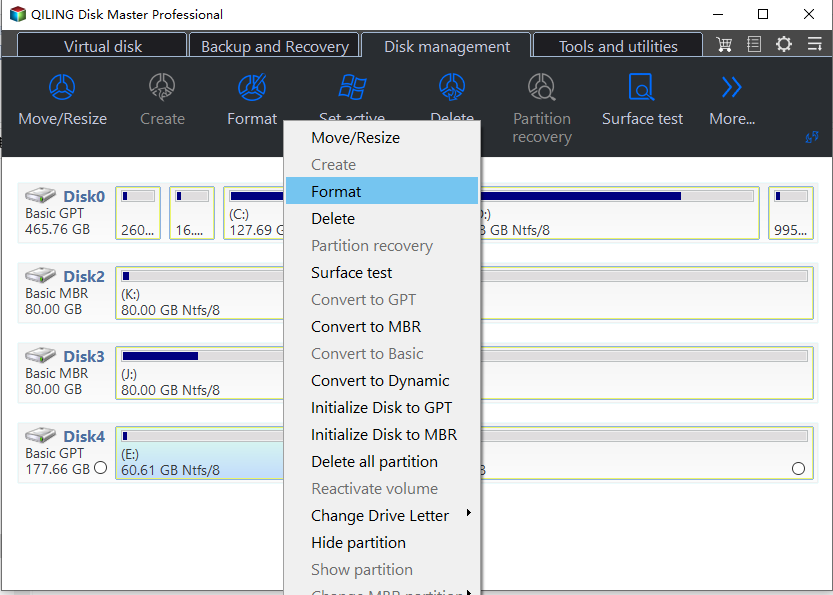
Step 1. Launch Qiling Disk Master, right-click the partition on your external hard drive/USB/SD card which you want to format and choose the "Format" option.
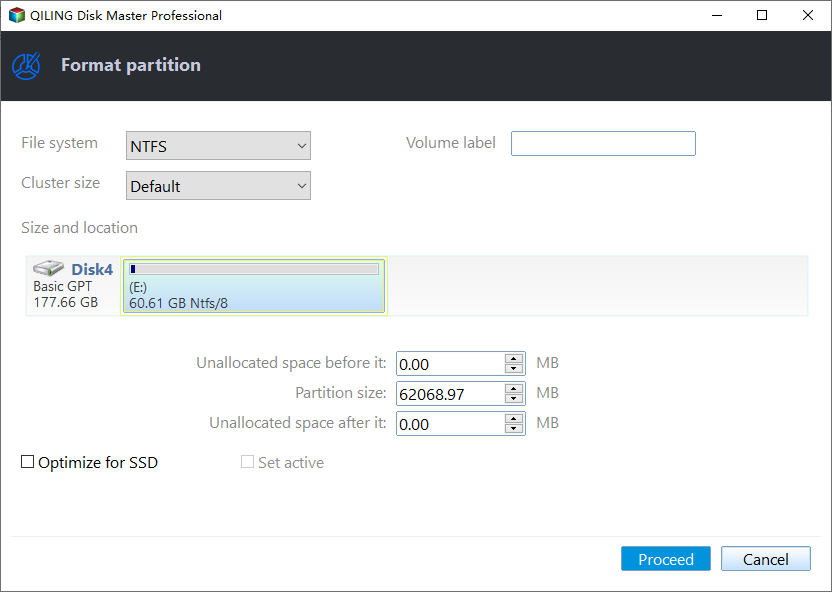
Step 2. Assign a new partition label, file system (NTFS, FAT32, EXT2, EXT3, EXT4, exFAT), and cluster size to the selected partition.
Step 3. Proceed by clicking the button to initiate the formatting process on your external hard drive, USB, or SD card.
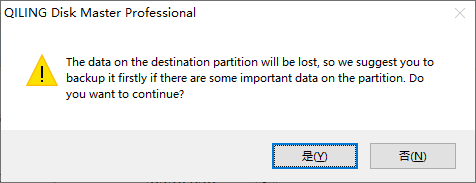
Step 4. In the Warning window, click "Yes" to continue.
Way 3. Run the Windows Update Troubleshooter
To fix the "Windows cannot install required files" error on your Windows 10 computer, run the Windows Update Troubleshooter. This tool can identify and resolve any issues with Windows Update, which may be preventing the installation of required files.
Step 1. Press the Windows key + I to open the Settings app, then select Update & Security.
Step 2. To resolve the issue, go to the Troubleshoot menu, select Additional Troubleshooters, then under the Get up and running section, choose Windows Update and click Run the troubleshooter.
Way 4. Download a Fresh Windows 10 Image File
The error code 0x8007025d may be caused by damaged Windows image files. To resolve this issue, you can download a fresh Windows 10/11 image file by following these steps:
- Go to the official Microsoft website, and switch to the "Create Windows 10/11 installation media" > "Download tool now" tab.
- Run the downloaded Media Creation Tool and select the "Create installation media for another PC" option.
- Follow the on-screen instructions to complete the installation media creation process.
Way 5. Update the Outdated BIOS
If the above solutions cannot solve this error, you can check if your BIOS is not updated to the latest version.
Note: Updating the BIOS can be risky, so it's crucial to follow the manufacturer's instructions carefully and ensure your computer is connected to a stable power source during the update.
Step 1. To find your current BIOS version, you can access the BIOS menu during startup, which can usually be done by pressing a specific key such as F2, F10, or Del, and then look for the version number.
Step 2. To update your BIOS, visit the website of your computer or motherboard manufacturer and download the latest BIOS update specifically designed for your model.
Step 3. Install the BIOS update, reboot, and reset the BIOS settings as per the tutorial.
Conclusion
Error Code 0x8007025D can be a frustrating obstacle during the Windows installation process, but it can be resolved with the right troubleshooting steps. By checking the installation media, verifying hardware components, updating drivers, and performing a clean installation if necessary, you can address the underlying issues causing this error and successfully install Windows. Qiling Disk Master can also be a helpful tool in this process.
FAQs of Error Code: 0x8007025d
Error code 0x8007025d can be frustrating, but understanding the possible causes and solutions may help alleviate your concerns. This error code is often associated with issues related to the Windows Update process, and it may occur when the system is unable to access the necessary files or folders.
1. How can I fix the Windows 11/10 installation error?
If you're experiencing issues with installing or updating Windows 10/11, there are some general fixes you can try. These may resolve common problems and get your system up and running smoothly again.
- Verify that there is sufficient room on your device.
- Repeatedly run Windows Update
- Examine third-party software and obtain any necessary updates.
- Disconnect any additional hardware.
- Check for the Device Manager.
- Eliminate any third-party security software.
- Examine the hard drive errors.
2. How to get rid of the Windows update error?
Windows users may experience issues during system updates, prompting error messages like "Please wait while we install a system update." To resolve this, users can try checking their internet connection, running the troubleshooter, initiating Windows Automated Startup Repair, or updating Windows in Safe Mode.
3. How do I manually update Windows 10?
To manually check for updates, select the Start button, then select Settings > Update & Security > Windows Update. Alternatively, you can download the Update Assistant from the Microsoft software download website to assist you in updating to the most recent version of Windows 10.
Related Articles
- How to Format Maxtor External Hard Drive [2024 Guide]
- Tutorial | Separate OS from Programs Without Losing Data
- How to Upgrade Xbox 360 Hard Drive to SSD [Easy Tutorial]
- How to Fix PS4 Can't Read USB [Quick & Easy]
If your PS4 can't read your external USB drive. We've got solutions for you to try and fix the issue. - Hide System Reserved Partition with A Simple Way
System reserved partition contains boot configuration data and other essential data. It is a good idea to hide them to protect information. Refer to this post, it will demonstrate 3 methods helping you perform this operation. - How to Fix Hogwarts Legacy Blue Screen [Step-by-Steo Guide]
This article will lead you to analyze the causes of Hogwarts Legacy blue screen. And you can find six ways to fix Hogwarts Legacy blue screen and improve gaming experiences.
Products
Articles & Tutorials
- Data Recovery
- Data Backup
- File Recovery
- File Backup
- System Backup and Restore
- Disk and Partition Clone
- Technical articles
- Mobile articles
- Disk Master Help
- Windows Data Recovery Tutorials
- Windows Secure Delete Tutorials
- Windows Partition Management Tutorials
- Windows File Backup and Restore Tutorials
- Windows System Backup and Restore Tutorials
- Windows Disk Backup and Restore Tutorials
- Windows Clone Tutorials