How to Format Hard Drive in Windows 7? [Detailed Tips]
Key Takeaways:
✔️What you can find: You can format a hard drive in Windows 7 using two free methods: Qiling Disk Master Free and Windows Disk Management. These tools allow you to erase all data on the drive and prepare it for new storage or operating system installation.
✔️What you need to prepare: Download the free software or run the built-in utility and back up your important data.
? Read Time: 3 Mins.
Page Content
When and Why Format Hard Drive in Windows 7?
Windows 7 Formats You Can Choose
To format a hard drive on Windows 7 using a free disk formatting utility, download and install a free disk formatting software such as DBAN (Darling Beagle and Nuke) or DiskGenius. Once installed, launch the software and select the hard drive you want to format.
Formatting Hard Drive Windows 7 by Windows Disk Management
In the End
Formatting Drive Windows 7 FAQs
When and Why Format Hard Drive in Windows 7?
Formatting a hard drive in Windows 7 involves erasing all data on the drive and reinstalling the operating system from scratch. This process can be performed for various reasons, including fixing a corrupted system, removing viruses, or simply starting with a clean slate. To format a hard drive in Windows 7, users can follow a series of steps, including backing up important files, selecting the correct drive to format, choosing a format type (quick or full), and confirming the format.
- If you sell your computer, format the hard drive to remove all your data.
- If your computer is running slowly, formatting the hard drive may help improve performance.
- Formatting the hard drive will also eliminate any viruses or malware that might be present.
- Notice:
- To format a hard drive in Windows 7, first back up any important data to an external drive or cloud storage. Then, go to the Start menu, click on Computer, right-click on the hard drive you want to format, and select Format. Follow the prompts to complete the formatting process, which will erase all data on the drive.
Windows 7 Formats You Can Choose
Windows 7 offers several drive format options, including FAT32 and NTFS, each with its own advantages and disadvantages.
FAT32 is a widely compatible file system used for removable drives, but it has a 4GB file size limit, which can be a limitation for larger files.
NTFS file system is a Windows-specific file system that has a high file size limit, but is incompatible with older versions of Windows.
For most users, NTFS is the best option.

The choice of file system depends on the specific needs of your device or system. NTFS is a good choice for Windows systems, while FAT32 is suitable for older systems or devices with limited storage.
This page compares four common file system formats - NTFS, FAT32, exFAT, and EXT2/3/4 - to help you choose the right one for your storage devices. The comparison will guide you in selecting the best file system format for your needs.

How to Format Hard Drive Windows 7 with Free Disk Formatting Utility
Qiling Disk Master Free is a safe partition manager that allows easy formatting of hard drives to FAT32, EXT2, EXT3, and EXT4 in Windows 7/8/8.1/10/11.
Download a free disk formatting software:
Step 1. Right-click the hard drive partition and choose the "Format" option.
Step 2. In the new window, set the Partition label, File system, and Cluster size for the partition.
Step 3. Click the "Proceed" button to start formatting the hard drive partition.
Step 4. You can see a warning window, click "Yes" to continue.
Formatting Hard Drive Windows 7 by Windows Disk Management
Windows 7 has a built-To format a hard drive in Windows 7, you'll need to access the Disk Management tool. First, press the Windows key + R to open the Run dialog box, type "diskmgmt.msc," and press Enter.
Step 1. Right-click the Windows icon from the toolbar, and select Disk Management.
Can't open Disk Management? Read on: Disk Management Windows 11
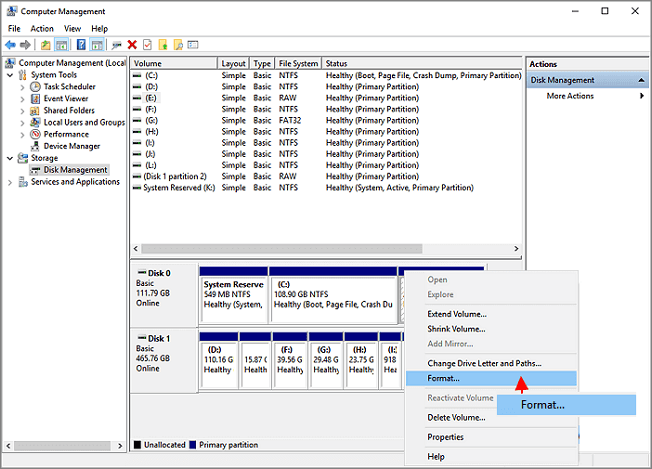
Step 2. In Disk Management, right-click the hard drive you want to format and select "Format" from the list.
Step 3. In the Format screen, name your volume and choose between File system and Allocation unit size.
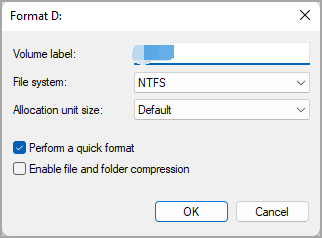
Step 4. Click Proceed to continue.
To format a new hard drive in Windows 7 using File Explorer, follow these steps: open File Explorer, right-click on the new hard drive and select "Format" from the context menu. In the Format dialog box, select the file system (such as NTFS or FAT32) and choose the allocation unit size.
Video Guide: How to Format a Hard Drive in Windows 7
In the End
When formatting a hard drive for Windows 7, it's essential to consider a few key points. First, ensure that the drive is properly initialized for Windows 7, which may involve formatting the drive with the NTFS file system.
- Windows 7 requires a minimum of 20 GB of free space on your hard drive to install and run properly.
- Before formatting your hard drive, make sure to back up any critical files or data you don't want to lose. This will ensure that your important information is safe and can be restored if needed.
- You can use two different methods to format your hard drive in Windows 7: Qiling Disk Master and Disk Management.
If you're formatting an external hard drive, we recommend using Qiling Disk Master as it offers more flexibility and options, making the process simpler.
Formatting Drive Windows 7 FAQs
Learn more about formatting a disk in Windows 7:
1. How do I delete everything on my computer Windows 7?
Deleting everything on your computer can be a daunting task, but you can start by using the built-in "Disk Cleanup" tool in Windows. This tool helps you delete temporary files and other junk that takes up space on your hard drive, making it easier to get rid of unwanted data and free up space.
- To clean up your computer, search for "Disk Cleanup" in the search bar and click on it to open it.
- Choose which drive you want to format.
2. To wipe your hard drive and reinstall Windows 7, you'll need to create a bootable USB drive or CD with the Windows 7 installation media, back up any important files, and then follow these steps:
Create a system image before wiping the hard drive:
Step 1.Use a tool to create a system image.
Step 2.Wipe your hard drive with Qiling Disk Master.
Once you've completed the preparation steps, restart your computer and boot from the Windows 7 installation disc or USB drive to initiate the clean install process.
Related Articles
- [Solved] Secure Boot Violation Invalid Signature Detected
- How to Install Windows 10 from USB Drive [Step-by-Step]
- How to Clone Windows 7 to USB [Full Guide]
- PS5 SSD Temperature Test: Do You Need A Heatsink?
- Download Partition Magic Server 2022/2019 and Optimize Server Disk Performances [2024 Guide]
This page introduces reliable partition magic server software that helps efficiently manage and optimize disk performance on Windows Server 2022/2019, making it easier to manage your server's disk performance. - Is Partition Magic Server Edition Crack Safe? No, You Have a Better Choice
To manage your server partitions and disk drive space effectively, you'll need a reliable partition magic server software. While cracked versions may seem appealing, they are not safe to use. This will ensure your server's disk drives are managed safely and efficiently.
Products
Articles & Tutorials
- Data Recovery
- Data Backup
- File Recovery
- File Backup
- System Backup and Restore
- Disk and Partition Clone
- Technical articles
- Mobile articles
- Disk Master Help
- Windows Data Recovery Tutorials
- Windows Secure Delete Tutorials
- Windows Partition Management Tutorials
- Windows File Backup and Restore Tutorials
- Windows System Backup and Restore Tutorials
- Windows Disk Backup and Restore Tutorials
- Windows Clone Tutorials