Fixed: WD My Passport Ultra Not Showing Up/Detected
Try restarting your computer and WD Passport Ultra, then reinsert the drive into your computer. If it still doesn't show up, check the drive's power light and make sure it's turned on."
If your WD My Passport Ultra external hard drive is not showing up, you can try restarting your computer, checking the USB ports, and ensuring the drive is properly connected. You can also try using the WD Discovery software to locate the drive or use the built-in Disk Management tool to initialize the drive.
If your WD Passport Ultra external hard drive is not showing up, ! With this guide, you can learn the causes and fixes to resolve the issue on your own. By following the steps outlined, you'll be able to identify and address the problems preventing your external hard drive from being recognized, and get it up and running smoothly again.
If your WD Passport external hard drive is not detected, try restarting your computer, checking the USB port, and updating the WD Discovery software. If it still doesn't work, try using a different USB port or cable, resetting the drive by pressing the reset button, and checking the drive's power source.
Some people may also want to know what causes a wd external hard drive not showing up on their computer, and can continue reading to find out.
Why is My WD Passport Not Showing Up?
After consulting with many experienced users and IT professionals, the common causes of a WD Passport Ultra external hard drive not showing up were identified. These include issues such as the drive not being properly connected, outdated or corrupted drivers, faulty USB ports, or problems with the drive's internal logic board. Additionally, conflicts with other USB devices, incorrect BIOS settings, or even a malfunctioning drive itself could also be contributing factors.
- 1. A faulty USB port or cable, or a damaged USB hub on your computer can prevent your headphones from charging. This could be due to a loose connection, a damaged port, or a malfunctioning cable.
- 2. Corrupted file system or bad sectors makes WD drive unreadable
- 3. No drive letter is assigned to WD Passport drive
- 4. WD drive driver is out of date
- 5. Universal USB controllers drivers are outdated
Some causes of a malfunctioning smart speaker, such as a Google Home or Amazon Echo, may also lead to issues with other devices, such as smartphones, tablets, and smart TVs, due to their interconnectedness and reliance on the same network. This can result in problems with streaming services, voice commands, and overall device functionality.
To fix the issue of your WD Passport Ultra external hard drive not showing up on PC, follow the tutorials below to resolve the problem immediately. The steps will guide you through fixing the errors and getting your drive to appear on your computer again.
Part 1. Check The State of WD External Hard Disk in Disk Management
Connect the WD external hard drive to your computer via the USB cable. Follow steps here to check the state of your WD external hard drive in Disk Management:
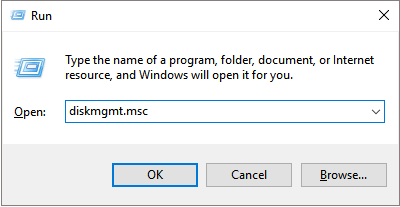
Step 1. Press Windows + R keys, type diskmgmt.msc in the Run box, and click "OK".
Step 2. In Disk Management, locate and check the state of your WD external hard drive.
Part 2. Fix WD My Passport External Hard Drive Not Showing Up Error
Check the state of your not showing up or not detected WD My Passport Ultra external hard drive and refer to the right fix to make your drive work normally again. If your WD My Passport Ultra is not showing up or not detected, check the USB port, restart your computer, and ensure the drive is properly connected.
Fix 1. Check and Fix Corrupted File System/Bad Sector on Not Detected WD Disk
Applies to: To fix a WD Passport external hard drive not showing up due to a file system error or bad sectors, try running a disk check using the built-in Windows tool, Chkdsk. If the issue persists, you may need to format the drive, which will erase all data.
If system files are corrupted or the WD device contains bad sectors, Windows may detect it as "*Others" or RAW, and it may not be visible in File Explorer.
You can use Qiling partition manager software with its Check File System feature to fix corrupted file systems and bad sectors on a WD hard drive. If your Disk Management can detect the issue, this tool can help resolve the problem.
To fix corrupted system files and bad sectors on your WD device, you can try running the built-in Check Disk (chkdsk) utility in Windows. This utility can scan your hard drive for errors and fix them automatically.
After this, you can check the drive. If your files were missing, move to Part 3 and apply reliable data recovery software to bring back all your WD external hard drive data.
Fix 2. Add New Drive Letter to Make WD Passport External Hard Drive Showing Up
Applies to: Fix WD passport external hard drive not showing up due to the drive letter confliction.
If your Western Digital (WD) external hard drive shows up as "New Volume" with no drive letter in Disk Management, it won't be visible in File Explorer. this is a normal issue that can be easily resolved. You can simply assign a drive letter to the WD drive in Disk Management, and it will then be accessible in File Explorer.
If your WD Passport is no longer detectable or accessible in your Windows PC, you can try rewriting the drive letter to make it detectable again. To do this, you can right-click on "This PC" or "Computer" and select "Manage".
Step 1. To open Disk Management, press the Win + R keys, type diskmgmt.msc in the Run dialog, and click "OK".
Step 2. Right-click on the WD drive that's not showing up and select "Change Drive Letter and Paths..." from the context menu.
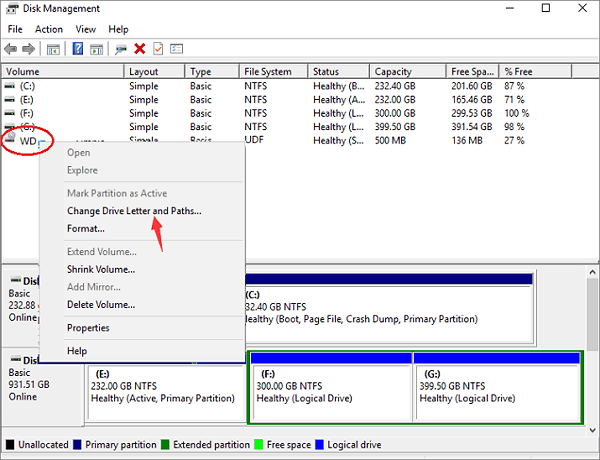
Step 3. Click "Add", set a new drive letter to assign to the WD external drive, and click "OK".
If the WD drive has already been assigned a letter, you'll need to change it by clicking "Change" and selecting a new letter for it. Once you've done this, simply restart your PC and check if you can access the WD external hard drive in Windows File Explorer.
Fix 3. Plug WD My Passport Halfway-in-USB
A user on a forum reported that his computer successfully recognized an external hard drive in a "bizarre way", which he described as a temporary solution. To replicate this, he followed a specific method.
Step 1.Plug the USB cable halfway through any one of your computer's USB ports.
Step 2.Wait for the WD hard drive to show up in File Explorer.
Step 3.When inserting the USB drive, push it all the way into the USB port on your hard drive.
It might be unreasonable, but quite a lot of people solved their problem with this trick. Have a try on it!
Fix 4. Try a Different USB Cable/Port or PC
If your WD hard drive isn't showing up in File Explorer or Disk Management, try swapping the USB cable, plugging it into a different USB port, or testing it on another PC to see if it can be read.
Step 1.Switch a USB port/cable and replug it to your computer.
If the drive can be accessed through a new USB cable or on a different computer, the issue is likely with the original USB cable, not the drive itself.
Step 2. If you're experiencing issues with your WD drive, try reconnecting it to your system via a new USB hub or to a different PC. This can help determine if the problem lies with the drive itself or with the original connection.
- If the WD Passport drive appears, it's the faulty USB hub that's preventing the WD from displaying.
- If the WD passport is not detected on your current or new PC, replace the WD drive with a new one.
Fix 5. Update WD External Device Driver & Reinstall BUS Controllers
When the WD Passport drive is not working, it might be caused by outdated device drivers. To resolve this, update the driver via the Device Manager, the WD support website, or by using a driver update tool such as Driver Booster. This can help ensure the drive is functioning properly.
#1. Download and Install WD Device Driver:
Step 1.Connect the problematic WD external hard drive to your PC.
Step 2.Right-click on the Windows icon and select "Device Manager".
Step 3.To resolve the issue, navigate to Device Manager, expand the Disk Drivers, Portable Devices, Universal Serial USB Controllers, or Other devices sections, and check for any unfamiliar or problematic devices. If you find any, right-click on them and select Uninstall Device to remove them.
See if the WD external hard drive is shown as an "Unknown" device.
Step 4.Right-click on the Unknown or not working WD external hard drive and select "Properties".
Step 5.Go to the Details tab, set Property to "Hardware Ids".
Step 6.Right-click the top Value and click "Copy".
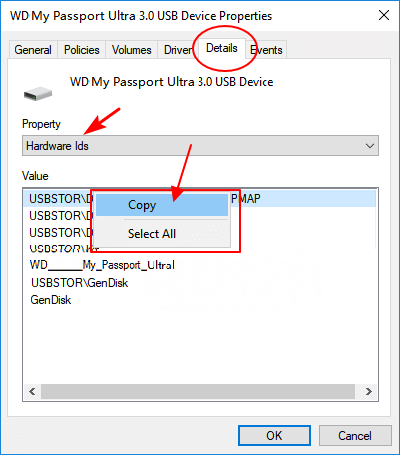
Step 7.Paste it into a browser and search for the correct device driver.
Step 8. To resolve the issue, find and download the correct WD device driver for your PC, and then install it. This should resolve any compatibility problems and ensure your WD device functions properly.
To resolve the issue with your WD My Passport Ultra drive, simply restart your computer, and it should function normally afterwards.
#2. Update WD Device Driver from Device Manager:
Step 1. Right-click on the Windows icon and select "Device Manager".
Step 2. Expand Device Manager and right-click the WD My Passport Ultra drive, selecting "Update driver" from the context menu.
Step 3.Select "Update driver".
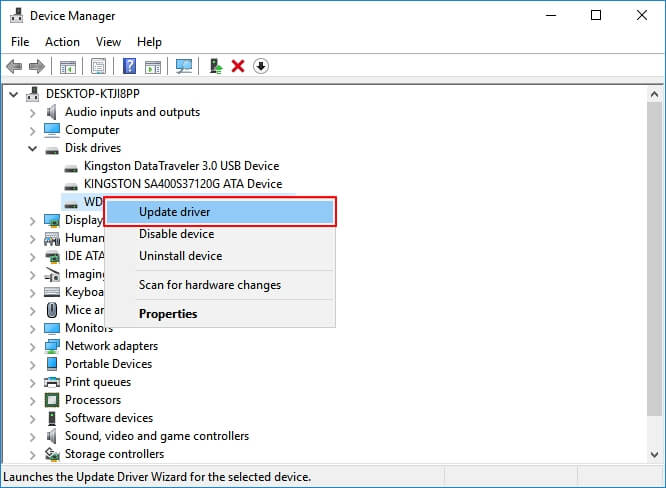
Step 4.To update the driver software for your graphics card, select the option "Search automatically for updated driver software" and let the process complete. This will allow your computer to search for and install any available updates for your graphics card driver.
#3. Uninstall/Reinstall USB Controllers
If your WD Passport is not being detected or showing up, it's possible that the Universal USB Bus Controllers are outdated, causing the issue. In this case, you can try uninstalling and reinstalling the USB controllers to resolve the problem.
Step 1.Right-click on the Windows icon and select "Device Manager".
Step 2. To resolve the issue, go to Device Manager, expand Universal Serial Bus controllers, right-click on the USB controllers of the WD drive, and select "Uninstall device".
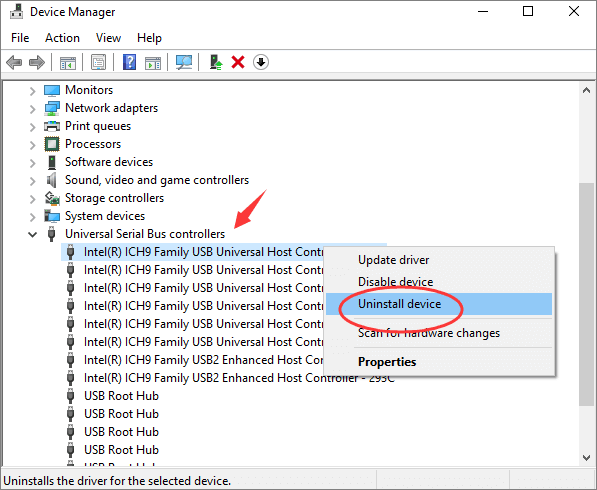
Repeat to uninstall each USB controller one by one.
Step 3. To resolve the issue, simply restart your computer and Windows will automatically reinstall the USB controllers of your WD drive. This should resolve the problem and allow your WD drive to function properly again.
After this, you shall be able to visit and access saved data on your WD Passport Ultra drive normally by then.
- Notice:
- If the WD external hard drive is still not showing up in both File Explorer and Disk Management after trying all these solutions, send your drive for repair as shown in Fix 3.
Fix 6. Send "Unknown" & Not Detected WD External Hard Disk for Repair
If your WD external hard drive shows up as "Unknown" in disk management, you can try sending it for repair as a last resort.
You have two options for this issue:
- If your Western Digital (WD) external hard drive is no longer under warranty, you can send it to a local repair center for repair. This option is available beyond the warranty period, and the repair center will assess and fix the issue with your external disk.
- If you're experiencing issues with your WD external disk and it's still within the warranty period, you can send it back to the manufacturer for repair or replacement, depending on the warranty terms. This option allows you to have the issue resolved without incurring additional costs for parts or labor. The manufacturer will likely provide a prepaid return shipping label to make the process even more convenient.
Part 3. Get Data Off WD External Disk and Format It to Work Again
If your WD external hard drive shows up and you can access the disk again, take the last guide in this part to fully protect your files and make the WD external hard drive viable for saving and editing data again.
#1. Get Data Off WD External Hard Drive
Here are two ways to fully get files from your WD external hard drive: You can use a USB cable to connect the drive to your computer and then transfer the files to your computer's internal storage. Alternatively, you can use a cloud storage service like Google Drive or Dropbox to upload the files from the external hard drive to the cloud, and then access them from any device with an internet connection.
- 1. Open and copy data from your WD hard drive to another storage device as a backup.
- 2. You can recover lost files from a WD drive using Qiling file recovery software. This software is designed to retrieve deleted or lost files from various storage devices, including WD drives.
If you lost some valuable files during the process, Professional file recovery software can scan and bring back your files in just 3 steps, making it easy to recover what you need.
Step 1: Select file types that you want to recover
- To recover lost data, download and install Qiling Data Recovery software on your PC or laptop.
- Connect the external hard drive to your computer.
- Run Deep Data Recovery and select the file types you want to recover. Click "Fast Scan" to proceed.
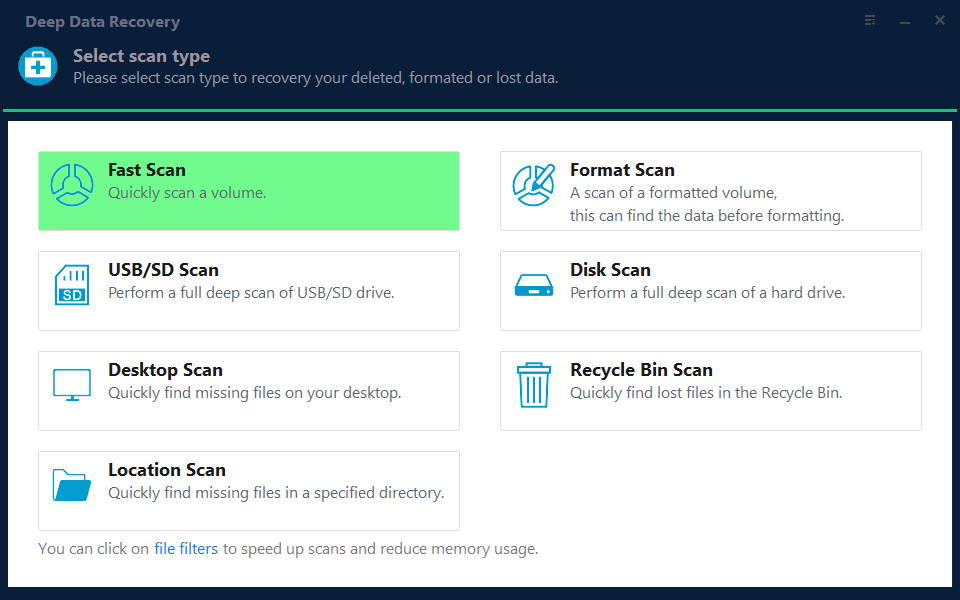
Step 2. Choose and scan the external hard drive
- To recover lost data, select the external drive from the External Drives list, and then click the "Scan" button to initiate the recovery process.
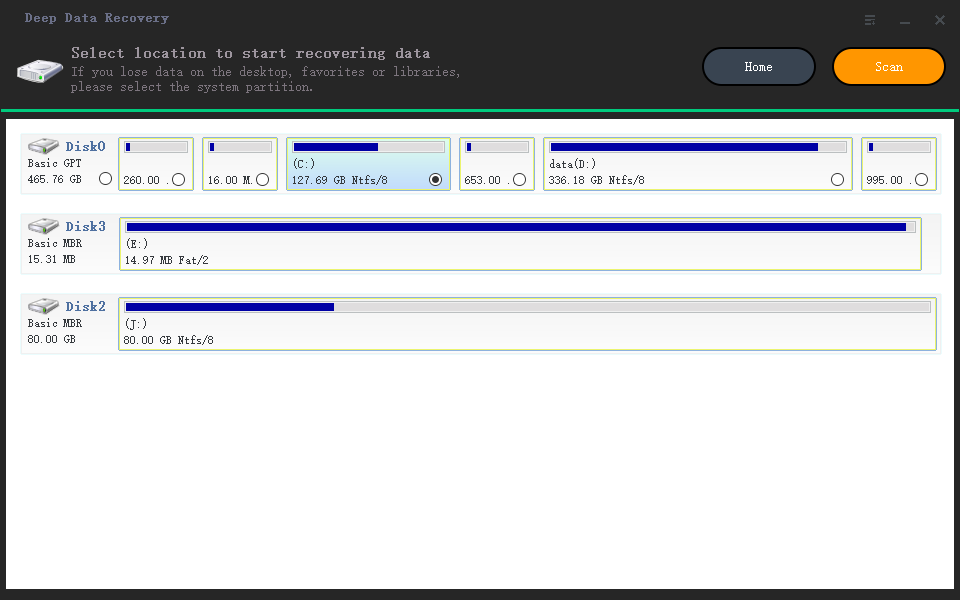
Step 3. Check the scan results
- Qiling data recovery software immediately scans the selected drive for all data, including deleted, corrupted, and existing data.
- The Filter feature allows you to quickly find and view files of a specific type, such as pictures, word documents, excel spreadsheets, pdfs, videos, or emails, by categorizing them for easy access.
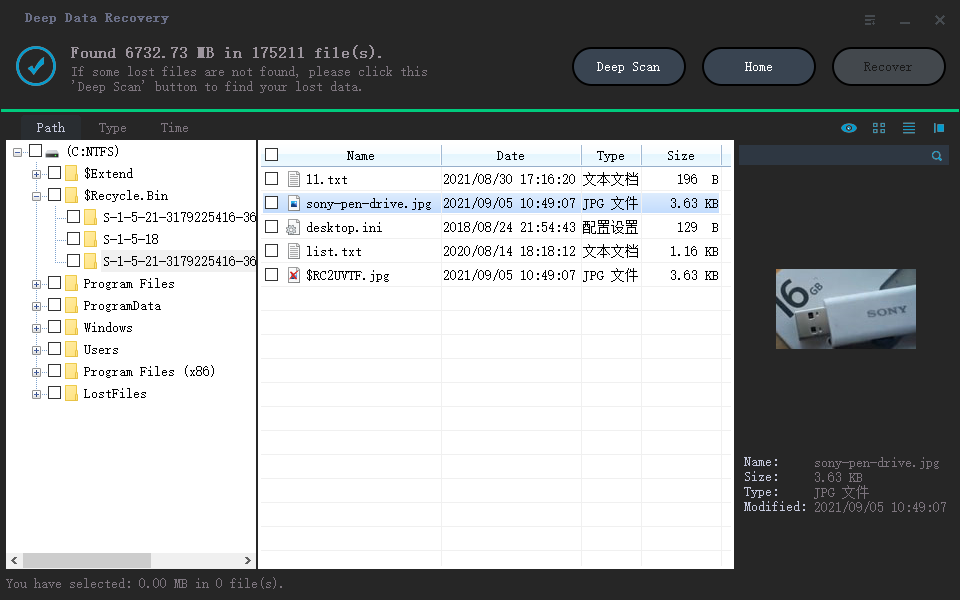
Step 3. Preview and recover data
- Double-clicking a file from the scanned results to preview.
- Choose the files you want and click "Recover".
- To avoid overwriting the original files, it's recommended to save the recovered files to a different drive, such as an external hard drive, USB drive, or a different partition on the same computer. This will ensure that the recovered files are safely stored and can be accessed without any risk of data loss.
Save the recovered files to another secure location, then proceed to format your WD My Passport external hard drive to make it usable again. This will likely involve following the next guide, which will outline the steps to format the drive and restore it to its original state.
#2. Format WD External Hard Drive to Usable
Here, you may also let Qiling Partition Master help. It's easy and efficient in formatting a disk:
Step 1.Launch Qiling Partition Master, click the partition on your external hard drive/USB/SD card which you want to format and choose the "Format" option.
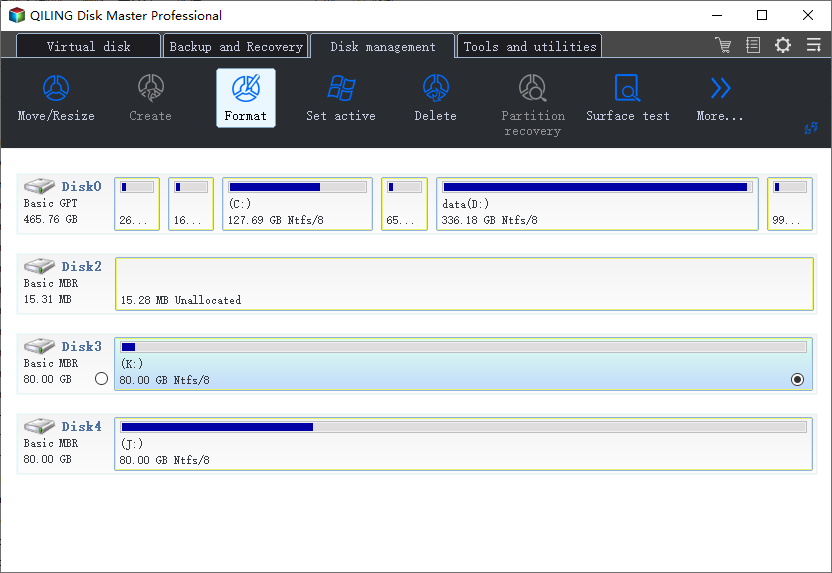
Step 2. Assign a new partition label, file system (NTFS, FAT32, EXT2, EXT3, EXT4, exFAT), and cluster size to the selected partition, then click "Proceed".
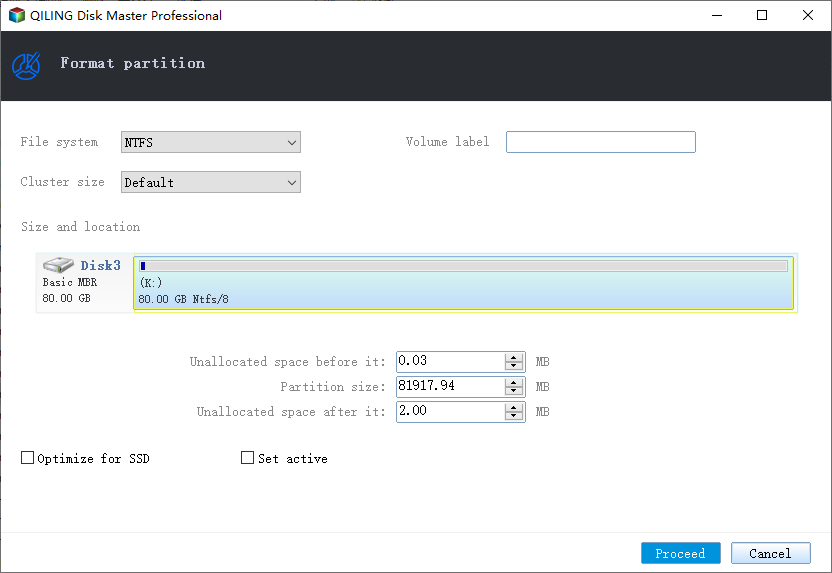
Step 3. To start formatting your external hard drive, USB, or SD card, click "OK" in the Warning window. This will initiate the formatting process.
After this, you can save the data back to your WD external hard drive again.
Make Your WD External Hard Drive Show Up and Work Now
The WD My Passport Ultra external hard drive may not show up on a Windows PC, and this issue can be resolved by following the 6 practical fixes provided on this page, which explain why this problem occurs and offer step-by-step solutions to make the drive appear again.
If you're experiencing issues with your external hard drive, follow our guide step by step to resolve the problem. These fixes are not only effective for external hard drives but also work for other storage devices like internal hard drives, USB drives, and SD cards, regardless of the brand.
To fix a WD external hard drive that's not showing up, start by checking the power cord and connections to ensure they're secure. Next, try restarting your computer and the external drive. If it still doesn't show up, try using the WD Discovery software to detect and connect the drive.
People Also Ask
The WD passport is a cloud storage service that allows users to access and share files across multiple devices. Here are some common issues and their solutions:
1. WD My Passport not showing up on Mac
If your WD My Passport external or internal hard drive isn't showing up on your Mac, try these troubleshooting tips: check if it's properly connected, restart your Mac, and ensure the drive is formatted for Mac. You can also try reformatting the drive using the Disk Utility app, or using the WD My Passport software to update the drive's firmware.
- #1. Reconnect WD Passport to Mac
- #2. Change WD Passport drive letter
- #3. Remount WD Passport to Mac
- #4. Update WD Passport drive driver
- #5. Format WD My Passport on Mac
2. How to use WD Passport on Windows 10?
To set up a new WD Passport on a Windows 10 PC, connect the device to the computer, open Disk Management, initialize the disk, and then create a new partition on the WD Passport drive.
To use a used WD Passport, connect it to your Windows 10 device, open it in File Explorer, and you can access its contents. If you need more storage space, consider deleting unnecessary files to free up room.
3. Why is my external hard drive not showing up?
Here are the major reasons why your external hard drive may not be showing up:
- The external hard drive may not be connected to the PC correctly, which is preventing it from being recognized and accessed. This could be due to a loose connection, incorrect port, or faulty USB cable.
- Faulty USB cable or USB hub
- External hard drive is not initialized
- External hard drive is doesn't contain a volume
- External hard drive has no drive letter
- An external hard drive with a file system error, bad sectors, or a virus may not be recognized by the computer, or may display an error message indicating that it's not accessible. In such cases, the drive may need to be reformatted or scanned for viruses to restore functionality.
If your external or internal hard drive is not showing up in Windows 10/8/7, you can refer to the guide "External/Internal Hard Drive Is Not Showing Up" for a resolution.
Related Articles
- How to Extend C Drive in Windows 7/8/10
- RAID 0 vs RAID 1, Comparison and How-to Setup Guide [2022 New]
- Best Partition Recovery Software for Windows 11 ( Reliable and Easy)
- How to Resize (Extend & Shrink) Partition Without Losing Data
- How to Easily Add Unallocated Space to D Drive in Windows 10/8/7?
How to add unallocated space to D drive when there is not enough space? Here, 2 ways will be provided to extend D drive easily, including Disk Management and Qiling Disk Master. In addition, it will offer a step-by-step guide. - How to Create Unallocated Space on Windows 7, 8, 10, 11
To create unallocated space on Windows 11, 10, 8, 7, you can follow the steps outlined in this post. However, it's worth noting that using unallocated space to extend a partition is often a more practical solution, and we would recommend this approach instead.
Products
Articles & Tutorials
- Data Recovery
- Data Backup
- File Recovery
- File Backup
- System Backup and Restore
- Disk and Partition Clone
- Technical articles
- Mobile articles
- Disk Master Help
- Windows Data Recovery Tutorials
- Windows Secure Delete Tutorials
- Windows Partition Management Tutorials
- Windows File Backup and Restore Tutorials
- Windows System Backup and Restore Tutorials
- Windows Disk Backup and Restore Tutorials
- Windows Clone Tutorials