How to Find and Recover Missing Space on Hard Drive in Windows
Many people use hard drives as their primary storage media, but some have reported finding missing space on their hard drives without knowing the exact cause. A recent case reported by CNET highlights this issue.
The discrepancy in free space on the 3TB SATA hard drive can be attributed to the way Windows Explorer calculates free space, which includes reserved space for the operating system, disk formatting, and other system requirements, not just the actual used space by folders and files. This reserved space is not visible in Explorer, but it's subtracted from the total capacity, resulting in the reported 470GB of free space, which is less than the actual 2.4GB of free space available for use.
If you're experiencing the same issue, you're in luck. There are 6 possible causes and corresponding solutions to the problem. To resolve the issue, you need to identify what's taking up space and why space is missing.
| Workable Solutions | Step-by-step Troubleshooting |
|---|---|
| Fix 1. Contact the Manufacturers | If your missing space is far more than 7% disk space, you should contact the manufacturers...Full steps |
| Fix 2. Unhide Partitions with Software | Choose a partition > Right-click it and click "Explore"...Full steps |
| Fix 3. Disable System Protection | Right-click on This PC/Computer and choose "Properties" and then click "System Protection"...Full steps |
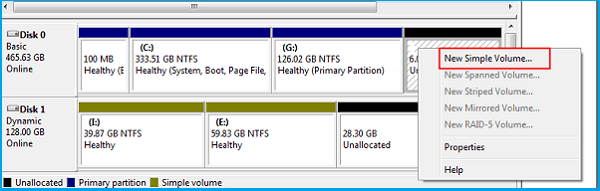
| Fix 4. Restore Missing Space | Right-click the unallocated space and select "New Simple Volume" to create...Full steps |
| Fix 5. Delete Hibernate File | Go to Start menu, type cmd and right-click on the results "Command Prompt" and...Full steps |
| Fix 6. Reformat the Partition | Run Qiling Partition Master again and select the partition and click"Format"...Full steps |
What Takes Up the Missing Space - 6 Causes
Windows losing too much space on a hard drive, PS3 hard drive, XBOX 360, and portable hard drive can be a frustrating issue. To identify the missing storage on the hard disk drive or SSD, it's essential to determine what's occupying the lost space. There are typically six situations that cause this problem, and understanding these scenarios can help resolve the issue.
1. Hard Disk Manufacturers Does not Give Capacity They Promise
The missing space on a hard disk is usually due to the operating system's overhead, which includes the space required for the boot sector, file system metadata, and other system files. This overhead can account for a significant portion of the total disk capacity, often around 10-15%. Additionally, some manufacturers may also reserve a portion of the disk for their own proprietary data, such as recovery partitions or diagnostic tools. As a result, the actual usable space on the disk may be smaller than the advertised capacity.
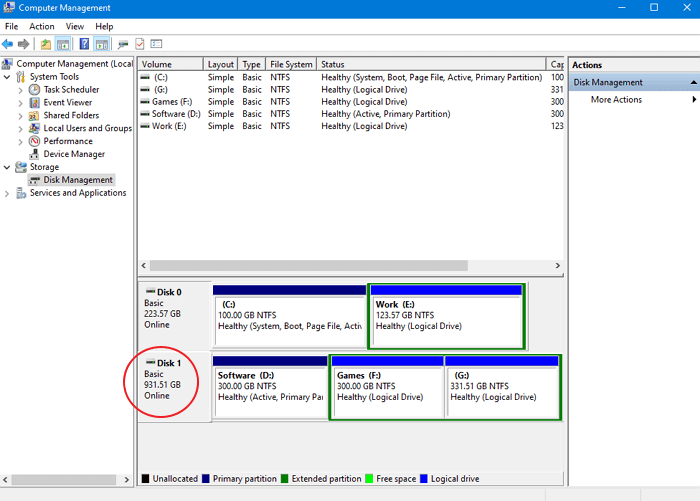
Hard disk manufacturers use 1000 as a base for calculations, but in reality, 1024 is used, resulting in a 7% discrepancy between manufacturer and user measurements, with a 500 GB hard drive actually being around 465 GB.
2. Hidden Partitions Take Up Space
Most computers and laptops have hidden partitions, such as OEM, recovery, and Microsoft reserved partitions, which can be viewed in Disk Management. If you've backed up your system, you can safely delete the OEM partition.
3. System Protection Takes Up Much Space
System protection is a feature that regularly creates and saves information about your computer's system files and settings, creating restore points before significant system events, but can take up a lot of space if set to half the drive capacity. To view the data, check the "System Volume Information" folder.
4. There Is Unpartitioned Hard Disk Space
A newly purchased hard drive needs to be partitioned before it can be used to store data. This process makes the space visible in Windows Explorer, but the unpartitioned space is only visible in Disk Management.
Although you have found what occupies the missing space, you may want to know the way to recover the missing space and get the real capacity of your hard drive.
5. Hibernate File or Page File Eats up a Lot of Space
Both hiberfil.sys (hibernation file) and pagefile.sys (page file) are hidden system files. Hiberfil.sys is created by the operating system when the computer goes into Hibernation Mode, and its size is half of the RAM space. For example, if your computer has 8GB of RAM, hiberfil.sys will be around 4GB in size. These files are invisible by default, but can be seen by unchecking "Hide protected operating system files" in the "Folder Options".
6. Employed Unreasonable Cluster Size
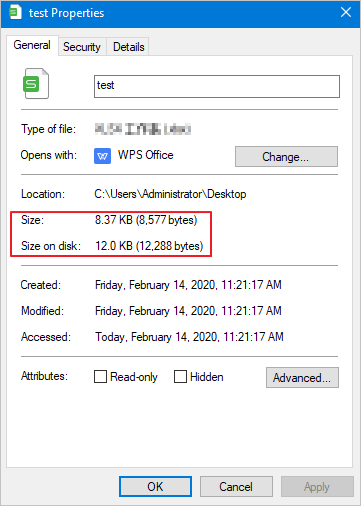
A cluster is the smallest logical amount of disk space, and a file's size on disk is always a multiple of its cluster size, which can lead to wasted space if files are small compared to the cluster size. This means that even if a file is only 3 KB, it will take up 3 clusters, or 12 KB, of space, resulting in a larger occupied disk space than real file size. Reducing the cluster size can help minimize this wasted space.
6 Fixes to Recover Missing Space and Restore the Hard Drive to Full Capacity
Now that you've identified what's consuming your HDD space and why it's missing, you can follow these 6 solutions to make your hard disk show its full capacity and regain the lost space.
Fix 1. Contact the Manufacturers
Around 7% of disk space missing on a hard drive is considered normal, so if you have a 1TB hard drive showing 931GB, there's no cause for concern. However, if the missing space exceeds 7%, you should contact the manufacturer for assistance.
Fix 2. Unhide Partitions with Software
When installing Windows OS on a new hard disk, hidden partitions are created by default, but they are not visible in Windows Explorer. However, they can be viewed in Disk Management, although it doesn't allow browsing their contents. To access and view the contents of these hidden partitions, a useful software is required, such as Qiling Partition Master, which not only displays all hidden partitions but also offers a feature to explore their contents, including FAT/NTFS/ReFS/EXT2/EXT3 file systems. This "Explore" feature allows users to browse and check various information about the partition.
- Total and free space of the entire partition.
- The File directory contains all folders and files, with each item displaying its created, modified, and accessed time information.
- The feature provides size information for a specific file, allowing users to access this detail.
To view the whole information of your partition, follow these steps. First, open the command line interface, such as Command Prompt on Windows or Terminal on macOS/Linux.
Step 1. Choose a partition.
Step 2. Right-click it and click "Explore".
To find the missing space, check the Disk Management console for partitions with no drive letter. By identifying which partition is missing a drive letter, you can determine where the missing space is and assign a drive letter or unhide the partition. This will help you understand where the missing space is and take the necessary steps to address it.
Fix 3. Disable System Protection
Disabling system protection can free up space on your computer by not creating and saving information about system files and settings. This can be a nice option if you're running low on storage.
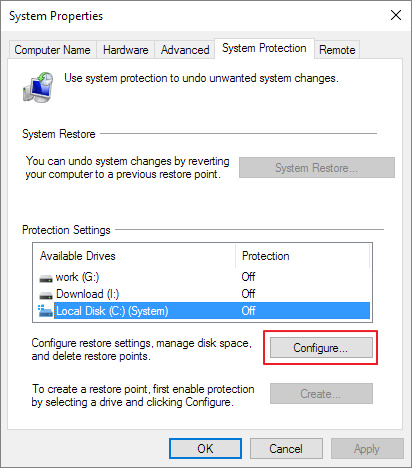
Step 1. Right-click on This PC/Computer and choose "Properties", then click on "System Protection".
Step 2. Click on the Configure button under the "System Protection" tab.
In the Restore Settings, select the option to Turn off system protection and apply the changes.
If you have a large space on your HDD, you can keep this option on, for it protects your system.
Fix 4. Partition the Space and Restore Missing Space
To utilize unallocated space, you can create a new partition on the disk, which will allow you to use the previously unallocated space. This process can be done through the built-in disk management tool in Windows or by using a third-party partition manager software. By creating a new partition, you can restore the hard drive to its full capacity, making the unallocated space usable for storing files, programs, or other data.
Method 1. Recover the unallocated space manually
1. To create a new partition, right-click on the unallocated space and select the "New Simple Volume" option, allowing you to create a new partition using that space, and potentially creating multiple partitions depending on the chosen size.
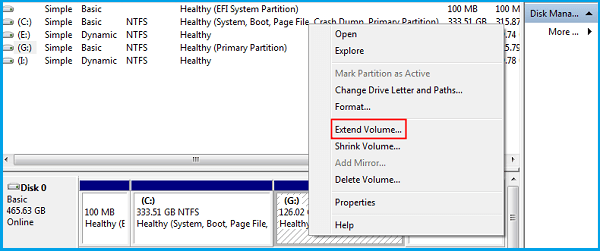
2. Right-click the partition before the unallocated space, select "Extend Volume" to extend the partition to this space.
Method 2.Restore missing space by using a partition tool
If you're having trouble manually partitioning unallocated space, consider using professional partition software to simplify the process.
Step 1. Launch Qiling Partition Master. On the main window, click on the unallocated space on your hard drive or external storage device and select "Create" to create a new partition.
Step 2. Adjust the partition size, file system (choose the file system based on your needs), and label for the new partition, then click "OK" to create a new partition.
Fix 5. Delete Hibernate File
Hibernate file can also take up lots of space, you can delete them to restore missing space on HDD. Here are the steps to delete hiberfil.sys file.
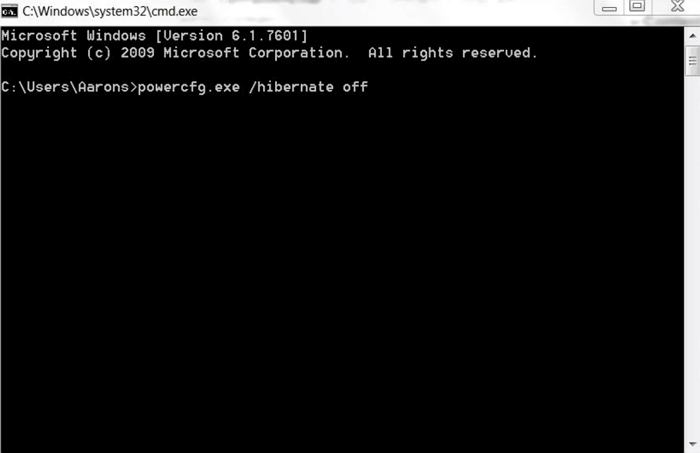
Step 1. To open Command Prompt as an administrator, go to the Start menu, type "cmd" and right-click on the result "Command Prompt", then select "Run as administrator".
Step 2. Then type powercfg -h off and press "Enter".
Fix 6. Reformat the Partition to Decrease Cluster Size
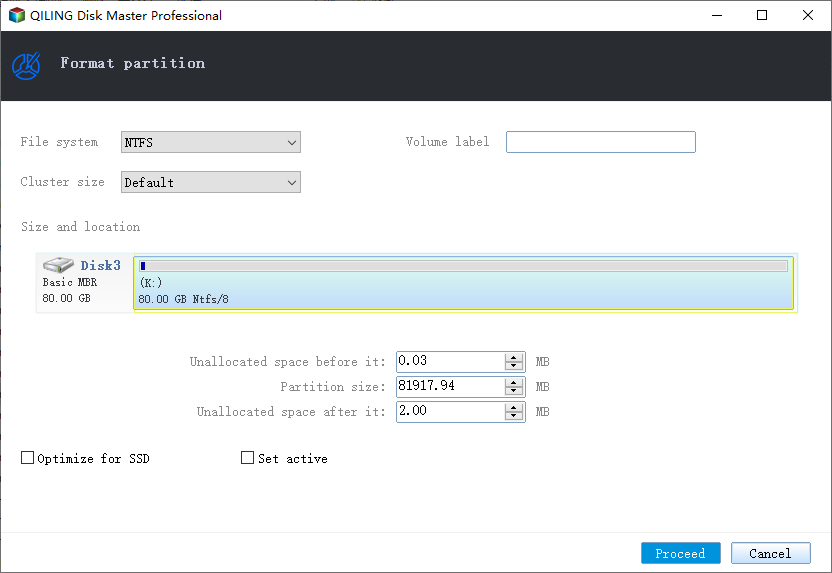
Cluster size can be adjusted when formatting a partition. To do this, you can use a partition formatting tool and set the cluster size to 512 bytes, which is considered optimal. This process involves formatting the partition, and during this process, you can change the cluster size to the recommended 512 bytes.
Step 1. Run Qiling Partition Master, right-click the hard drive partition you intend to format and select "Format".
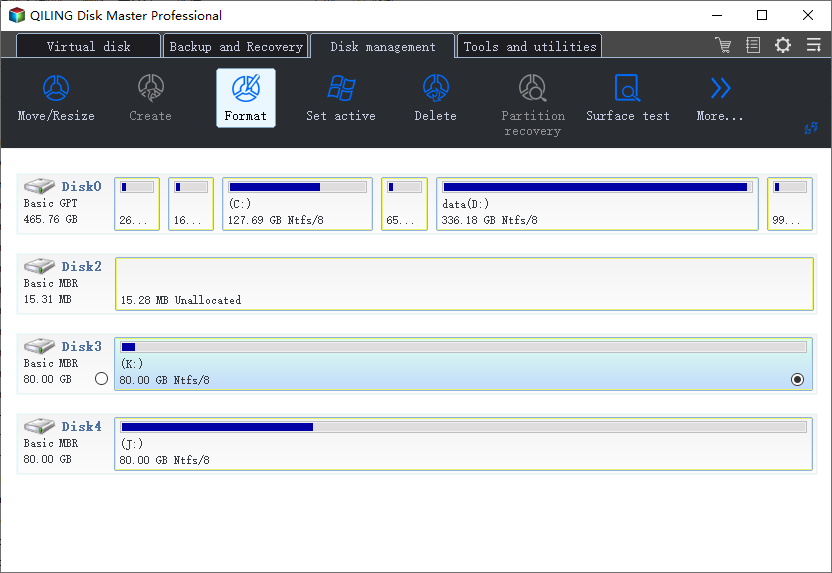
Step 2. Set the Partition label, File system, and Cluster size for the partition to be formatted, then click "Proceed" in the new window.
Step 3. You will see a warning window, click "OK" in it to start formatting the partition on your hard drive. Then, the partition will be formatted.
Any one of the solutions could have solved your problem. If you still have questions you can contact the live chat or send an email to us.
People Also Ask
1. Why does my hard drive not show full capacity?
What are the 6 situations that cause windows missing space on the hard drive?
- Hard disk manufacturers do not give the capacity they promise
- Hidden partitions take up much space
- There is unpartitioned hard disk space
- Too many hibernate files
- Employed unreasonable cluster size
2. How do I recover lost space on my hard drive?
If you've lost a partition, you can either follow the 6 fixes above or use partition recovery software to recover it.
3. Why is my C drive so full?
If your C drive is full in Windows 7/8/10, you can clean up junk files and other unimportant data to free up hard disk space. Refer to the article about SSD full for no reason for further assistance.
4. To find a hidden partition on your hard drive, you can try using a partition recovery software, such as Qiling Partition Recovery or Disk Drill. These tools can scan your hard drive and detect any hidden partitions, including those that were accidentally deleted or hidden by a virus.
To find hidden partitions, you can use a partition manager software such as Qiling Partition Master, which can help you locate and manage hidden partitions on your computer.
1. Launch Qiling Partition Master and right-click the New Volume which is hidden.
2. Select Unhide partition and click OK.
3. To keep all changes, click Apply and restart the computer.
Related Articles
- What is New Simple Volume and How to Create New Simple Volume in 2 Reliable Ways
- Internal Drive vs External Hard Drive. Which is better?
- How to Fix Service Host Superfetch High Disk Usage
- [2022 New Fix] Use SD Card as Internal Storage in Windows 11/10 | See Full Guide
- Download Corrupted Memory Card Formatting Software for Free
If you're looking for a solution to format and repair a corrupted or damaged SD memory card, this page can guide you through the process using a corrupt memory card formatting tool and command prompt to fix issues with your SD card, USB flash drive, pen drive, or other storage media. - How To Create Bootable USB for Windows Server
To create a bootable USB for Windows Server 2019, you can follow a detailed guide that includes formatting the USB drive, downloading the Windows Server 2019 ISO file, and using a tool like Rufus or Windows Media Creation Tool to create a bootable USB drive.
Products
Articles & Tutorials
- Data Recovery
- Data Backup
- File Recovery
- File Backup
- System Backup and Restore
- Disk and Partition Clone
- Technical articles
- Mobile articles
- Disk Master Help
- Windows Data Recovery Tutorials
- Windows Secure Delete Tutorials
- Windows Partition Management Tutorials
- Windows File Backup and Restore Tutorials
- Windows System Backup and Restore Tutorials
- Windows Disk Backup and Restore Tutorials
- Windows Clone Tutorials