Is exFAT The Same As FAT32 Format? Everything You Need to Know
| Workable Solutions | Step-by-step Troubleshooting |
|---|---|
| How to Format or Convert exFAT to FAT32 | Method 1: Using Qiling Partition Master; Method 2: Using Windows Tool on CMD...Full steps |
| How to Format or Convert FAT32 to exFAT | Step 1: Press the Start menu, and type CMD to bring up the Command Prompt...Full steps |
Is exFAT The Same As FAT32 format?
In Windows, various file formats are used, with FAT32 emerging as a popular choice, but it has limitations, particularly regarding file size. This led to the introduction of exFat, which offers a significant difference compared to FAT32.
The exFAT file system is more advanced and superior to FAT32, supported by a wider range of devices and operating systems, making it the best choice for removable devices and flash drives.
exFAT is a replacement for FAT32, offering larger partition and file size limits, with no practical limitations on partition size, unlike FAT32 which has a 4GB file size and 8TB partition size limit.
Should I Use exFAT or FAT32?
exFAT is a more efficient file system than FAT32, offering better speed and supporting large file sizes. However, whether to use exFAT depends on your specific use case, as it may not always be necessary. Nevertheless, its cross-platform compatibility makes it a good choice for many users.
Comparison between exFAT and FAT32: ExFAT
| FAT32 | exFAT |
|---|---|
| Best suited for small drives. | Works well on large drives. |
| Maximum file size 4 GB and partition size 8 TB. | No limit on file size, and partition size. |
| FAT32 is an older type of file system introduced in Windows 95. | exFAT replaces FAT32, and supports cross-platform scenarios. |
| Better compatibility | Not used often. |
The format you should use will depend on the purpose of the document. For example, if you are writing a research paper, you would use a formal format, such as a title page, abstract, headings, and a bibliography. If you are writing a blog post, you would use a more informal format, such as a conversational style, headings, and a list of sources.
- If you won't be copying or moving files larger than 4GB, Fat 32 is the best option.
- If you need to deal with a large file, then use exFAT, otherwise use FAT32.
- Small storage devices like SD cards and USB drives are compatible with FAT32, while external hard drives are better suited for exFAT.
- There is another reason to use exFAT—Cross-Platform support, making it a better option for copying files between different platforms.
How to Format or Convert exFAT to FAT32?
Converting one file format to another is possible, such as converting exFAT to FAT32. There are two ways to do this: using the Qiling Partition Master software or the Windows built-in tool.
- Notice:
- No matter which tool you use to convert, make sure to back up the data from the drive.
- Once the process is complete, you can copy the data back to the converted drive or partition.
Method 1: Using Qiling Partition Master
Qiling Partition Master simplifies the formatting process, allowing users to easily convert a device from exFAT to FAT32 in just a few clicks, making it a straightforward and user-friendly solution.
Step 1. Launch Qiling Partition Master, right-click the partition you intend to format and choose "Format".
Step 2. In the new window, enter the Partition label, choose the desired file system, set the cluster size, and click "Proceed" to continue the partitioning process.
Step 3. To start formatting the partition, you will see a warning window. Click "OK" in it to begin the formatting process to FAT32/EXT2/EXT3/EXT4.
The software is more user-friendly and reduces the likelihood of errors, minimizing the risk of data loss. Always back up your data before using it.
Method 2: Using Windows Tool on CMD
Diskpart is a built-In Windows, a tool allows administrators to manage and format partitions and partition data, providing a way to organize and configure storage space on a computer.
Step 1. To open the command prompt with admin permission, press the Windows key + R to open the Run dialog box, type "CMD" and press Shift + Enter. This will open the Command Prompt with administrator privileges.
Step 2. Type `diskpart` in Command Prompt, and press the Enter key to launch the tool.
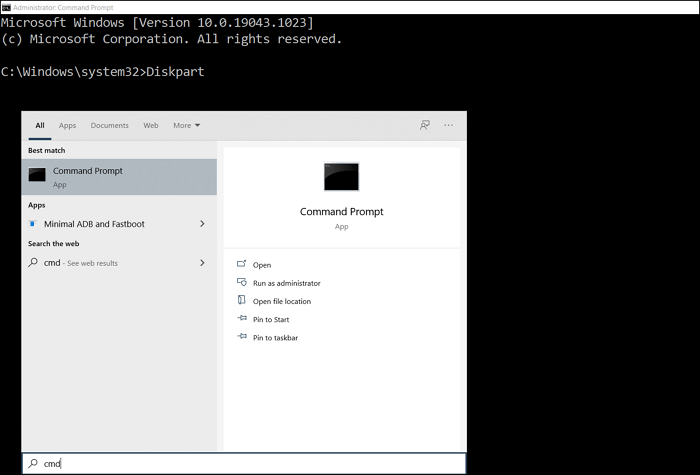
Step 3. Once established, type the following commands one after the other: X is a number and the drive you want to format.
- list disk
- select disk 2
- list partition
- select partition 2
- format fs=fat32 quick
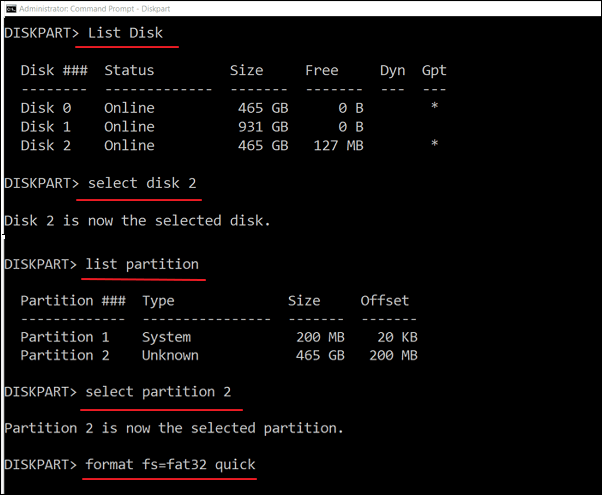
Once you've completed the formatting process, right-click on the drive and select "Properties" to verify the format type.
How to Format or Convert FAT32 to exFAT
To convert FAT32 to exFAT, use the Windows Diskpart tool on Command Prompt to format the FAT32 partition to exFAT, effectively reversing the conversion process.
Step 1: To open the Command Prompt as administrator, press the Start menu and type CMD to bring up the Command Prompt. Then, mouse over it and choose to run as administrator. This will allow you to execute commands with elevated privileges.
Step 2: Type Diskpart and press Enter to launch the disk management tool.
Step 3: Execute the following commands to convert:
- list disk
- select disk 1
- list partition
- select partition 2
- format fs=exfat quick
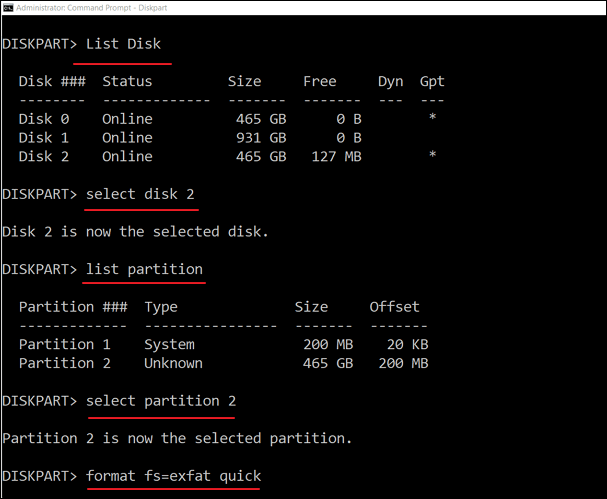
The driver properties have been checked, and it is now FAT32.
There are alternative methods to format a drive to FAT32, and a video guide is available for reference.
exFAT Is Not The Same as FAT32, Set the Right Format for Your Devices
The primary difference between exFAT and FAT32 is that exFAT is primarily used on SD cards, large flash drives, and some external hard drives. This is in contrast to FAT32, which is used on smaller storage devices.
- exFat should be your preferred choice if you want to transfer large-size files and make them work on almost every platform.
- Due to FAT32's 4GB file size limitation, it is mainly used on USB-like devices, where its functionality is somewhat limited.
- If you're using a portable drive, go with fat32 as it directly supports portable drives.
Related Articles
- [Top 5] Best USB Format Tool | USB Formatter
- How to Improve SSD Performance in Windows 11 [Step-by-Step]
- What Allocation Unit Size Should I Use for FAT32
- How to Remove SD Card Notification in Samsung S7/S7 Edge
- How to Boot From NVMe [2024 Easy Tutorial]
Learn how to boot from an NVMe drive and use it as your primary boot drive with our easy-to-follow guide. We'll walk you through the clear steps to enhance and improve your system boot times, making it a great resource for anyone looking to upgrade their system's performance. - How to Boot Samsung Laptop From USB on Windows 10/11
To boot a Samsung laptop from a USB drive, start by creating a bootable USB drive using a tool like Rufus or Etcher. Next, insert the USB drive into your laptop, and enter the BIOS settings by pressing the key that corresponds to your laptop model (usually F2, F12, or Del).
Products
Articles & Tutorials
- Data Recovery
- Data Backup
- File Recovery
- File Backup
- System Backup and Restore
- Disk and Partition Clone
- Technical articles
- Mobile articles
- Disk Master Help
- Windows Data Recovery Tutorials
- Windows Secure Delete Tutorials
- Windows Partition Management Tutorials
- Windows File Backup and Restore Tutorials
- Windows System Backup and Restore Tutorials
- Windows Disk Backup and Restore Tutorials
- Windows Clone Tutorials