How to Hide Recycle Bin in Windows 10/11
What Is Recycle Bin in Windows
The Recycle Bin is a container that holds unwanted or unnecessary items, including digital files, for recycling or reuse. In our daily lives, we use physical Recycle Bins to discard items that are no longer needed. Similarly, on computers, the Recycle Bin serves as a temporary storage for deleted files, allowing users to recover them if desired.
The Recycle Bin is a useful feature that helps prevent accidental file deletions by storing them temporarily until they are manually deleted or cleared, allowing users to restore files that were mistakenly deleted.
If you delete a Windows file using the DOS Command Prompt, it is completely erased and doesn't go to the Recycle Bin. However, users can change their settings to keep files and folders from going to the Recycle Bin when they're removed. Many people want to hide the Recycle Bin in Windows 10, and this article provides guidelines for multiple ways to do so, as well as show it again. This article is helpful for those who want to hide the Recycle Bin in Windows 10.
[Further reading]: What is $recycle.bin folder Windows 10
How to Hide Recycle Bin from Desktop in Windows 10 - 4 Ways
Windows 10's Recycle Bin allows for the recovery of accidentally deleted data, but it can also be hidden from view if desired. When a file is deleted and the Recycle Bin is emptied, the file is not completely erased, but rather a copy remains on the hard drive, inaccessible through its previous location and no longer stored in the operating system.
Some people conceal the Recycle Bin in Windows 10 because they believe it is unnecessary, as they rarely use it and don't want to delete files twice. There are four different ways to hide the Recycle Bin.
- Method 1. Unpin Recycle Bin
- Method 2. Check Desktop Icon Settings
- Method 3. Hide Recycle Bin in File Explorer
- Method 4. Hide Recycle Bin in Group Policy
Method 1. Unpin Recycle Bin
To remove the Recycle Bin from the Start menu, you can unpin it. This can be done by right-clicking on the Recycle Bin icon in the Start menu, then selecting "Unpin from Start" from the context menu. This will remove the Recycle Bin icon from the Start menu, but it will still be accessible through the File Explorer.
Step 1. To remove the "Recycle Bin" from the Start menu, go to the Start menu, right-click the "Recycle Bin" program, and select "Remove from Start".
Step 2. The Recycle Bin will be unpinned and concealed.
Method 2. Check Desktop Icon Settings
Icon Settings is the most popular option for hiding the Recycle Bin from the desktop. It's a simple yet effective solution that allows users to declutter their desktop and maintain a clean and organized workspace. By using Icon Settings, users can easily hide the Recycle Bin and other unwanted icons, creating a more streamlined and efficient desktop experience.
Step 1. Press the Win button on the keyboard, then click "Settings" in the vertical menu at the screen's left edge.
Step 2. To personalize your window settings, click the "Personalization" tab, then select the "Themes" tab from the menu on the left side.
Step 3. To customize the desktop icons, scroll to the bottom of the Themes section and select "Desktop Icon Settings".
Step 4. To hide the Recycle Bin icon on the desktop, open the Desktop Icon Settings window and uncheck the box next to Recycle Bin.
Step 5. To validate your selection, select the Apply checkbox and then click "OK".
Method 3. Hide Recycle Bin in File Explorer
Moreover, if you wish to conceal the recycling bin from the file explorer, you can follow the methods listed below.
Step 1. To access the Recycle Bin, open File Explorer and click on the "Quick Access" menu, then select "Recycle Bin" from the list.
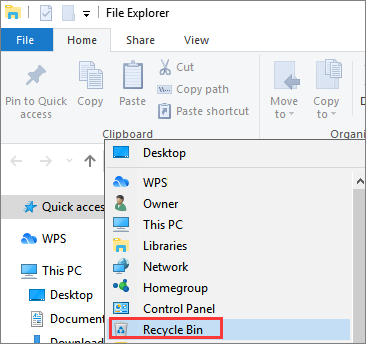
Step 2. To remove an icon from the Quick Access section, select the icon's context menu and choose "Unpin from Quick Access".
Step 3. The Recycle Bin will be hidden from the File Explorer after the system updates.
Method 4. Hide Recycle Bin in Group Policy
You can also hide the Recycle Bin in Windows 10 by using Group Policy. To do this, follow these steps:
Step 1. To start the computer, click on the "Start" button located in the bottom-left corner of the desktop.
Step 2. To access the Local Group Policy Editor, go to the Start menu, click on the Run button, type "gpedit.msc" in the white box, and then click the OK button.
Step 3. To extend User Configuration, click the "+" symbol, then expand Administrative Templates under User Configuration, and finally click "Desktop" under Administrative Templates.
Step 4. To remove the Recycle Bin icon from the desktop using Group Policy, navigate to the Group Policy window, where a submenu labeled "Desktop" will appear on the right-hand side. From this submenu, select the option to "Remove Recycle Bin" icon from the desktop with a right-click, then click the "Properties" button.
Step 5. To remove the Recycle Bin icon from your desktop, open the desktop properties window, click on the "Enabled" radio button, and then click "OK" to confirm the change.
The Recycle Bin has been successfully deleted from your desktop, resulting in a cleaner and more organized workspace.
Note:
If the Recycle Bin is still visible on your desktop after trying the methods above, refresh your desktop by left-clicking a blank area and pressing F5. This should remove the Recycle Bin.
How to Show Recycle Bin in Windows 10
The Windows 11 and Windows 10 Recycle Bin is typically located in the upper-left area of the desktop by default, where it stores all deleted files. The icon changes depending on whether it contains files or is empty.
The Windows 10 Recycle Bin is a unique feature for each hard disk, with deleted data stored in a single folder on the desktop. However, if this folder has disappeared, it's possible to recover it, and one method is described below, which outlines a specific way to access the Windows 10 Recycle Bin location.
Step 1.To start, select the Start button, then click "Settings," and finally select "Personalization."
Step 2. Next, you need to choose "Themes" and then select "Settings for desktop icons" to change the desktop icon settings.
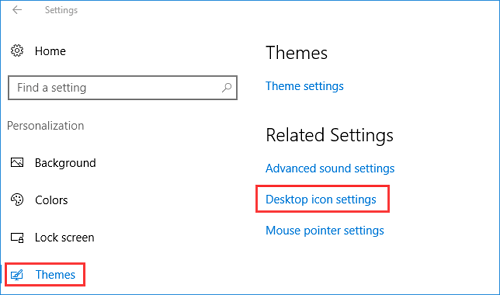
Step 3. After selecting the "Recycle Bin" checkbox, click "Apply" and then "OK" to display the Recycle Bin icon on your desktop.
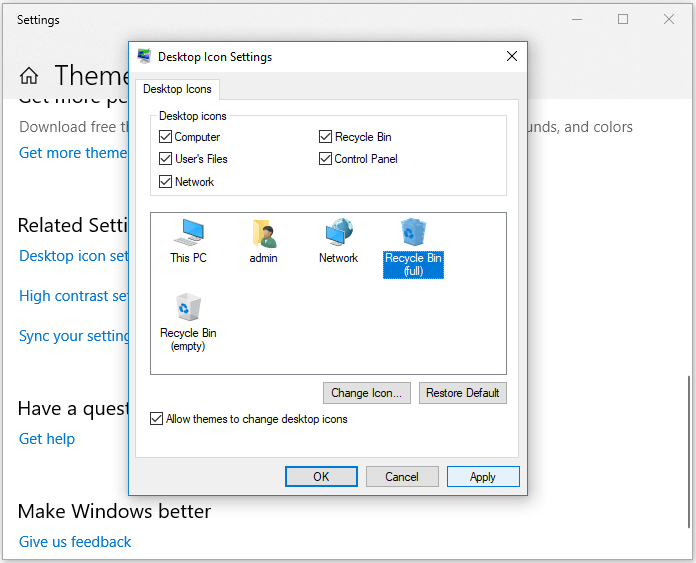
You can also use the search box, type desktop icons, and then click Show or conceal other popular desktop icons.
Bonus Tip: How to Recover Data from Emptied Recycle Bin in Windows 10/11
When you need additional space for storage, you might right-click on the Recycle Bin sign and choose Empty Recycle Bin, but be aware that this action is permanent and files cannot be recovered later on.
Deep Data Recovery software can help with data recovery. It's available for free or for a fee, depending on the operating system. When data is removed from a storage device, the directory structure references to that data are also deleted. However, the data itself can be recovered and utilized or replaced from other files or computer functions.
Data deletion often leaves behind disconnected portions of destroyed data on the hard drive, which can be retrieved if not erased. Fortunately, the Qiling Recycle Bin recovery software can easily recover all lost data, regardless of the situation, with its advanced features and control over 100+ scenarios, making it an all-in-one data recovery solution.
Features:
- Fun and easy-to-use UI
- Recover deleted files from a variety of systems
- This device allows for a wide range of storage devices, including internal and external hard drives, USB drives, SD cards, digital cameras, and video players, among others.
- Effortless Data Restoration process in a few clicks
- Most file types can be recovered, with a capacity of up to 1000+.
- Scan findings or sessions can be imported and exported
- This software supports almost all latest versions of the Windows operating system, including Windows 11, 10, 8, 7, and various Windows Server versions such as 2022, 2019, 2016, 2012, 2008, and 2003.
You can follow the steps listed below to recover data from emptied Recycle Bin in Windows 10/11 with data recovery software.
Step 1.Run Deep Data Recovery. Select file types and click "Recycle Bin Scan" to start.
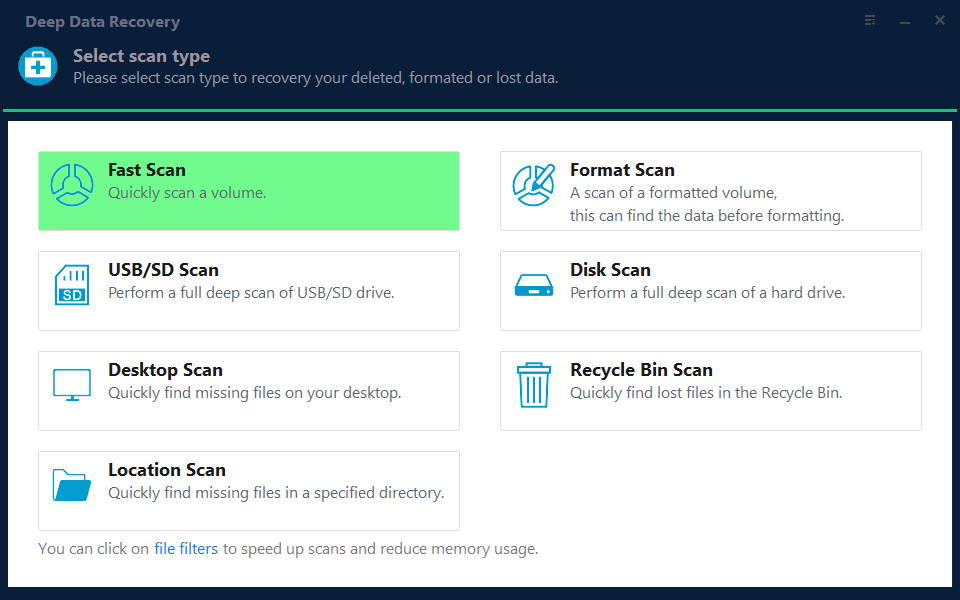
Note: You can choose different search modes based on where and why the data was lost.
Step 2. To recover files from an emptied Recycle Bin on Windows, hover the mouse pointer over the "Recycle Bin" option under the "Locations" section and click "Scan" to initiate the recovery process.
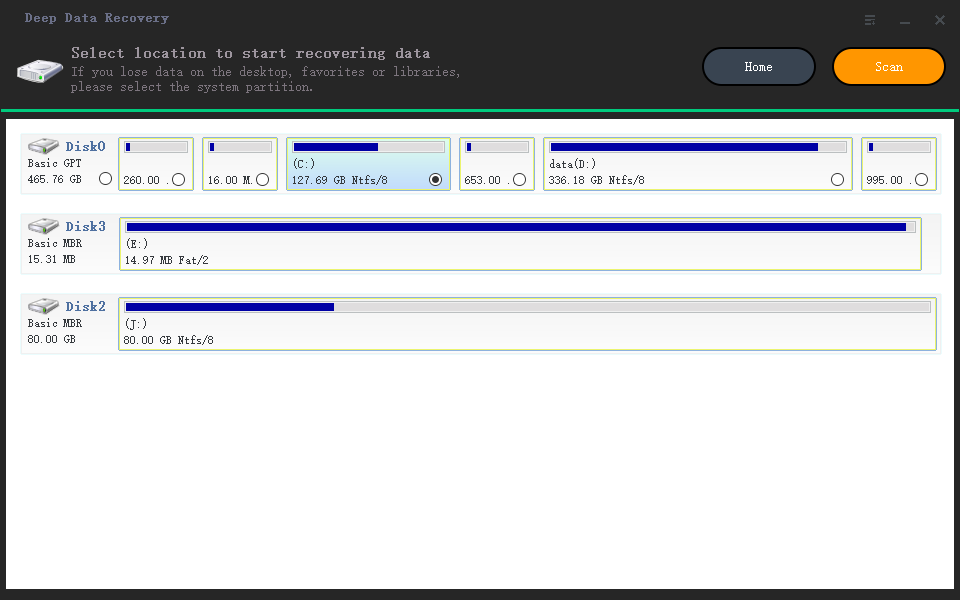
Step 3. Qiling data recovery software performs a quick scan to recover deleted files, followed by a deep scan to find more lost files. After scanning, you can use the "Filter" feature to select specific file types, such as pictures, word documents, or videos, to narrow down the search.
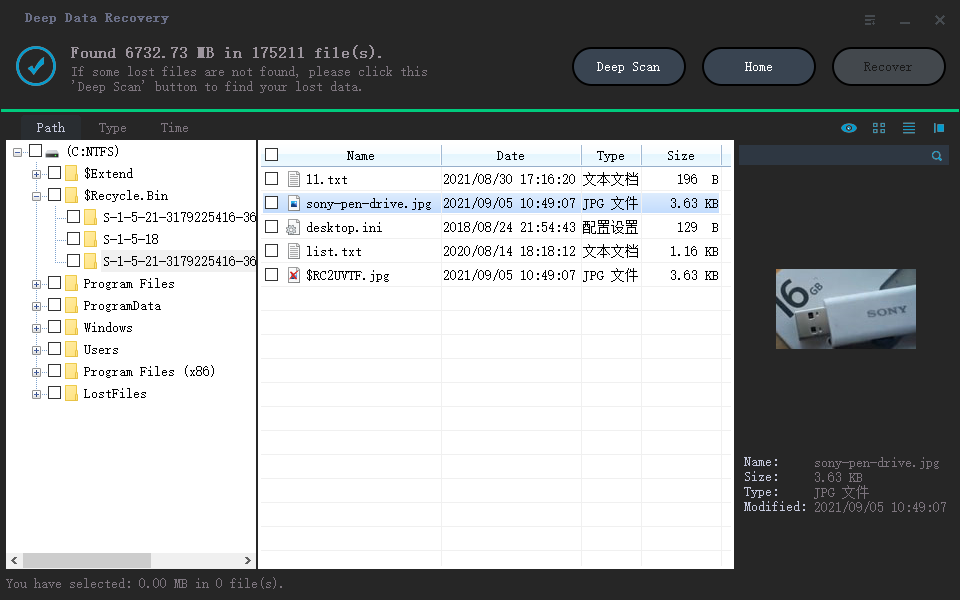
Step 4. To restore the files you want, double-click on the desired file for a full preview, then select the target files and click "Recover". It's a good idea to save the recovered files to a different volume or an external USB drive to avoid data overwriting.
Windows Recycle Bin FAQs
After learning so many things, you might still have some questions on your mind regarding Recycle Bin. Here are some of the most frequently asked questions that might provide you with more clarity.
1. How do I pin Recycle Bin to taskbar?
The trash can is easy to stick to the taskbar.
Step 1. To access the Recycle Bin, click or tap the new Recycle Bin icon with two fingers and choose "Show More Options" from the context menu.
Step 2. From the following menu, select "Pin to Taskbar".
Now, you can find the Recycle Bin in the taskbar.
2. How do I move my Recycle Bin from my desktop?
The Recycle Bin creates a shortcut on the desktop during Windows installation, allowing for easy access to deleted content. To access the content, click on the Recycle Bin icon, and to move it, simply drag the icon from the desktop to the taskbar.
3. How to find Recycle Bin in Windows 10?
If you're having trouble seeing icons on your desktop, you can try right-clicking on the desktop and selecting View. If the box next to Show desktop icons is not checked, click it to turn it on. If that doesn't work, you can also try checking if the icons are hidden by selecting the "Details" view in the File Explorer and looking for them in the "This PC" section. If you still can't find them, it's possible that they've been moved to a different location or deleted.
Step 1. Click "Start" and then "Settings".
Step 2. Pick "Personalization" and then "Themes".
Step 3. To set up the Desktop icons, ensure the box next to "Recycle Bin" is checked and then click "OK".
You should be able to see the icon on your desktop.
Conclusion
The Recycle Bin is used to store deleted files and folders, where you can either permanently delete them by emptying the bin or recover them using the "Restore" option. You can also clear your desktop by unpinning the Recycle Bin, dragging it to the File Explorer, checking desktop icon settings, or using Group Policy to hide it.
If you're hiding the Recycle Bin in Windows 10, keep in mind that data security is crucial. To avoid losing important files, consider using a data recovery software like Deep Data Recovery to retrieve them. You can download the software from the official website.
Related Articles
- Top 10 Best NAS Recovery Software for RAID Recovery in 2022
- How to Recover Deleted Instagram Posts/Photos/Videos
- How to Recover Locked SD Card Pictures/Files
- Recover Data from a Dead Hard Drive and Repair the Corrupted Disk
- How to Recover Deleted Large Video Files | Reliable Video Recovery Software
Losing large video files can be a disaster, especially when they contain valuable and time-consuming data. Fortunately, there are methods to recover deleted large video files, and this article outlines them. - 2 Best Ways to Recover Deleted Minecraft Worlds in Windows 10
Minecraft data recovery can be easily achieved by either running Minecraft game data recovery software or recovering deleted Minecraft worlds from the local folder, both of which work well in restoring lost game data.
Products
Articles & Tutorials
- Data Recovery
- Data Backup
- File Recovery
- File Backup
- System Backup and Restore
- Disk and Partition Clone
- Technical articles
- Mobile articles
- Disk Master Help
- Windows Data Recovery Tutorials
- Windows Secure Delete Tutorials
- Windows Partition Management Tutorials
- Windows File Backup and Restore Tutorials
- Windows System Backup and Restore Tutorials
- Windows Disk Backup and Restore Tutorials
- Windows Clone Tutorials