[Solved] USB Pen Drive Not Showing Data, Files, and Folders
If your USB pen drive is not showing data, files, and folders, there are several troubleshooting steps you can take. First, check if the drive is properly connected to your computer and if the USB port is functioning correctly.
| Workable Solutions | Step-by-step Troubleshooting |
|---|---|
| Fix 1. Unhide files in pen drive using Windows Explorer | If the data on your USB has accidentally been hidden or made invisible by a virus, you can try to unhide...Full steps |
| To recover hidden files from a pen drive, you can utilize data recovery software. This software can scan the pen drive and identify hidden files that were previously inaccessible due to being set as hidden. The process typically involves connecting the pen drive to a computer, running the data recovery software, and following the on-screen instructions to scan the pen drive. | If the steps above didn't work for you, try to retrieve your data with Qiling disk data recovery Wizard...Full steps |
| Fix 3. Show hidden files in Command Prompt |
Windows Command Prompt is a suitable tool for professionals to solve many computers...Full steps |
| To show hidden files on a USB drive using a disk tool, you can follow these steps. First, insert the USB drive into your computer. Next, open the Disk Management tool, which can be found by typing "diskmgmt. | Manual execution of the command line is suitable for computer professionals, since incorrect...Full steps |
| More useful solutions | Format the USB pen drive that is not showing files, check and fix USB pen drive errors...Full steps |
Why Is USB Not Showing Files?
The pen drive not showing data but using space is a frustrating issue that can be caused by a virus attack, which cannot only infect your files but also make them hidden, creating empty shortcuts that lead to nowhere. This is not the only reason, as other factors such as a virus infection can also lead to this problem, resulting in an empty USB drive that shows used and unused space correctly but doesn't display any files.
- Files and folders on your pen drive are hidden
- Data is accidentally deleted
- The file system is not recognized by the OS of your computer because the operating system is unable to read or access the file system, which is usually due to a corrupted file system or a mismatch between the file system type and the operating system installed on the computer. This can be caused by various reasons such as a virus or malware infection, a failed file system check, or a hardware issue.
If you're experiencing issues with your pen drive not showing data, you can try a USB data recovery solution. To recover files from your pen drive, you can follow simple steps that also work with flash drives, external hard drives, SD cards, or other external USB devices. This tutorial will guide you through the process of fixing the issue where files or folders are not showing but the space is still being used.
If you're experiencing issues with a flash drive not showing up on your Mac, you can follow the provided instructions to troubleshoot and resolve the problem. This will help you recover any lost files and get your flash drive working again.
How to Fix USB Pen Drive Not Showing Data
If your USB drive isn't showing files, the solution depends on the underlying cause. If you haven't pinpointed the issue yet, you can try the standard methods below. We've got five effective solutions to help you restore disappeared files and fix the "USB not showing data" problem.
- 1. Unhide Files in Pen Drive Using Windows Explorer
- 2. Recover Hidden Files with Qiling USB Recovery Software
- 3. Unhide Files in Pen Drive in Windows Command Prompt
- 4. Show Hidden Files with Qiling CleanGenius
- 5. Format Pen Drive that Is Not Showing Data Files
- 6. Check and Fix USB Drive Errors
Fix 1. Unhide Files in Pen Drive Using Windows Explorer
If your USB data has been hidden or made invisible by a virus, you can try to unhide your files using CMD. Alternatively, you can check out other methods to show hidden files on a USB drive.
Step 1. To connect the USB pen drive or flash drive to the PC, simply insert the drive into a free USB port on the computer. The PC should automatically recognize the drive and a window will appear on the screen asking you to take action.
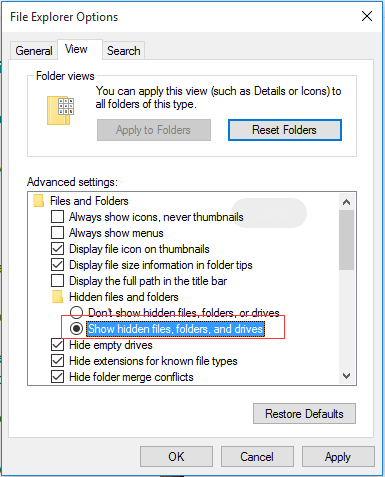
Step 2. To view hidden files and folders in Windows, navigate to File Explorer, click on "Tools" and select "Folder Options." In the Folder Options window, go to the "View" tab and check the box next to "Show hidden files, folders, and drives." Click "Apply" to save the changes. This will ensure that hidden files and folders are visible in File Explorer.
Fix 2. Free Download USB Recovery Software to Recover Hidden Files From a Pen Drive
If the previous steps didn't work, try using Deep Data Recovery, a popular third-party software that can recover files and folders in various situations.
You can recover your data from a non-showing USB drive using a reliable tool, even if it's due to a virus attack, hidden files, accidental deletion, or file system errors. This tool can also recover corrupted files and does a good job of retrieving shortcut files, hidden files, deleted files, and RAW files from a USB pen drive or flash drive, making it a useful solution when your USB is not showing files.
Step 1. Launch Deep Data Recovery. Select file types
Connect your USB drive or pen drive to your computer, then launch the Qiling USB data recovery software on your PC. Select the file types you want to recover and click "USB/SD Scan" to initiate the recovery process.
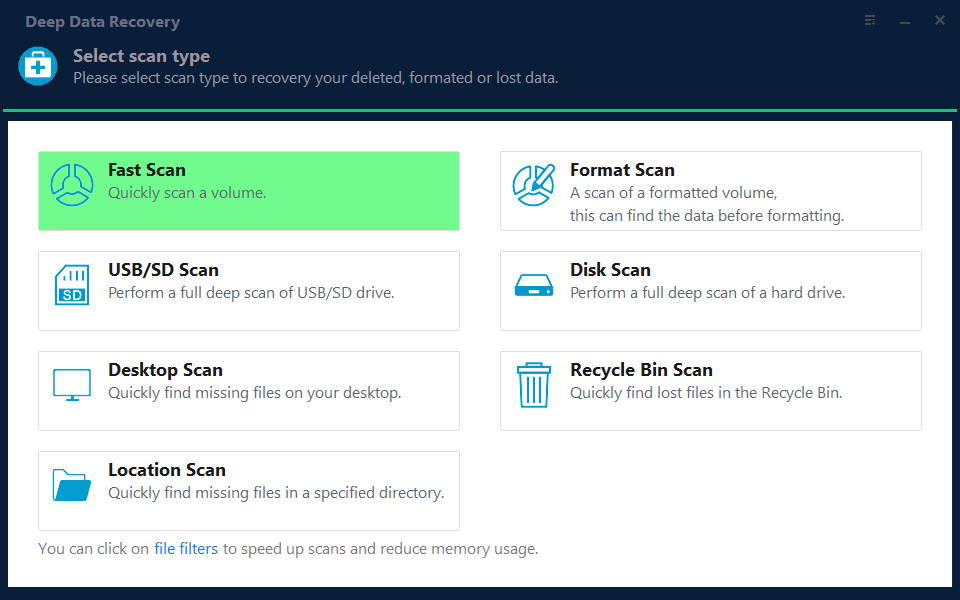
Note: You can choose different search modes based on where and why the data was lost.
Step 2. Run USB Data Recovery Software
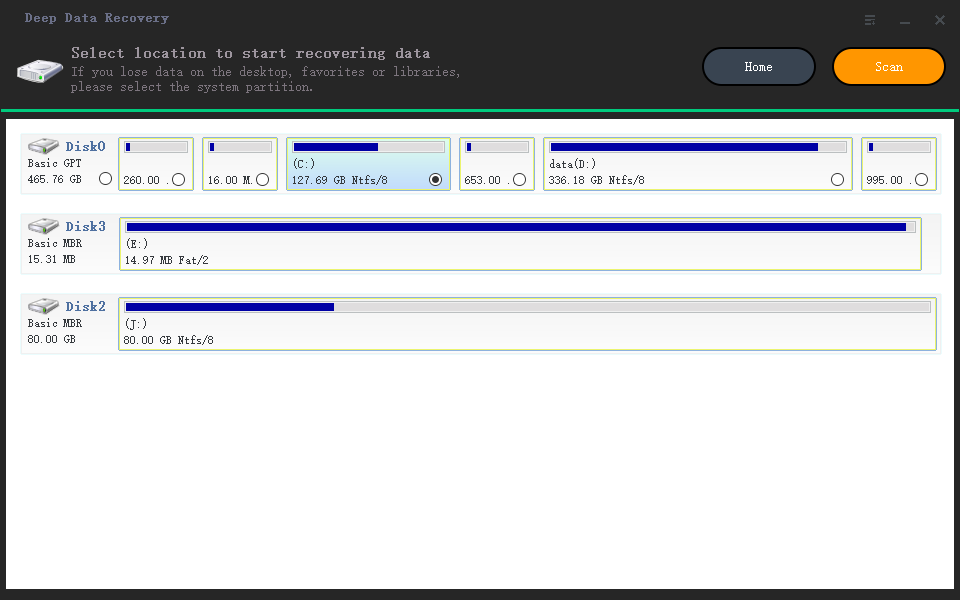
To recover lost files, select the drive labeled as an External drive and click "Scan" to initiate the search.
Step 3. Scan and Search Lost Files on a USB Drive
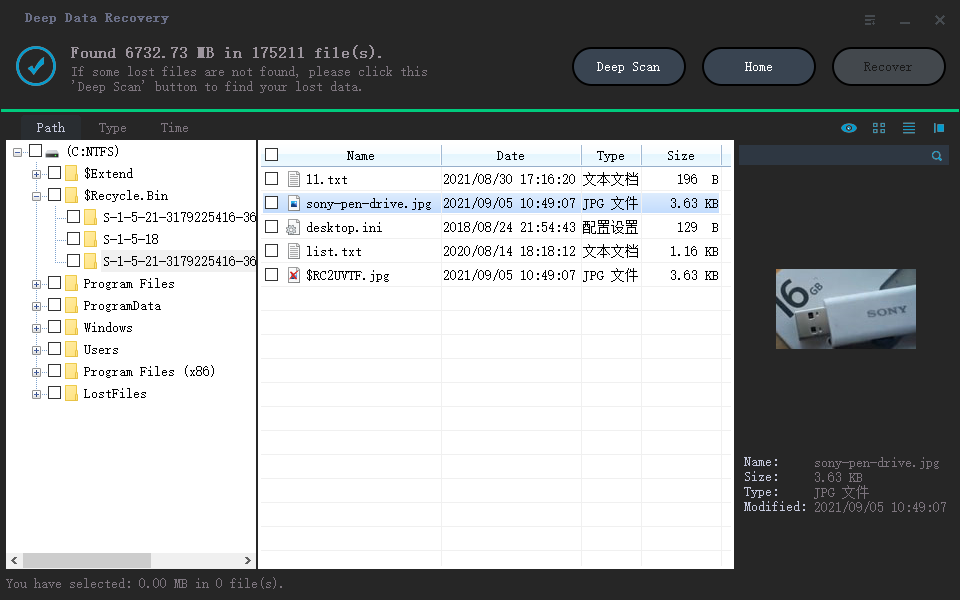
Deep Data Recovery will thoroughly scan your USB flash drive/pen drive and find all your lost data on it. After scanning, you can use the Filter feature to find and recover specific files.
Step 4. Restore All Lost Files from USB
A double-Click will allow you to preview the files. Select the target files to restore and click "Recover" to save them to a secure location on your PC or other external storage devices.
If you're unable to locate missing files, you can also consider seeking help from data recovery and repair specialists who can assist you in finding and restoring the lost files.
Consult with Qiling data recovery experts for a one-on-one manual recovery service, which includes a FREE diagnosis and a range of services offered thereafter.
- To fix errors on HDD, SSD, external hard drives, and USB flash drives, as well as restore data from various RAID levels, you can use a data recovery software tool. This tool can scan the storage device, identify the problem, and provide options to recover the data.
- If a partition cannot be restored by data recovery software, it may be possible to recover the lost partition by using a combination of disk imaging and file system analysis. This involves creating a bit-for-bit copy of the entire disk, including the lost partition, and then analyzing the file system to identify the lost partition's file system structure.
- To fix disks that cannot be read or accessed because of bad sectors, you can try using disk repair tools such as chkdsk in Windows or fsck in Linux. These tools scan the disk for errors and attempt to repair them.
- Fix disks that become GPT protected partitions
- Wipe data, unformat hard drive, Install/uninstall software or driver, etc.
Fix 3. Show Hidden Files in Windows Command Prompt
The Windows Command Prompt is a suitable tool for professionals to solve various computer storage issues, requiring administrator permission to access its high-level functionality.
Step 1.To open the Command Prompt, click on the "Start" Menu, select "Run", type "cmd" in the text box, and press "Enter".
Step 2. To make the USB pen drive data show up, type the command "attrib -h -r -s K:\*.* /s /d" and press "Enter", replacing "K" with the drive letter of your pen drive.
Fix 4. Download Qiling CleanGenius to Show Hidden Files on a USB drive
Manual execution of the command line is not recommended for non-professionals as it can cause more harm than good. Instead, a tool like Qiling CleanGenius is suggested for its ease of use and ability to perform system maintenance tasks with a single click, making it a safer and more user-friendly alternative.
To show hidden files using this 1-click-fix software, simply follow these simple steps.
Step 1. DOWNLOAD Qiling CleanGenius for Free.
Step 2. Start Qiling CleanGenius, choose "Optimization" on the left panel. Next, click "File Showing" on the right panel.
Step 3. Select the hard drive and click "Execute".
Step 4. After the operation completes, click the here link to check the hidden files.
Now, all your files will be visible on your USB flash drive. If you see a folder without a name, rename it to recover its data.
- Notice:
- Running antivirus software on your computer may help remove the virus, but it doesn't always work and may even delete infected files on your USB, requiring you to use Method 2 to recover the lost data.
Fix 5. Format the USB Pen Drive That Is Not Showing Files
When your USB pen drive data not showing, you'll see some error messages appear on your screen. This indicates something has gone wrong with your USB file system, which includes the drive is corrupted, damaged, inaccessible, or showing RAW, and asking you to format it. The common errors are usually as follows.
- To use a new disk in Windows 10/8/7, you need to format it first. Formatting a disk erases all data on it and prepares it for use with your computer.
- The disk is not formatted (in Windows XP)
- The volume does not contain a recognized file system
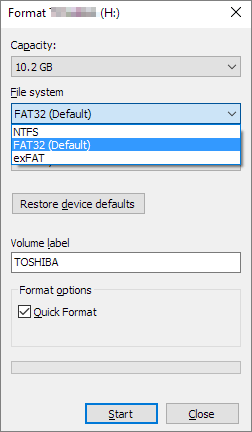
To resolve the issue of data not showing on a USB drive due to file system issues, you should format the drive to a Windows-recognized file system, such as NTFS, before attempting to recover any data, as formatting will erase all data on the drive.
Step 1. Download Deep Data Recovery and perform data recovery.
Step 2. To format your USB drive, open Windows Explorer, right-click on your USB drive, and select the "Format" option from the context menu.
Step 3. Choose a Windows-compatible file system such as FAT32, NTFS, or exFAT for your USB, and click "Start".
Fix 6. Check and Fix USB Pen Drive Errors
To fix a USB drive that's not showing files, you can try running the CHKDSK command to check and repair disk errors, which is a more convenient option compared to running the command in CMD.
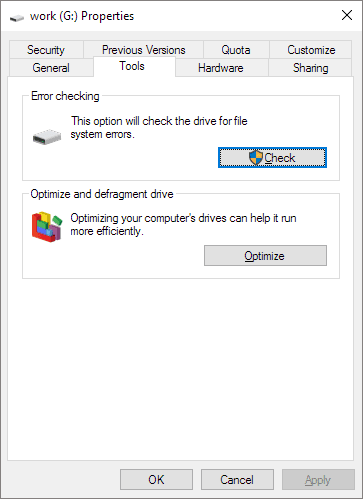
Step 1. Open "This PC", right-click your pen drive, and choose "Properties".
Step 2. Go to the "Tools" tab.
Step 3. The USB drive contains corrupted data. To repair it, run a disk check on the device.
If unhiding files doesn't work, it's probably a problem with your USB, so you should try data recovery software like Deep Data Recovery to get your files back, and then format your pen drive to fix the error.
FAQs about USB Pen Drive Not Showing Files
Apart from offering solutions for fixing the issue of a USB pen drive not showing files, some users may also want to know the cause of this problem and how to view files. To help resolve these queries, we have collected 4 top questions that users might be interested in.
Here are those questions and answers:
1. How do I recover my pen drive data?
If you've deleted files from your pen drive, check the Recycle Bin first to see if they're still there. If not, you may have lost them due to deletion, formatting, or other misoperations. If you've lost data due to deletion, formatting, or other misoperations, you can try using data recovery software to restore your files.
To recover deleted or formatted files from a pen drive, you can use Deep Data Recovery software or CMD to retrieve hidden files. For more information, refer to the article "How to Recover Deleted Files from Pen Drive".
2. How do I view files on my USB?
Files on a USB drive can become hidden due to various reasons, and can be recovered using software such as Qiling data recovery, or by using Control Panel and CMD to show or recover them, particularly on virus-infected devices like flash drives, hard drives, memory cards, and pen drives.
To make all files viewable again on your USB drive, follow the instructions in the link provided, which explains how to show hidden files on the USB drive. This will ensure that all files, including hidden ones, are visible on the drive.
3. Why do files disappear from USB?
Users are experiencing issues where files copied to their USB drive suddenly disappear. This phenomenon is causing concern among those affected.
Here are the common reasons why files on a USB pen drive might go missing mysteriously:
- 1). Virus infection on USB drive
- 2). File Explorer settings hide files on USB
- 3). Unfinished file transferring or failed file copying on USB
Related Articles
- Where Do My Downloads Go? Find & Open Downloads on PC, iPhone/iPad, or Android [Beinners' Guide]
- 2022 Fix: Discord Not Opening, Stuck or Not Responding on Startup
- How to Repair Damaged BMP Files in 3 Ways
- Most Reliable Way to Store Data Long Term
- Here Are the Solutions to Fix NVME SSD Not Detected (Windows/Mac)
This guide provides tried-and-true solutions to fix the NVME SSD not detected error, and if data is lost during the process, Qiling data recovery software can help recover it within three steps. - Best Online Data Recovery Tool for File Recovery [in 2026]
If you're experiencing data troubles, Qiling data recovery software and Deep Data Recovery, an online data recovery tool, can help you recover your files.
Products
Articles & Tutorials
- Data Recovery
- Data Backup
- File Recovery
- File Backup
- System Backup and Restore
- Disk and Partition Clone
- Technical articles
- Mobile articles
- Disk Master Help
- Windows Data Recovery Tutorials
- Windows Secure Delete Tutorials
- Windows Partition Management Tutorials
- Windows File Backup and Restore Tutorials
- Windows System Backup and Restore Tutorials
- Windows Disk Backup and Restore Tutorials
- Windows Clone Tutorials