2022 USB Data Recovery | How to Recover Files from USB [ 5 Ways]
Applies to: USB data recovery involves retrieving lost or deleted data from a USB flash drive, pen drive, or external USB drive, regardless of the USB version (4.0, 3.0, or 2.0). This process typically requires specialized software and hardware tools to scan and recover data from the USB device.
You can recover files from USB drives, and this page covers everything you need to know about USB data recovery. Follow our guide to learn how to recover USB data safely.
USB Data Recovery Preparation - What to Do When You've Lost USB Files
If you experience data loss on your USB drive, try to stop using it immediately to prevent further data corruption. Then, you can try to recover the lost data using data recovery software, such as Deep Data Recovery, which can scan the USB drive and retrieve deleted files. If the data is not recoverable, you may need to seek professional help from a data recovery service or contact the manufacturer for assistance.
#1. Immediately stop using the USB drive on which the files were lost
- 1. Don't use the USB drive that held the lost files, as they may still be recoverable even though they're not visible, but using it could overwrite them.
- 2. 5 USB data recovery solutions are available to help recover lost data from a USB drive. These solutions include Deep Data Recovery, Disk Drill, Wondershare Data Recovery, Recuva, and Deep Data Recovery. Each of these tools offers a user-friendly interface and advanced features to recover deleted files, photos, and other data from a USB drive.
#2. Five ways to get back lost files on a USB drive
- To recover deleted files from a USB drive, you can use specialized data recovery software. This method has a high success rate of 97%. The software scans the USB drive for recoverable files and allows you to preview and select the files you want to recover.
- #Method 2. Use CMD Attrib Command - 80% Success Rate
- #Method 3. USB CMD Alternative Tool - 80% Success Rate
- #Method 4. Use USB File Backup - 50% Success Rate
- In this method, the developer reverts the code to a previous version, usually the one that was working, and then manually applies the changes made in the subsequent versions. This approach has a relatively low success rate, around 20%, as it requires significant manual effort and can be time-consuming. It also poses a risk of reintroducing bugs that were previously fixed.
For beginners, we recommend using the USB File Recovery Software option, as this is the easiest and most straightforward way to recover your files.
Method 1. How to find lost files on a USB drive using USB Data Recovery Software.
Applies to: All levels of Windows and USB drive users.
The simplest and most reliable way to get your files back is to use dedicated data recovery software, such as Deep Data Recovery, which offers powerful tools and an easy-to-understand interface.
See What Qiling USB Data Recovery Software Can Do for You
Deep Data Recovery
- To recover all files and folders from your USB device, follow these steps: First, stop using the USB device immediately to prevent any further data loss. Next, use a data recovery software such as Deep Data Recovery to scan the USB device for recoverable files.
- You can recover deleted files from all brands of USB drives, including SanDisk, Seagate, Kingston, Toshiba, and Samsung, among others.
- Recover USB data from sudden deletion, formatting, hard drive corruption, virus attack, system crash, and other similar issues with ease.
Download this 100% secure software suite and follow the tutorial to start using the USB file recovery features, a process that requires just a few simple steps.
Detailed Guide: 3 Steps to Recover Data from USB
Step 1. Select file types and click "USB/SD Scan" to start
Launch Deep Data Recovery. Select the desired file types and click "USB/SD Scan" to proceed with the recovery process.
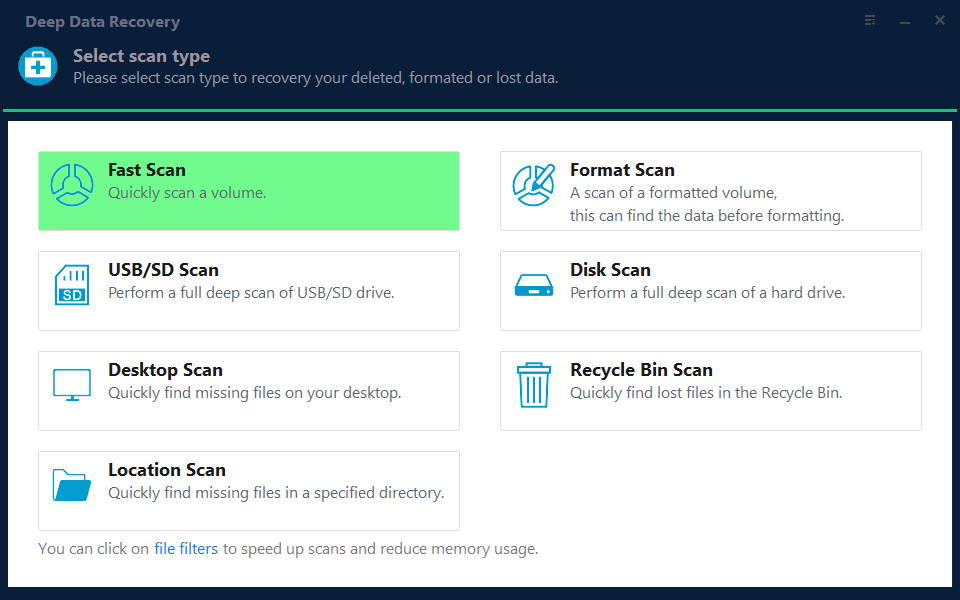
Note: You can choose different search modes based on where and why the data was lost.
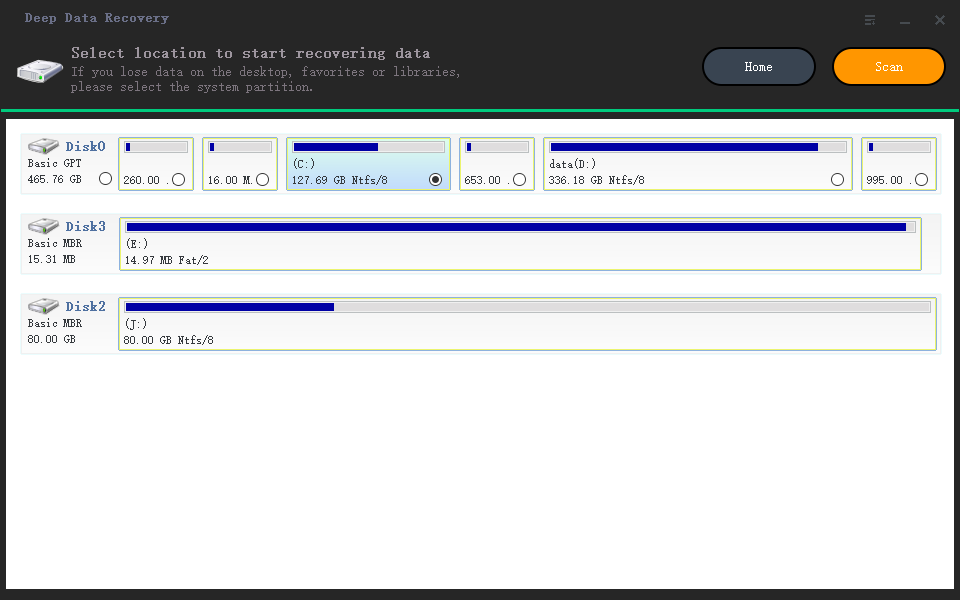
Step 2. Choose the USB drive to scan
To recover lost files from a USB drive, select the drive where the files were lost, then click "Scan" to initiate the recovery process.
Step 3. Check and preview USB drive data
When the scanning is finished, you can quickly locate a specific type of file by using the Filter feature and the Search option.
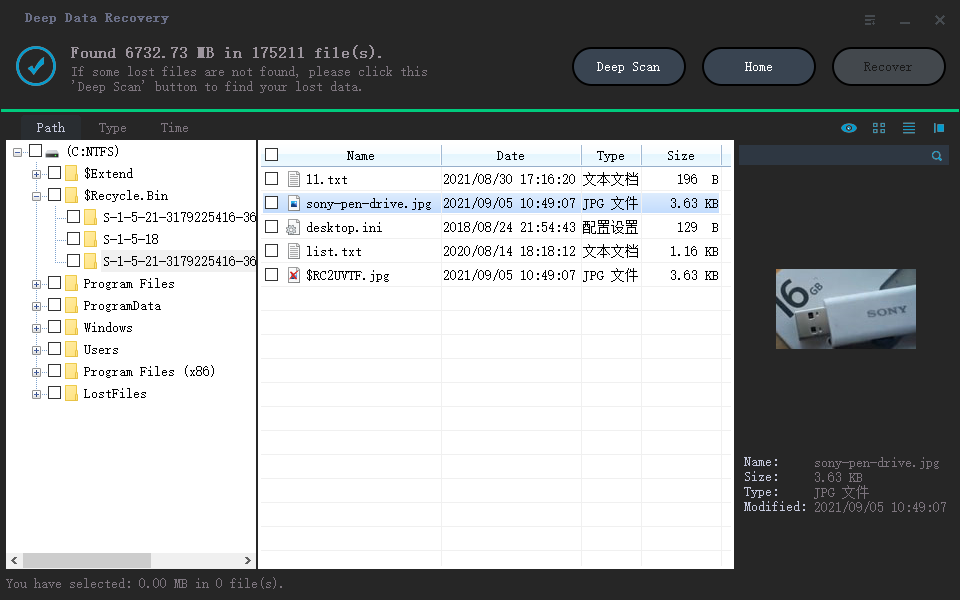
Step 4. Restore flash drive data
After finding lost files on your USB drive, click "Recover" to restore them. Save the recovered files to a safe location on your PC, rather than back to the USB drive.
Note: Once the recovery is complete, save the restored files to another location and format the USB drive to make it safe to use again.
You can also follow this video and run Deep Data Recovery to perform SD card recovery, recover files from external hard drive, hardware RAID, SD card, memory cards, etc.
Method 2. Perform USB Data Recovery Using Command Prompt
This guide is intended for advanced Windows users who are familiar with using the CMD command and are looking for a concise, step-by-step solution to a specific problem. If you're not comfortable with using the command line or don't know how to use CMD commands, this guide may not be suitable for you.
To recover data from a USB drive using the Command Prompt, you can try using the built-in command-line utility, `chkdsk`. This method allows you to scan the USB drive for errors and potentially recover lost data, but it is limited to working with hidden files. The process involves opening the Command Prompt as an administrator, navigating to the drive letter of the USB drive, and running the `chkdsk` command followed by the drive letter. This may take some time to complete, and it is essential to be cautious when using this method to avoid overwriting any existing data.
Step 1. Connect the USB flash drive to your computer.
Step 2. Run Command Prompt as an administrator.
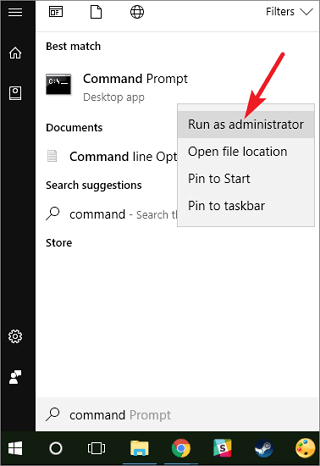
Step 3. The command `attrib -h -r -s /s /d e:\*.*` is used to remove the hidden, read-only, and system attributes from all files and subdirectories on the E:\ drive. The `/s` and `/d` options are used to apply the changes to subdirectories and their contents, while the `*.
Note: Replace e: with the drive letter of your USB flash drive or USB external hard drive.

After completing the steps above, the hidden files on your USB will once again be visible.
Method 3. Recover Hidden USB Files with CMD Alternative Tool
Apples to: Recover hidden files from USB flash drives, SD cards, and other portable storage devices using a CMD alternative tool.
Manual execution of the command line is not recommended for non-computer professionals, as incorrect commands can cause more harm than good. Instead, using a tool like Qiling CleanGenius is recommended, as it allows for automatic checking and fixing of file system errors, enabling or disabling write protection, and updating the system with a single click, making it a more secure and user-friendly alternative.
To show hidden files using this 1-click-fix software, follow these simple steps: the steps outlined below.
Step 1. DOWNLOAD Qiling CleanGenius for Free.
Step 2. Start Qiling CleanGenius, choose "Optimization" on the left panel. Next, click "File Showing" on the right panel.
Step 3. Select the hard drive and click "Execute".
Step 4. After the operation completes, click the here link to check the hidden files.
Method 4. Recover Lost Files from USB with Backup
If you have previously created a backup of your USB drive, you can recover lost or deleted files from it.
Here are the steps to recover lost data with a 100% success rate if you have a backup:
Step 1. Find your USB data backup on your computer or external storage device.
Step 2. Locate and select your lost data from the backup.
Step 3. Copy and save the data back to your USB drive.
If you don't have a backup, then your best option is to return to Step 1 and use the Qiling Data Recovery software.
Method 5. Recover USB Data from Previous Versions
If you're using the previous version of the software on Windows and need to recover data from a USB drive, you can do so by following the relevant instructions for that specific version.
Windows has a feature called Previous Versions that acts as a system backup for files, although it may not work all the time. It's worth trying.
Here are the steps:
Step 1. Connect the USB drive to your computer.
Step 2. Open This PC and right-click your USB drive, select "Properties".
Step 3. To revert to a previous version of your OneDrive file, go to the Previous Versions tab, select an available previous version, and click "Restore".
Note: This feature may not be available on the latest version of Windows 10 for some files. It also requires File History to be enabled before data loss occurred. If so, Deep Data Recovery can retrieve lost files.
Causes of USB Data Loss
Congratulations if you've successfully restored lost data from your USB flash drive or external hard drive! Data loss is a common experience for many people, but it's great that you've been able to recover your lost files.
The most common causes of data loss issues include hardware failure, software corruption, power outages, cyber attacks, human error, and natural disasters. These can result in the loss of important files, programs, and other digital information, making it essential to have a plan in place to prevent or mitigate these risks.
- Accidental deletion
- Careless formatting
- Invalid file system error
- Virus or malware infection
- Hardware failure
- Connection issue
To keep your data safe on USB drives, follow the tip in the next section, which will help you protect your information from being compromised.
Bonus Tips: How to Back Up USB Data
Data loss can occur not only in USB devices, but also in other external storage devices such as hard drives, SD cards, and memory cards.
Here are some tips to help you prevent data loss on your storage media: Regularly back up your data, use a reliable backup software, avoid overwriting existing files, use a secure erase method when disposing of storage media, and avoid physical damage to storage devices. By following these tips, you can minimize the risk of data loss and ensure your important files are safe.
#1. Create a backup of USB data regularly
To backup USB files, you have three options:
1. Turn to free file backup software for help; 2. Manually copy and paste files to another location; 3. Upload and save USB data to a Cloud drive.
We recommend you try the Qiling Backup is a user-friendly software that allows you to back up all files on a USB drive to an internal or external storage device with just a few clicks.
Step 1. To initiate a file backup, navigate to the Backup and recovery page and click on the File backup option. This will start the backup process.
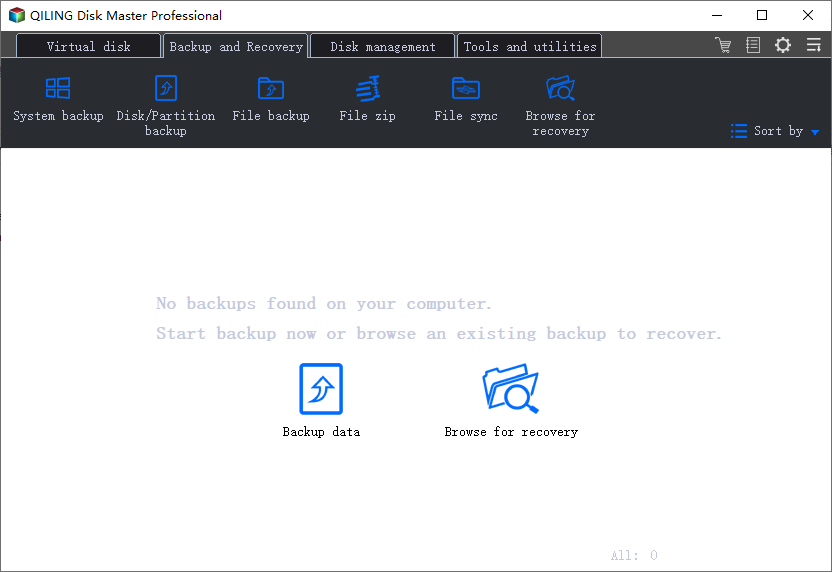
Step 2. Local and network files will be listed on the left, allowing you to expand directories to select files for backup.
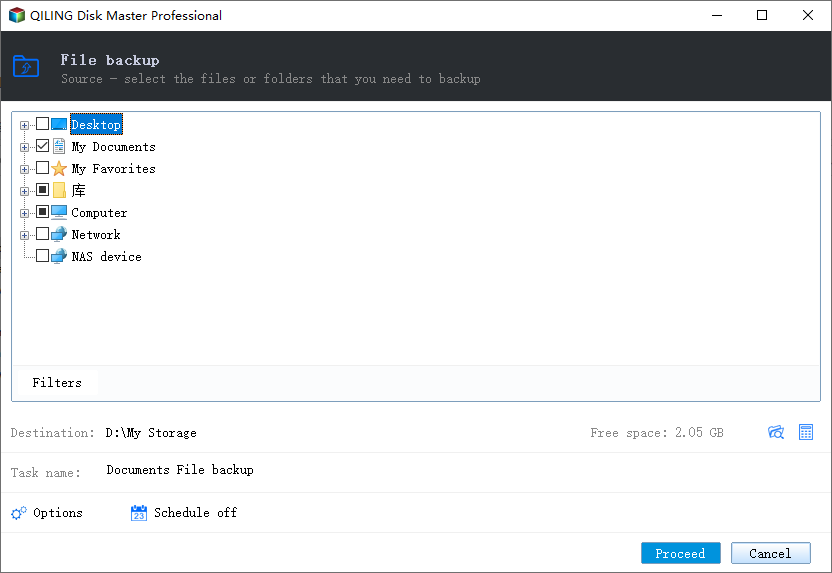
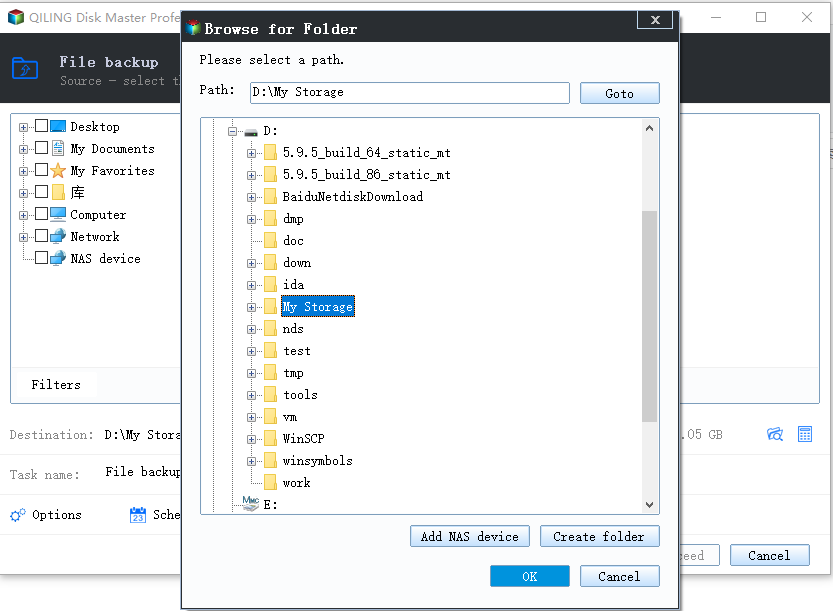
Step 3. Follow the on-screen guide to select the destination where you want to save the backup.
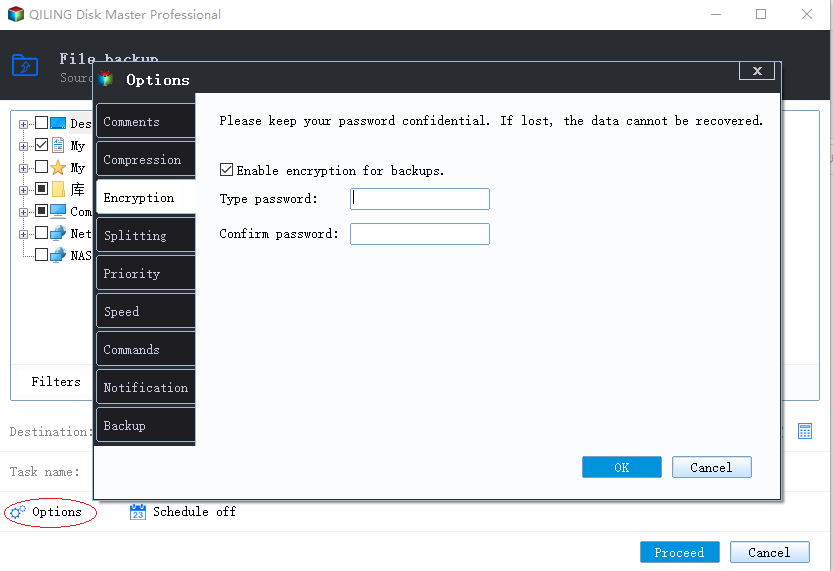
Step 4. To encrypt the backup with a password, click on the "Options" button and select the "Backup Options" section. This will allow you to customize the backup task and explore other available options.
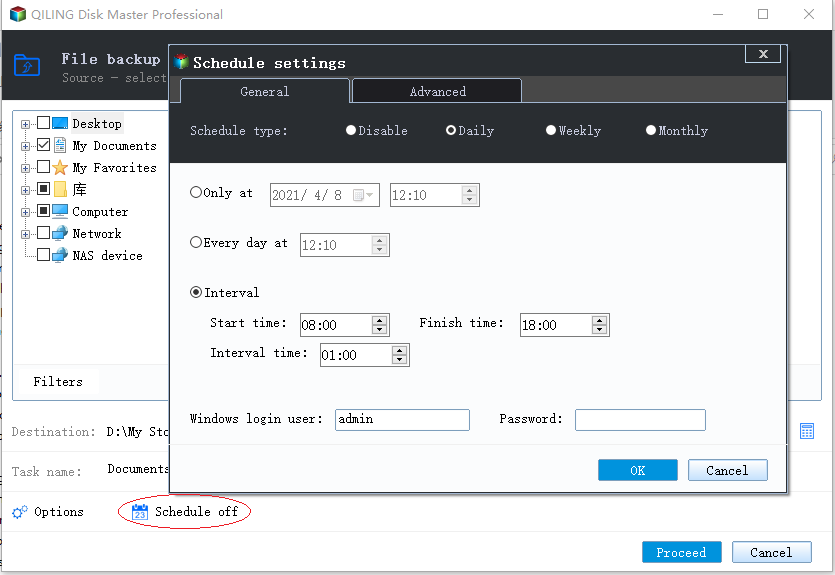
In the Backup Scheme section, you can set the backup schedule and choose to start backing up at a specific event, such as a daily or weekly schedule, or even a specific date and time. This allows you to customize the backup process to fit your needs and ensure that your important files and data are safely backed up at the right time.
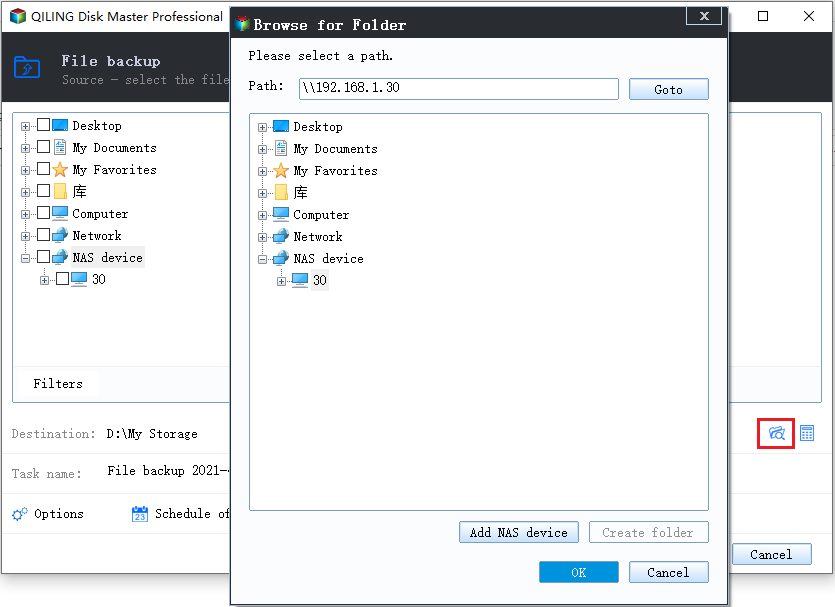
Step 5. You can store the backup to local drive, Qiling's cloud service, or NAS.
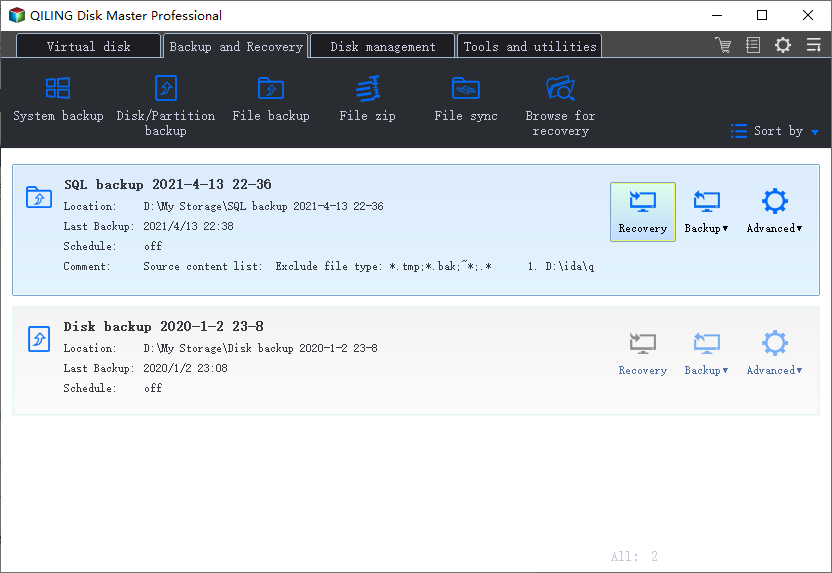
Step 6. Click "Proceed" to start the backup process. Once the backup is complete, it will be displayed as a card on the left side of the panel. You can then right-click on the backup task to further manage it.
To automate the process of backing up files to an external hard drive, you can use a software like Qiling Backup. These programs allow you to create a backup schedule and automatically copy your files to the external drive at the specified intervals.
#2. Deal with USB drive carefully
It's a good idea to spend a little time maintaining your USB drives to ensure they remain in prime condition. This includes regularly cleaning the USB ports and drives, avoiding extreme temperatures, and not overwriting the same files repeatedly. Additionally, it's a good idea to format your USB drives periodically to prevent data fragmentation and maintain the drive's performance.
- Set the file system on a USB or USB flash drive to FAT32, NTFS, or exFAT.
- Run antivirus software to clean up viruses or malware on your computer's drives.
- Connect and eject the USB drive from the PC properly.
- Pay careful attention when deleting files or formatting drives.
The Bottom Line
If you've lost files due to a USB drive failure, don't worry - there are 5 reliable USB data recovery methods that can help you salvage your data. These methods include using a USB data recovery software, taking the drive to a professional data recovery service, using a USB data recovery hardware, formatting the drive and recovering data from a backup, and using a cloud backup service to recover your files.
Deep Data Recovery is the go-to solution for reliable and fast data recovery, outperforming its competitors with excellent performance. It allows users to recover data from various storage devices in different data loss situations, making it a must-have for anyone in need of a simple yet effective recovery tool.
If your data is precious, then protect it in the best way possible by adding Qiling Data Recovery to your device.
While we can take measures to minimize the risk of data loss, it's impossible to completely eliminate the possibility of losing data. Therefore, both backup software and data recovery software are essential tools to ensure data security.
Related Articles
- Download Qiling Bootable Data Recovery Software to Recover Files
- How to Work on Large Excel Files Without Crashing (5-Step Guide)
- What Happens to the Data on an SSD When the Power Is Lost?
- Top 5 Best Open Source Data Recovery for Windows/Mac/Linux/Android
If you're struggling to find your open source data, this guide recommends the top 5 best open source data recovery software options, which can help you recover deleted or lost data. - Top 8 Best Professional Data Recovery Software 2022 Update
If you've lost important files, professional data recovery software can help.
Products
Articles & Tutorials
- Data Recovery
- Data Backup
- File Recovery
- File Backup
- System Backup and Restore
- Disk and Partition Clone
- Technical articles
- Mobile articles
- Disk Master Help
- Windows Data Recovery Tutorials
- Windows Secure Delete Tutorials
- Windows Partition Management Tutorials
- Windows File Backup and Restore Tutorials
- Windows System Backup and Restore Tutorials
- Windows Disk Backup and Restore Tutorials
- Windows Clone Tutorials