Professional Data Recovery Software Safe Download Guide
If you're experiencing data loss due to accidental deletion, hard drive formatting, or a virus attack, This page provides a step-by-step guide to help you recover your lost files safely and effectively, without causing any damage to your device or data.
Professional vs cracked data recovery software
When unexpected disasters strike on your files, it's hard to avoid accidents, but you can find a reliable data recovery software to help.
Many people opt for cheaper data recovery software with cracked versions, hoping to get a good recovery result without the hefty price tag.
Be cautious with cracked data recovery software, as the drawbacks far outweigh the benefits. Using such software can lead to serious issues, making it a risk not worth taking.
| Professional Data Recovery Software | Cracked Data Recovery Software |
|---|---|
|
|
Cracked data recovery software can cause further data loss and even device damage, making it unreliable and potentially hazardous to use. It's best to stick with legitimate and trustworthy software to ensure successful data recovery.
Download Qiling professional data recovery software for help
Professional data recovery software offered by reliable software providers consistently works, unlike software with cracks. Qiling professional data recovery software is a recommended option that allows you to restore lost files from various data loss situations.
Overview of Deep Data Recovery Free
For those who prefer a 100% free alternative to replace data recovery software with cracked versions, we recommend trying Deep Data Recovery Free.
Advantages:
- The free version of the software enjoys the same powerful data recovery quality and ability as its professional version.
- Support deleted recovery, formatted recovery, RAW recovery, even Virus recovery.
- Suitable for all levels of users, requiring no technical skill.
- 100% secure, virus clean.
The freeware has a disadvantage in that it requires users to click the share button in the wizard to restore up to 2GB of files, which can be inconvenient.
- Tip
- If your lost data is more than 2GB, you can upgrade to Deep Data Recovery Professional and enjoy unlimited data recovery.
With this tool, you can recover lost files from a USB drive, hard drive, memory card, and more. If you need help during the recovery process, you can email the support team at support@idiskhome.com.
Full data recovery with Deep Data Recovery
Given the advantages of Qiling freeware, it's the optimal choice. Download this software to let it help you.
Step 1. Run Deep Data Recovery on your computer, select the file types you want to recover, and click "Fast Scan" to begin the process.
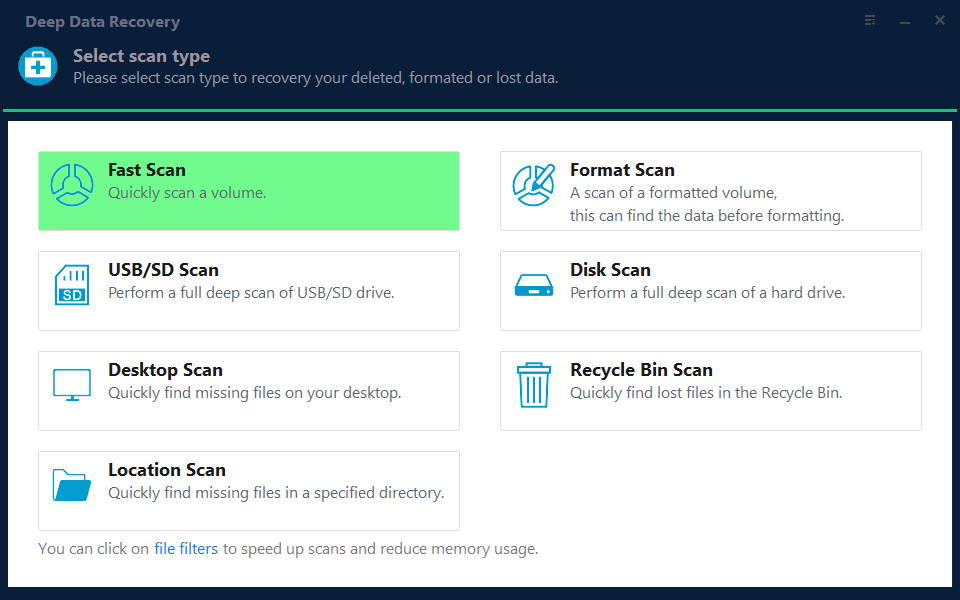
Note: You can choose different search modes based on where and why the data was lost.
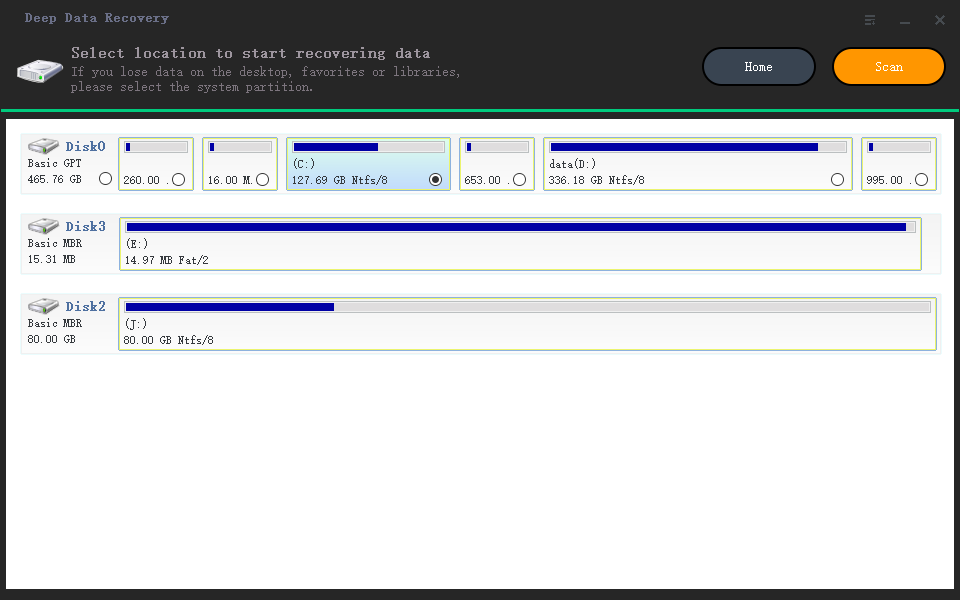
Step 2. To recover lost files, choose the drive where the files were lost and click "Scan". If the lost files were on an external storage device, make sure to connect it to your computer before scanning.
Step 3. The software rapidly scans deleted files, followed by a deep scan to locate more lost files. Upon completion, a "Filter" feature allows for quick filtering of specific file types.
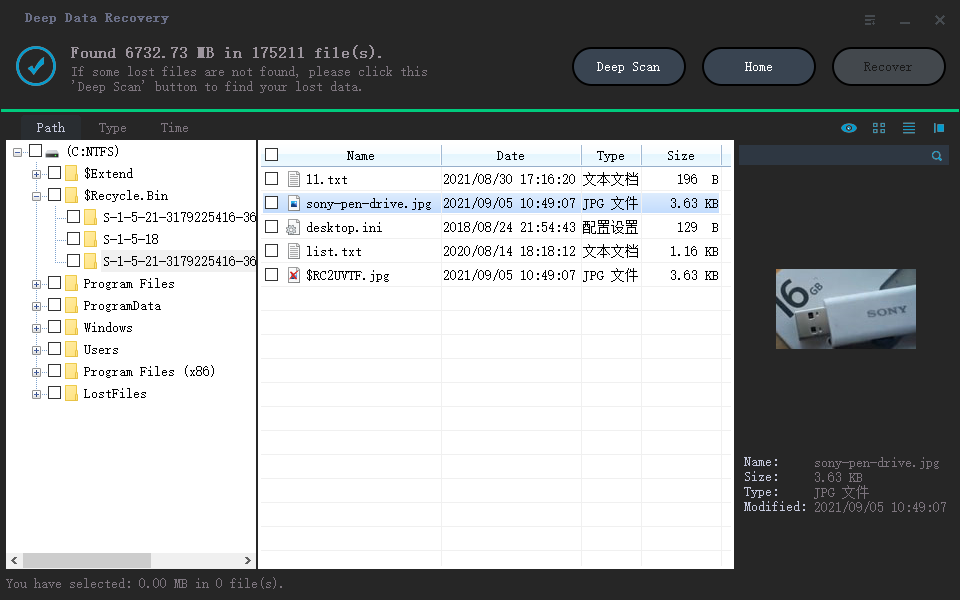
Step 4. To preview and recover files, click the "Preview" button or double-click on a file to view its contents. Select the desired files, click "Recover", and choose a safe location to save them.
Related Articles
- Fix 'Photos Cannot Preview or Open' Error in Windows 10/8/7
- Recover Data After Windows 10/11 Crashed
- Recover Deleted Volume Windows 10/11
- Look! 5 Methods to Fix PNG Files Not Opening in Windows 10/11
- [Official & Latest] Deep Data Recovery Key 2.6 and Qiling License Code
Stop using Qiling data recovery crack, keygen, or serial number to activate Deep Data Recovery. Instead, download the official license code and serial key available here to activate the software legally and safely recover your data. - Deep Data Recovery Stuck Or You Recieve Error Messages? Fixes Here!
To resolve Deep Data Recovery issues with Qiling, such as a deep scan getting stuck, taking too long to scan a disk, or getting stuck building a new directory, try restarting the application, checking for disk space and ensuring the disk is not full, or running the scan on a different disk.
Products
Articles & Tutorials
- Data Recovery
- Data Backup
- File Recovery
- File Backup
- System Backup and Restore
- Disk and Partition Clone
- Technical articles
- Mobile articles
- Disk Master Help
- Windows Data Recovery Tutorials
- Windows Secure Delete Tutorials
- Windows Partition Management Tutorials
- Windows File Backup and Restore Tutorials
- Windows System Backup and Restore Tutorials
- Windows Disk Backup and Restore Tutorials
- Windows Clone Tutorials