How to Recover Data from Corrupted Windows OS [Easy and Fast]
This tutorial offers detailed guides on recovering data from a corrupted OS and repairing a Windows system, providing you with the necessary steps to restore your system to a functional state.
| Workable Solutions | Step-by-step Troubleshooting |
|---|---|
| Recover data from corrupted OS | First, recover data from corrupted OS with Qiling Data Recover Wizard Bootable Media...Full steps |
| Use Windows Repair Services | The Windows repair services can solve any system startup errors, including system failure, system blue screen, system black screen, and so on...Full steps |
| Check disk errors to fix corrupted OS | Press the "Windows" key and type cmd > right-click "Command Prompt"...Full steps |
| Update device drivers to repair Windows OS | Go to "This PC" > "Manage" > "Device Manager" > expand "Disk drives"...Full steps |
| Run system file checker to fix corrupted Windows OS | Press the "Windows" key and type cmd > right-click "Command Prompt" and...Full steps |
What Is a Corrupted Windows OS (Symptoms)
A computer program, such as a software application or operating system, stops functioning properly and exits, resulting in a crash or system corruption. This can occur due to various reasons, including corrupted Windows OS, which can cause boot issues with different symptoms.
- A black or blue screen of death
- Stuck on Spinning Circle
- Stuck at loading files loop
- Computer keeps freezing randomly
Why Does Windows 11/10/8/7 Get Corrupted (Causes)
Unexpected problems often arise, preventing access to hard drives and data. These issues typically occur due to various reasons, including hardware failures, software glitches, and human errors, which can be frustrating and disrupt daily activities.
- Hardware issue
- Bad sector in hard disk
- Outdated drivers
- System files corrupted
- Conflicts and more
To recover data from a corrupted Windows OS, you can try using a third-party data recovery software, such as Deep Data Recovery or Deep Data Recovery, to scan your computer for recoverable files. You can also try booting from a Windows installation media and using the built-in System File Checker (SFC) tool to scan and replace corrupted system files. Additionally, you can try using a Linux live CD or USB to access your files and transfer them to a safe location.
Can I Recover Data from Corrupted Windows OS
You can recover data from a corrupted Windows OS by using a bootable data recovery software, which can help you access your hard disk data even if your PC won't boot.
Deep Data Recovery with Bootable Media is a tool designed to recover lost data in cases of system crashes or booting issues, such as crashes, freezes, or continuous rebooting. It can also efficiently recover data from a dead hard drive.
If your Windows 10, 8, or 7 system becomes corrupted, don't panic - your data can still be rescued. Start by booting your computer in Safe Mode to see if the issue is hardware-related.
Step 1. Create a bootable disk
Before creating a bootable disk, make sure to back up any important data on the USB stick to another device, as the process will erase its contents. Once you're ready, you can use Deep Data Recovery WinPE Edition to create a bootable disk.
To start the recovery process, connect the USB drive to your PC and launch the Deep Data Recovery WinPE Edition software. From there, select the USB drive as the target device and click "Create" to create a bootable disk that can be used to recover data from the damaged drive.
Step 2. Boot from the bootable USB
Connect a bootable disk to the non-booting PC, and change the boot sequence in the BIOS settings by pressing F2 at startup. This usually resolves the issue when the PC is restarted.
To boot your PC from a device other than the hard drive, press F10 to save and exit the BIOS settings. This will allow you to boot from a removable device, such as a USB disk, or a CD/DVD drive.
Step 3. Recover data from a hard drive that won't boot
When booting from a USB, you can run Deep Data Recovery from the WinPE bootable disk, then select the drive to scan and recover lost files.
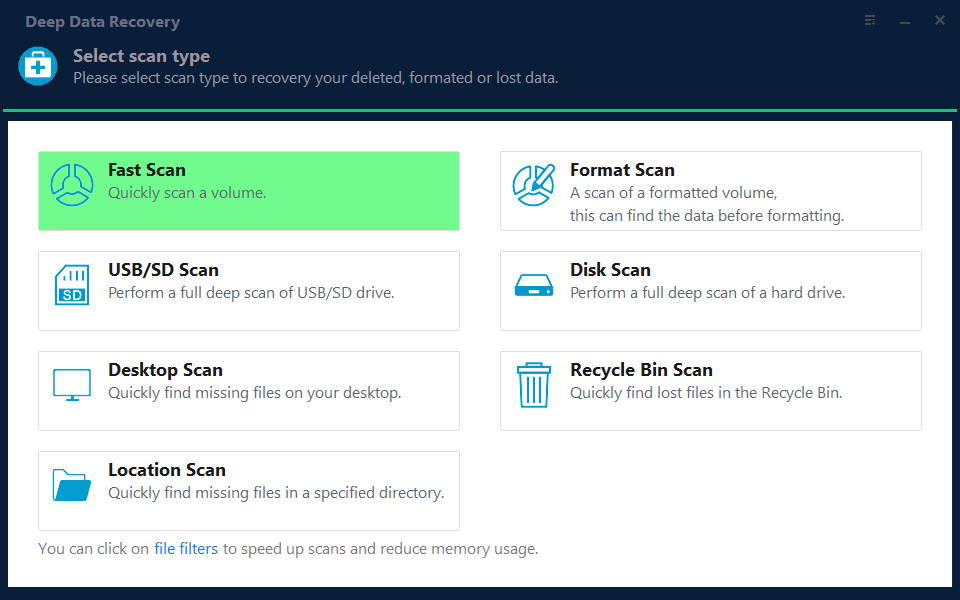
Note: You can choose different search modes based on where and why the data was lost.
Click "Proceed" to start the scanning process.

After scanning, recover data from the computer or laptop by previewing all recoverable files, selecting the targeted files, and clicking the "Recover" button to restore your files, then save them to another place to avoid data overwriting.

After recovering your data, you can proceed with repairing the corrupted Windows system using various solutions. These solutions can help restore the operating system to a functional state, allowing you to regain control and continue using your computer as usual.
How to Repair Corrupted Windows System
Before repairing, ensure that the issue isn't caused by physical damage or hardware failure, and then address the corrupted system based on the identified cause.
Solution 1. Repair Windows 10 with Windows Repair Services
The most secure and easiest way to repair Windows 10 without data loss is through manual Windows repair services, which can help solve system startup errors such as system failure, blue screen, and black screen, among others, with the assistance of Qiling's professional technical team.
- 1. Fix Windows boot issues, including BSOD
- 2. Fix Windows error and configure Windows environment
- 3. Restore the system when it fails to boot
- 4. Optimize Windows computer to make it run quickly
Solution 2. Check and Repair Hard Disk Corruption Errors
If a hard disk drive becomes damaged or corrupted, it can cause system corruption. To address this issue, you can use the CHKDSK command to check and potentially fix the damaged hard disk drive.
Step 1. Press the "Windows" key and type cmd.
Step 2. Right-click "Command Prompt" and choose "Run as administrator".
Step 3. To repair a damaged partition, enter the command `chkdsk e: /f /r /x` in the command prompt, where "e" represents the drive letter of the partition you want to repair. This command will run a check on the partition, fix any errors it finds, and then attempt to recover any readable data from the damaged areas. The `/f` option forces the check to be run, the `/r` option runs a thorough check and attempts to recover data, and the `/x` option will not prompt the user to press any keys during the process.
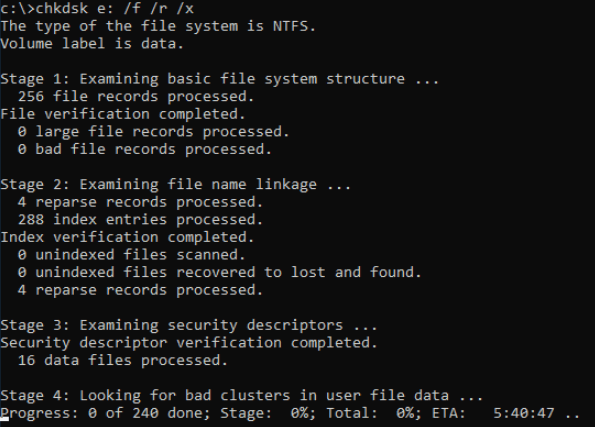
- chkdsk /f is running to fix any found errors.
- The /r option in the chkdsk command is used to locate bad sectors on a disk and attempt to recover any readable information from them. This process involves scanning the disk for errors and attempting to repair or recover data from any sectors that are found to be bad.
- chkdsk /x is running to force the volume you're about to check to be dismounted before the utility begins a scan, which is necessary to ensure the integrity of the disk.
Solution 3. Updating all Device Drivers to the Newest
System corruptions after a Windows 10 update can be caused by hardware and driver incompatibilities. To resolve this, simply update all device drivers.
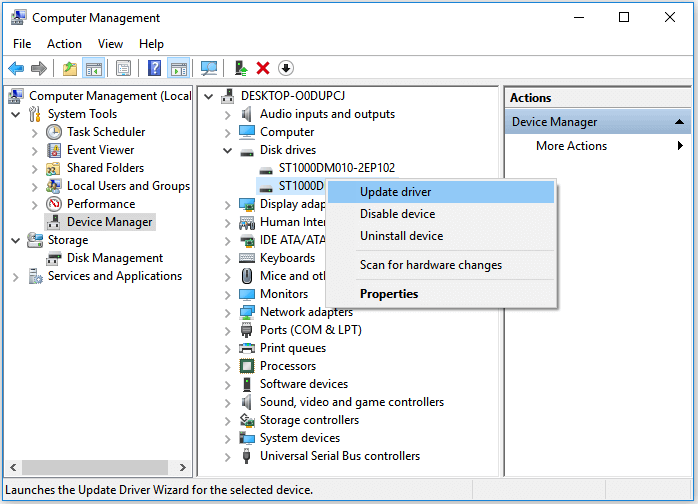
Step 1. Go to "This PC" > "Manage" > "Device Manager".
Step 2. Expand "Disk drives".
Step 3. Right-click the disk and choose "Update driver".
Solution 4. Run System File Checker Scan (Sfc) to Fix Corrupted System Files
System File Checker is a utility in Windows that scans for corruptions in Windows system files and restores corrupted files. To use it, follow these steps: the steps outlined below. This tool allows users to scan system files and repair missing or corrupted system files, helping to maintain the integrity of the Windows operating system.
Step 1. Press the "Windows" key and type cmd.
Step 2. Right-click "Command Prompt" and choose "Run as administrator".
Step 3. Type `sfc /scannow` into the Command Prompt window and press "Enter" to run a full system scan.
If the System File Checker couldn't fix one or more files, you may need to consider taking system restore or a Windows clean install into account. Before starting, it's a good idea to back up your data, even if you can't boot into Windows, to ensure that your data is safe.
How to Back Up Your Data Even Windows Corrupted
If you're unable to access the normal Windows OS, you'll need to use other tools to help you. Qiling Backup can create a bootable USB drive or CD/DVD disc, and also allows you to back up your data to an external hard drive or cloud.
The backup procedure requires a working computer to create an emergency disk for Qiling Backup, which can then be used to boot an unbootable computer and make a full backup.
Step 1. To make a Qiling Backup emergency disk, connect a USB flash drive to a working computer, launch Qiling Backup, click "Tools", and then click "Create bootable media".
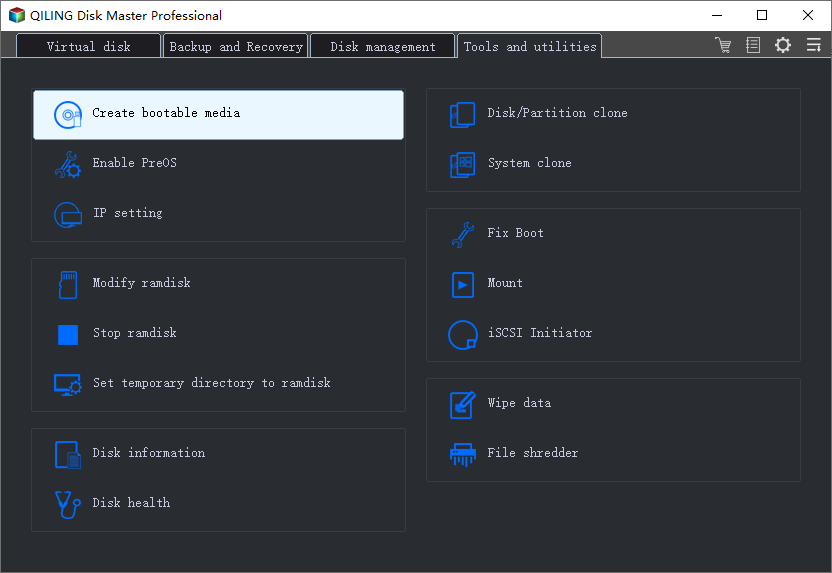
Step 2. When choosing a boot disk location, select the USB option and click Create.
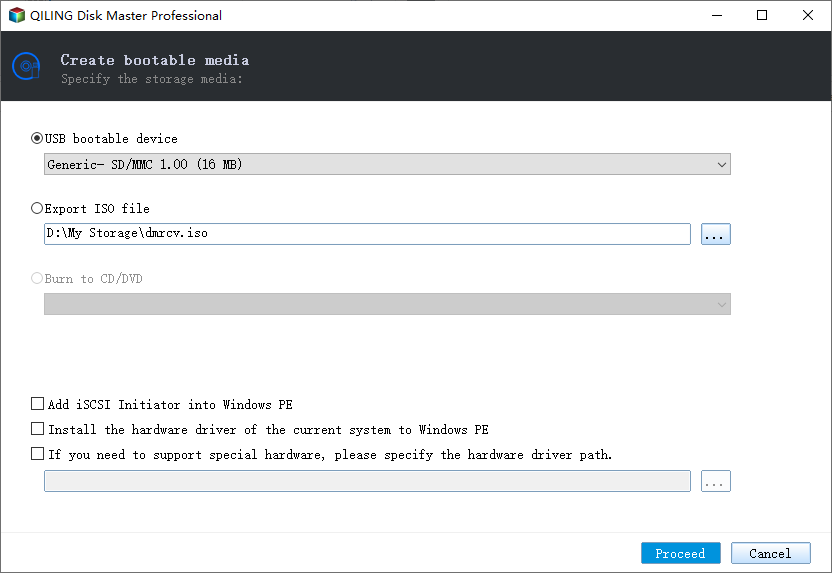
Step 3. To create a backup, insert the emergency disk into the computer that needs backing up, restart the PC, and press F2/DEL to enter the BIOS. From there, change the boot sequence to prioritize the emergency disk, then restart the computer and run the Qiling backup software from the bootable disk.
Step 4. In the Backup and recovery page, select the Disk backup mode and choose the computer hard drive(s) to make a full backup.
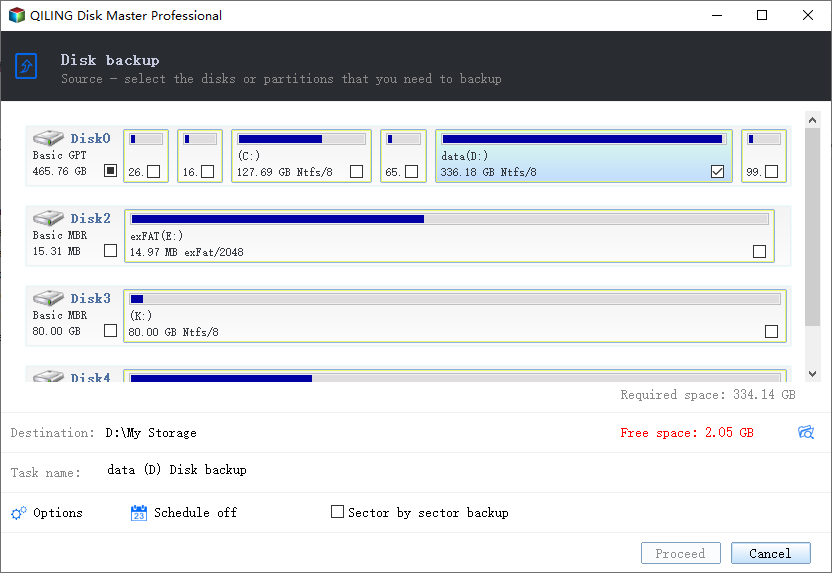
Step 5. Save the backup file to an external storage device, such as a USB drive or an external hard drive, to keep it safe and separate from your main device.
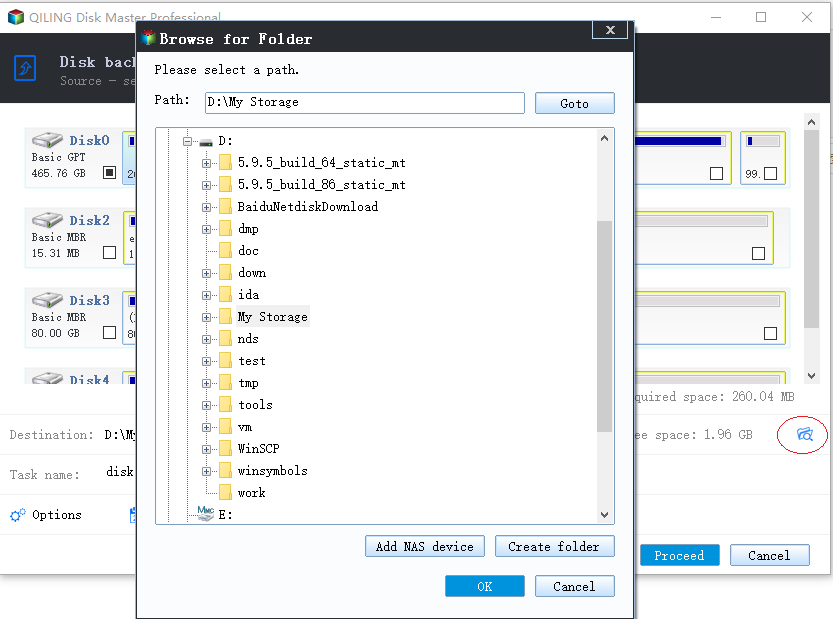
Step 5. Click "Proceed" to execute your operation.
Conclusion
Before repairing a corrupted system, use Qiling data recovery software to easily and quickly recover deleted, formatted, or lost data from your PC, laptop, or removable devices. After that, you can follow the solutions to repair your corrupted Windows.
Related Articles
- How to Recover Black Box Recordings (FDR/CVR) from a Flight/Plane
- Download Microsoft Word Document Recovery Software to Recover Word Files
- TXT File Recovery - Two Methods to Recover Lost Text Files
- What Is Network Attached Storage and How to Recover Lost/Deleted Data from NAS
- How to Recover Deleted Videos on Any Device
No matter how you lost videos from your PC or phone, there are ways how you can recover deleted videos. Try the best and most effective methods below to recover deleted, formatted, or damaged videos on Windows/Mac/iPhone/Android. - Recover and Repair Word Document Opens with Random Codes
If you've lost an important Word document or one that opens with random codes or gibberish, this article can help you recover and repair it. The steps to follow are divided into two parts, and are applicable to various versions of Word, including 2017, 2016, 2010, and 2007.
Products
Articles & Tutorials
- Data Recovery
- Data Backup
- File Recovery
- File Backup
- System Backup and Restore
- Disk and Partition Clone
- Technical articles
- Mobile articles
- Disk Master Help
- Windows Data Recovery Tutorials
- Windows Secure Delete Tutorials
- Windows Partition Management Tutorials
- Windows File Backup and Restore Tutorials
- Windows System Backup and Restore Tutorials
- Windows Disk Backup and Restore Tutorials
- Windows Clone Tutorials