How to Backup Outlook PST Files
PAGE CONTENT:
- The Outlook PST file is a personal storage table that stores all your emails, contacts, calendars, and tasks in Microsoft Outlook. It's a crucial file that contains all your important data, and losing it can be disastrous.
- How to Backup Outlook to PST Files – 3 Methods
- Final Verdict: A Comparison of 3 Backup Outlook PST Files
- Backup Outlook PST FAQ
If you need to backup your Outlook PST files, there are three available methods to do so. You can use the built-in feature in Outlook to backup your PST files, or use a third-party tool like PST Backup or PST Capture to automate the process.
What is Outlook PST File & Why You Need to Backup It
Outlook is a widely used email client, part of the Microsoft Office suite, available for both Windows and Mac.
Outlook supports PST files, which stand for Personal Storage Table, and store all of your Outlook data, including emails, contacts, calendar items, tasks, and notes, in a single file.
This file, located on your computer's hard drive, stores all of your Outlook data in one place and allows for data transfer between Outlook installations.
Backing up Outlook PST files is essential for several reasons. It ensures that your important emails, contacts, and other data are safely stored in case of a system crash, hardware failure, or accidental deletion.
- If you're upgrading to a new computer, you'll need to transfer your PST file to the new machine.
- When migrating from an older version of Outlook to a newer one, export the PST file and import it into the new version of Outlook.
- If your Outlook crashes or data gets corrupt, you'll need to restore your PST file from a backup to recover your lost data.
Backing up your Outlook PST file is a crucial step in using this email client, and there are three methods to do so. By creating a backup of your PST file, you can ensure that your emails, contacts, and other data are safe in case of any issues with your Outlook account. This article will guide you through the process of backing up your Outlook PST files using three different methods.
How to Backup Outlook PST Files – 3 Methods
| Workable Solutions | Step-by-step Troubleshooting |
|---|---|
| Method 1. Use Outlook Backup Software |
Launch Qiling Backup on your computer, and click Cre...Full steps |
| Method 2. Use Personal Folder Backup | Launch Microsoft Outlook, and sign in with your account and...Full steps |
| Method 3. Use Import/Export Wizard | To open Microsoft Outlook, click on the File tab and select Open & Export from the drop-down menu.Full steps |
Method 1. Backup Outlook PST Automatically with Outlook Backup Software
Qiling Backup SysInfoTools PST Backup is a reliable and professional backup software that allows you to backup Outlook PST files with ease, even if you're not tech-savvy. With just a few clicks, you can automatically and schedule backups of your Outlook PST files and save them to a USB flash drive, external hard drive, or network location, ensuring your important data is always safe and secure.
Qiling Backup offers various backup options, including full, incremental, and differential backups.
To backup Outlook PST files with Qiling Backup software, follow these steps:
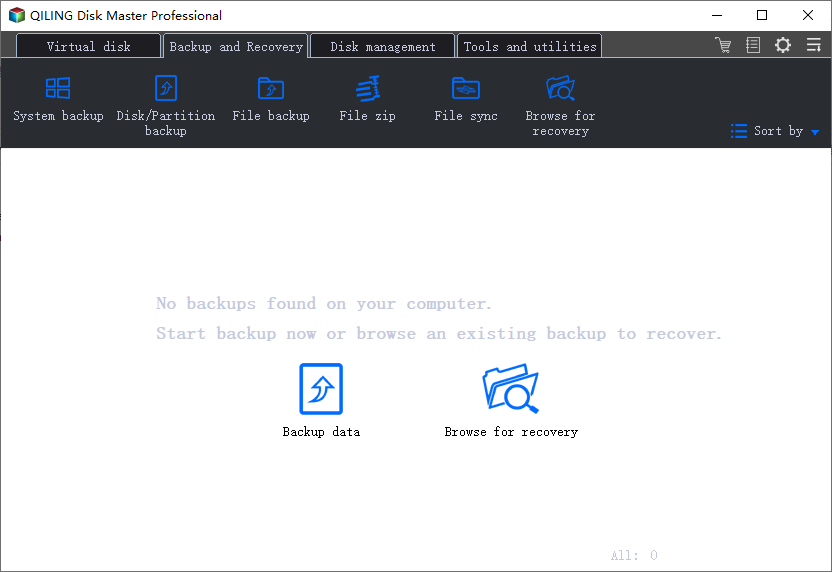
Step 1. Launch Qiling Backup on your computer, and click File Backup on the home screen.
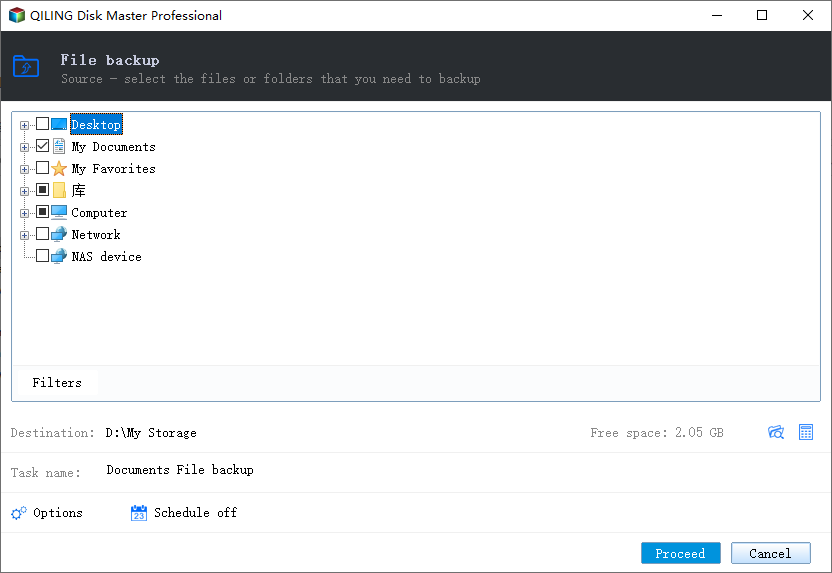
Step 2. Select the mailbox addresses you want to make a backup of the mails, contacts or calendars in your Microsoft Outlook database folder.
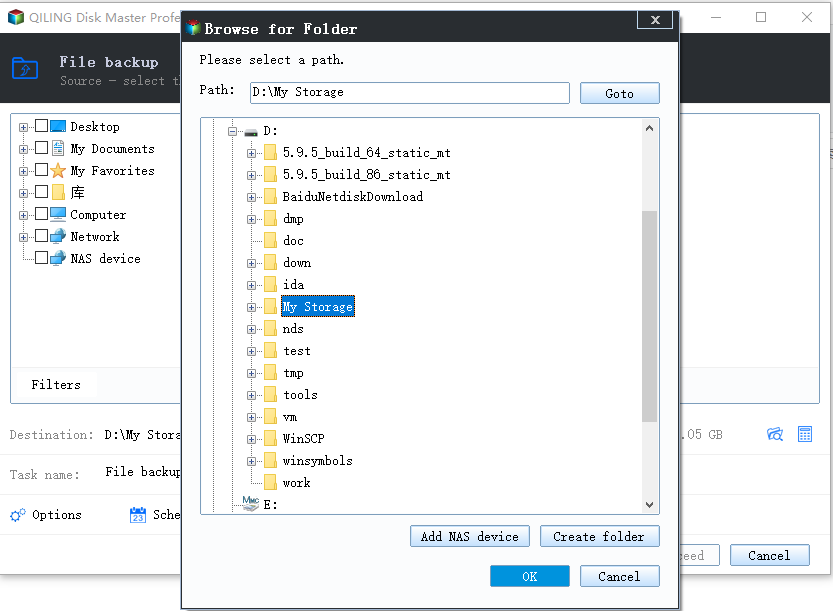
Step 3. To save the Outlook backup, you need to choose a location by clicking on the illustrated area. This will allow you to select a folder on your computer or device where the backup file will be stored.
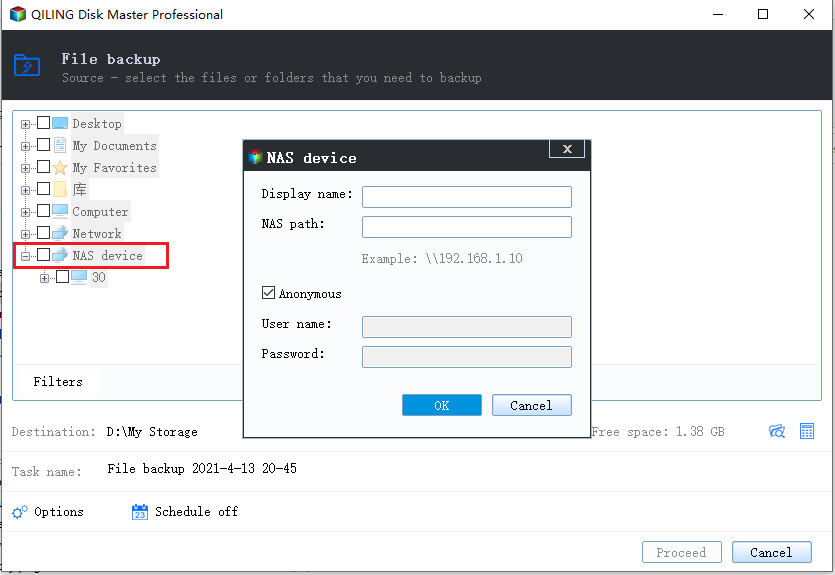
Step 4. The backup location can be another local drive, external hard drive, network, cloud, or NAS, and it's recommended to use an external physical drive or cloud to preserve the backup files.
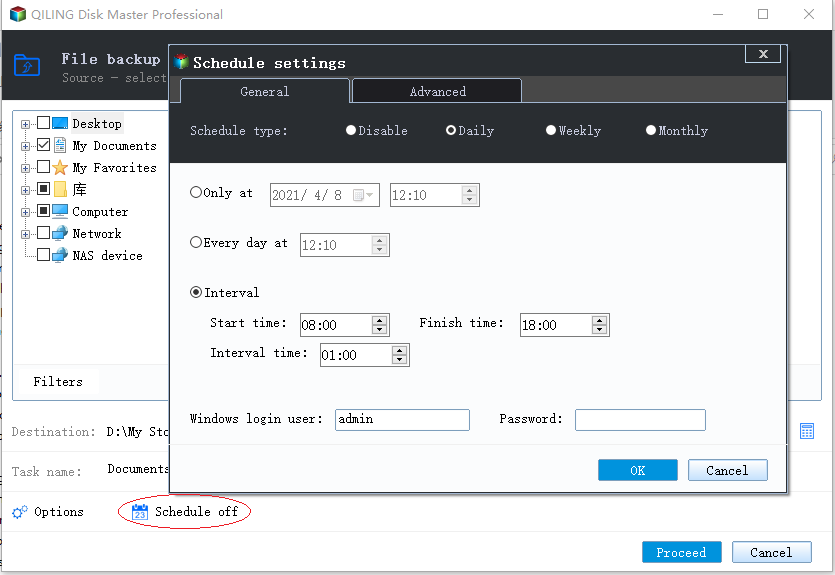
Step 5. The customization settings for automatic backup in Outlook include setting a schedule for daily, weekly, monthly, or event-based backups. Additionally, users can configure differential and incremental backups through the "Options" button. Once the settings are chosen, clicking "Proceed" initiates the backup process, and the completed task is displayed on the left side in a card format.
Method 2. Backup Outlook PST Automatically with Add-in Personal Folder Backup
The Personal Folder Backup utility is a feature in Microsoft Outlook that automates the backup process, saving Outlook data only in PST format.
If you're using an exchange server mailbox, the server administrator will frequently back up your files. Alternatively, you can use the Microsoft Outlook Personal Folders Backup tool add-in to manually backup your Outlook PST files. This process allows you to schedule backups of your Outlook data, ensuring that your emails, contacts, and other important information are safely stored.
Step 1: To access Microsoft Outlook, start the application, then enter your account credentials, which include your account name and password, to sign in and begin using the email client.
Step 2: To backup your Excel file, click on the File tab in the top-left corner, then select Backup.
Step 3: To back up a file, click on Options, then select the file you want to back up from the pop-up window that appears.
Step 4: Once you've completed the setup process, your files will start backing up automatically. This means that from now on, your files will be safely stored in the cloud, and you can access them from any device with an internet connection.
Method 3. Backup Outlook PST Manually with Import/Export Wizard
The Export and Import feature is a manual method for backing up Outlook data, allowing you to save PST files on your local computer or transfer them to another computer.
Here are the detailed steps to export Outlook data to PST files:
Step 1: To sign in to Microsoft Outlook, open the application and enter your email address and password in the required fields. Click on the "Sign in" button to proceed. If you're using the Outlook app on your mobile device, tap on the "Sign in" button and enter your credentials.
Step 2: Click the File, and select Open & Export > Import/Export.
Step 3: Select the Export to a file option and click Next in the pop-up window.
Step 4: Select Outlook Data File (.pst) as the export type and click Next.
Step 5: Select the Outlook data you want to export and click Finish.
You can also use this method to transfer Outlook data to another computer.
To transfer Outlook data from an old computer to a new one, export the data from the old computer to PST files, copy these files to the new computer, and then import them into Outlook on the new machine.
Related Articles:
Final Verdict: A Comparison of Three Backup Methods
You can use any of the three methods mentioned above to backup Outlook PST files, but each method has its own advantages and disadvantages.
The most recommended method for backing up Outlook is using specialized backup software, which is easy to use and can automate the process. This method also supports incremental and differential backups, providing a comprehensive and efficient way to protect your Outlook data.
Backing up Outlook with the Personal Folder Backup Utility is a straightforward process, but it has some limitations. It only supports backing up Outlook data in the PST format, and requires some knowledge about the tool add-in. This might not be the most efficient or user-friendly option for some users.
Using the Import/Export feature to manually back up Outlook data is a bit complicated, but it supports backing up in PST and CSV formats, allowing you to transfer data to another computer.
To automatically and securely backup Outlook PST files, we recommend using Qiling Backup software. You can download and try it now!
Backup Outlook PST FAQ
1. Where does Outlook backup PST files?
The default location for saving backup PST files varies across different Outlook versions. For the latest Outlook and Windows versions, the PST file can be found in the path C:\Users\AppData\Local\Microsoft\Outlook.
2. How do I recover a PST file?
To recover a PST file using Outlook's Import/Export feature, select "Import from another program or file", browse to the PST file, and choose a location to save the file.
3. Where is the Outlook PST file for Windows 10?
To find your PST file, depending on your Outlook version, you can look in either C:\Users\\AppData\Local\Microsoft\Outlook or C:\Users\\Documents\Outlook Files (for 2010) or C:\Users\\AppData\Local\Microsoft\Outlook or C:\Users\\Roaming\Local\Microsoft\Outlook (for 2013, 2016, and 2019).
4. What is the difference between OST and PST?
Outlook uses two data storage formats: PST and OST. PST files store archived items, while OST files maintain offline availability of items. Both formats can be converted into each other, allowing for flexibility in data management.
Related Articles
- How to Save Outlook Emails When Leaving Job | 2 Available Options
- Four Ways | How to Prevent Data Corruption in Windows Computer
- USB Bootable Software & Bootable USB Creation Tool
- How to Create Recovery Partition for Windows 7/8/10/11 with 2 Possible Ways
- How to Create Image of SD Card on Windows 11/10/8/7 [Step-by-step Guide]
If you need to create an image of an SD card, this article is for you. It will guide you through the process of creating a disk image of an SD card using professional SD card backup software, making it quick and easy to do so. - How to Create Sector by Sector Backup on Windows 11/10/8/7🔥
To create a sector-by-sector backup of your computer hard drive, follow the steps outlined in this article. The best backup software can help you back up all the sectors on your drive, ensuring a complete and reliable backup.
Products
Articles & Tutorials
- Data Recovery
- Data Backup
- File Recovery
- File Backup
- System Backup and Restore
- Disk and Partition Clone
- Technical articles
- Mobile articles
- Disk Master Help
- Windows Data Recovery Tutorials
- Windows Secure Delete Tutorials
- Windows Partition Management Tutorials
- Windows File Backup and Restore Tutorials
- Windows System Backup and Restore Tutorials
- Windows Disk Backup and Restore Tutorials
- Windows Clone Tutorials