Backup and Restore Not Working Windows 7? 3 Solutions and Best Alternatives
If you're experiencing issues with Backup and Restore on Windows 7, you're not alone. This problem can occur due to various reasons, and it's essential to understand why it happens and how to resolve it. Fortunately, this article provides solutions to help you overcome this issue and offers a reliable alternative to Backup and Restore for your Windows 7 system.
Backup and Restore Not Working Windows 7
If you're experiencing issues with Backup and Restore not working on Windows 7, it's likely due to a problem that can be resolved.
Why Backup and Restore Not Working Windows 7?
Backup and Restore is a built-in Windows software that sometimes fails to work, causing various problems. The failure may be due to corrupted system files, Windows updates, or other issues, leading to a non-functional backup system.
- System files are corrupted.
- Third-party applications or startup items cause problems.
- Viruses attack the computer.
What Are the Symptoms of Backup and Restore Not Working Windows 7?
When Windows Backup and Restore isn't working, it can manifest in various ways, such as the backup process failing to complete, the restore process not being able to recover files, or the program not launching at all. This can be due to a range of causes, including issues with the Windows operating system, problems with the backup software itself, or conflicts with other system programs.
1. Backup and Restore do not respond.
The most common scenario where you cannot open Backup and Restore is when you receive a message saying "1053: The service did not respond to the start or control request in a timely fashion." This prevents you from accessing Backup and Restore, making it difficult to perform backups or restores.
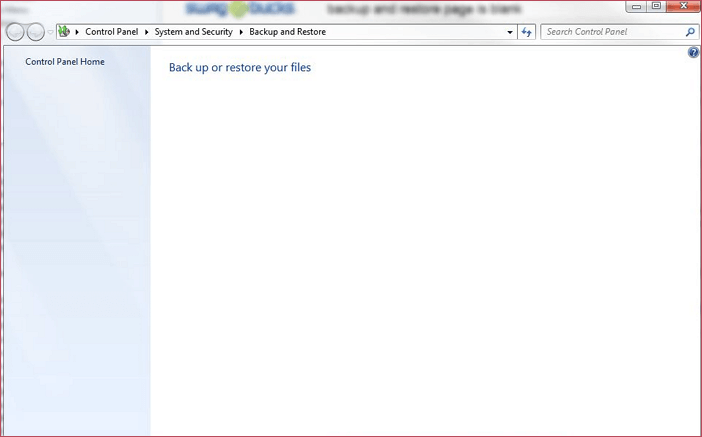
2. Backup and Restore displays blank.
The application can be opened, but it cannot be used due to some issues.
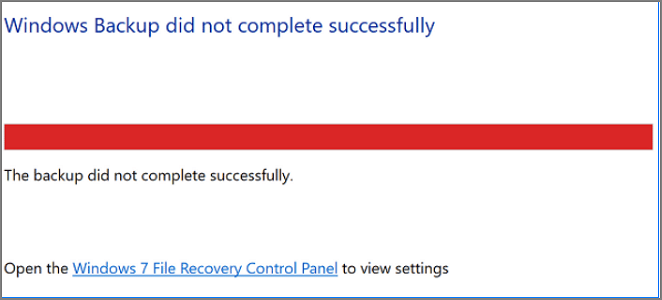
3. The Backup and Restore process did not successfully complete the backup or restore task. This could be due to various reasons such as insufficient storage space, corrupted files, or issues with the backup software.
Backup and Restore failed to complete the task, resulting in a notice that Windows Backup did not finish successfully.
What Impact Will Backup and Restore Not Working on Windows 7 Bring?
The unavailability of Backup and Restore can have significant disadvantages, including the inability to safeguard against data loss, the potential for critical information to be irretrievable, and the disruption of business continuity. This can lead to a range of negative consequences, such as financial losses, reputational damage, and decreased productivity.
- Backup data is lost.
- Files are corrupted.
- Data security is not guaranteed.
Backup is essential to ensure data safety. Backup and Restore on Windows 7 allows you to create backups of files or a system image, and you can restore the system to its previous state in case of system crashes or other situations. However, Backup and Restore is no longer updated after Windows 7, so it is necessary to choose reliable backup software. Qiling Backup Home is an excellent choice, which we will introduce below.
Alternatives of Backup and Restore Not Working Windows 7
Qiling Backup is a professional software that offers advanced data backup and recovery capabilities, replacing the need for Windows' built-in Backup and Restore tool. One of its key features is the ability to encrypt backup files, allowing users to set a password to secure their valuable content. Additionally, Qiling Backup provides a range of convenient features to streamline the backup process:
- Automatic backup.
- Full, incremental, and differential backup.
- File backup, disk backup, system backup, or partition backup.
Qiling Backup is a powerful tool that meets all your backup needs, improving efficiency and providing more storage space for your computer. The software is simple to operate, making it accessible even to those without technical expertise. With Qiling Backup, you can easily follow a straightforward process to get started, even if you're not familiar with backup software.
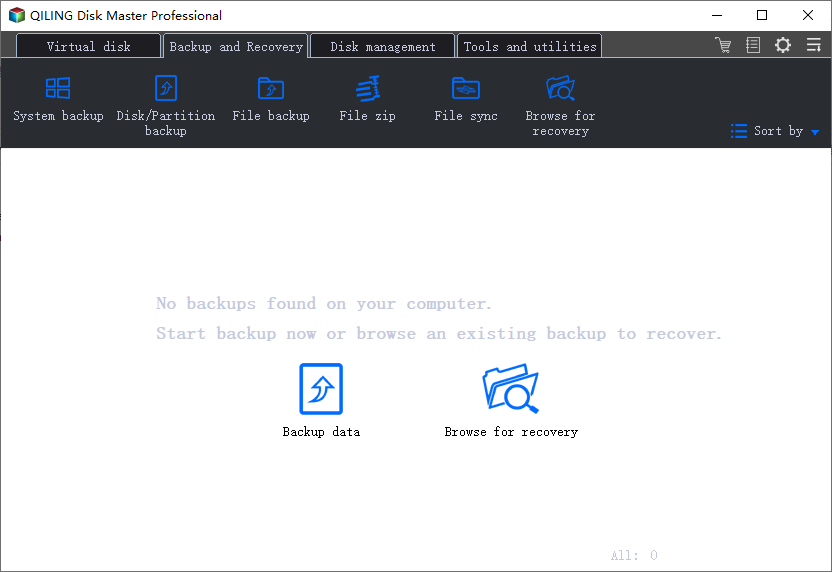
Step 1. Click the "File backup" button to start backup.
Step 2. Local and network files will be listed on the left, allowing you to expand directories and select the files to be backed up.
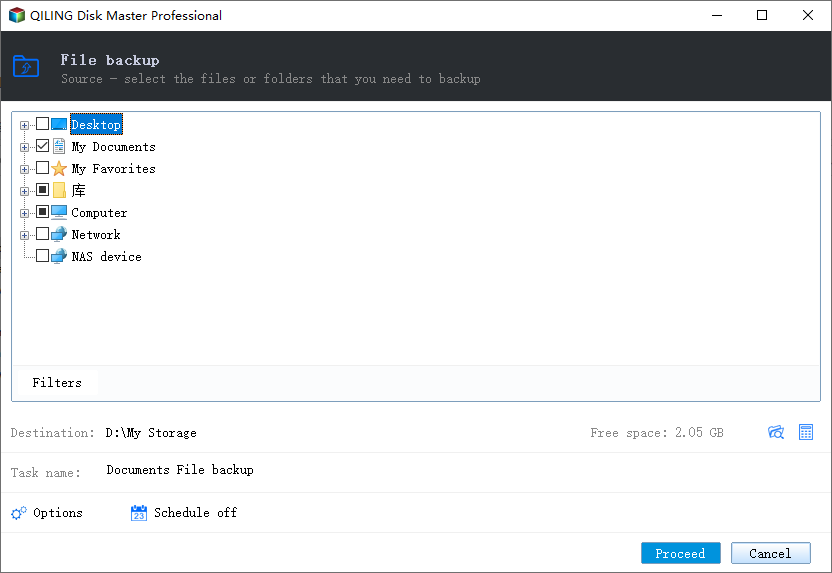
Step 3. Follow the on-screen guide to save the backup at the destination of your choice.
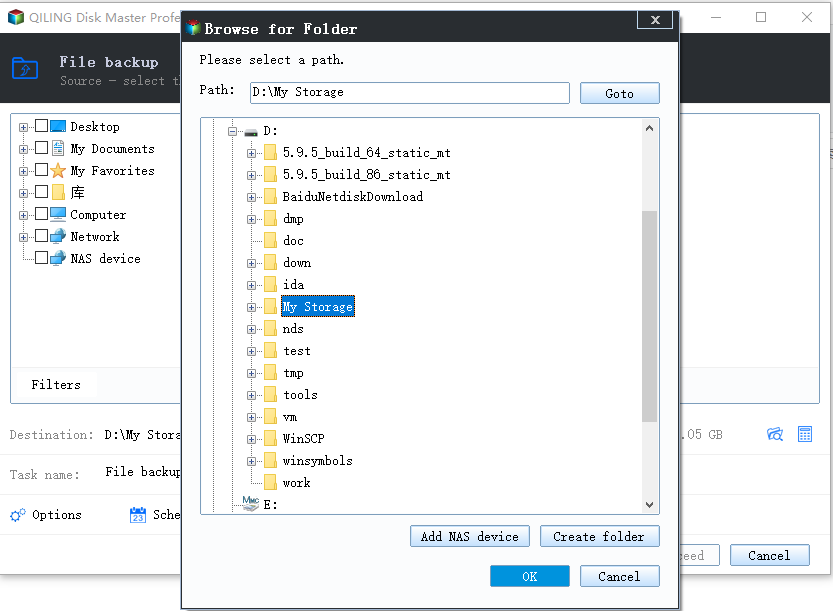
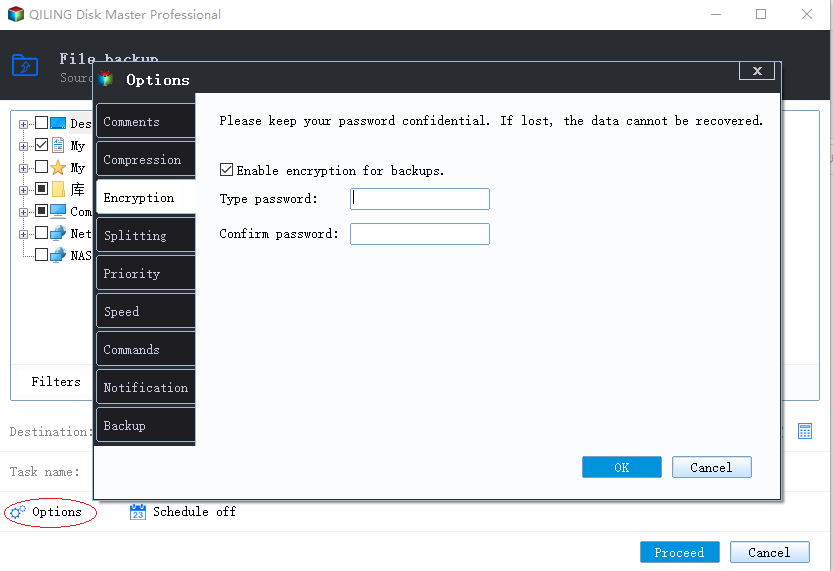
Step 4. To encrypt the backup with a password, click on the "Options" button in the "Backup Options" section. This allows you to customize the backup task according to your needs and explore other available options.
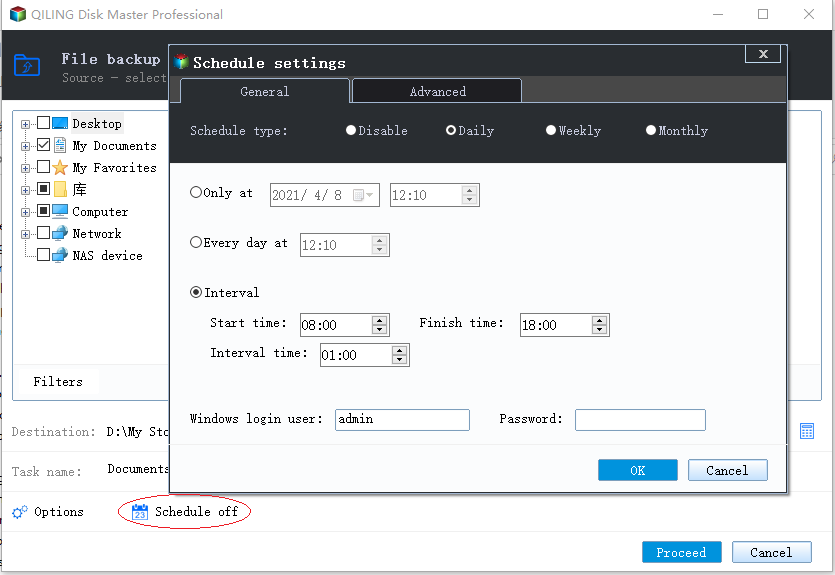
Set the backup schedule and choose to start the backup at a certain event in "Backup Scheme".
Step 5. You can store backups to a local drive, Qiling's cloud service, or a NAS.
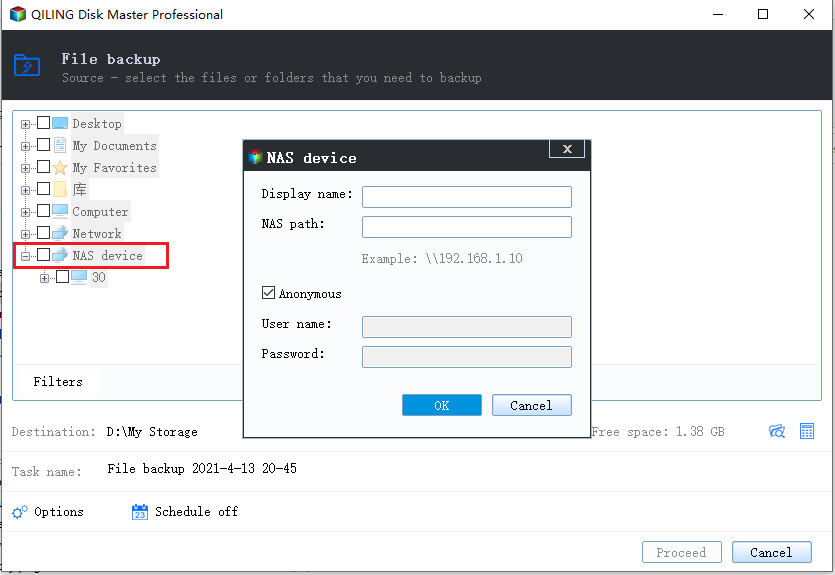
Step 6. Qiling Backup allows users to save data to both external cloud services and its own cloud storage.
To back up data to a third-party cloud drive, select Local Drive, scroll down to add Cloud Device, and log in to your account.
Step 7. Click "Proceed" to start the backup process. Once the task is completed, it will be displayed as a card on the left panel, where you can right-click to further manage the backup.
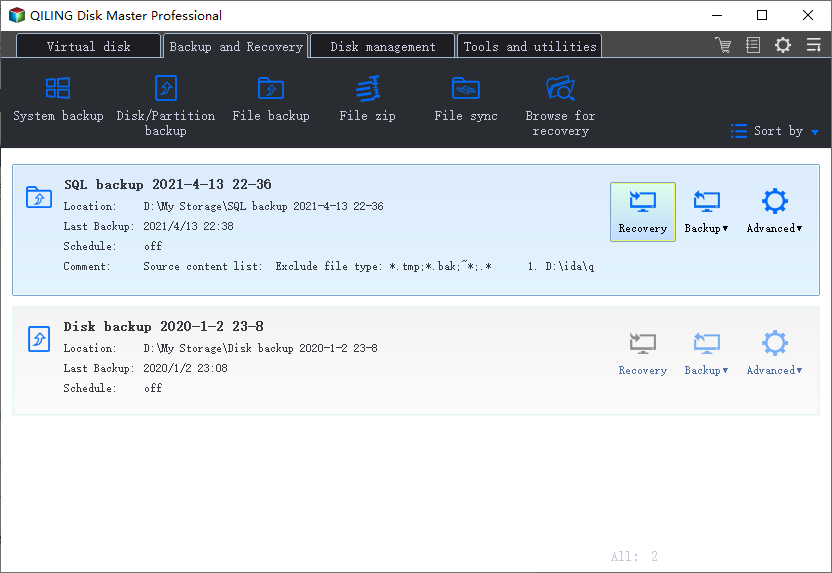
Compared to Backup and Restore, Qiling Backup offers more features with simpler steps. While Backup and Restore do not support incremental backup, Qiling Backup excels as the best incremental backup software, meeting a wider range of needs.
- You can access more free cloud storage.
- You can choose to backup your files to a Network Attached Storage (NAS) device, a cloud storage service, or even backup OneDrive files to an external drive.
- You can create a system image and recover your system image in case your computer crashes or you need to reinstall the operating system. This process involves backing up your system image, which includes all the files and settings on your computer, and then restoring it in case of a system failure or if you need to reinstall the operating system.
Solutions of Backup and Restore Not Working Windows 7
If you're experiencing issues with Backup and Restore not working on Windows 7, such as blank content or no response to clicks, you can try the following solutions to resolve the problem.
Method 1: Change the Startup Type
If your Backup and Restore are blank, you can check by clicking on the Start button, then typing "backup" in the search bar. If no results appear, it means the Backup and Restore feature is not enabled in your Windows.
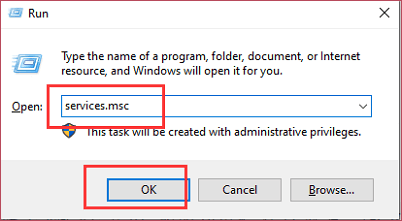
Step 1: To access the Services window, press the Win+R keys together to open the "Run" window, then type "services.msc" and click "OK."
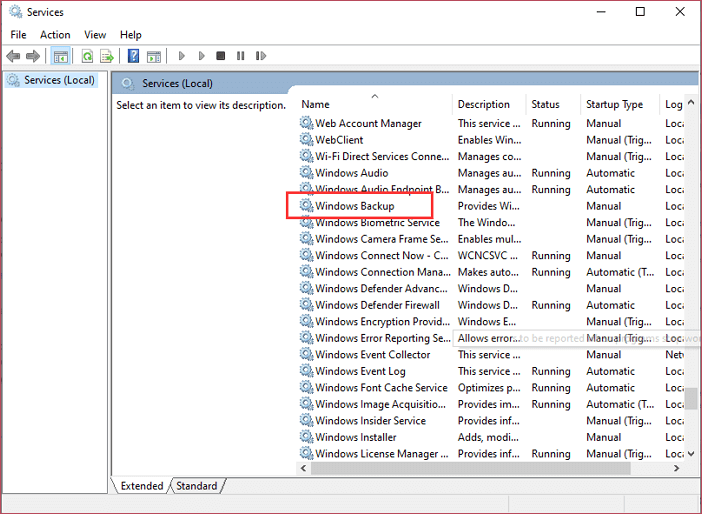
Step 2: To access the Windows Backup settings, locate the "Windows Backup" option in the pop-up window that appears, and double-click it to open the settings.
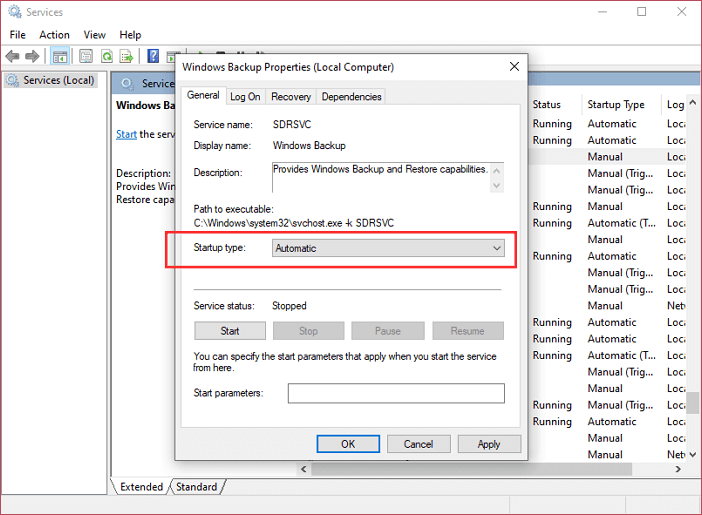
Step 3: To change the startup type of the Windows Update service to "Automatic", select it in the list of services and click on the "Startup type" dropdown menu. Then, select "Automatic" from the options and click "OK" to save the changes. This will ensure that the Windows Update service starts automatically when the computer boots up.
Method 2: Run System File Checker
This method can be used to check missing or corrupted system files on Windows 7, requiring an administrator account to run. If you already have an administrator account, you can proceed.
Step 1: Press Windows+R together, type "cmd," and click OK.
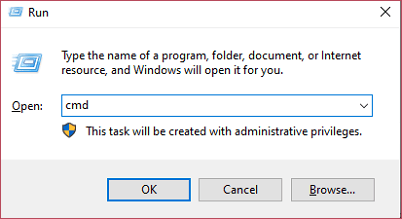
Step 2: At the command prompt, type "sfc/scannow", then press "Enter."

Step3: The command will scan all protected system files and display the results when it finishes, so do not close the command prompt window.
Method 3: Uninstall Antivirus Application
The antivirus application may interfere with the Backup and Restore process, so consider uninstalling it to ensure a smooth operation.
Step 1: Open the "Control panel" and choose "Programs and Features."
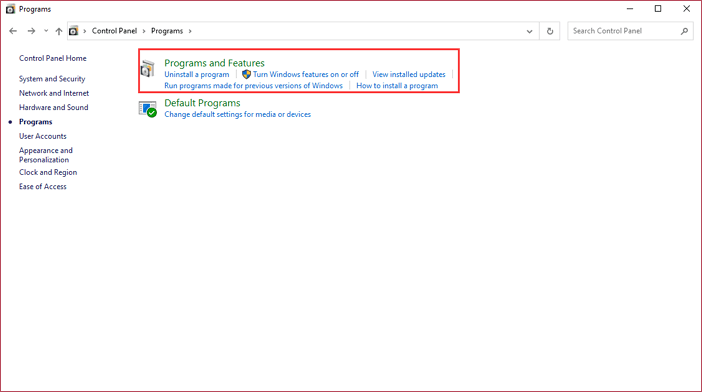
Step 2: Select the antivirus application on your computer and click on "Uninstall."
Conclusion
If Backup and Restore is not working properly on Windows 7, or if it's not meeting your needs, consider a reliable alternative like Qiling Backup, which you can download to try.
FAQs About Backup and Restore Not Working Windows 7
If you're experiencing issues with backing up and restoring on Windows 7, don't worry - there are solutions available. Three methods can be used to resolve the problem, and they may help you get back on track. Additionally, there are some frequently asked questions that may provide further assistance. I hope these methods and FAQs will be helpful in resolving your issue.
1. Does Backup and Restore Windows 7 work on Windows 10?
Windows 10 users can utilize the Backup and Restore (Windows 7) tool, which is a built-in feature that remains unchanged since Windows 7, for simple backup and restore needs, or opt for third-party software like Qiling Backup for more advanced solutions.
2. What to do if System Restore does not work?
If System Restore doesn't work, you need to identify the cause. You can use the System File Checker to check for corrupted files. Alternatively, try restarting your computer to see if it functions normally.
3. How do I force System Restore Windows 7?
To force the System to be restored, you can use the Control Panel.
Step1: Open Control Panel and click "System."
Step 2: Choose System Protection and select the drives.
Step 3: Choose the Restore system settings and previous versions of files option.
Related Articles
- How to Backup Windows 7 in Different Ways - Full Steps with Pictures
- [Backup Question] How Often Should I Create A System Image
- Can I Clone BitLocker Encrypted Drive Without Disabling It? Yes! [3 Minutes Guide]
- [100% Efficient] Create Windows 10 Image Backup with 2 Ways
- Where Does Windows 10 Backup Save to? Get Full Answer
If you've backed up your important files or Windows 10 system, you might be wondering where Windows 10 saves these backups. This article will provide you with detailed answers, helping you find and understand the Windows 10 Backup location. - How Do I Fix Windows 7 Backup Taking Forever Issue? Check the How-To Guide Here
The article provides step-by-step solutions to resolve Windows 7 backup issues, allowing users to successfully back up their PC's data in simple clicks. It covers the causes and fixes of the problem, providing assistance to users in resolving the issue and ensuring their data is safely backed up.
Products
Articles & Tutorials
- Data Recovery
- Data Backup
- File Recovery
- File Backup
- System Backup and Restore
- Disk and Partition Clone
- Technical articles
- Mobile articles
- Disk Master Help
- Windows Data Recovery Tutorials
- Windows Secure Delete Tutorials
- Windows Partition Management Tutorials
- Windows File Backup and Restore Tutorials
- Windows System Backup and Restore Tutorials
- Windows Disk Backup and Restore Tutorials
- Windows Clone Tutorials